Colour explosion: Autumn in Switzerland’s vineyards
TEXT: NANE STEINHOFF
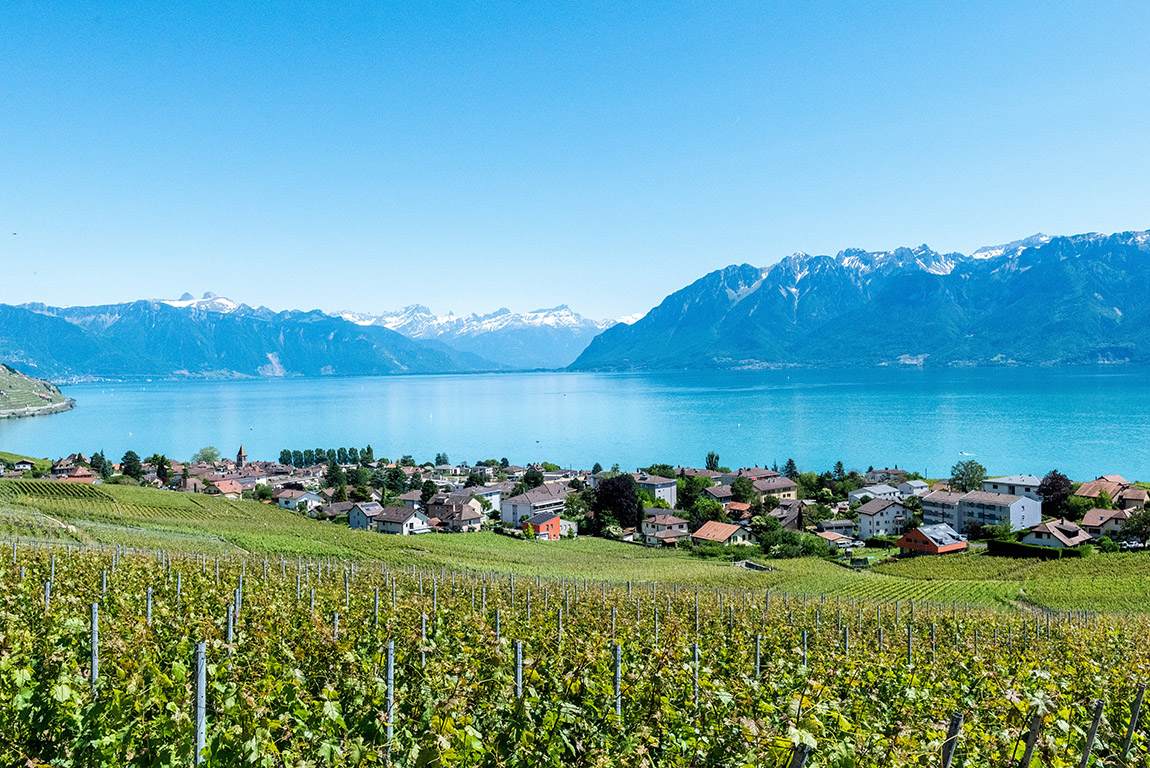
Vineyards in Lavaux. Photo: Gabriel Garcia Marengo via Unsplash
Here is a hot take: autumn is one of the best times to visit Switzerland! When vibrant colours fill the landscape, cool but mild temperatures creep in, considerably fewer crowds visit, and the wine harvest is in full swing, we explore some of the country’s most famous wine hikes to learn more about Switzerland’s rich viticultural history.
There is a particular kind of light in Swiss vineyards in autumn. Summer’s high gloss gives way to something earthier: harvest baskets, cellar doors, leaves turning copper, and walking paths that seem to lead as naturally to a glass of wine as to a viewpoint.
Switzerland is rarely the first country mentioned in conversations about wine tourism, which is exactly why its vineyard trails feel so rewarding. Much of the wine is produced in modest quantities and enjoyed close to home, meaning a walk through the vines can feel less like a polished route around famous labels and more like an invitation into a living landscape. The hiking is part of the pleasure, but so is the sense of discovery: a small cellar, a family story, a grape variety you may not have encountered before.
The Au cœur des vendanges event. Photo: © Swiss Wine Promotion
At the heart of the harvest
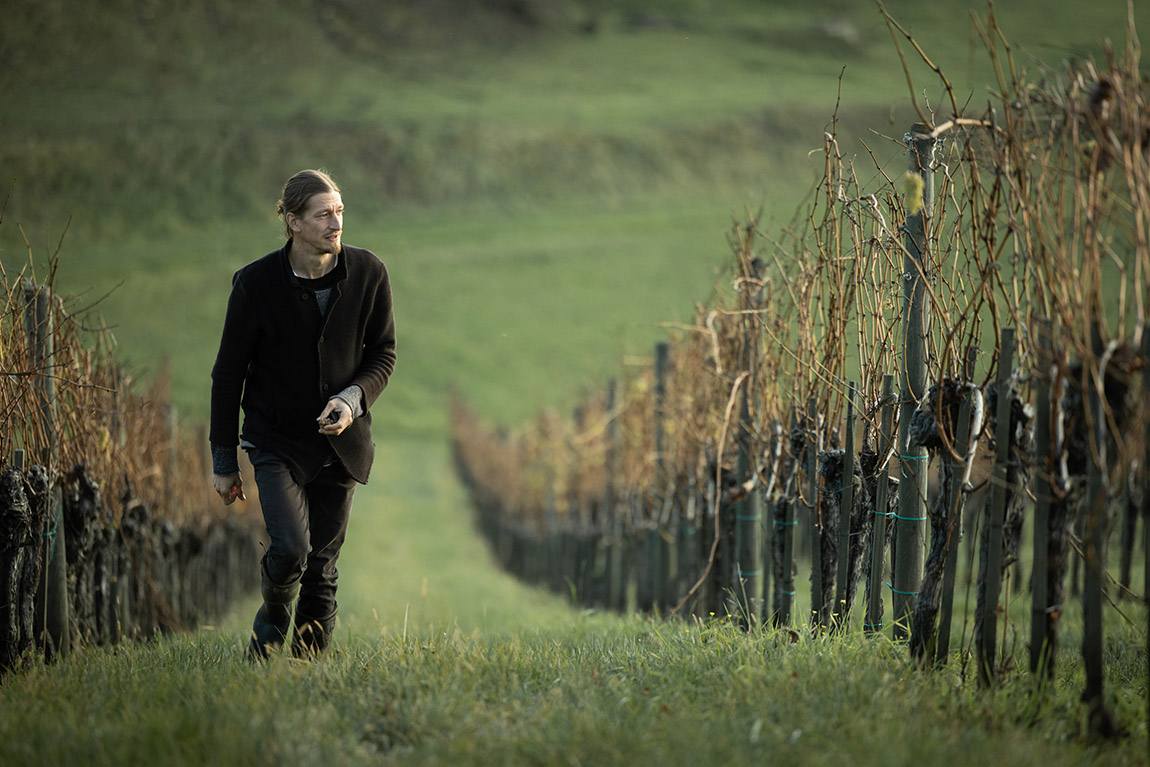
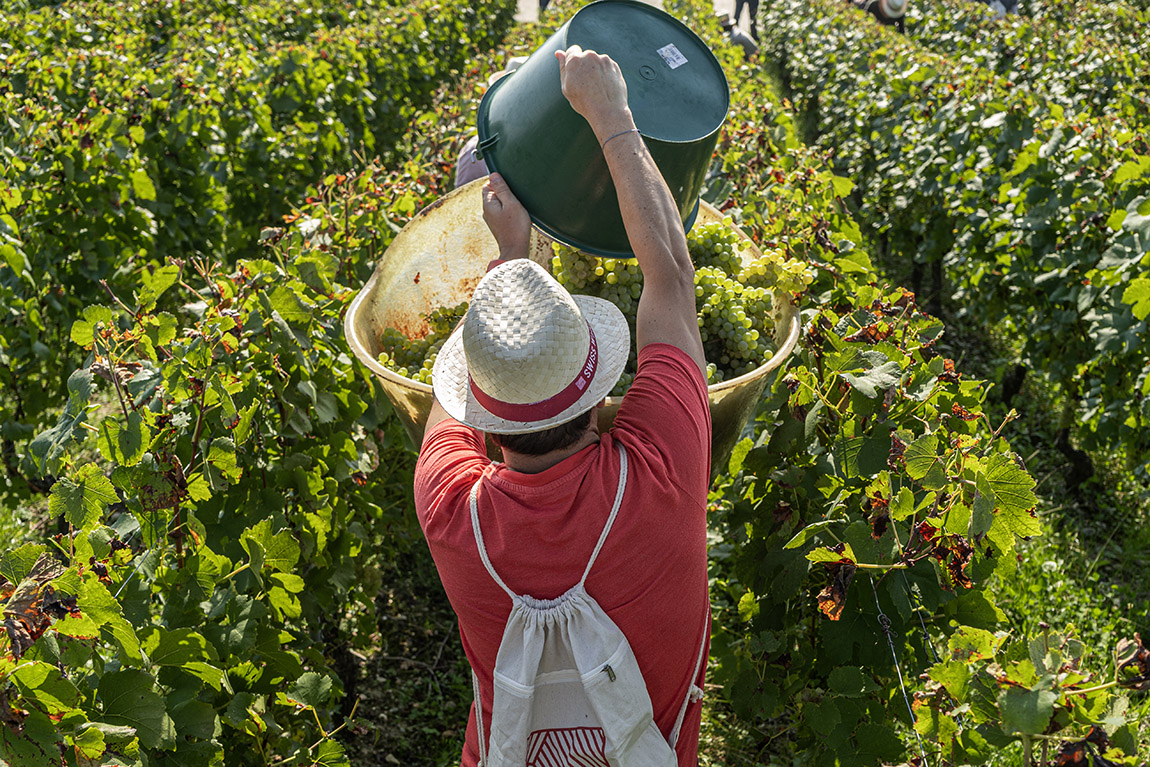
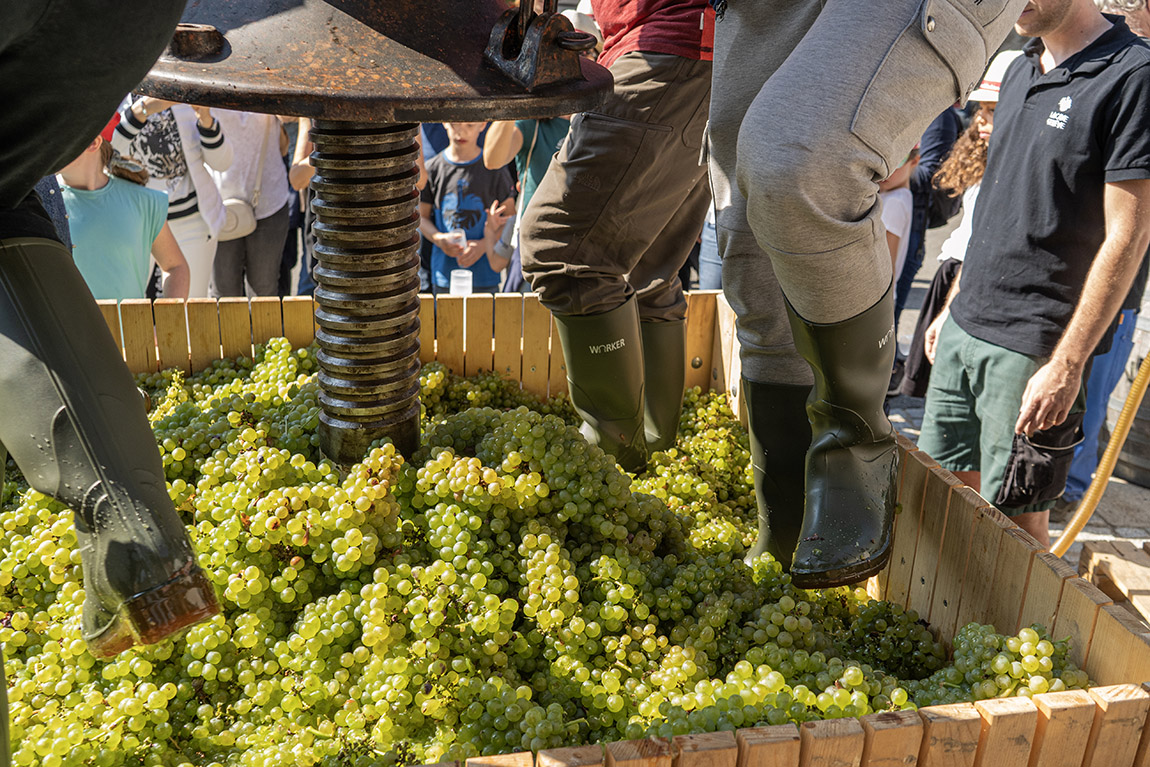
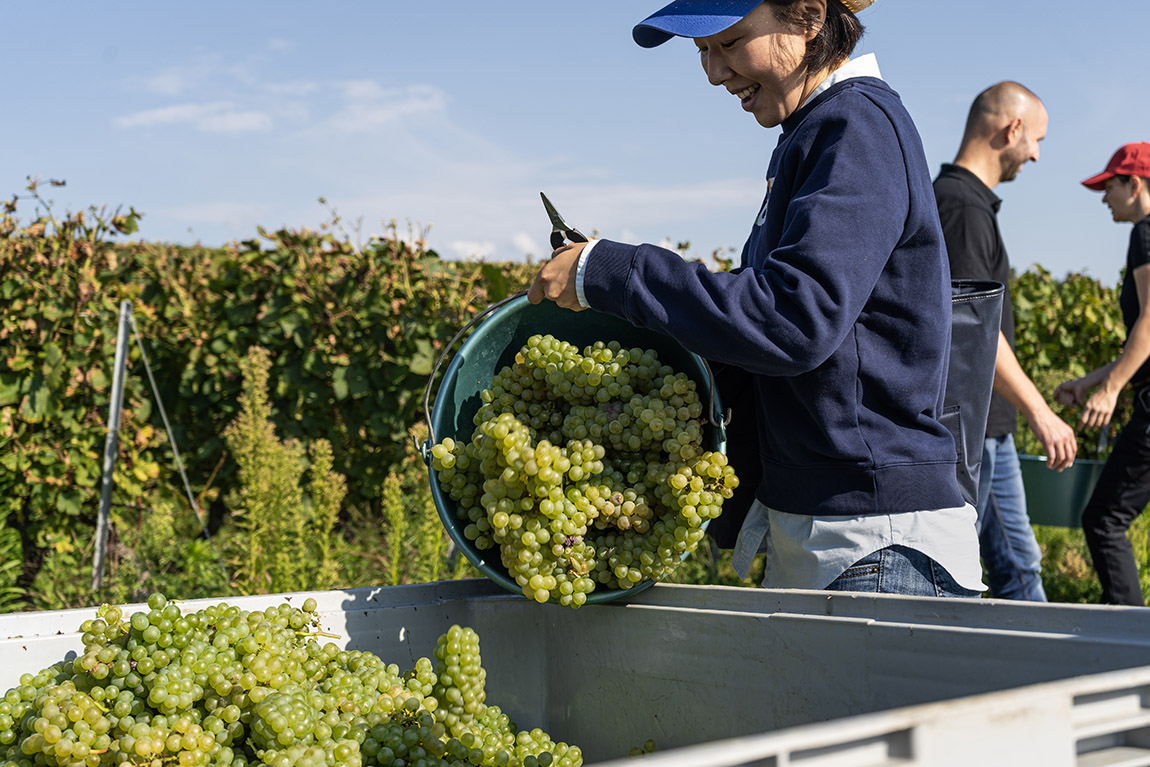
That feeling becomes even stronger during harvest. In September, more than 30 estates across Switzerland’s six wine-growing regions opened their vineyards and cellars for the sixth edition of Au cœur des vendanges, which translates to at the heart of the grape harvest. Visitors were able to take up pruning shears, harvest grapes themselves, follow the journey from vineyard to cellar and sit down afterwards for tastings and regional food. In 2025, the initiative drew more than 600 participants across 42 wine estates — proof that the appetite for immersive, hands-on wine experiences is growing.
For Esther Meyer, director of Domaine Château du Crest in Geneva, such encounters are about far more than a pleasant tasting. “Welcoming visitors into our vineyards is about much more than just sharing a moment over wine. It means opening the doors to our profession and showing them all the hard work that goes into every bottle,” she explains. “Au cœur des vendanges offers the chance to experience the harvest in a friendly, authentic atmosphere, while gaining an appreciation for the expertise and passion it demands.”
The Au cœur des vendanges event. Photo: © Swiss Wine Promotion
Top wine hikes in Switzerland
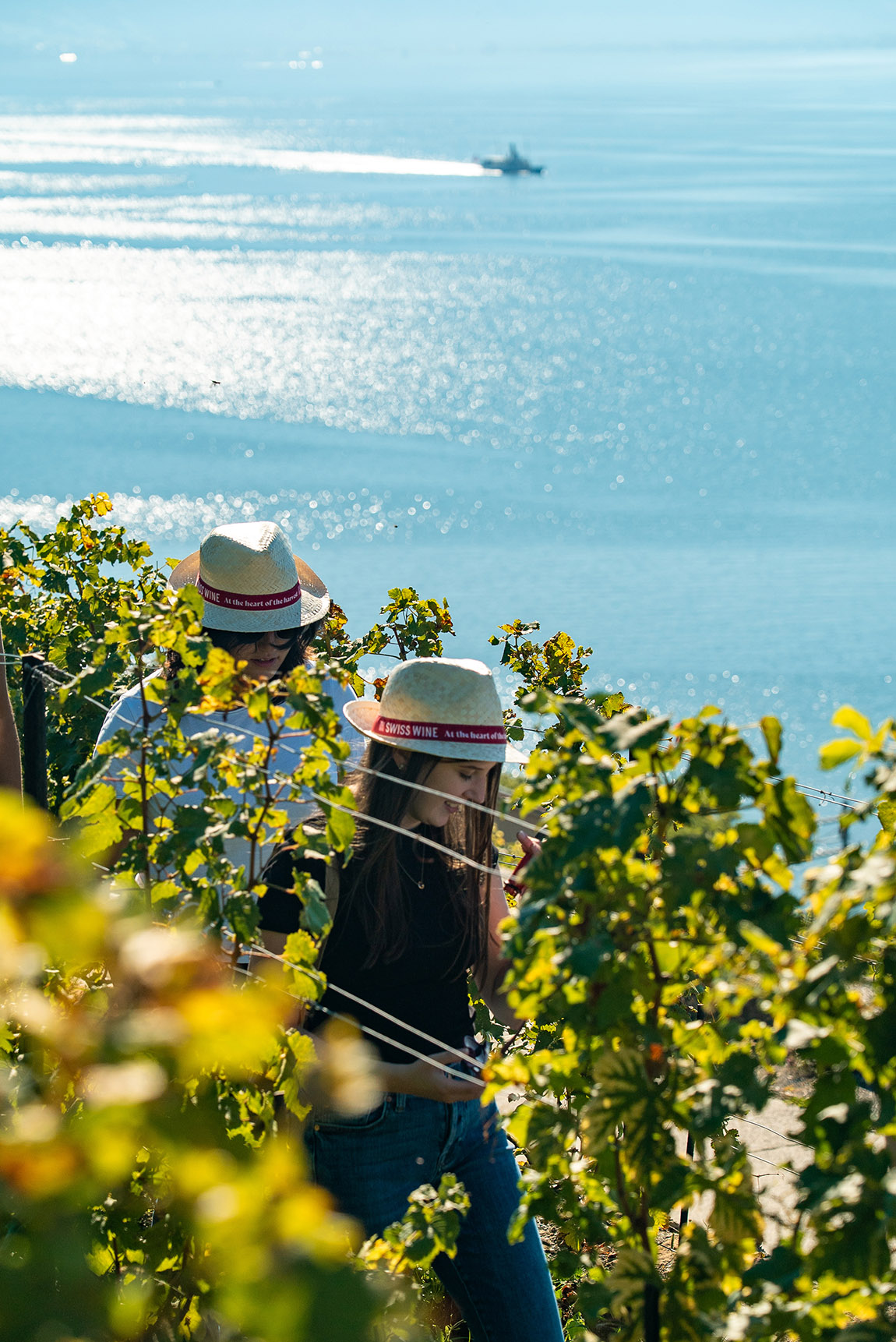
For wine enthusiasts, combining this special autumnal event with wine hikes offers a great way to experience Swiss wine heritage to the fullest. One of the more cinematic wine hikes begins in Lavaux and slips through steep terraces stacked above Lake Geneva between St-Saphorin and Lutry. Across the water, the Alps sit like a painted backdrop. Narrow lanes, stone walls, old winegrowers’ houses and little villages line the path.
In autumn, Lavaux becomes especially persuasive. The vines glow amber and bronze, the lake throws back the light, and the classic local grape, Chasselas, feels perfectly suited to the setting: crisp, understated and made for drinking with a view. The full route is around 11 kilometres, though its real pleasure lies in not treating it like a checklist. Stop often. Look back. Let the train take you home when your legs or your curiosity have had enough.
The Au cœur des vendanges event. Photo: © Swiss Wine Promotion
If you are in the canton of Valais, the vineyard trail from Martigny to Leuk stretches for roughly 65 kilometres through the Rhône Valley, one of Switzerland’s most distinctive wine landscapes. It is a route that rewards time: serious walkers can take on several stages, while others can dip into a shorter section and still come away with the sense of having entered another world. The wines here have names that sound rooted in the mountains: Fendant, Petite Arvine, Cornalin. The villages bring another layer of character, with cellars, terraces and restaurants that make the connection between path and plate feel effortless.
For something more vertical in Valais, head above Visp to Visperterminen, where vineyards climb to remarkable heights and the walking takes on a distinctly Alpine mood. The terraces here seem to defy the landscape, rising towards the village in a succession of stone, vine and sky. The route asks a little more of the legs than a lakeside stroll, but that effort is part of its appeal. The wine to know is Heida, a mountain white prized for its freshness and mineral character. After the climb, it tastes exactly as it should: shaped by altitude, sunlight and stone.
For a gentler hike, head to Bielersee Rebenweg, one of Switzerland’s most quietly photogenic wine walks, easy to reach by public transport. Set above Lake Biel, it impresses with shimmering lake vistas, gentle hill slopes, and the sequence of wine villages such as Twann and Ligerz
The Three-Lakes region is known for Chasselas and Pinot Noir, and the landscape has a different register from the drama of Valais or Lavaux. It is intimate, unhurried and full of small rewards like a church tower above the vines, a bench facing the water, a cellar sign at just the right moment.
Exploring the village of Ciona in Ticino by bike. Photo: Christian Meixner / Switzerland Tourism
Hiking and biking
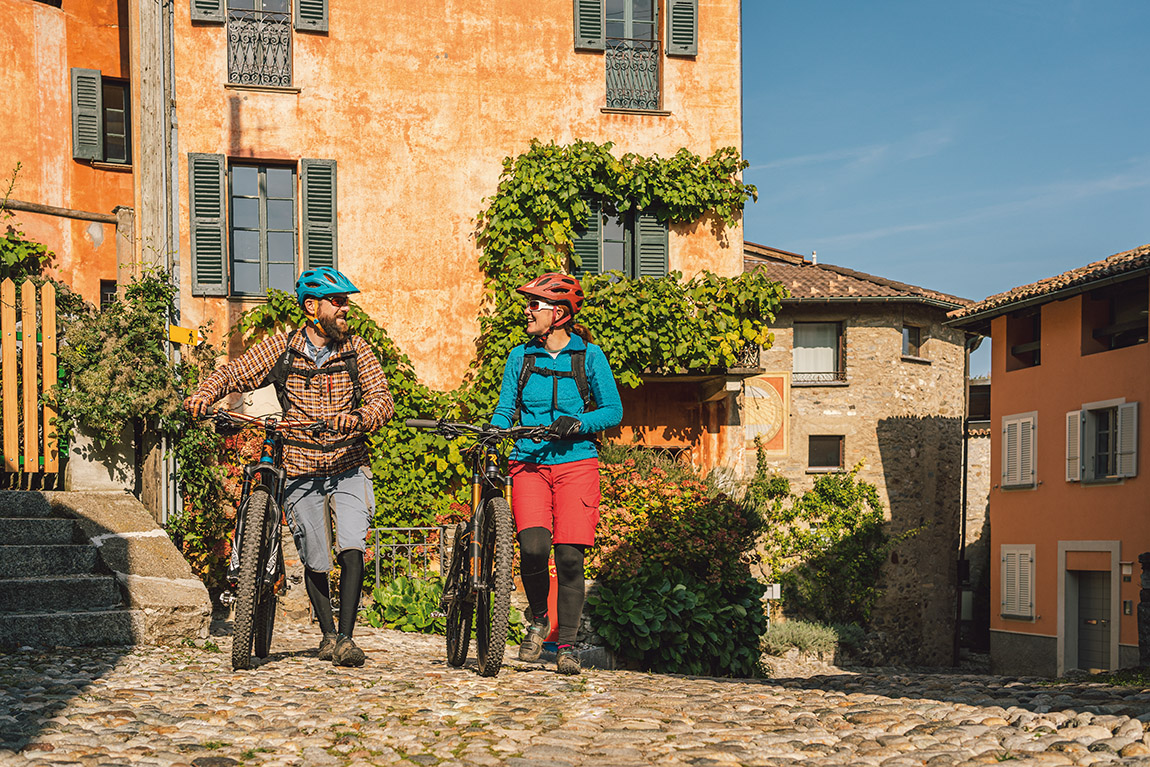
Then there is Mendrisiotto, Ticino’s southernmost and most vineyard-rich region, where the Swiss wine hike takes on a warmer, Italian-speaking cadence. Around Mendrisio and Balerna, low hills, stone villages and vine-striped slopes create a landscape that feels made for slow movement. Here, hikers can choose between three themed wine trails. For example, the Man and Grapevine loop trail takes visitors to places that tell the story of Mendrisiotto’s wine production and viticulture.
At Borgovecchio vini in Balerna, a Bike’n’Wine tour adds a playful variation on the classic vineyard walk: a half-day ride through the region, with stops at local wineries, plates of specialities and conversations with producers who work close to the land.
Photo © www.swisswine.com
The experience is less about chasing famous labels than understanding scale. Mendrisiotto accounts for around 40 per cent of Ticino’s wine production, with 360 hectares of vineyards, yet the encounters remain personal. Rocco Travella, former Olympic cyclist and Bike’n’Wine guide, captures the relaxed philosophy neatly: “Wine doesn’t necessarily need to be the star in the room. Sometimes it can simply accompany other plates and dishes.”
Travella speaks with particular pride about the region’s soils and position. “Thanks to our location and our soils, we have very unique terroirs,” he says, pointing to recognition at the Grand Prix des Vins Suisses and the Merlot World Championship. The dominant grape here is Merlot, but the lasting impression is broader: warm light, chestnut forests, grotto-style meals and family cellars where the person pouring the wine may also have helped make it.
Stops at Piccola Vigna, Ortelli Vini and La Costa show how intimate those bigger claims can become. Piccola Vigna began with Piermarco Soldini, who first made wine from a family vineyard once tended by his father, before Pierwalter Trapletti joined him in 1998. It remains deliberately modest and family-run, balancing professional know-how with the spirit of a hobby carried seriously. Its purpose is expressed simply: “The feeling that unites us is the desire to preserve the great winemaking tradition of our region.”
That, ultimately, is what makes autumn wine hiking in Switzerland so memorable. The scenery may be spectacular, but the deeper pleasure lies in proximity: to the harvest, to local varieties, to villages shaped by vines and to winemakers who are still close enough to their work to explain it with soil under their fingernails.
The Au cœur des vendanges event. Photo: © Swiss Wine Promotion
To find out more about Swiss wine and the wine trails, visit: www.swisswine.com

Subscribe to Our Newsletter
Receive our monthly newsletter by email