TOWNSET – empathy as a benchmark
TEXT: CORNELIA BRELOWSKI | VIDEO: TOWNSET
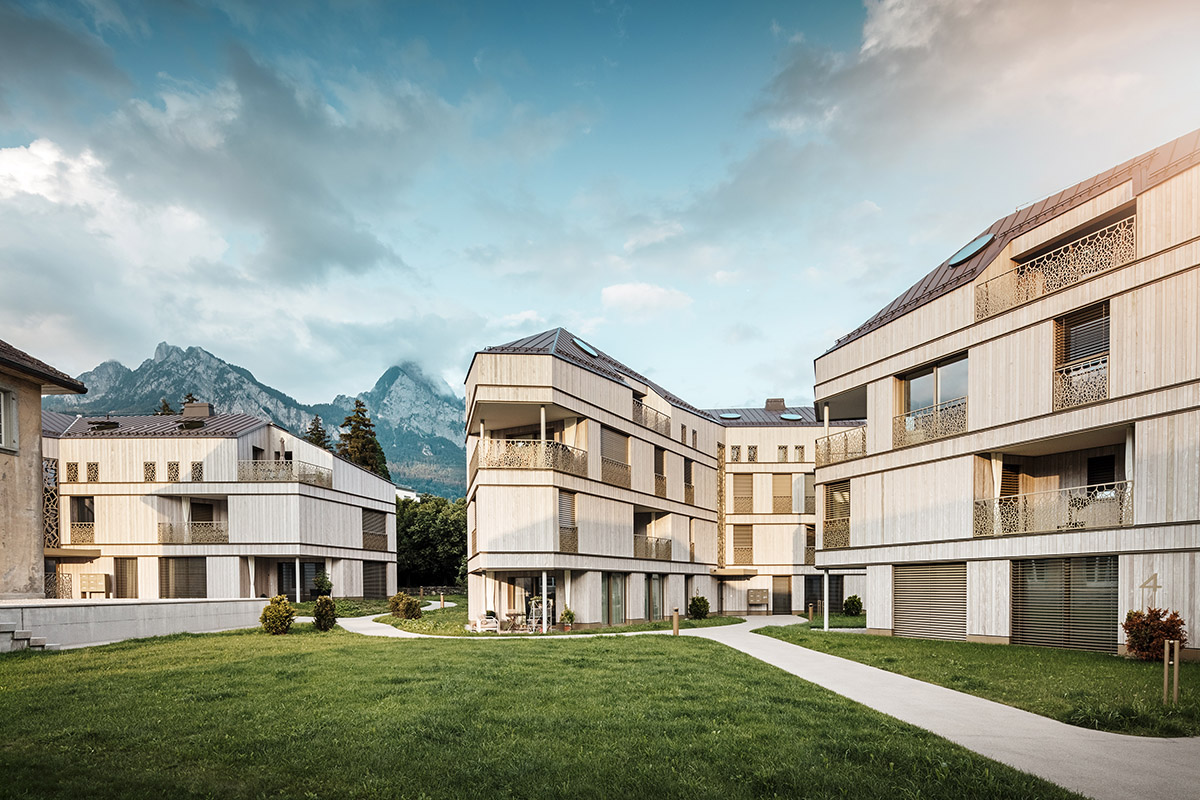
Relationship of the multi-family houses to the central park landscape. Photo: PREFA / Croce & Wir
The Zurich-based company TOWNSET offers project development, architecture and urban planning, as well as consulting in the areas of sustainability, smart city and architectural monuments.
“Small core, large network,” explains architect and urban planner Ihab Morgan when talking about his company TOWNSET GmbH. “We don’t do everything ourselves, that just wouldn’t be exciting enough.” And yet it is an entirely self-designed project that best reflects his attitude towards contemporary architecture and planning.
Liebwylen – modern living honouring tradition
In the cantonal town of Schwyz in central Switzerland, TOWNSET realised an ensemble of multi-storey residential buildings on a park-like plot originally belonging to the renowned chocolate manufacturer Max Felchlin. A villa from 1927, of both architectural and historical value, had to be considered on the site.
Where Alpine peaks alternate with high plateaus and green meadows in central Switzerland, Swiss chocolate has been produced for centuries. The traditional Felchlin company, headquartered in Schwyz, is renowned for its pralines and couvertures. In 1927, the manufacturing family built a villa and park in the style of the great industrialists of the early 20th century – initially functioning as private residency, then as the main business address. Following restructuring measures in 2018, the company moved to new headquarters in Ibach/Schwyz. What remained were the villa and park – with plenty of space for a development. As the new owner of the site since 2017, Liebwylen Immobilien AG wanted to transform the site for residential purposes, taking into account both the historical traces and the requirements of modern living, in harmony with the natural surroundings and mountainous landscape.
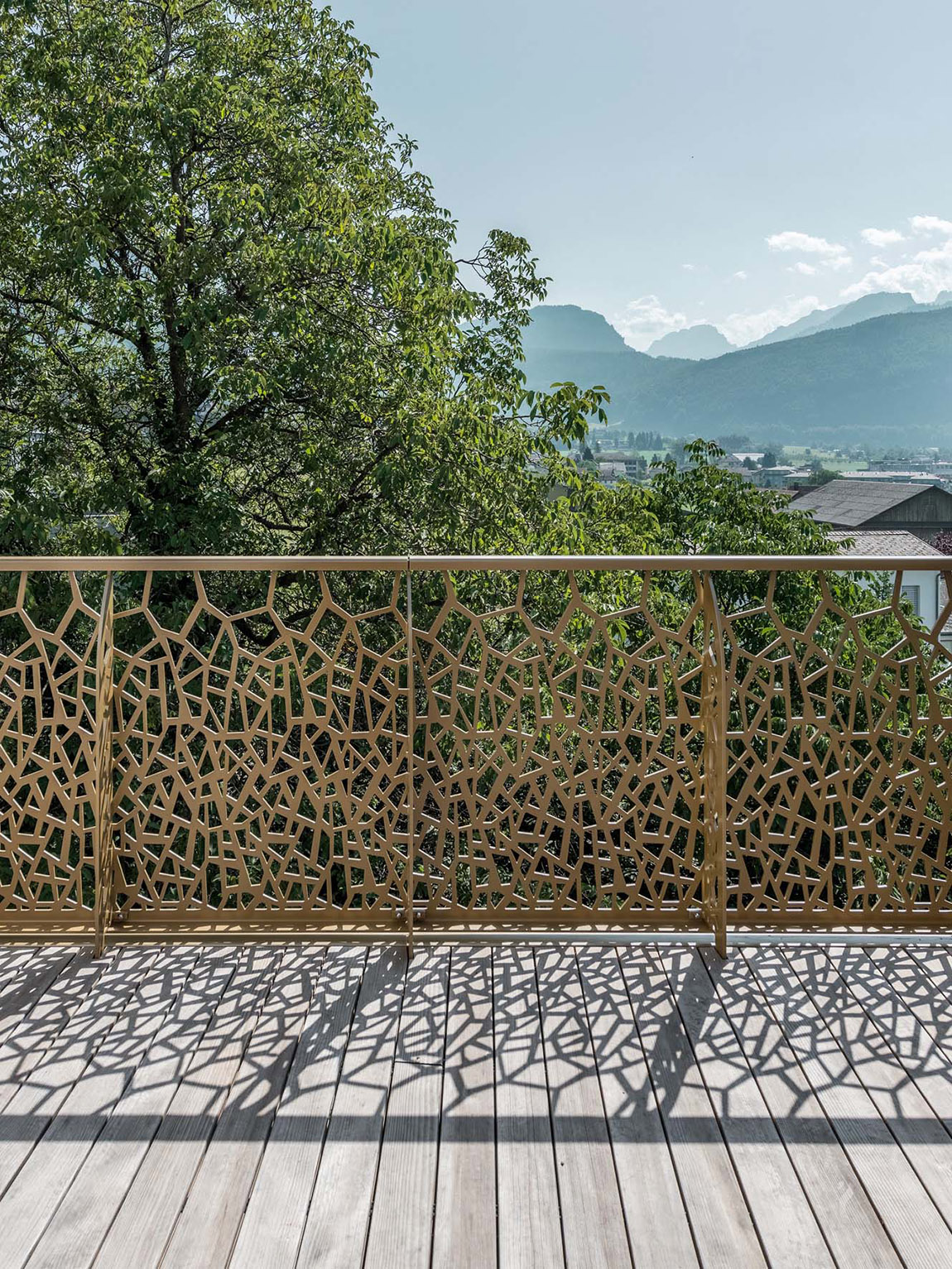
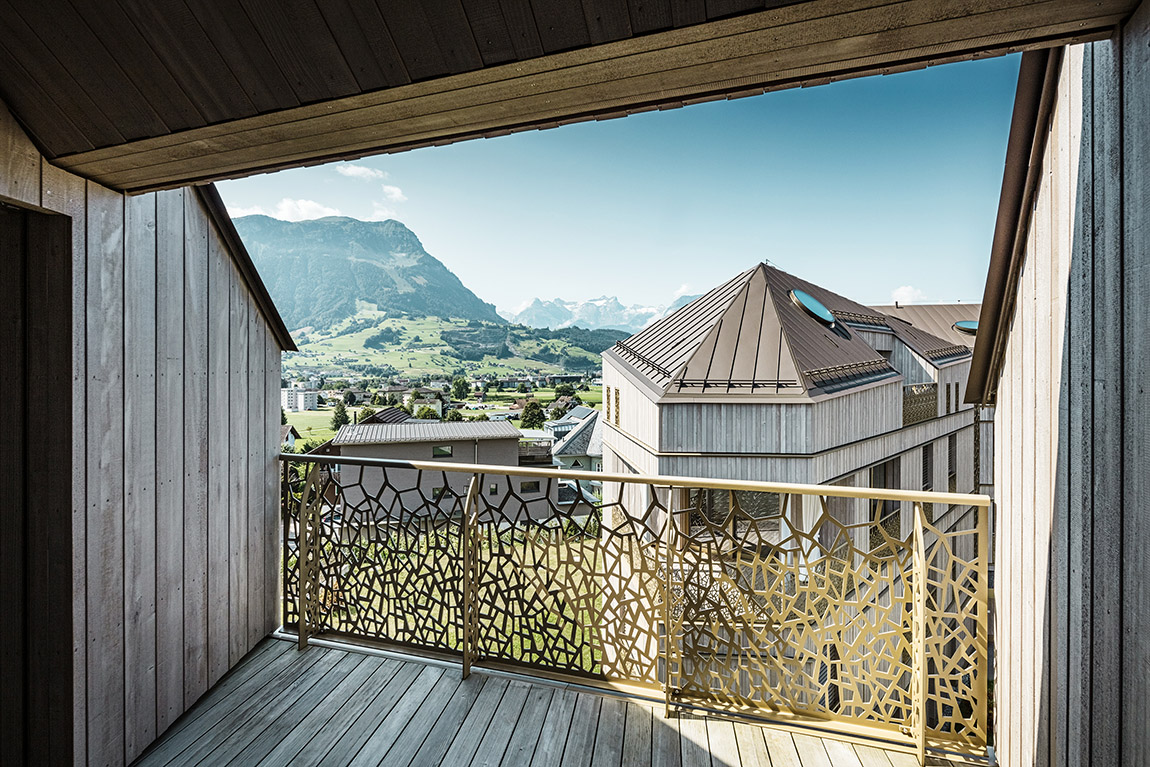
Relationship of the railings to nature and light. Photo: Tom Licht Photography
Preservation and appreciation of existing structures
“When planning a project with an old building stock, you have to recognise it as a contemporary witness and develop new perspectives for the future,” explains Morgan. Proactively approaching the authorities and involving the neighbours were therefore key to success. Solutions were developed with appreciation and empathy, and the villa was protected from demolition. In this way, potential conflicts were recognised and averted even before they arose, Morgan explains. He communicated the villa as absolutely worth protecting, thus supporting its preservation against initial plans – and then adapted the planning and architecture accordingly.
To this end, the architect designed an L shape, which mirrors the scale and layout of the historic villa with an extension – and rotated it depending on the placement of the respective buildings on the plot. In addition, the new structures were individually adapted to the slope, with a staggered number of storeys. Thus, five multi-storey residential buildings were arranged around the existing villa in the park. At 60 per cent, the possible building density was fully utilised without losing the impression of a loosely set ensemble. The 32 living units, comprising 18 maisonettes and 12 single-storey apartments ranging between 29 and 131 square metres, are fully let. Their orientation celebrates views of the mountains, the park and the old villa. Generous spaces connect the new buildings with the loosely scattered, villa-like building environment.
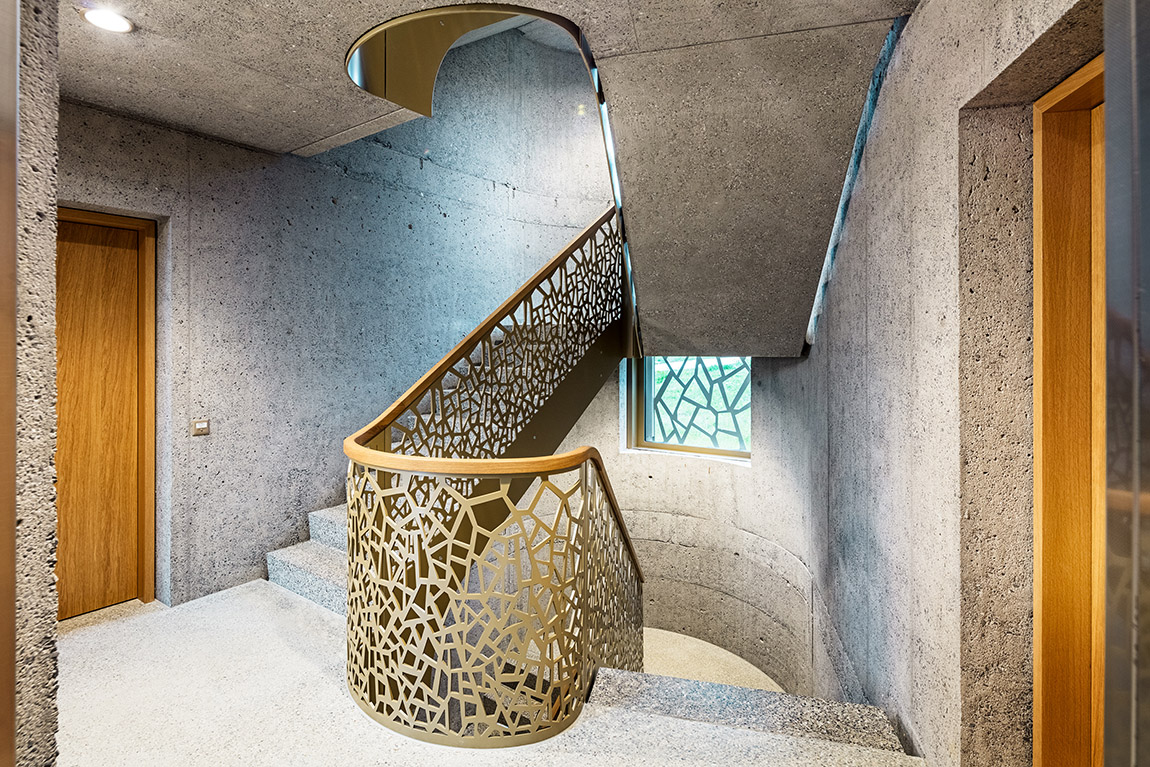
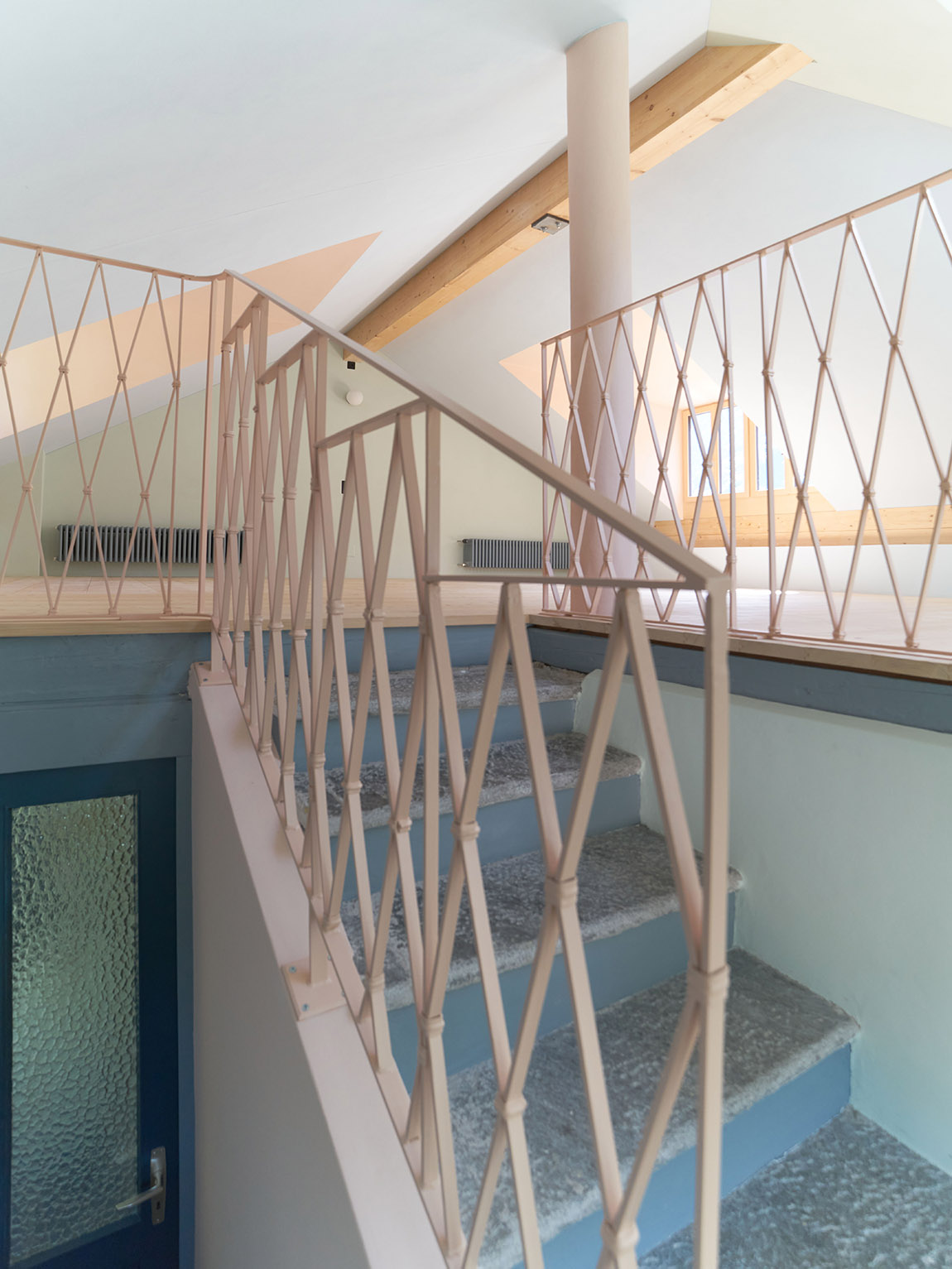
Main staircase made of sandblasted exposed concrete, polished concrete floor, prefabricated staircase elements and perforated steel railing. Photo: PREFA / Croce & Wir
Polygonal structures
The two- to four-storey, L-shaped structures are each accessed via a central staircase, while rounded walls characterise the internal staircases of the maisonette apartments. The irregular overlapping and interweaving of the apartments creates unusual spatial structures on the inside as well as exciting views to the outside, explains Morgan. “I would have thought it a shame if buildings had been built next to the villa in such beautiful surroundings if not in harmony with nature.” The exceptional structures invite to consciously design the living space in a minimalistic way. “The space itself is perceived as an experience.”
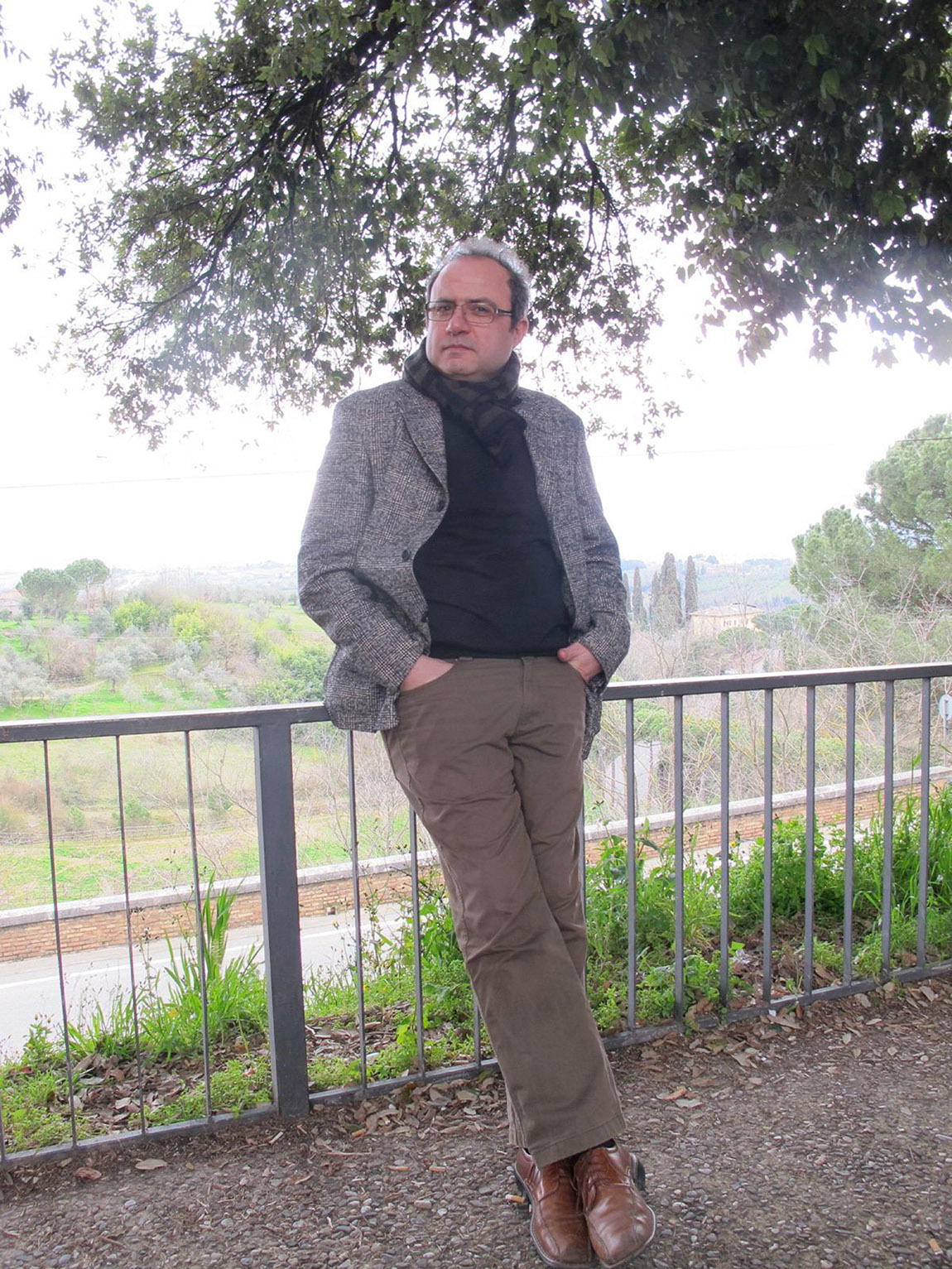
Ihab Morgan. Photo:TOWNSET GmbH 2025
Alpine roofscapes and organic details
The roof landscape features 12 different roof pitches and is based on the surrounding mountain silhouette of the Kleiner and Großer Mythen, while 45 porthole-shaped skylights act as definitive eye-catchers. Also particularly striking here is the visual continuity of the aluminium panels through a perforated sheet dyed in the roof colour, which completely conceals the eaves gutters. Only the ridge lines are perpendicular – other roof lines rise or fall, which supports the polygonal, playful overall impression of the design. For the balcony and stair railings, Morgan chose steel sheets that matched the colour of the wooden façades, into which a textured pattern was milled, resembling the shadow of a treetop.
The result is a modern, harmonious ensemble for contemporary living in the most beautiful surroundings.
Web: www.townset.com
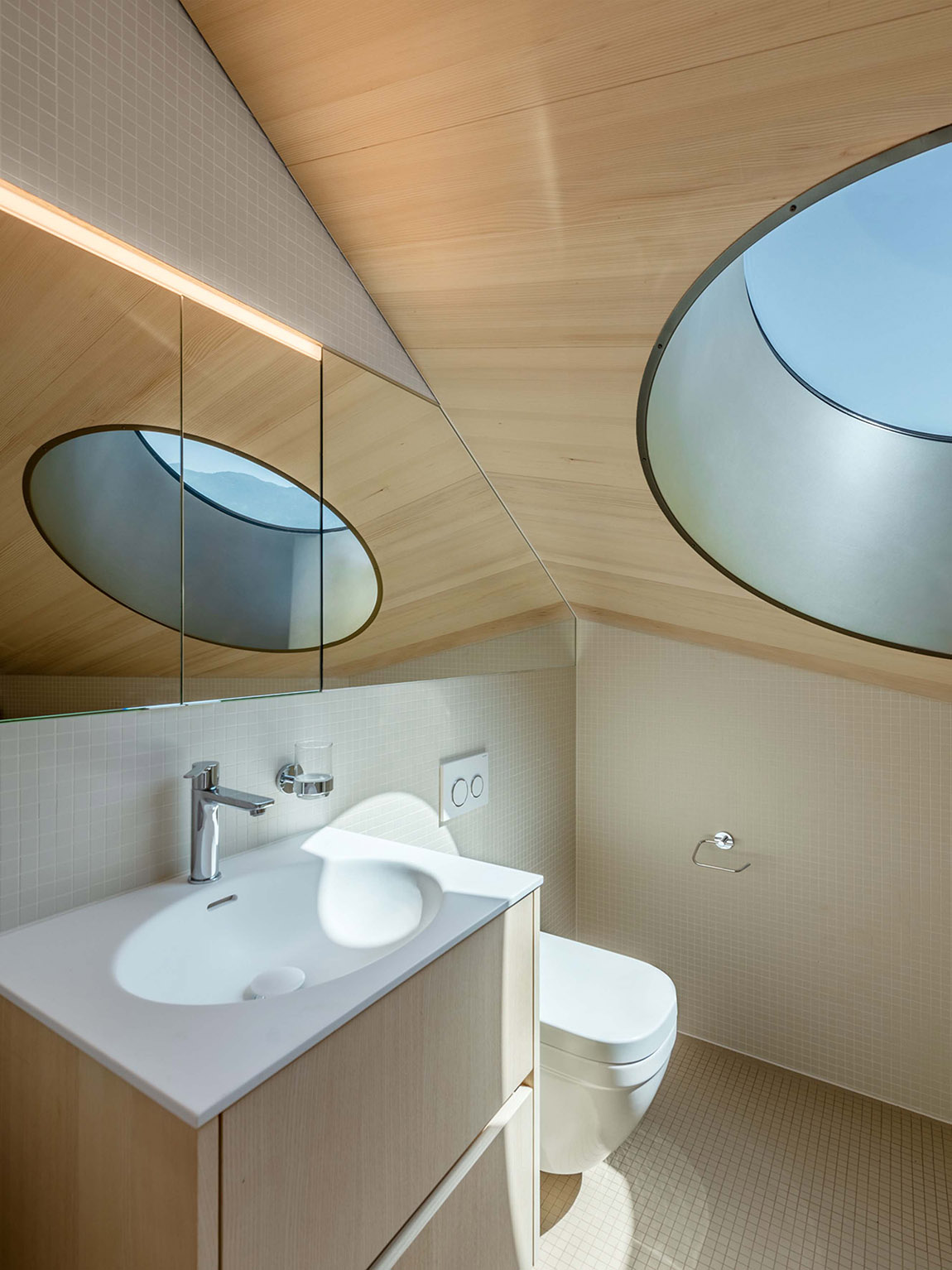
Design of the interior with natural materials and natural light. Photo: Tom Licht Photography
TOWNSET – Empathie als Maßstab
Die Züricher Firma TOWNSET bietet Projektentwicklung, Architektur und Städtebau sowie Beratung in den Bereichen Nachhaltigkeit, Smart City und Baudenkmäler.
„Kleiner Kern, großes Netzwerk“, erklärt Architekt und Stadtplaner Ihab Morgan, wenn es um seine Firma TOWNSET GmbH geht: „Wir machen nicht alles selbst, das wäre einfach auch nicht spannend genug.“ Und doch ist es ein durchweg selbst gestaltetes Projekt, welches seine Einstellung zu zeitgemäßer Architektur und Planung am besten widerspiegelt.
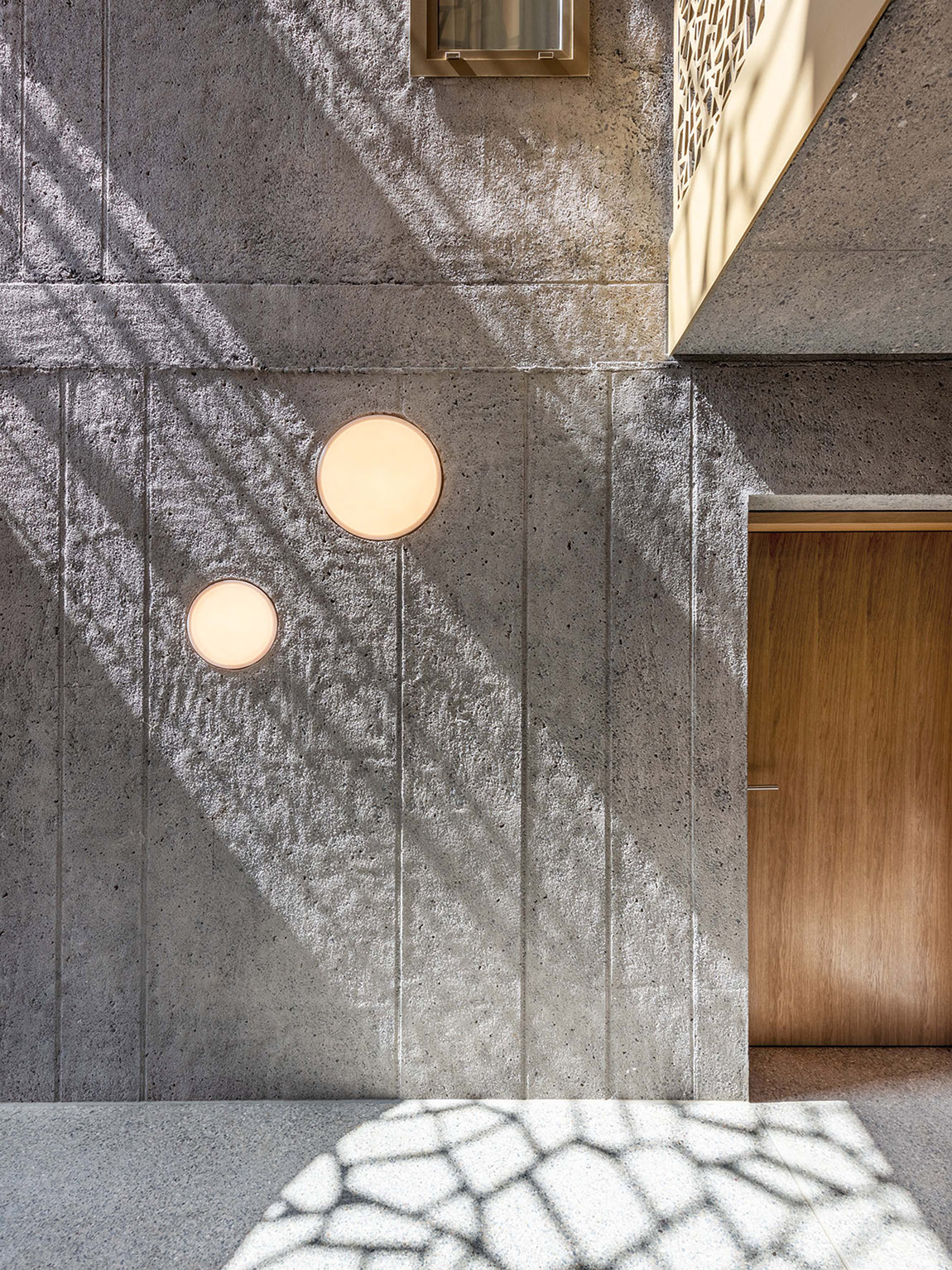
Haupttreppenhaus: sandgestrahlte Wandoberfläche und Licht-Schattenspiel. Foto: Tom Licht Photography
Liebwylen – modernes Wohnen mit Traditionen
In der innerschweizerischen Kantonsstadt Schwyz realisierte TOWNSET mehrgeschossige Wohnbauten auf einem parkähnlichen Grundstück des renommierten Schokoladenfabrikanten Max Felchlin. Zu berücksichtigen war auf dem Gelände eine Villa aus dem Jahr 1927, ein Bestandsgebäude von baukulturellem und historischem Wert.
Wo sich in der Zentralschweiz Alpengipfel mit Hochebenen und grünen Wiesen abwechseln, wird seit Jahrhunderten auch Schokolade hergestellt. Die traditionsreiche Firma Felchlin mit Hauptsitz in Schwyz ist bekannt für ihre Pralinen und Kuvertüren. Ganz im Stil der Großindustriellen des frühen 20. Jahrhunderts baute die Fabrikanten-Familie im Jahr 1927 eine Villa mit Park – zunächst als private, dann als geschäftliche Hauptadresse. Im Jahr 2018 ging es nach Umstrukturierungen in eine neue Firmenzentrale nach Ibach/Schwyz. Zurück blieben Villa und Parkanlage – mit viel Raum für eine Überbauung. Von der Liebwylen Immobilien AG als neue Arealeigentümerin seit 2017 war eine Transformation des Areals zu Wohnzwecken gewünscht, die sowie die historischen Spuren der repräsentativen Großindustrie als auch die Anforderungen des modernen Wohnens im Einklang mit der natürlichen Umgebung und Berglandschaft berücksichtigt.
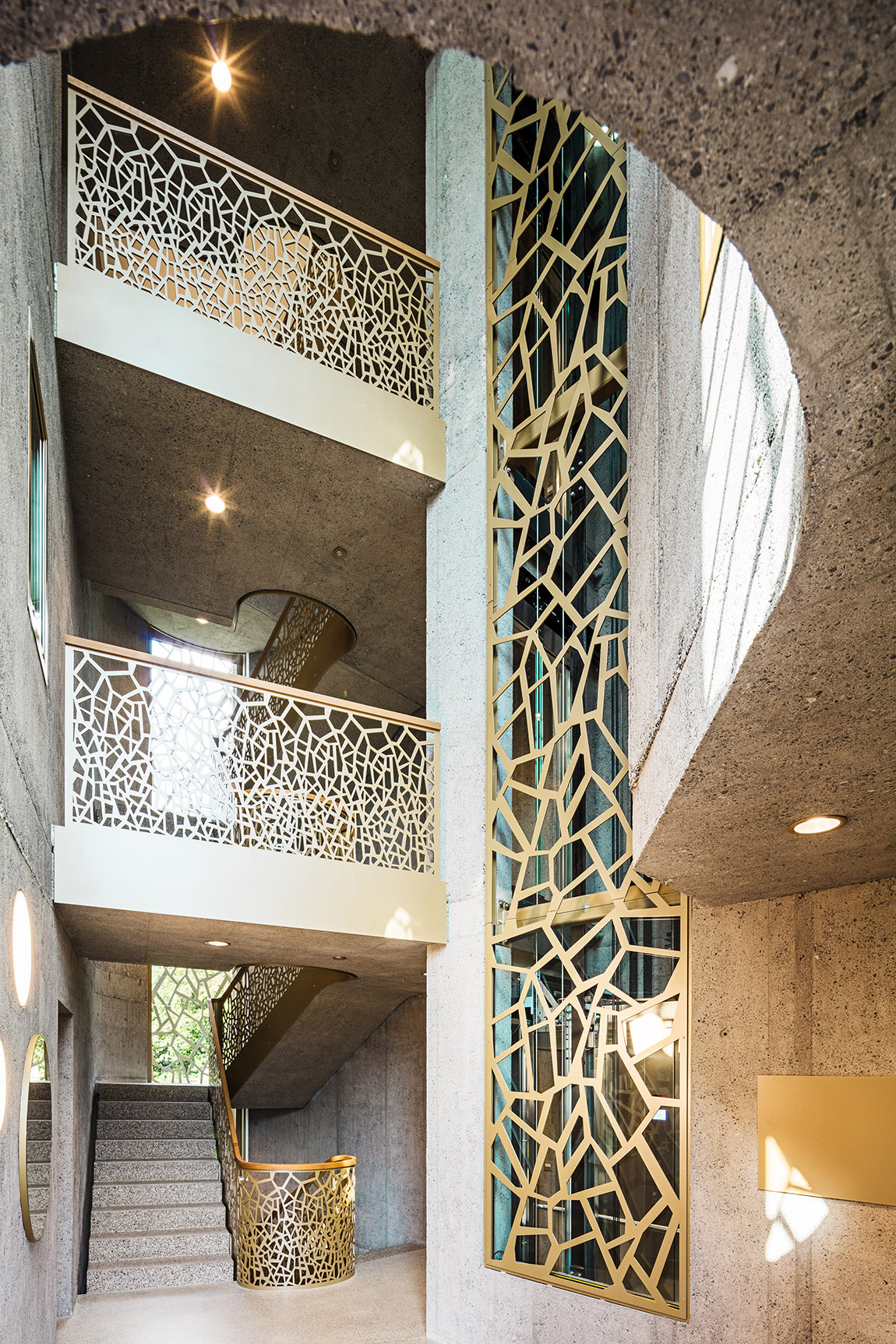
Haupttreppenhaus aus sandgestrahltem Sichtbeton und perforiertem Stahlgeländer. Foto: PREFA / Croce & Wir
Erhalt und Wertschätzung des Bestandes
„Man muss bei einer Planungsaufgabe mit altem Baubestand diesen als Zeitzeugen anerkennen und neue Perspektiven für die Zukunft erarbeiten“, erklärt Morgan. Ein proaktives Zugehen auf die Behörden sowie die Einbindung der Nachbarn waren für ihn daher ein Schlüssel zum Erfolg. Mit Wertschätzung und Empathie wurden Lösungen entwickelt und die Villa vor dem Abriss geschützt: Auf diese Weise wurden etwaige Konflikte bereits vor deren Auftreten erkannt und abgewendet. Ihab Morgan vermittelte die Villa als absolut schützenswert, unterstützte deren Erhalt gegen erste Pläne – und passte sodann Planung und Architektur den neuen Rahmenbedingungen an.
Der Architekt entwarf hierfür einen L-förmigen Grundtyp, der Maßstab und Grundriss der historischen Villa mit Anbau adaptiert – und drehte diesen je nach Platzierung der jeweiligen Baukörper auf dem Grundstück. Zudem wurden die einzelnen Bauten individuell an die Hanglage angepasst, mit gestaffelter Geschosszahl. Entstanden sind fünf mehrgeschossige Wohnbauten, die sich im Parkumschwung um die Bestandsvilla formieren. Mit 60 Prozent nutzte man die mögliche Baudichte voll aus, ohne den Eindruck eines locker gesetzten Ensembles zu verlieren. Die 32 Einheiten mit Wohnflächen aus 18 Maisonette- und 12 eingeschossigen Wohnflächen zwischen 29 und 131 Quadratmetern werden vollständig vermietet. Ihre Ausrichtung zelebriert jeweils Ausblicke in die Bergwelt, den Park und auf die alte Villa. Großzügige Zwischenräume verbinden die Neubauten mit der villenartig lockeren, umgebenden Bebauung.
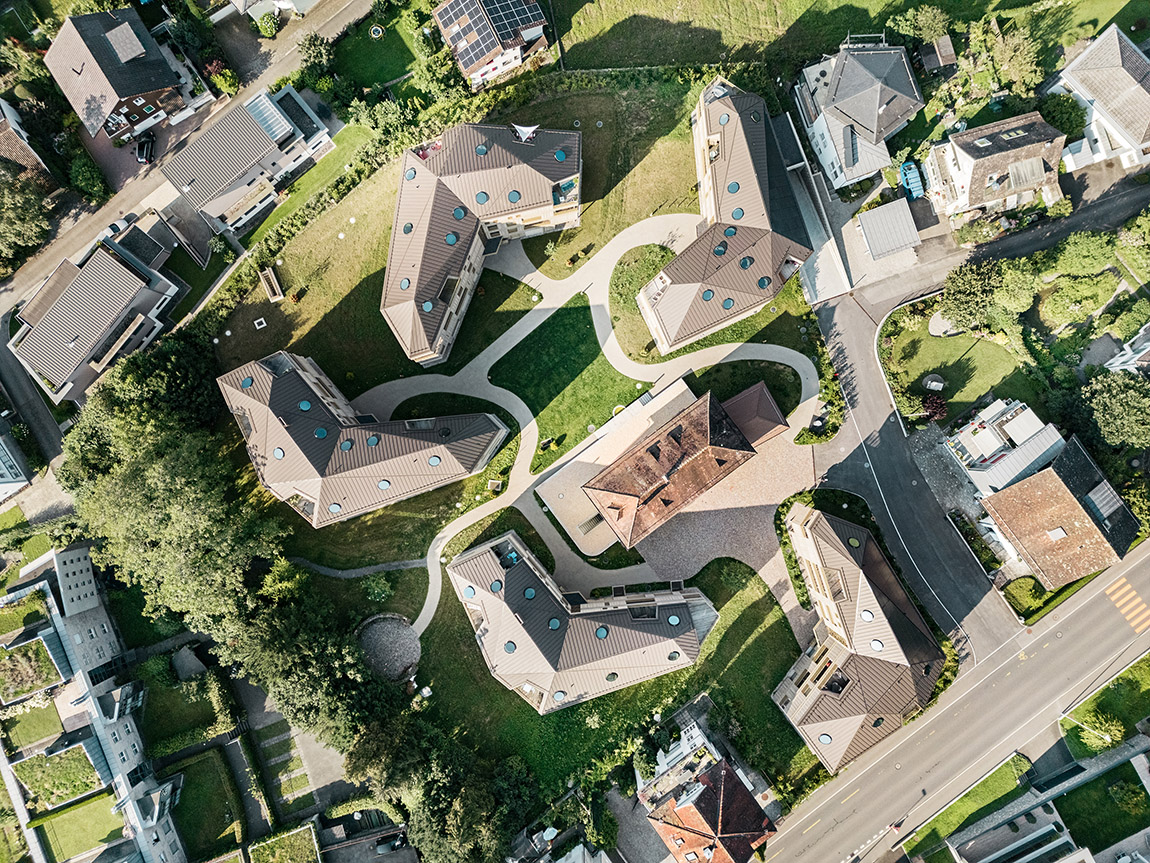
Situationsplan: Liebwylen im Park. Foto: PREFA / Croce & Wir
Polygonale Baukörper
Zwei- bis viergeschossige L-förmige Baukörper werden durch je ein zentrales Treppenhaus erschlossen; abgerundete Wände prägen jeweils auch die Innentreppen der Maisonette-Wohnungen. Die unregelmäßige Wohnungsüberlagerung und -verflechtung erzeugt ungewöhnliche Raumgefüge im Inneren sowie spannende Durchblicke nach Außen, erläutert Morgan: „Ich hätte es schade gefunden, wenn neben der Villa und in der großartigen Lage im Park und am Hang Gebäude gebaut worden wären, welche nicht mit der Natur in Einklang treten.“ Die ungewöhnlichen Raumgefüge laden dazu ein, den Wohnraum bewusst und reduziert zu gestalten: „Der Raum selbst wird als Erlebnis wahrgenommen.“
Alpine Dachlandschaften und organische Details
Die Dachlandschaft mit je 12 unterschiedliche Dachneigungen orientiert sich an der umgebenden Bergsilhouette des Kleinen und Großen Mythen. Echte ‚Hingucker‘ bilden die 45 bullaugenförmig gestalteten Dachfenster. Besonders auffällig ist hier die optische Durchgängigkeit der Aluminium-Scharen durch ein in der Dachfarbe eingefärbtes Lochblech, welches die Traufrinnen vollständig verdeckt. Lediglich die Firstlinien sind lotrecht – andere Dachlinien steigen oder fallen, was den polygonal-verspielten Gesamteindruck des Entwurfs unterstützt.
Für Balkon- und Treppengeländer wählte Morgan farblich auf die Holzfassaden abgestimmte Stahlbleche, in die ein strukturiertes Muster gleich dem Schatten einer Baumkrone gefräst wurde. Entstanden ist ein modern-harmonisches Ensemble, für zeitgemäßes Wohnen in schönster Umgebung.
Beziehung der Mehrfamilienhäuser zueinander und zur umgebenden Landschaft. Foto: PREFA / Croce & Wir
Web: www.townset.com
Ihab Morgan is an architect and urban planner with two degrees and a doctorate from ETH Zurich. The TOWNSET founder gained international experience on major projects in Switzerland, Canada, the USA and Germany. Despite his work on large-scale projects, he opted for the comparatively modest Liebwylen project because he was fascinated by the location in the park, the proximity to the historic Felchlin Villa, and the idea of extraordinary living. The project won the 2021 ICONIC AWARD from the German Design Council in the Architecture and Urban Planning category. In July 2024, it was nominated as a finalist at the World Architecture Festival 2024 in Singapore, in recognition of its high environmental and sustainability standards. TOWNSET clients are primarily private family businesses, foundations and industrialists from the high-tech sector.
Ihab Morgan ist Architekt und Stadt planer mit zwei Studienabschlüssen und Doktorat von der ETH Zürich. In ternationale Erfahrung sammelte der TOWNSET-Gründer bei Großprojekten in der Schweiz, Kanada, den USA und Deutschland. Trotz seiner Arbeit an großen Projekten entschied er sich für das vergleichsweise bescheidene Vorhaben Liebwylen, da ihn die Lage im Park, die Nähe zur historischen Felchlin-Villa und die Idee des außer gewöhnlichen Wohnens faszinierten. Das Projekt wurde 2021 mit dem ICONIC AWARD des Deutschen De sign-Rats in der Kategorie „Architektur und Stadtplanung“ ausgezeichnet. Im Juli 2024 folgte die Nominierung zum Finalisten des „World Architec ture Festival 2024“ in Singapur – als Anerkennung für hohe Umwelt- und Nachhaltigkeitsstandards. TOWNS ET Kund*innen stammen primär aus privaten Familienunternehmen, Stiftungen, sowie Industriellen aus der High-Tech-Branche.

Subscribe to Our Newsletter
Receive our monthly newsletter by email