Nathalie Pohl: Making waves
TEXT: NANE STEINHOFF | PHOTOS: DANIEL TONI JAIS
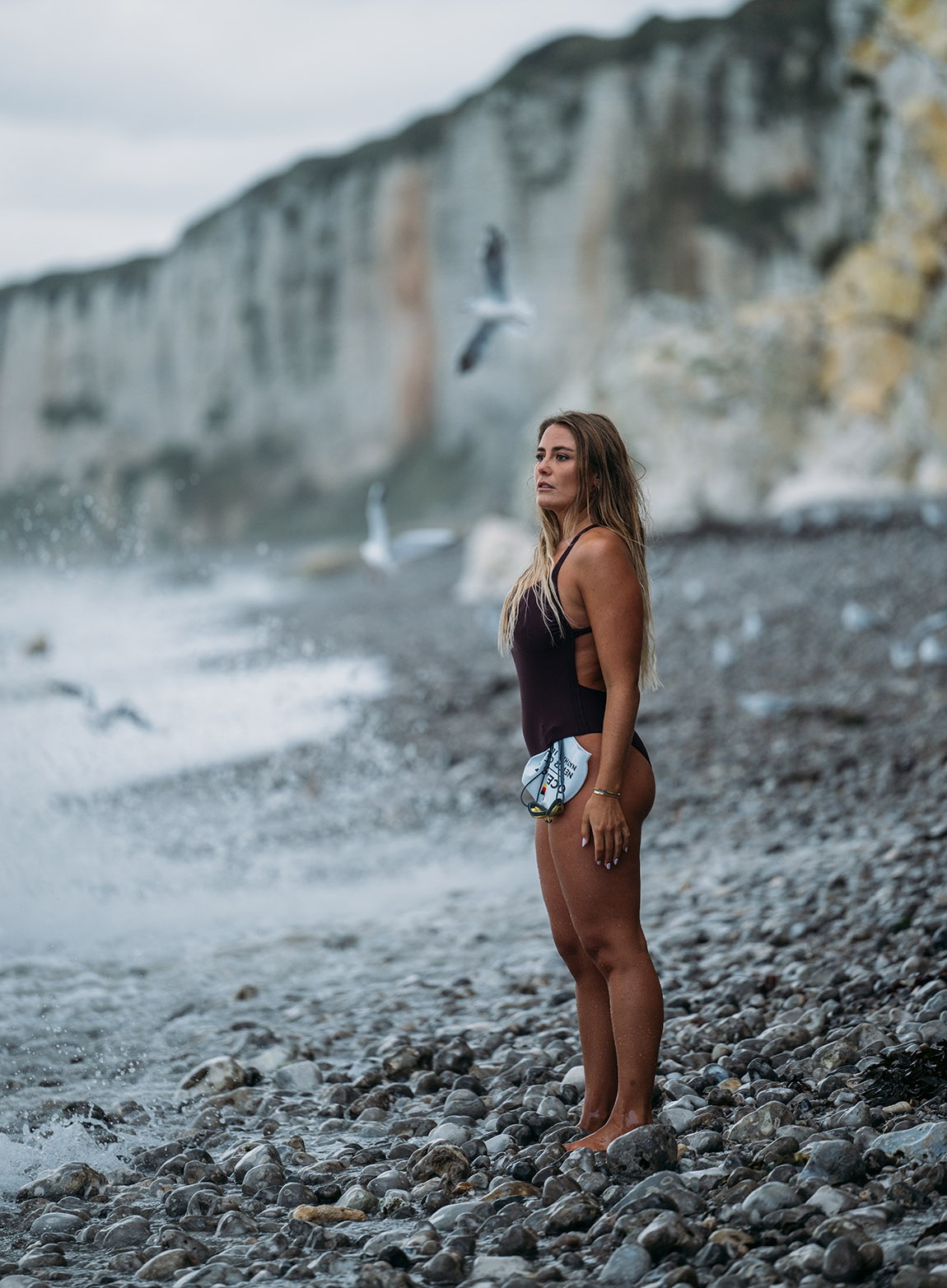
Photo: Anna Heupel
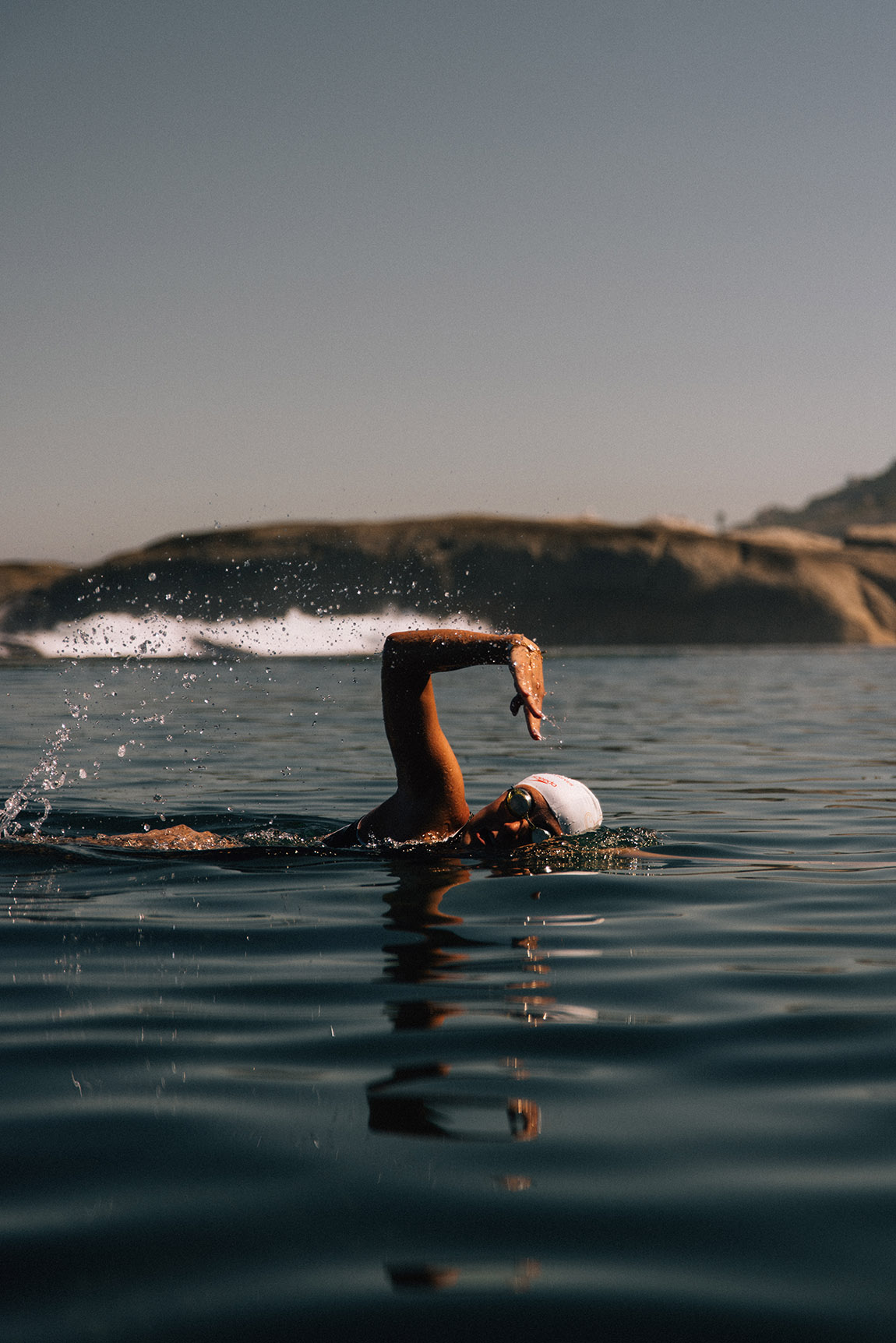
As the first German woman to conquer Oceans Seven, one of the world’s toughest open-water swimming challenges, and tackle a 110-kilometre swim around Ibiza, Nathalie Pohl is Germany’s foremost extreme open-water swimmer. Her world records, passion for water safety, and drive to empower others make her an inspiring force, changing lives both in and out of the water.
The 31-year-old swimmer is, quite simply, a trailblazer. One of those rare individuals who seem to thrive where boundaries exist, only to break through them. Her story is not a neat tale of personal triumphs; it is a mosaic of ambition, warmth, and a deep, genuine urge to make a difference. Spend any time in conversation with her, and it becomes immediately obvious that her passion is infectious and that her targets are not just medals or records. She is out to make waves.
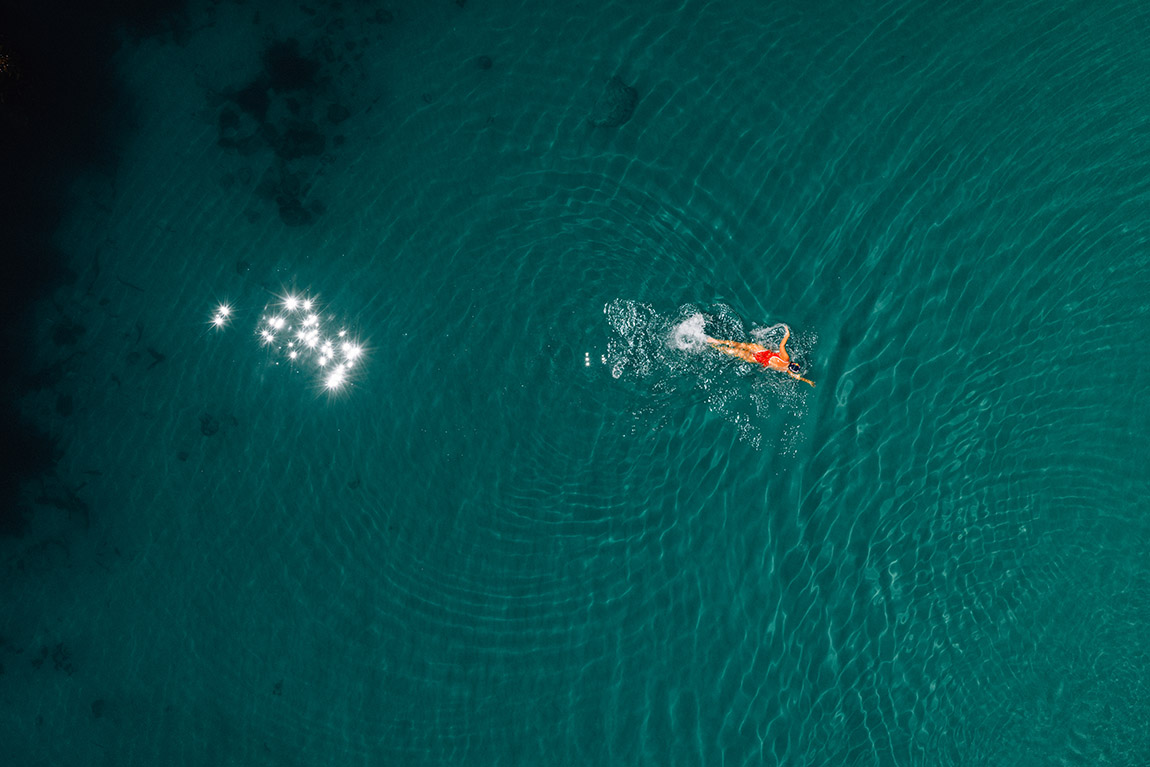
“I never wanted to prove anything to anyone but myself”
Nathalie Pohl’s journey into the world of extreme swimming began in her childhood that was coined by the need for movement and adventure. “I was always a kid who got bored quickly,” she recalls. To break up the monotony of a summer holiday with her family, she joined a swim camp where her passion for swimming took root. “I had so much fun that after the holiday, I joined a swim club in Marburg.”
That early spark ignited a lifelong pursuit; Nathalie soon realised she had a gift for swimming and began training several times a week to compete in races. Her childhood and adolescence were shaped by competitive swimming. Yet, as she grew older, the pressure of school and the demands of competition began to wear on her. “I always told myself that if I stopped enjoying the sport, I’d quit right away, and that was the moment I decided it was time to stop,” she says. It was a pivotal moment; one that could have ended her swimming story. But instead, it became a turning point. Around that time, her parents gifted her extreme swimmer Lynne Cox’s book Swimming to Antarctica. “I really saw myself in her and thought, ‘Wow, why don’t I try that too?’ That’s how my journey into extreme swimming began.”
She dove into research, determining what it would take to swim the English Channel. “I quickly found out I’d need a six-hour qualifying swim in 15°C water,” she recalls. “I found out that that was offered in April on Mallorca. So, I signed up, flew there, and went into the water without a wetsuit because we’re not allowed to wear wetsuits in official events.” The cold was overwhelming and she thought her heart would stop. Nevertheless, she refused to give up. After a night’s sleep, she tried again, this time with a wetsuit, but soon decided to embrace the authentic challenge. Until this day, she never wore one again. “I taught myself cold water training. I think it’s better to teach yourself and make your own experiences, because everyone’s different.”
Her first attempt at the English Channel ended dramatically: weeks in intensive care, and soul-searching about whether she should risk trying again. “I never wanted to prove anything to anyone but myself,” Nathalie explains. The drive to achieve her dream, and the support from her family, kept her moving forward. Soon after, she connected with Adam Walker, the fifth person to complete the Oceans Seven challenge, and started her journey alongside him. “When I finally swam the English Channel a year later, Adam and I started the Oceans Seven journey together. That was the starting point. And now, 11 years later, I’ve accomplished it.”
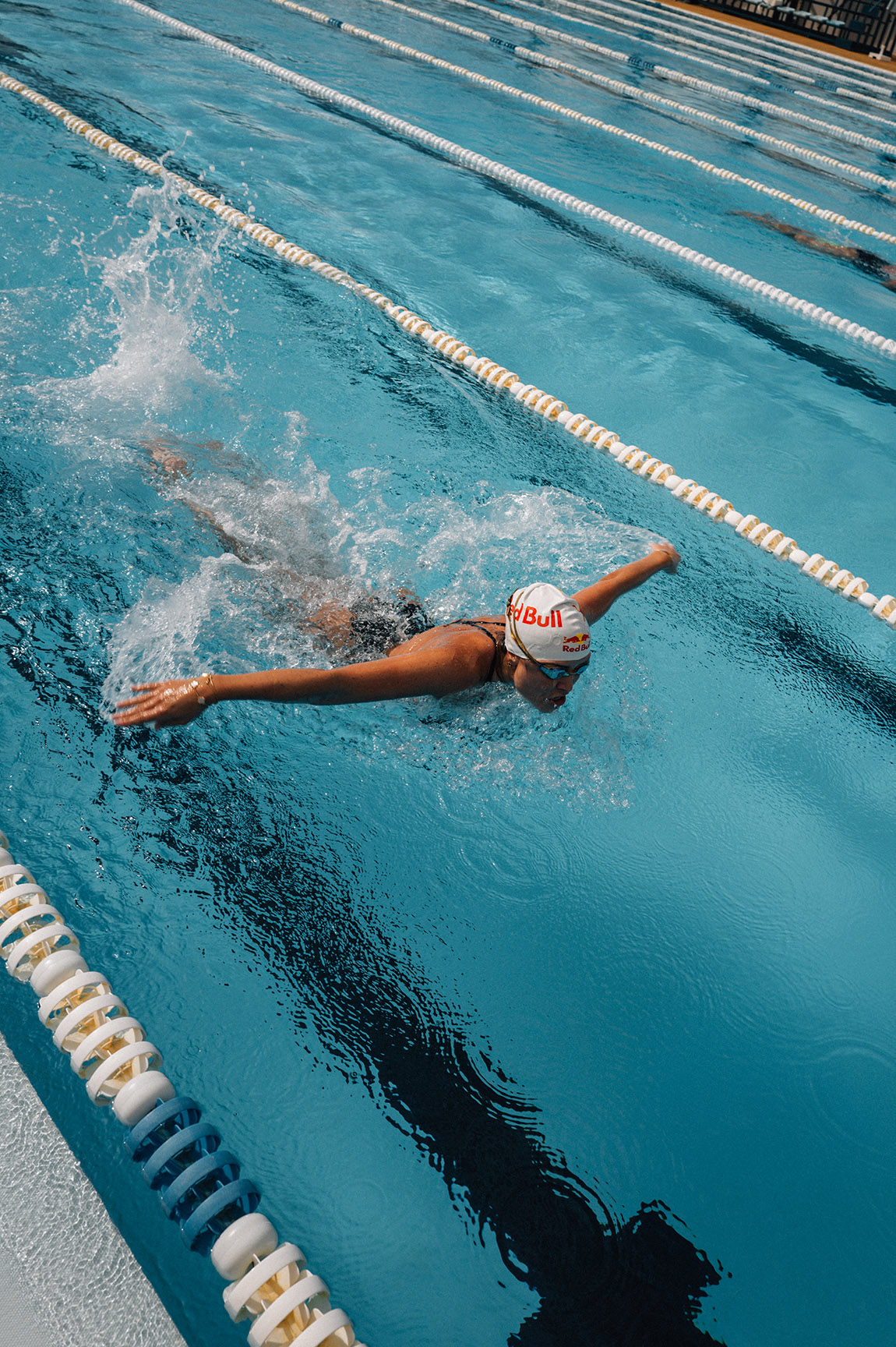
“If you truly want it, you can make it happen”
The Oceans Seven marathon swimming challenge is regarded as one of the most gruelling feats in open-water swimming, involving seven notorious channel swims such as the English Channel and the Cook Strait. Nathalie Pohl managed to complete the challenge in September 2024 as the first German woman to ever to do it. During this challenge, she even achieved a world record for swimming across the Strait of Gibraltar from Spain to Morocco, completing it in just 2 hours and 53 minutes.
Tackling Oceans Seven is, of course, far from straightforward, and Nathalie encountered many obstacles early on, starting in 2019 with her initial Cook Strait attempt in New Zealand. Despite enduring over 11 hours in the water during her first try, she was unable to complete the crossing. A second go in 2020 saw her fall short just before reaching the finish line. These tough moments proved invaluable, teaching her that setbacks are an essential part of progress. In 2023, perseverance paid off when she successfully crossed the Cook Strait in 6 hours and 33 minutes, setting a record as the fastest European woman. Amongst other incredible feats, Nathalie Pohl also circumnavigated Ibiza in 2025. This monumental swim saw her cover 110 kilometres in 30 hours, 57 minutes, and 49 seconds as the first swimmer to achieve a relay non-stop around the island.
But how does one swim for over 30 hours? Besides an arduous training regimen of multiple hours per day, Nathalie says that “the mental factor is huge in this sport.” That unwavering determination surfaced during one of her swims in Scotland. “During the last two hours, my body told me that I couldn’t keep going, but I wanted it so badly. My mind kept giving me flashbacks of everything I’d sacrificed. Somehow, you find new energy, even when you think you have none left. I believe that if you really want to achieve something in your life, if you truly want it, you can make it happen.”
Nathalie Pohl’s experience in the water is defined by mental endurance and an almost meditative state. “During a swim, you don’t really think much,” she explains. “I often find myself in a trance, counting strokes for hours. The only thing that breaks the monotony is getting a warm drink from the boat every 30 minutes, which becomes a small highlight and helps keep me going.”
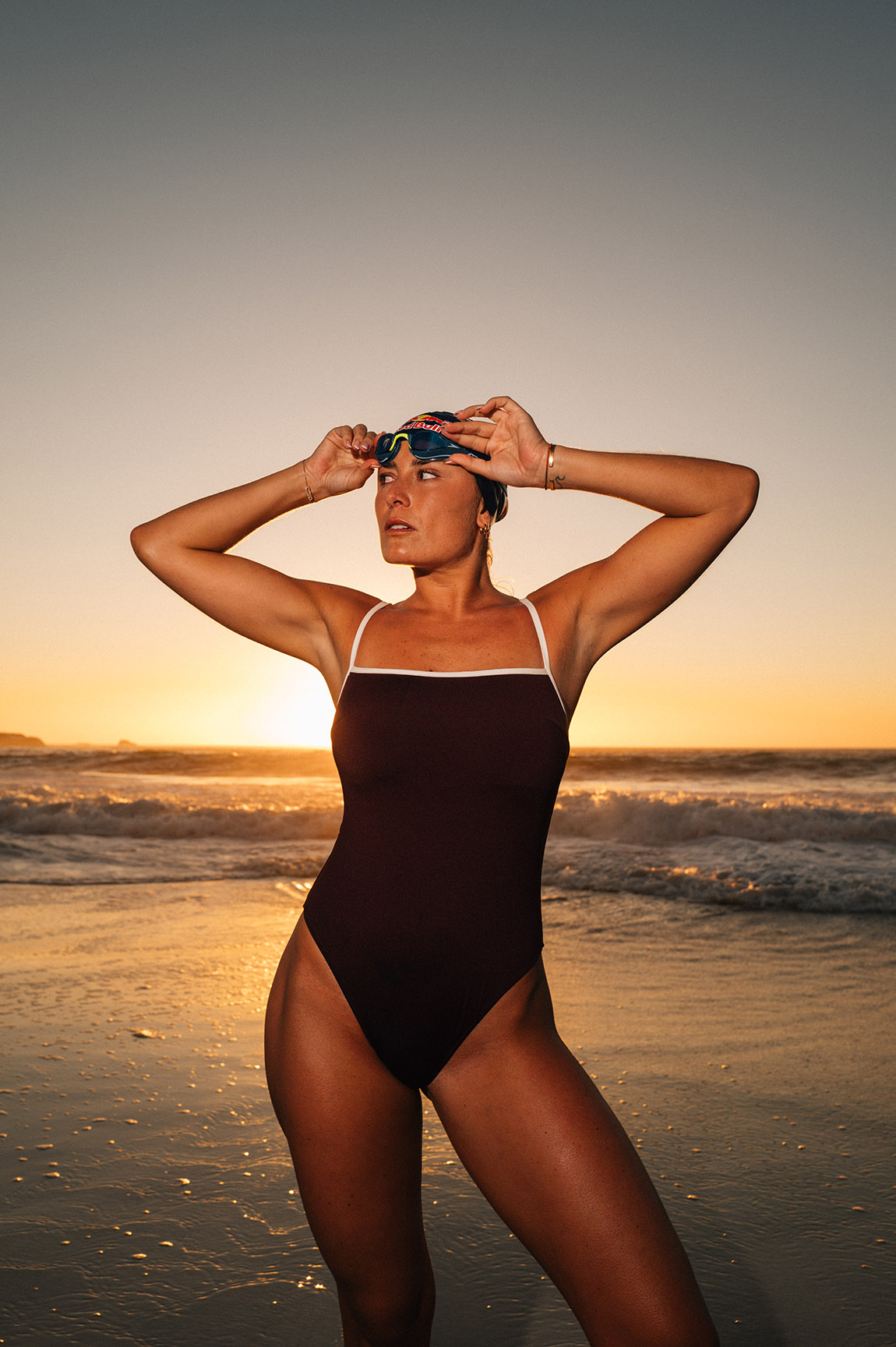
“The cold eventually gets to you”
Open-water swimming presents unique physical dangers, with cold water being Pohl’s greatest adversary. In a competition setting, swimmers aren’t allowed wetsuits so many try to build up body fat for insulation. However, even that isn’t always enough. “The cold eventually gets to you. After one swim in Scotland, my core body temperature dropped to 29.3°C. Some people don’t survive that,” she recalls.
Safety during her swims is always a concern, especially with wildlife. Pohl uses a shark shield – a device that creates a magnetic field – as extra protection. Jellyfish, especially the Portuguese Man o’ War, pose a significant threat, causing pain and paralysis that can last for months. She has been stung herself and remembers: “You have two choices: swim through the pain or get on the boat and end the swim.”
Another factor that is crucial when planning her swims are the elements and their unpredictability. “We plan for months and years beforehand, but currents and weather can change everything,” she explains. “It’s like climbing Everest. You never know if you’ll have a good day or if conditions will turn against you.”
While open-water swimming is often seen as an intensely solitary pursuit, Nathalie Pohl emphasises the critical importance of teamwork. “You really swim until your body stops giving you signals,” she notes, underscoring the need for her team to make crucial decisions during difficult moments. “It sounds silly, but you swim until you sink.” Nathalie never questions her team’s judgment; it is a pact made before every swim, ensuring that she never pushes beyond safe limits. She adds: “You need people who believe in your dream, because you can’t do it alone.”
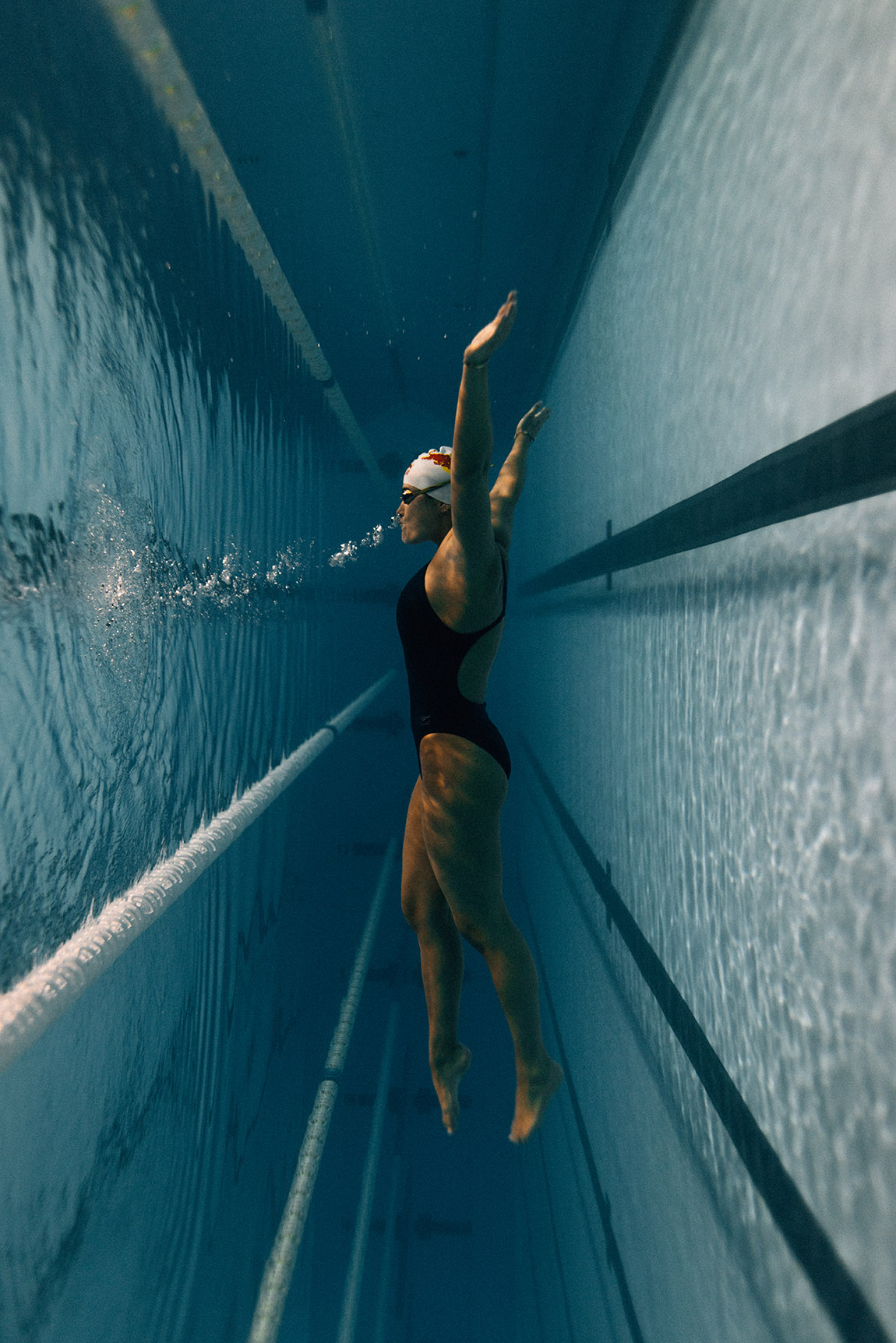
Boundless ambition
Nathalie Pohl inspires people of all ages, now reaching new audiences with her children’s book Nanami – Schwimm Dich Mutig, which encourages kids to be brave and accept help when needed. The book’s positive reception means that a second part is already on the way. Her autobiography, Im Meer Bin Ich Zuhause, explores her relentless Oceans Seven pursuit and setbacks, aiming to inspire others. “If I inspire even one person to dare to pursue their dream, I’ve achieved everything I wanted,” Nathalie shares.
Beyond writing, Nathalie is dedicated to ocean conservation, collaborating with organisations like Sea Shepard to push for positive change. “The seas have really deteriorated – even in my lifetime,” she notes. Her activism extends to helping children learn to swim.
Looking ahead, Nathalie’s ambitions continue to grow. She is preparing to launch a fashion brand and plans a relay across the English Channel this summer, marking the centenary of Gertrude Ederle’s historic swim in 1926. “I’m drawn to projects that no one has done before, that are unique and special,” she explains. “If swimming ever stops being fun, I’ll hang up my swimsuit. But, at the moment, I can’t imagine life without swimming.”


Subscribe to Our Newsletter
Receive our monthly newsletter by email