Kuník de Morsier: “architecture is about community”
TEXT: CORNELIA BRELOWSKI
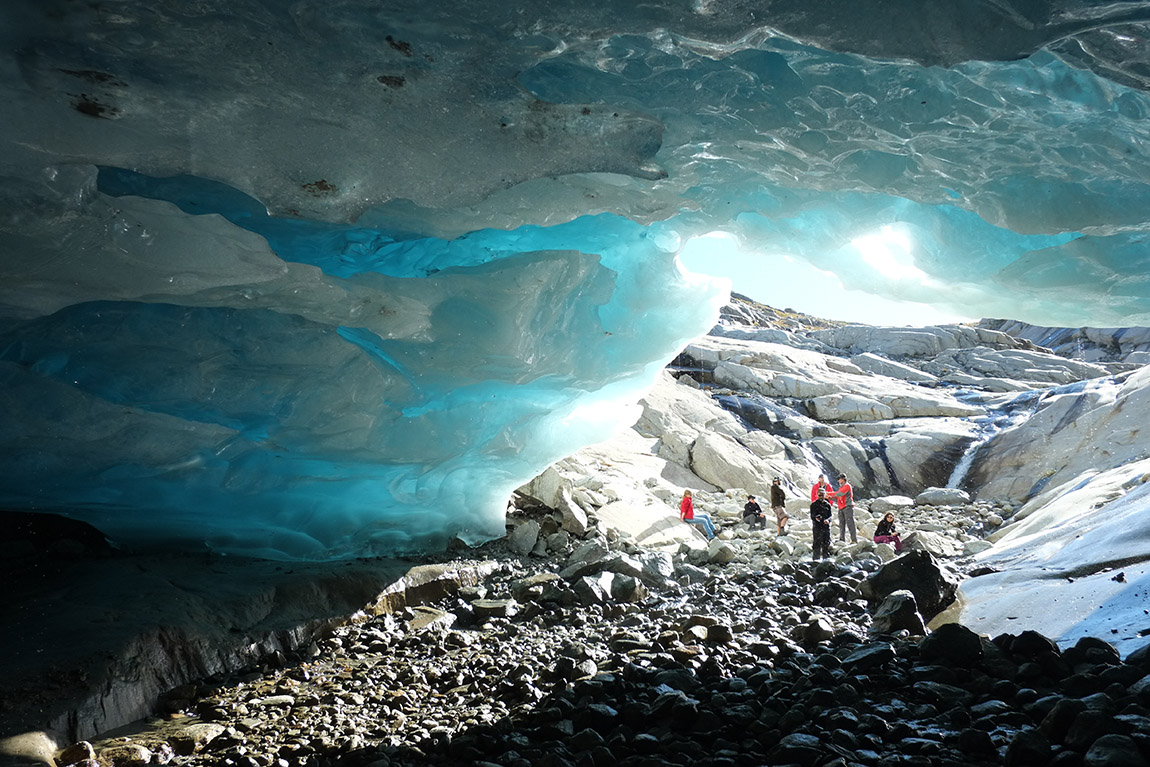
Aletsch Glacier, natural architecture. Photo: Kuník de Morsier architects
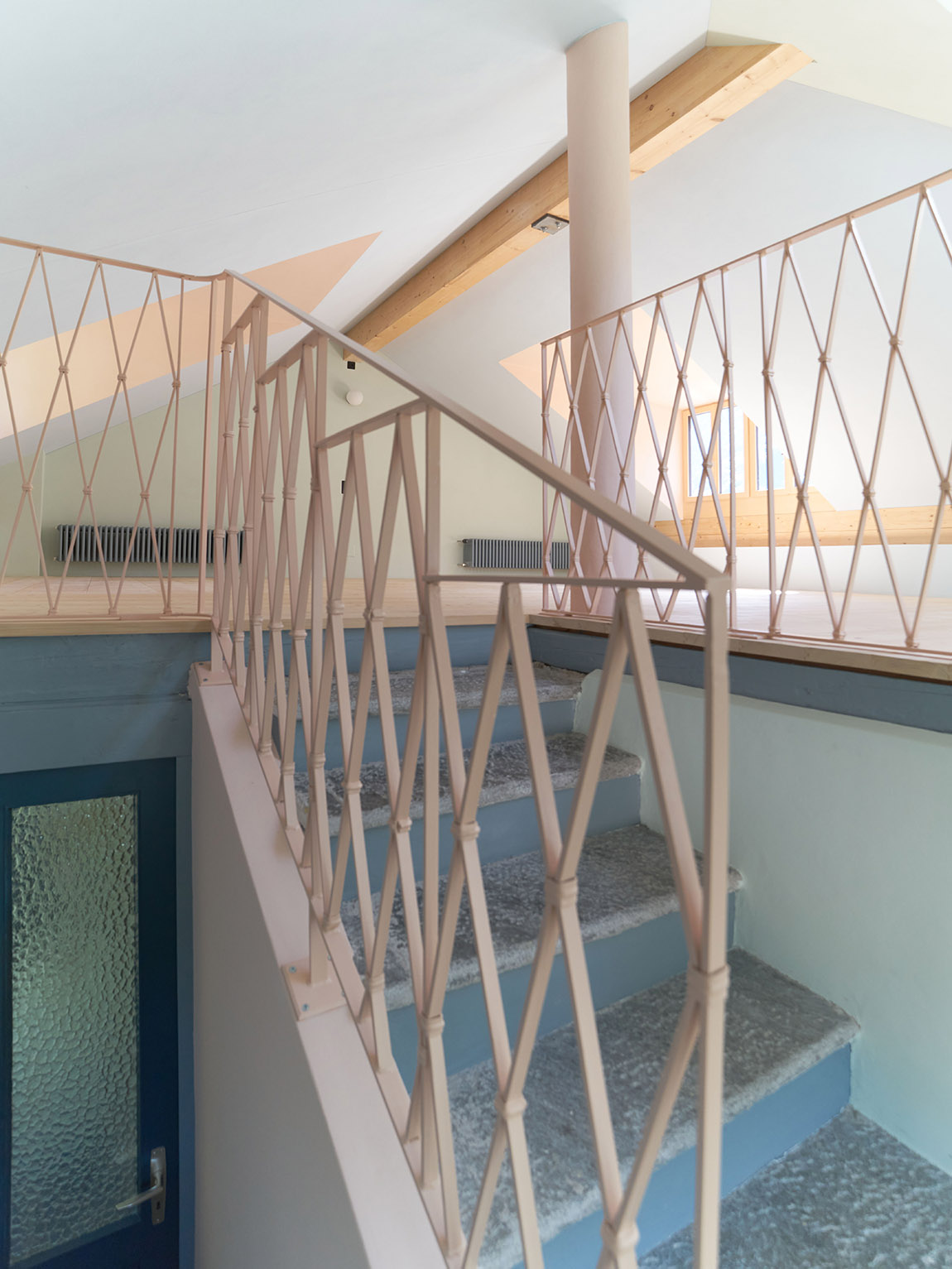
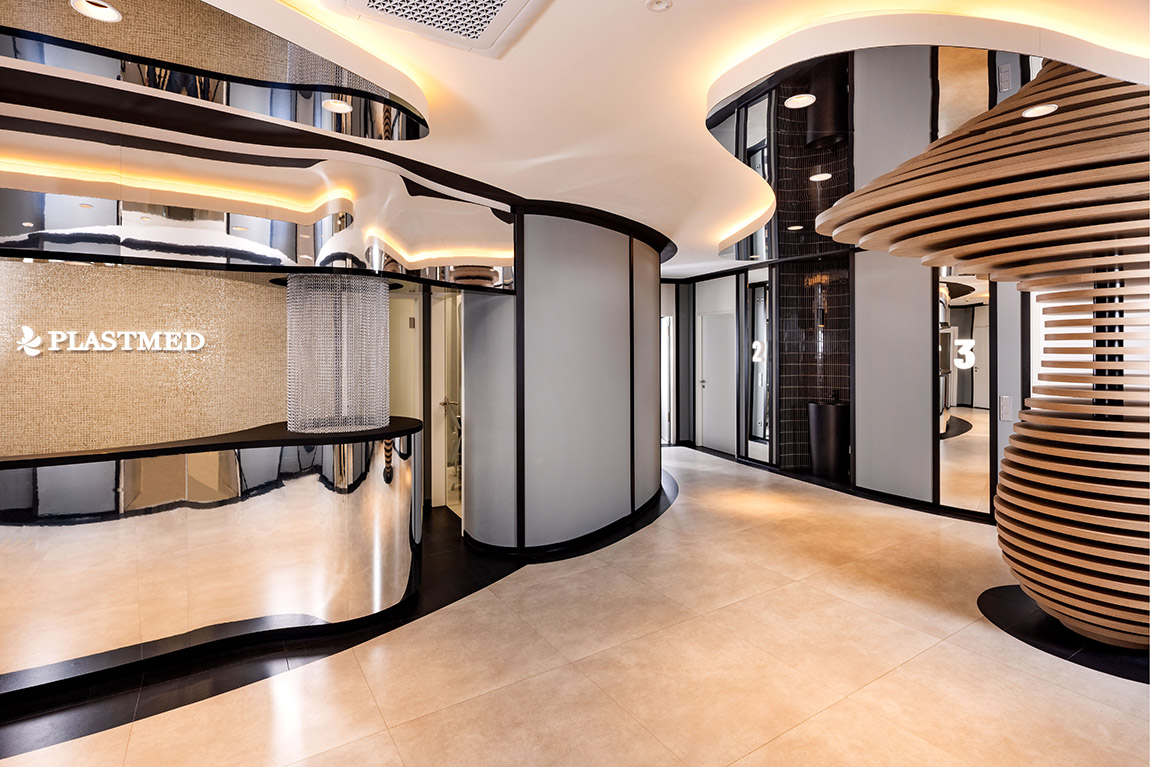
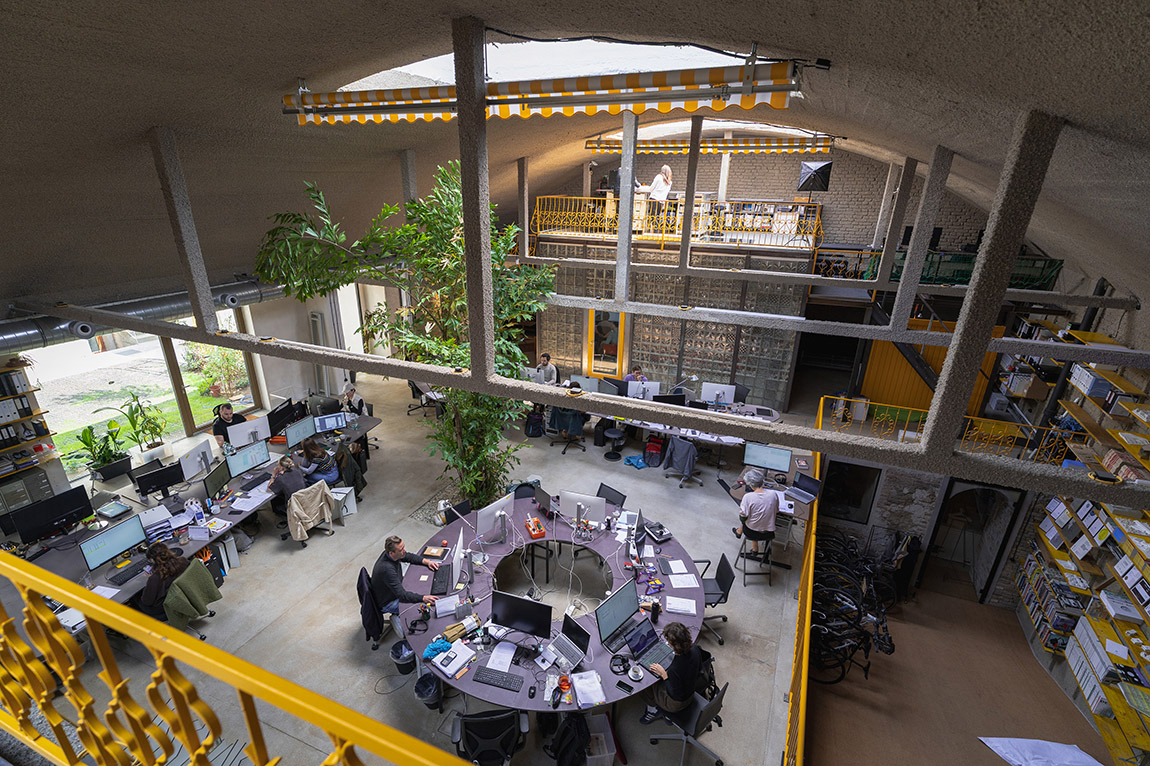
Kuník de Morsier architects focus on experiential architecture – a discipline that translates themes such as community and integration into innovative and unique spatial and construction strategies.
Influenced by geographies and cultural landscapes, the site-specific architecture fosters new relationships between inhabitants and environment. The Swiss office realises architectural projects with extreme sensitivity and curiosity, explains architect and co-founder Guillaume de Morsier: “We are interested in finding the right conditions for living together today – how we share space and its functions. We are also active in the contemporary environmental art scene, which has become a significant part of our identity.”

Aletsch Glacier, natural architecture. Photo: Kuník de Morsier architects
Unconventional and experimental
Setting up the company in 2010, Guillaume de Morsier and Valentin Kuník initiated several projects and research investigating how the built environment interacts with both natural and man-made landscapes. The office was created to experiment with architecture in relation to collectivity, geography and art. “Clients came to us because they were curious about our unconventional approach – and this lead us to work on very special projects from tiny installations through to urban strategies.”
The architects especially like to work in contexts where architecture is apparently absent or hidden. “We believe that architecture is everywhere – where there are people, there is architecture!” In 2024, Kuník de Morsier was certified B Corp, an important step for the company, proving its continuous commitment to designing environmentally and socially engaging projects.
To this end, Valentin and Guillaume are continuously involved in research and academia to keep the office at the forefront of innovation. They teach sustainable architecture, circular construction as well as urban design in the context of ecological transition – currently in Geneva (HEPIA) and Marseille (ENSA-M). Over the years, they have for example conducted research in countries sharing the Mediterranean basin: Kosovo, Albania, Egypt, Algeria, Spain, and France.

Audemars Piguet Manufacture des Saignoles. Photo: Iwan Baan
Kuník de Morsier and Audemars Piguet
In 2017, the architects started working with the Swiss luxury brand Audemars Piguet and designed its new production site in Le Locle, which opened in 2021. Here, Kuník de Morsier designed a new type of building: set horizontally on the hill, the site fits discretely into the landscape marked by the folds of the Jura. Its surroundings create a succession of biotopes which are characteristic of the region, while the contours and materials were chosen to intensify an experience of environment, natural light and the movement of the sun. At the very centre, the industrial crossroad is a Piazza. It is a collective space by and for the community where work and innovation get together and team building can take place.

Audemars Piguet Manufacture des Saignoles. Photo: Iwan Baan
“The site in Le Locle was our first project for a luxury brand,” remembers the architect. “The client was very ambitious and we managed to connect the two worlds of environmental art and industrial architecture.” Apart from geography and art, the design was influenced by the studio’s research in community, resulting in multi-functional spaces that allow using the site for public events. “The idea of community building has remained at the core of our practice.”
The studio has since worked on several projects for the high-end client – most recently in Raleigh, North Carolina, where Audemars Piguet has expanded its North American presence with a new service centre. The next project will be the company’s community hub in the Swiss village of Le Brassus in Vallée de Joux, one of the cradles of Swiss watchmaking.

Le Romandie et La Brèche – Lausanne. Photo: Nicolas Delaroche Studio
A great curiosity about everything
Kuník de Morsier works with a large range of clients, from municipalities and institutions through to corporations. “We enjoy working with industrial firms who want to embed innovation into their buildings,” de Morsier explains: “Usually, we share a great sense of curiosity with them, about everything – and a culture of experimentation.”
In 2026, the Audemars Piguet community hub in Le Brassus will be realised with spaces for kids and childcare, sport and retail, displaying playful architecture and soft geometry. The design will echo the complexity of watchmaking through elements such as complex timber building. Committed to resource protection, the architects will focus on low carbon levels, local timber, and a reuse of concrete for structural elements.
The studio has recently opened a new office in Marseilles and will develop projects in the fields of education and industry, allowing them to extend their competencies regarding regenerative building systems and sustainability. “Furthermore, we are organising an exhibition on water and architecture along the Rhône,” reveals de Morsier. Covering research on the territory of the river from the Swiss Alps to Camargue through to the Mediterranean, the exhibition is designed to provide new images and ideas on how to inhabit this linear 800 kilometre region sharing the same water – a project that will keep the company at the cutting edge of architectural design and research.
Web: www.kdm.archi

Le Romandie et La Brèche – Lausanne. Photo: Nicolas Delaroche Studio
Kuník de Morsier: “Architektur ist Gemeinschaft”
Kuník de Morsier konzentriert sich auf Erfahrungsarchitektur – eine Disziplin, die Themen wie Gemeinschaft und Integration in innovative und einzigartige Raum- und Konstruktionsstrategien umsetzt.
Beeinflusst von Geografien und Kulturlandschaften fördert die ortsspezifische Architektur neue Beziehungen zwischen Bewohnern und Umwelt. Das Schweizer Büro realisiert architektonische Projekte mit großer Sensibilität und Neugier, erklärt der Architekt und Mitgründer Guillaume de Morsier: “Wir sind daran interessiert, die richtigen Bedingungen für das heutige Zusammenleben zu finden – etwa wie wir einen Raum und seine Funktionen teilen. Wir sind auch in der zeitgenössischen Umweltkunstszene aktiv, die zu einem wichtigen Teil unserer Identität geworden ist.”

Kindergarten Vufllens le chateau. Foto: Nicolas Delaroche Studio
Unkonventionell und experimentierfreudig
Mit der Gründung ihres Unternehmens im Jahr 2010 haben Guillaume de Morsier und Valentin Kuník zahlreiche Projekte und Forschungen initiiert, welche die Interaktion der gebauten Umwelt mit natürlichen sowie vom Menschen geschaffenen Landschaften untersuchen. Das Büro wurde vornehmlich geschaffen, um mit Architektur in Bezug auf Kollektivität, Geografie und Kunst zu experimentieren: „Die Kunden kamen zu uns, weil sie neugierig auf unseren unkonventionellen Ansatz waren – und das führte dazu, dass wir an sehr speziellen Projekten arbeiteten, von kleinen Installationen bis hin zu urbanen Strategien.”
Die Architekten arbeiten besonders gern in Kontexten, in denen Architektur scheinbar abwesend oder versteckt ist: „Wir glauben, dass Architektur überall existiert – wo es Menschen gibt, da gibt es auch Architektur!” Im Jahr 2024 erhielten Kuník de Morsier das B Corp-Zertifikat, das ein kontinuierliches Engagement für die Gestaltung von umweltfreundlichen und sozial engagierten Projekten bestätigt – ein wichtiger Meilenstein für das Unternehmen.
Zu diesem Zweck engagieren sich Valentin und Guillaume kontinuierlich in Forschung und Lehre, um das Büro an der Spitze der Innovation zu halten. Sie unterrichten nachhaltige Architektur, kreisförmiges Bauen und Stadtplanung im Kontext des ökologischen Wandels – derzeit sowohl in Genf (HEPIA) als auch in Marseille (ENSA-M). Im Laufe der Jahre haben sie Forschungen u. a. in den Ländern des Mittelmeerraums durchgeführt: Kosovo, Albanien, Ägypten, Algerien, Spanien und Frankreich.

Kindergarten Vufllens le chateau. Foto: Nicolas Delaroche Studio
Kuník de Morsier und Audemars Piguet
2017 begann die Zusammenarbeit des Büros mit der Schweizer Luxusmarke Audemars Piguet mit einer neuen Manufaktur in Le Locle, die 2021 eröffnet wurde. Hierfür entwarfen Kuník de Morsier einen neuen Gebäudetypus: Die Manufaktur liegt horizontal auf einem Hügel und fügt sich unauffällig in die von den Jurafalten geprägte Landschaft ein. Die Außengestaltung schafft eine Abfolge von Biotopen, die für die Region charakteristisch sind, während die Konturen und Materialien so gewählt wurden, dass die Erfahrung der Umgebung, des natürlichen Lichts und der Bewegung der Sonne intensiviert wird. Im Zentrum der industriellen Kreuzung befindet sich eine Piazza. Sie ist ein kollektiver Raum von und für die Gemeinschaft, in dem Arbeit, Innovation, Zusammenkunft und Teambildung stattfinden können.

Audemars Piguet Manufacture Les Saignoles. Foto: Iwan Baan
„Die Manufaktur in Le Locle war unser erstes Projekt für eine Luxusmarke“, erinnert sich de Morsier. „Der Kunde war sehr ehrgeizig und es ist uns gelungen, die beiden Welten Umweltkunst und Industriearchitektur miteinander zu verbinden.“ Neben der Geografie und der Kunst wurde der Entwurf auch von den Forschungsergebnissen des Studios zum Thema Gemeinschaft beeinflusst – was zu multifunktionalen Räumen führte, welche die Nutzung der Manufaktur für öffentliche Veranstaltungen ermöglichen: „Die Idee der Gemeinschaftsbildung ist Kern unserer Praxis geblieben.“
Seitdem hat das Studio an mehreren Projekten für den High-End-Kunden gearbeitet – zuletzt in Raleigh, North Carolina, wo Audemars Piguet seine nordamerikanische Präsenz mit einem neuen Servicecenter erweitert hat. Das nächste Projekt wird das Gemeinschaftszentrum des Unternehmens im Schweizer Dorf Le Brassus im Vallée de Joux, einer der Wiegen der Schweizer Uhrmacherkunst.

Audemars Piguet Manufacture Les Saignoles. Foto: Iwan Baan
Neugier und Innovation
Kuník de Morsier arbeitet für ein breites Spektrum von Kunden, von Gemeinden und Institutionen bis hin zu Unternehmen: „Wir arbeiten gern mit Industrieunternehmen zusammen, die innovative Gebäude wollen“, erklärt de Morsier: „In der Regel teilen wir mit ihnen eine große Neugierde auf alles – und eine Kultur des Experimentierens.“
2026 wird das Audemars Piguet-Gemeinschaftszentrum in Le Brassus mit Räumen für Kinder und Kinderbetreuung, Sport und Einzelhandel anhand verspielter Architektur und weicher Geometrien realisiert werden. Das Design wird die Raffinesse der Uhrmacherei durch Elemente wie den komplexen Holzbau widerspiegeln. Das Büro hat sich zudem auch mit diesem Projekt dem Ressourcenschutz verpflichtet – mit niedrigem Kohlenstoffgehalt, lokalen Hölzern und der Wiederverwendung von Beton für Konstruktionselemente.

Le Romandie et La Brèche – Lausanne. Foto: Nicolas Delaroche Studio
Die Architekten haben vor kurzem ein weiteres Büro in Marseille eröffnet und werden Projekte in den Bereichen Bildung und Industrie entwickeln, um ihre Kompetenzen in Bezug auf regenerative Bausysteme und Nachhaltigkeit zu erweitern. „Wir organisieren außerdem eine Ausstellung über Wasser und Architektur entlang der Rhône“, verrät de Morsier. Die Ausstellung, die sich mit der Erforschung des Flusses von den Schweizer Alpen über die Camargue bis zum Mittelmeer befasst, soll neue Bilder und Ideen für die Bewohnbarkeit dieser linearen, 800 km langen Region, die dasselbe Wasser teilt, liefern – ein Projekt, mit dem sich das Unternehmen weiterhin an der Spitze der architektonischen Gestaltung und Forschung positioniert.

Valentin Kuník (left) und Guillaume de Morsier. Foto: Nicolas Haeni
Web: www.kdm.archi

Subscribe to Our Newsletter
Receive our monthly newsletter by email