Jachen Könz: Architecture as continuity of past and present: new life for historic buildings and in new quarters
TEXT: JESSICA HOLZHAUSEN | PHOTOS: © WALTER MAIR
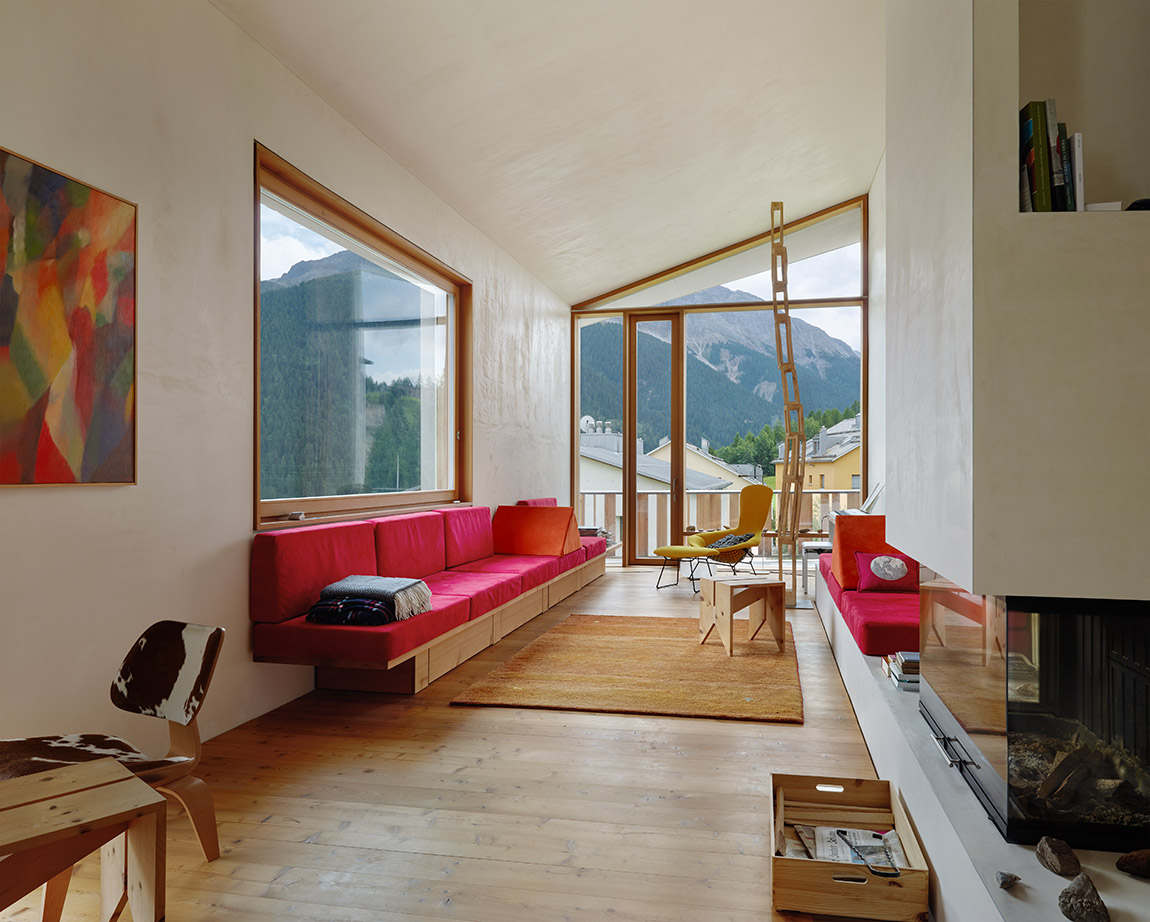
Photo: Zuoz Chesa Mariöl.
Many towns and villages in Switzerland have their own unique features, building styles and history. To work in this environment, architects need to be aware of the context of the buildings they are creating – no matter whether they are giving renewed life to existing buildings or integrating new developments into their surroundings. Lugano-based architect Jachen Könz and his team see buildings as a public act, where the territorial and urban context set the theme for a project.
Jachen Könz’s architectural approach combines several aspects. He highlights ‘Genius Loci’ as an important factor – that is, the place, the context, and the relationship of buildings to urban and natural landscapes. The private and public space also influence the style, especially when building on a site where the architect has to work with pre-existing structures. Born and grown in Ardez, in the Swiss Engadin, Jachen Könz studied architecture in Zurich and Lausanne and has worked in Germany, Barcelona and Bellinzone. In 1992, he founded his own studio in Lugano. His work often brings him back to his roots: the beauty of the Swiss mountains in Engadin, where he realised several buildings, creating new living spaces in close connection to the history of towns and villages.

Photo: Zuoz Chesa Mariöl.

Photo: Zuoz Chesa Mariöl.
Structure, construction, and materiality as core values
“Having an old building structure can be a help, like having a partner: the goal is not to invent everything anew, but to react to a presence,” explains architect Jachen Könz. Of course, the quality of existing buildings plays an important role when approaching a new project. One of the projects Könz and his team have been working on in recent years is Chesa Cotschna S-chanf, a traditional Engadin farmhouse – composed of a part for living and a stable with a hay barn under one roof – situated in the centre of the village.

S-chanf Chesa Cotschna. Photo: J. Könz
“It’s important to understand the location and connect it with an updated reality, to transfer it. Interestingly, the opposite of old and new is often an enrichment and can lead to a re-evaluation, a dialogue,” says Könz. This needs critical thinking and the will for a new interpretation of a building’s lived history.

Photo: Zuoz Chesa Mariöl.

Photo: Zuoz Chesa Mariöl.
New life for a traditional farm while honouring the original features
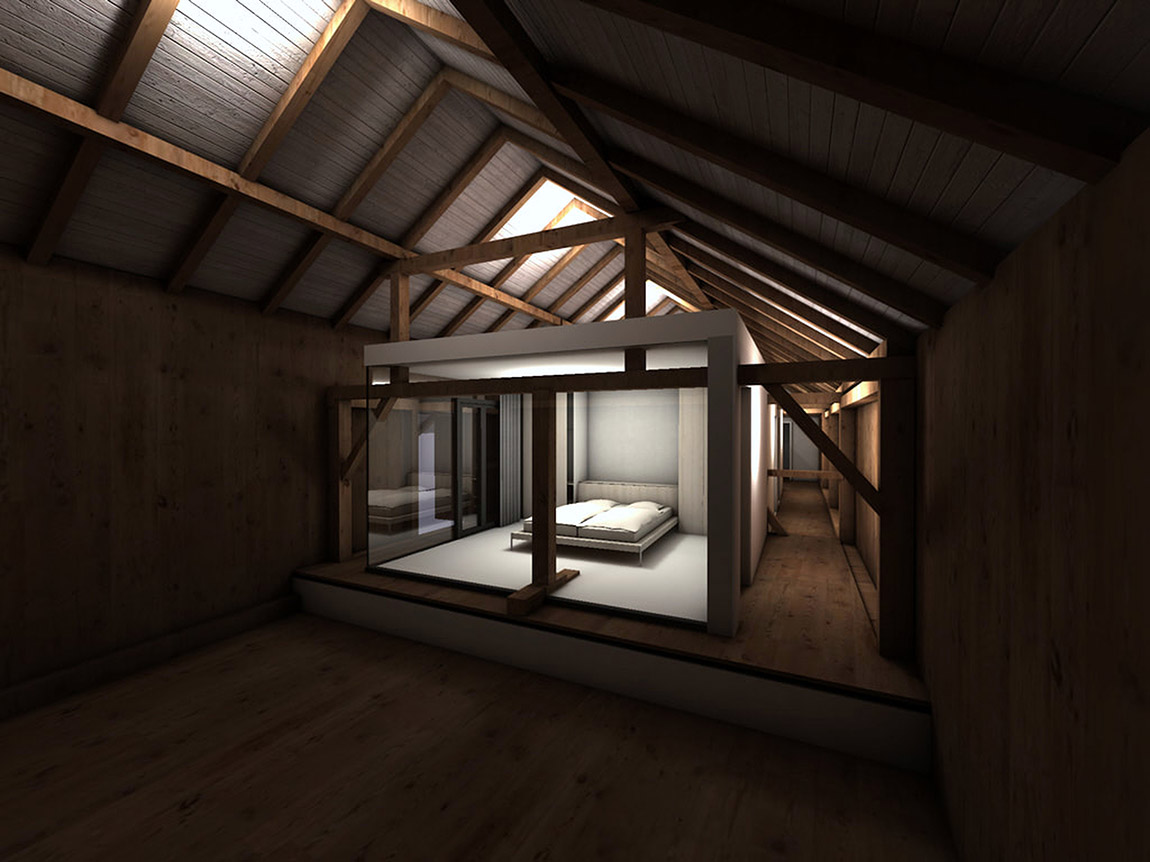
In Chesa Cotschna, using local plain wood, the architects skilfully integrated a new design into the old structures and features that are typical for a farmhouse of this kind. The farmhouse had been refurbished before, which proved to be an additional challenge.
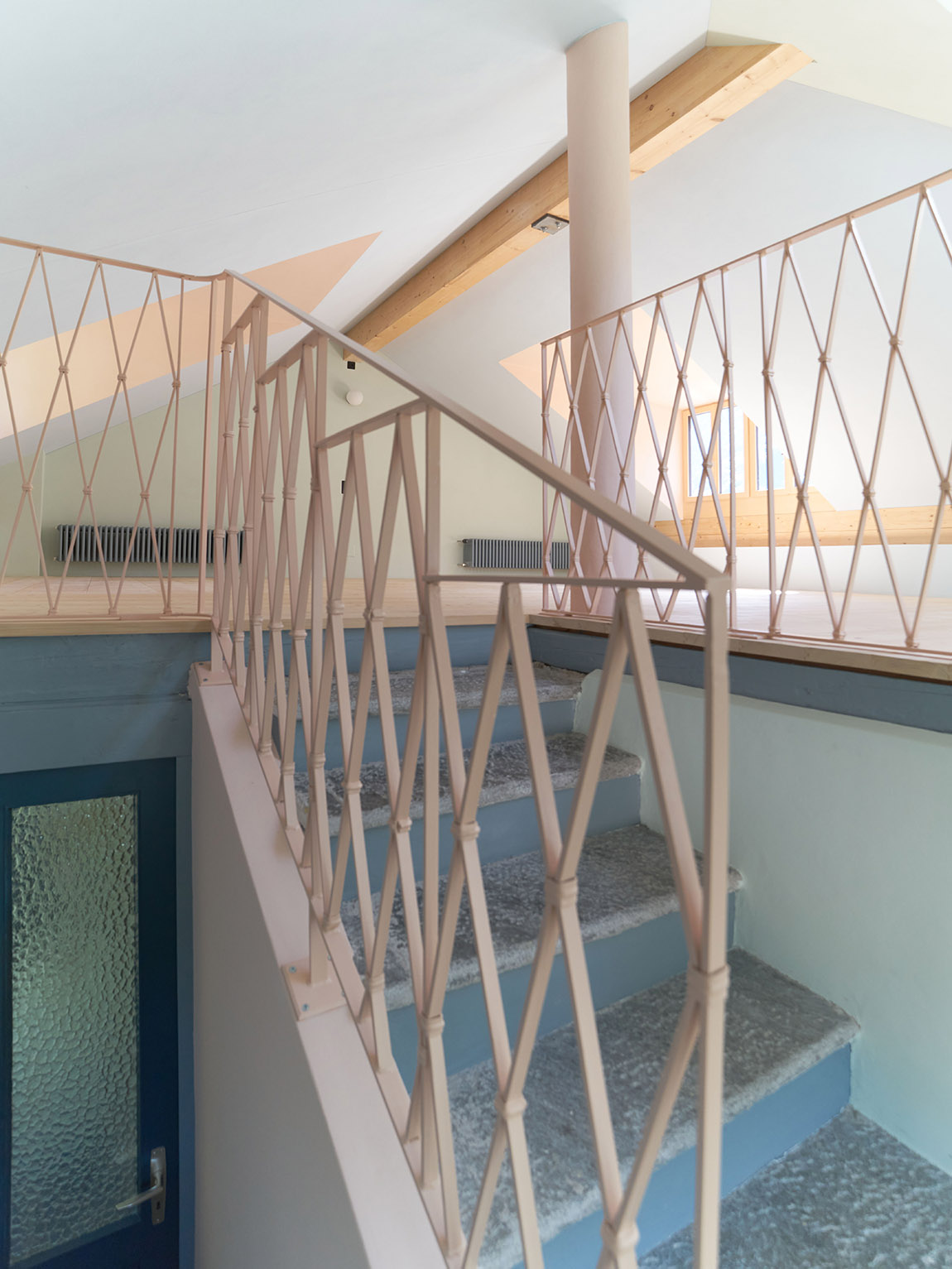
The refurbishment and renovation took place in three steps: first the architects created a new staircase as a central element between the former living quarters and the barn. The only intervention in the façade is a new large panorama window that helped create a new space for the staircase. Previous refurbishments were removed from the lounge and the upstairs bedrooms, before giving them a new and refreshed life. In a second step, three bedrooms were added to the top floor of the barn, before the barn itself was converted into a spacious living area with an additional en-suite bedroom.

S-chanf Chesa Cotschna. Photo: J. Könz

S-chanf Chesa Cotschna. Photo: J. Könz

S-chanf Chesa Cotschna. Photo: J. Könz
Modernising structures with an understanding for culture, use and history
Another revitalising project, Chesa Mariöl Sur in Zuoz, the first building of a quarter, came with additional challenges, since it involved the integration of a new building into a historic village centre with its specific Swiss characteristics. Zuoz has one of the most important historic village centres in all of Engadin, with a market place on an incline surrounded by Engadin houses, typical for the area. Here, two roads cross – Talstrasse and Bergstrasse – structuring the whole village and leading downhill towards another village square. Not far from here, at the edge of Zuoz, lies Chesa Mariöl Sur, where Jachen Könz and his team built a new development that takes old structures into consideration.

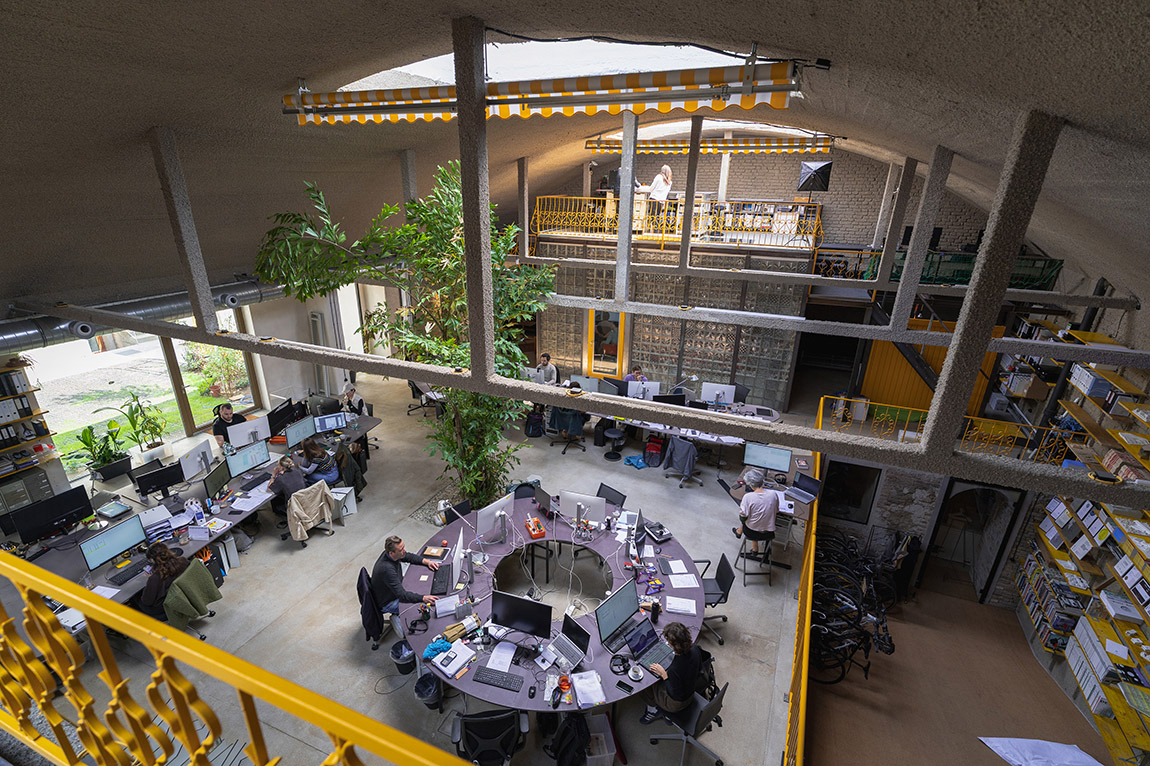
Photo: Lugano via Bertoni.
Initially, the goal was to understand the old village centre in its structure and spatial nature. “After that, it was important to consider which aspects should be further pursued and adjusted to modern requirements,” explains the architect. This included form, functionality and typology and means more than just formally using and adopting existing structures. “The biggest challenge today is to create a public space that includes everyone and not to solely focus on one individual need, on one necessity.” The Chesa Mariöl therefore has two sides and purposes: facing the road, it creates a continuity of other buildings in the public sphere, and towards the back it provides a private space and garden for residents.

Photo: Lugano via Bertoni.
Combining modern and traditional building materials and spatial ideas
Like Chesa Cotschna, the new building S-chanf takes inspiration from the traditional Engadin building style, with 265 square metres of open plan living combined with private rooms in two intimate, introvert wooden cores. The interior is reflected in the exterior, where large panorama windows reflect the open plan living room, while smaller windows provide the same intimacy as the rooms in the rest of the house. The building materials are a combination of modern and traditional as well, with walls in white concrete and larch wood floors. Walls, floors and ceilings in the bedroom are made from Swiss pine, another local building material.
Naturally, the well-being of future residents should never be overlooked in a building’s design. Residents’ needs are at the heart of every building project. This includes working in a historic structure, and of course also when creating new buildings with different uses.

Photo: Lugano via Bertoni.
From kindergarten to modern housing – the appeal of working on a variety of projects
“One of the greatest appeals of working as an architect is to question humans’ different life functions in society and to give these a new form at different places,” says Jachen Könz about his work. “Every task is a new challenge, a new opportunity. Every task needs its own form.” For Jachen Könz, every new task is additionally determined by its context. “The appeal comes from the challenge to develop and tell a new story. As an architect, you’re an intellectual with a pencil.” In this context he refers to two projects: a kindergarten in Morbio Inferio and a new house in Lugano, a three-generation vertical building with some duplex apartments on a tiny plot – both projects with their own geographic and cultural context, which allow different spatial and formal approaches, “less determined by continuity but as a free expression.” The mild climate in the region also offered new opportunities for a more open space.

Morbio Inferiore Kindergarden.
The kindergarten, for example, is structured around two inner courtyards, the building covered by a large roof as a continuous space, designed by the serial superimposed application of wooden beams. The building is arranged on one single floor with an open space, modulated by half-height furniture, ideal for children as main users. In addition, the building is energetically autonomous, making it an ideal new structure for a modern future.

Morbio Inferiore Kindergarden.
Architecture: more than new inventions, the cultural context is of importance
In conclusion, architect Jachen Könz asks and answers an important question: “is it all about new inventions? Does architecture always have to be something special, something new?” Yes and no, or as Jachen Könz says; “yes, but.” New requirements and new technological possibilities allow for new developments, at the same time architects need to take the existing context into consideration, the urban and natural characteristics of its neighbourhood.
“Here lies the difficulty and the challenge. Architecture should renew and at the same time it’s a humble conversation with the existing,” Jachen Könz explains. Existing structures not only tell stories and a history, they also reflect the previous use of materials and climatic conditions, which is useful information for future buildings. The cultural context – that is the ultimate guideline for architects who want to successfully work in the built environment.

Photo: Lugano via Bertoni.
Web: www.koenz.ch

Subscribe to Our Newsletter
Receive our monthly newsletter by email