When the cows come home
TEXT: NANE STEINHOFF
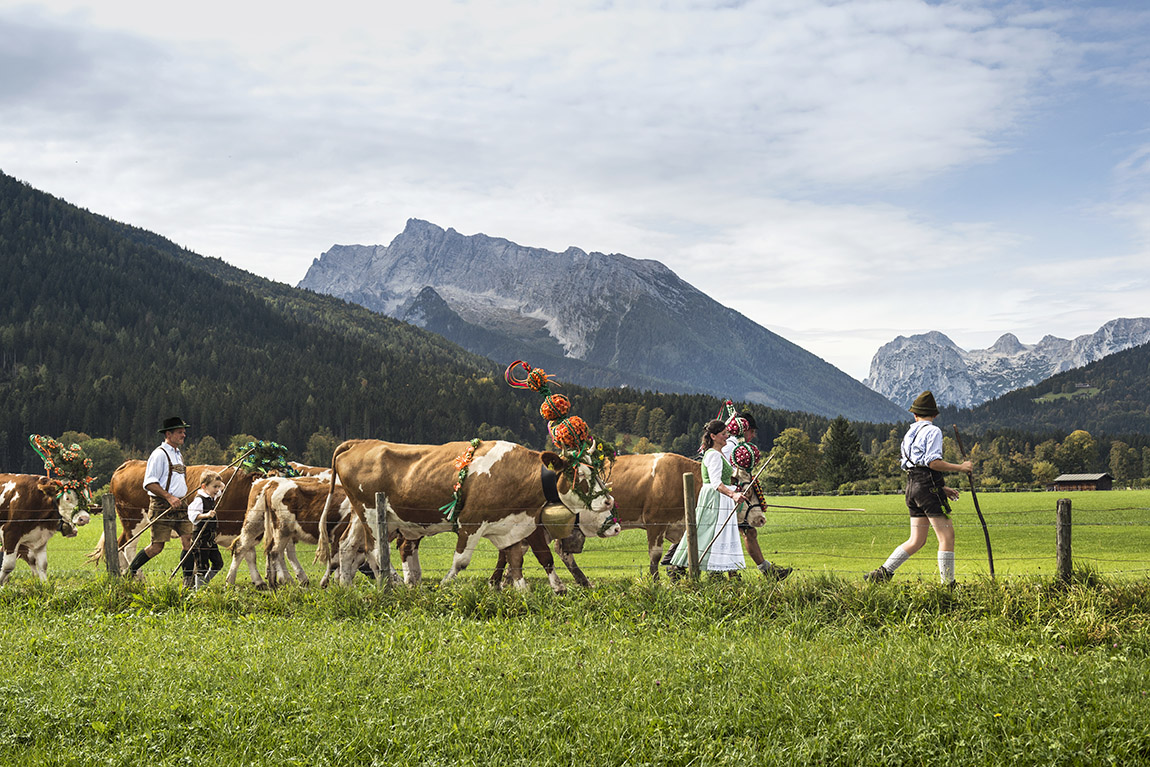
Berchtesgaden: Cows and shepherds come back from Saletalm in Bavaria. Photo: Bildarchiv Bayern Tourismus/ erlebe.bayern – Peter von Felbert
By late September, Alpine villages across Austria, Germany and Switzerland begin preparing for one of the region’s most visible seasonal rituals. Cattle that have spent the summer grazing on high pastures are brought back to the valleys before winter. The descent is practical work, but it has become a statement about farming, landscape and continuity in the Alps, as well as a touristic spectacle.
Known in Austria and much of southern Germany as Almabtrieb, in Bavaria’s Allgäu as Viehscheid, and in Switzerland as Alpabzug or Désalpe, the event marks the end of the grazing season. In some villages, it is a modest farm routine. In others, it is a full on festival with decorated cattle, music, food stalls and crowds lining the streets.
The timing is not fixed by the calendar alone. Weather, pasture conditions, snow, herd health and local custom all matter. But the main season falls from late September into early October, especially in Tyrol, Vorarlberg, the Salzburgerland region, Upper Bavaria, Allgäu, Appenzell and Bernese Oberland. While visitors see a carefully scheduled procession, farmers see the final stage of a working year.
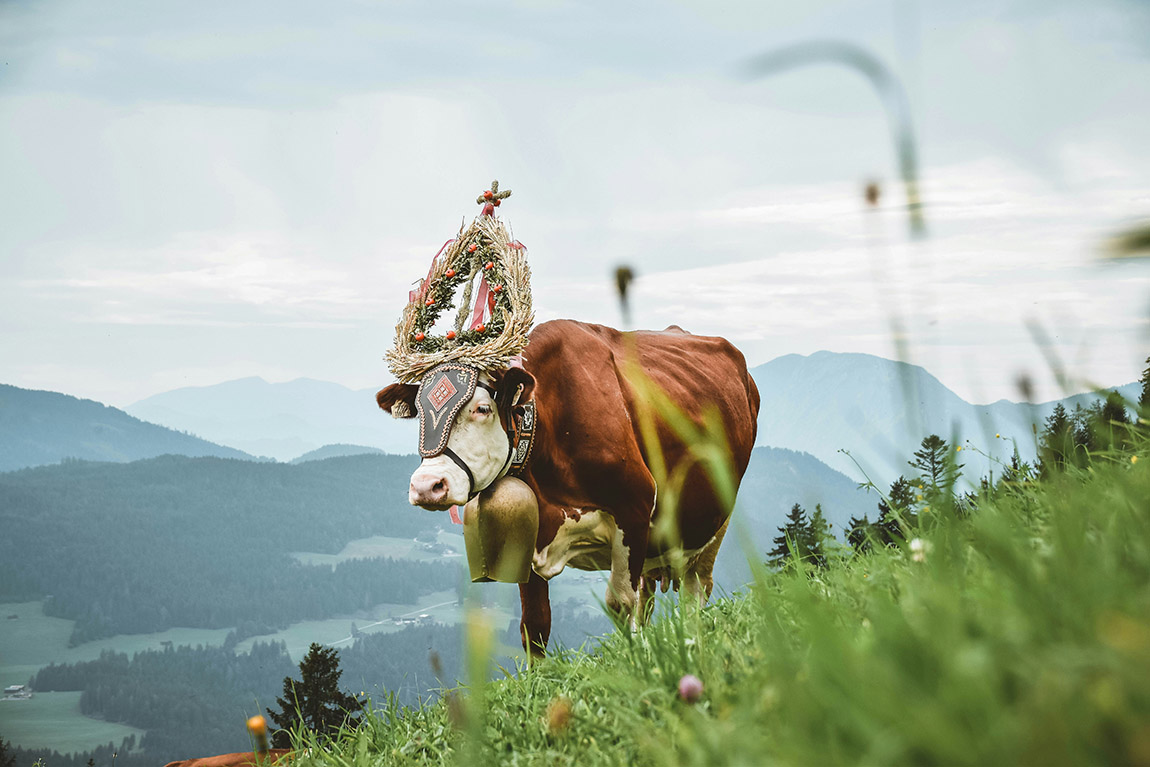
A cow ready to leave its summer pasture in Westendorf, Austria. Photo: Stephan Seeber, Unsplash
When the animals return safely, many communities decorate them. The flowers, ribbons and bells are not only there to look attractive. They mark a good summer on the mountain. The elaborate headpieces, often made with fir, flowers, ribbons, mirrors or religious images, are traditionally used when the herd has come back without serious loss or injury.
In Allgäu, the term Viehscheid refers to the sorting of animals after their descent. Cattle from several owners may have grazed together during summer; once back in the village, they are separated and returned to their farms. The public celebration sits on top of this practical task. There may be brass music, local cheese, beer and market stalls, but the day still depends on farmers moving large animals safely through crowded streets.
The first sign is usually the bells. Their uneven rhythm carries through narrow streets before the herd appears. In villages such as Reith im Alpbachtal, Oberstdorf or Appenzell, the procession can draw large crowds, but the choreography remains agricultural rather than theatrical. Farmers keep the animals moving; spectators are expected to give them space.
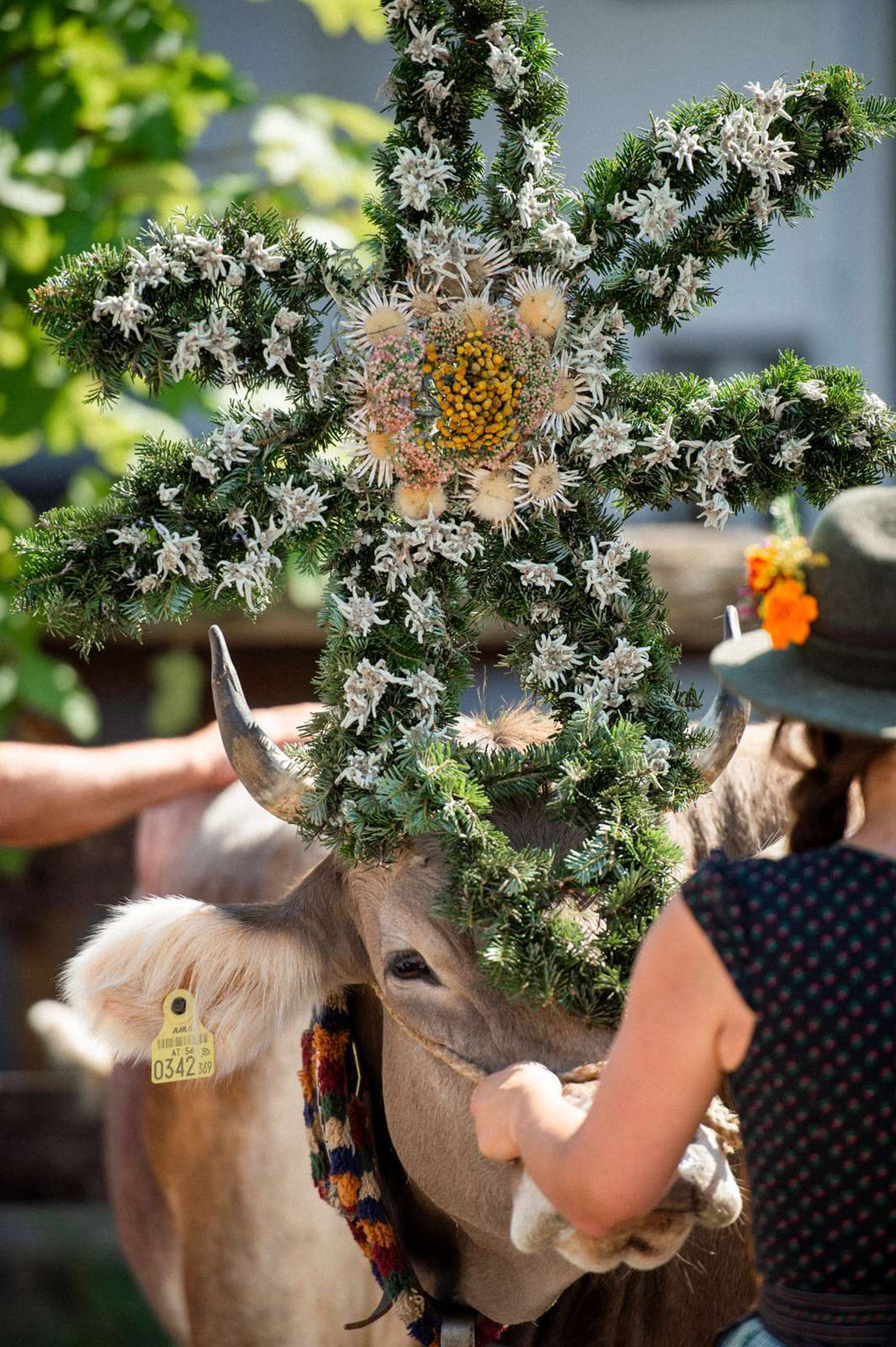
A cow during the Alpine cattle drive in Tyrol. Photo: Tiroler Zugspitz Arena, photographer: Bianca McCarty
In Appenzell, the Swiss Alpabzug is known for formal dress, strong visual codes and carefully arranged bells. Even there, the public side of the event comes after the work. Before the procession there is a long season of grazing, milking, cheese-making, changing weather and the responsibility of bringing animals down safely.
Across the DACH region, the custom also shows how Alpine culture crosses national borders. The names change, dialects change and local costumes vary, but the basic pattern is shared. Livestock move up to high pastures in summer and return before winter. The system uses altitude, grass and seasonal timing efficiently; the ceremony gives that cycle a public form.
For travellers, Almabtrieb is easy to romanticise: cows in flowers, beer tents and a straightforward photo opportunity. A better approach is to treat it as a living farm tradition. Arrive early, follow local guidance, stay clear of the animals and buy food from regional producers. The most rewarding view is not necessarily from the front row, but from understanding what the day represents.
There are wider pressures behind the garlands. Alpine villages are dealing with overtourism, climate change, labour shortages and changing views of farming. Traditions such as Almabtrieb now have to mean several things at once: they need to remain credible for locals, understandable for visitors and practical for the people who still do the work. Warmer weather may shift grazing seasons. Predators returning to some Alpine regions can complicate pastoral routines. Young farmers also have to balance inherited customs with the demands of modern farm life. The emotional pull is still strong. For many people, the sound of the bells and the return of the herds signal the start of autumn. That is one reason the custom still matters beyond tourism. It gives a community a shared marker of seasonal change.
And, ultimately, that is Almabtrieb’s real value. It is not a staged version of Alpine life, but a visible link between farming, landscape and community. At the end of September and beginning of October, the decorated cattle do more than draw crowds. They make a working system public for a short time, reminding visitors that the Alps are not only scenery. They are managed, grazed and lived in.
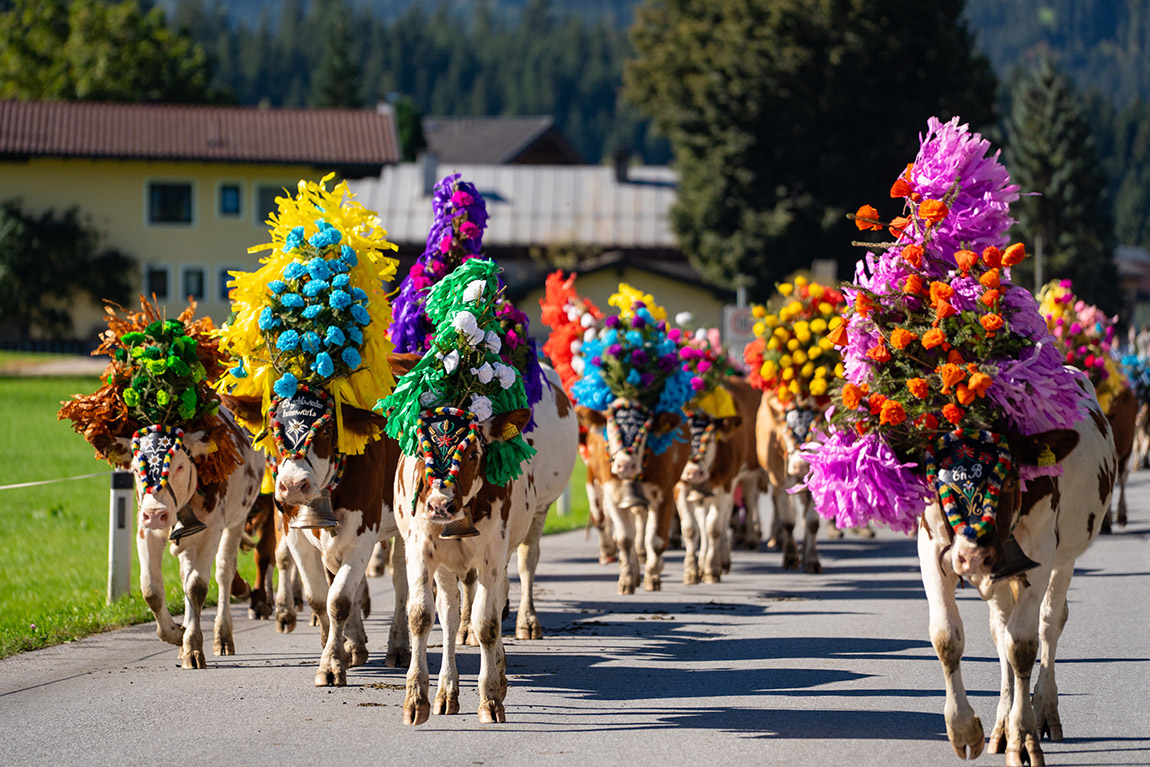
The cattle drive in Westendorf, Austria. Photo: TVB Kitzbüheler Alpen-Brixental, photographer: Licht& Motiv Media


Subscribe to Our Newsletter
Receive our monthly newsletter by email