400 years of the Reeperbahn: Hamburg’s most famous street
TEXT: WIBKE CARTER
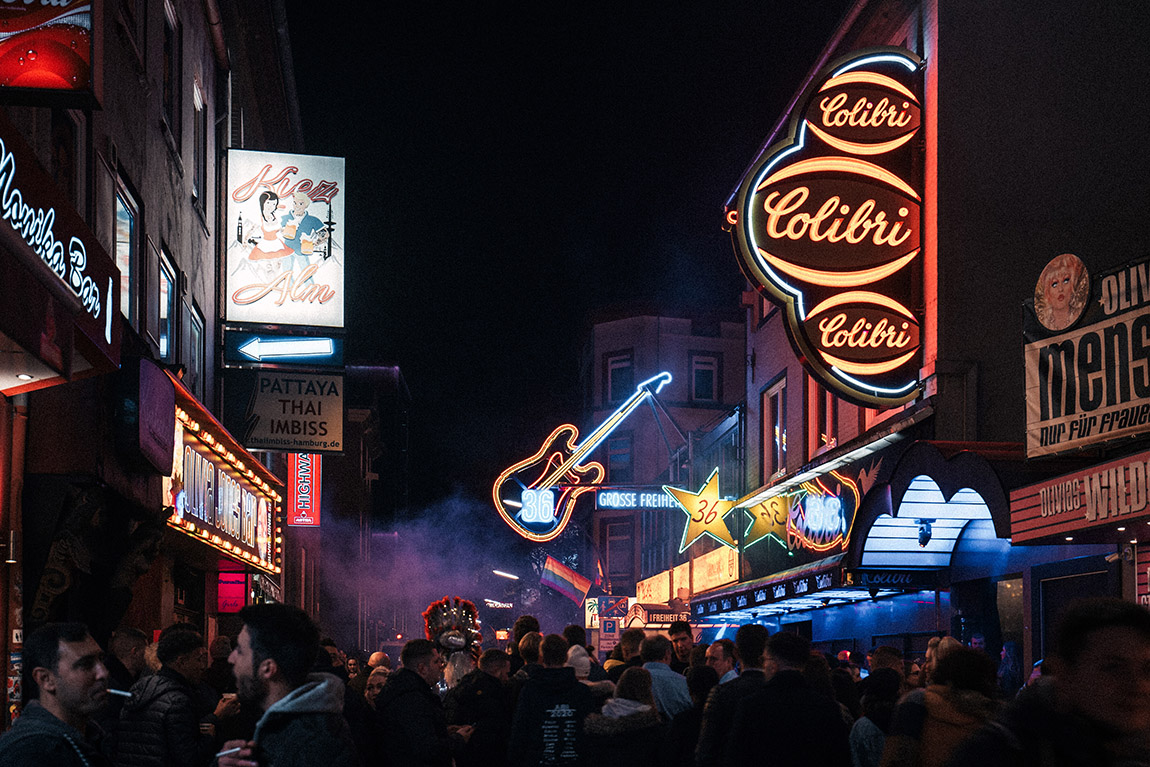
Reeperbahn Grosse Freiheit 36. Photo: Konstantin Beck
Few streets in the world carry as much mythology as the Reeperbahn. It conjures images of neon-lit clubs, the Beatles and the restless energy of a port city that never sleeps. In 2026, its story from ropemakers to rock ‘n’ roll is in the limelight.
“The word Reeperbahn comes from the Low German Reep, meaning rope, and the craftsmen known as Reepschläger (rope makers) who gave the street its name,” explains historian and tour guide Eva Decker. “Producing ropes for Hamburg’s merchant fleet required long, straight lanes hundreds of metres in length, along which craftsmen walked backwards twisting fibres by hand.” By the early 17th century, Hamburg was expanding its defensive fortifications and needed space within the city walls. The rope makers were pushed outside the city boundaries along with innkeepers, prostitutes, entertainers and anyone else deemed inconvenient or undesirable. Historical records show that the move lasted a couple of years, from 1624 until 1626.
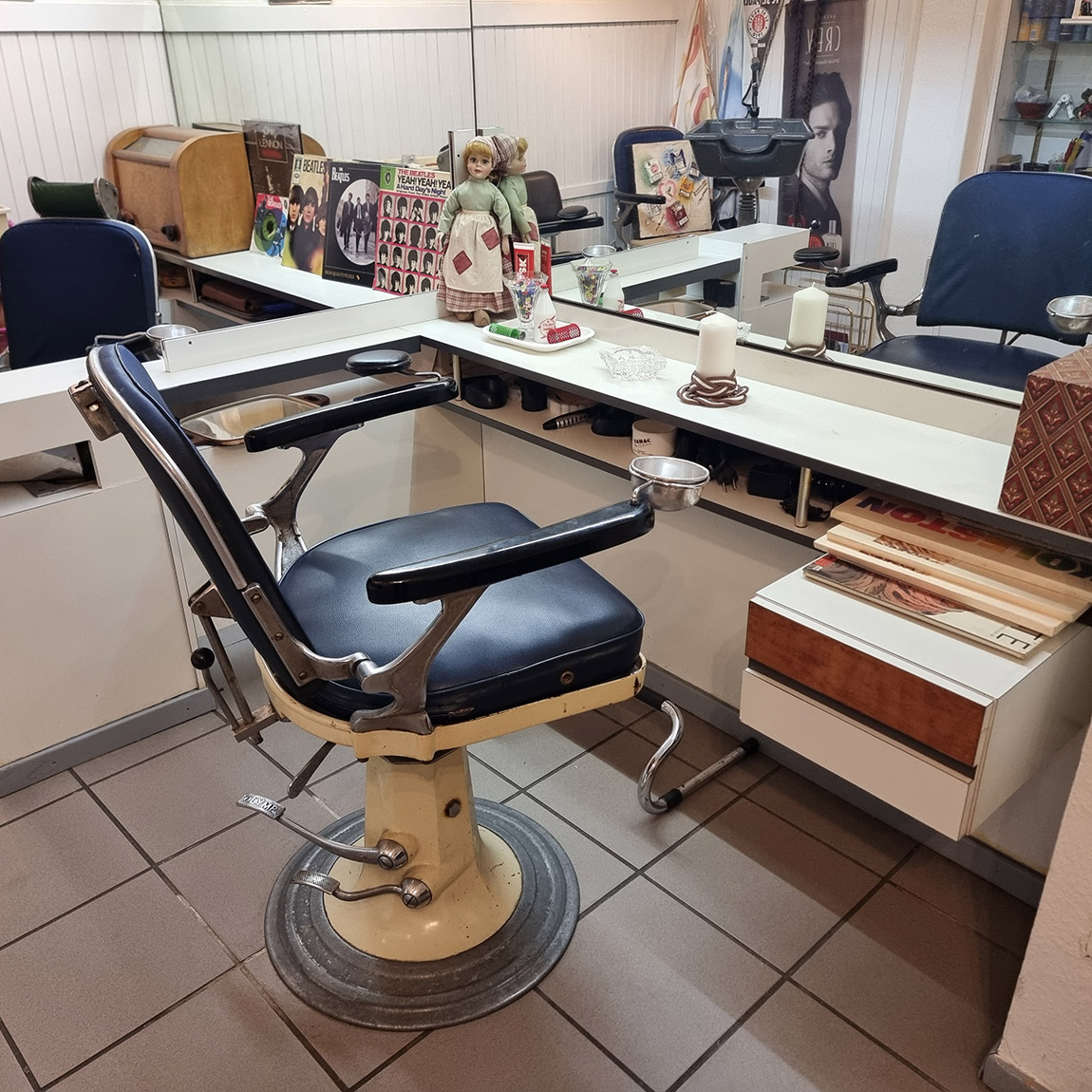
The original hairdresser, Harrys Salon, where the Beatles got their mop-top. Photo: Wibke Carter
From workshop to pleasure district
The suburb outside Hamburg’s walls, known as Hamburger Berg until it was renamed St. Pauli in 1833, developed its own vivid identity. A fairground (Spielbudenplatz) and annual market became established early on, and by the 18th century the area had transformed from a zone of the excluded into a destination. Hamburgers came here for entertainment, fresh air and amusement.
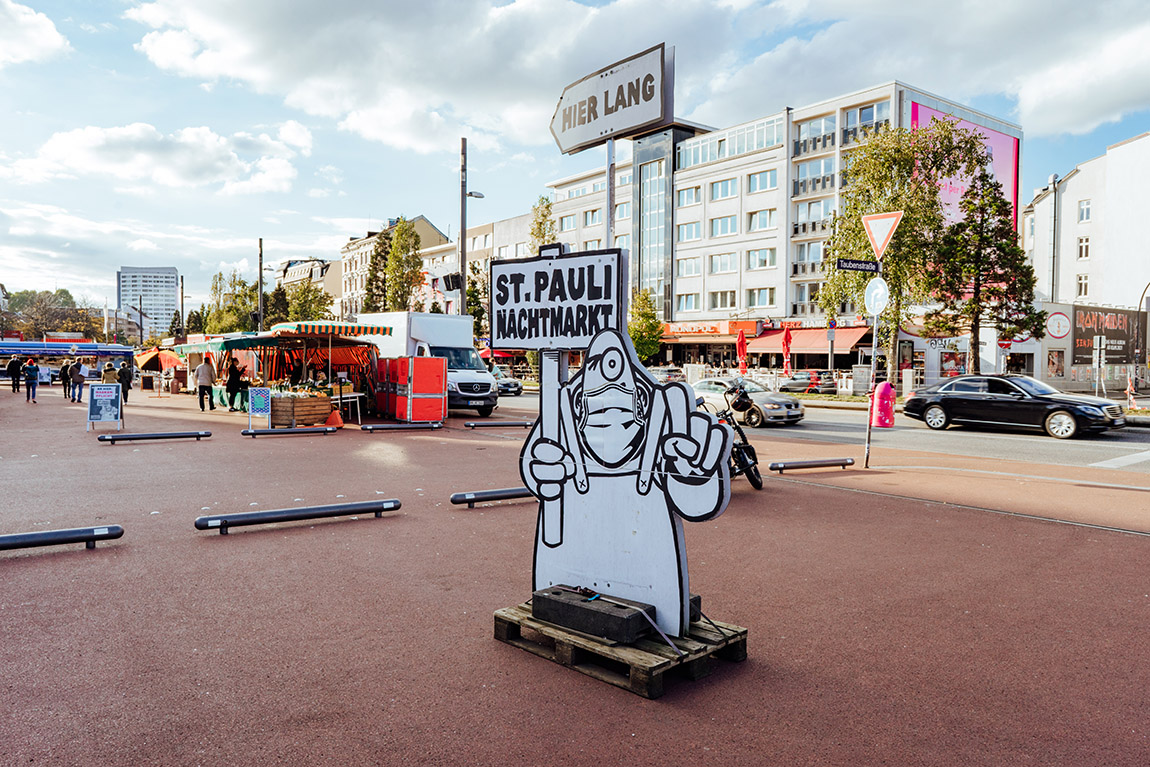
St. Pauli Nachtmarkt 1-Mediaserver Hamburg. Photo: Lisa Knauer
The removal of the city gate curfew in 1861 proved a turning point, and pleasure on the Reeperbahn experienced a sharp upswing. Dance halls, theatres and variety acts multiplied. “By the 1920s, Hamburg had turned into the Broadway of the North,” says Decker. “International stars such as Josephine Baker were performing in its famous clubs, jazz had arrived with musicians on steam ships from America and drifted through the dance palaces.” The Reeperbahn had become one of Europe’s great pleasure strips.
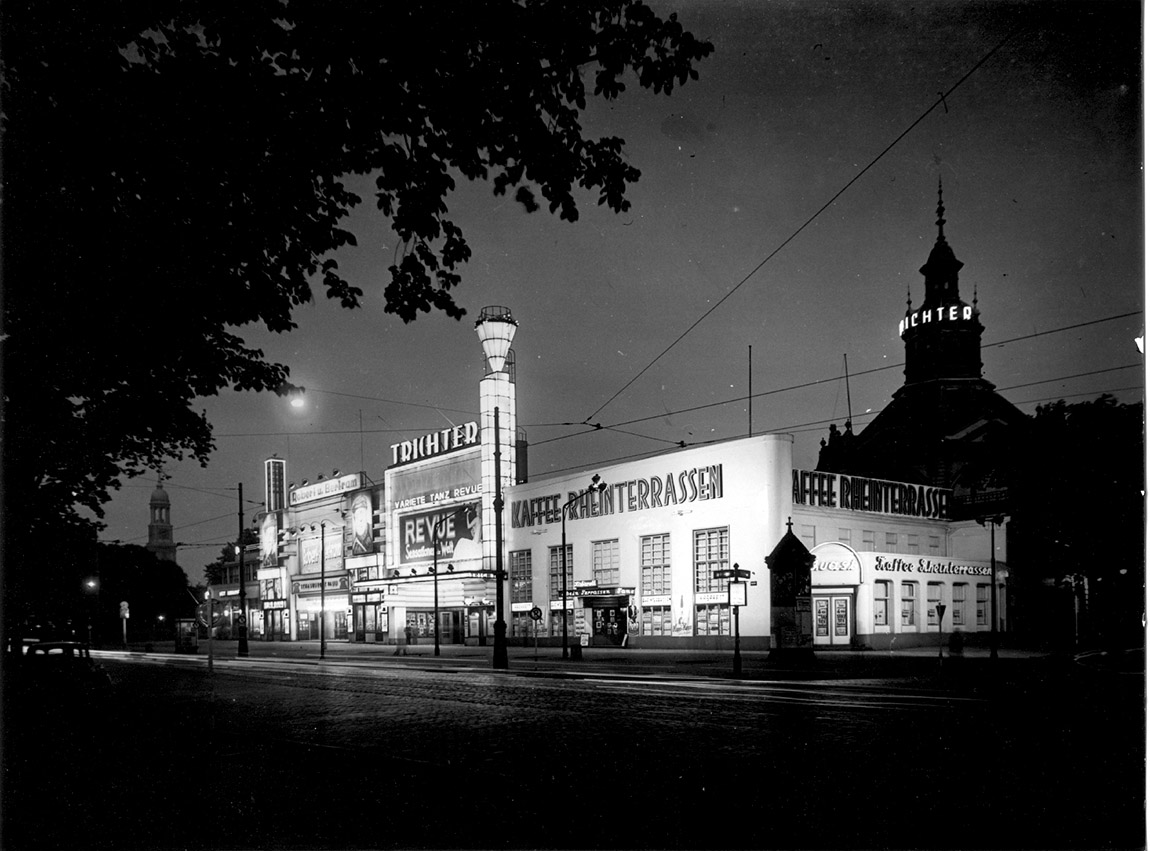
Trichter varietee theatre around 1930. Photo: Günter Zint Stiftung
The Beatles and the making of a legend
But maybe no chapter in the Reeperbahn’s history has resonated as widely as its connection to the Beatles. On 17 August 1960, the Fab Four stepped onto the stage of the Indra club on the Große Freiheit, a side street running directly off the Reeperbahn, for the very first time. Hamburg club owner Bruno Koschmider, searching for English acts for his nightclubs, had been put in touch with the band through his Liverpool business partner Allan Williams.
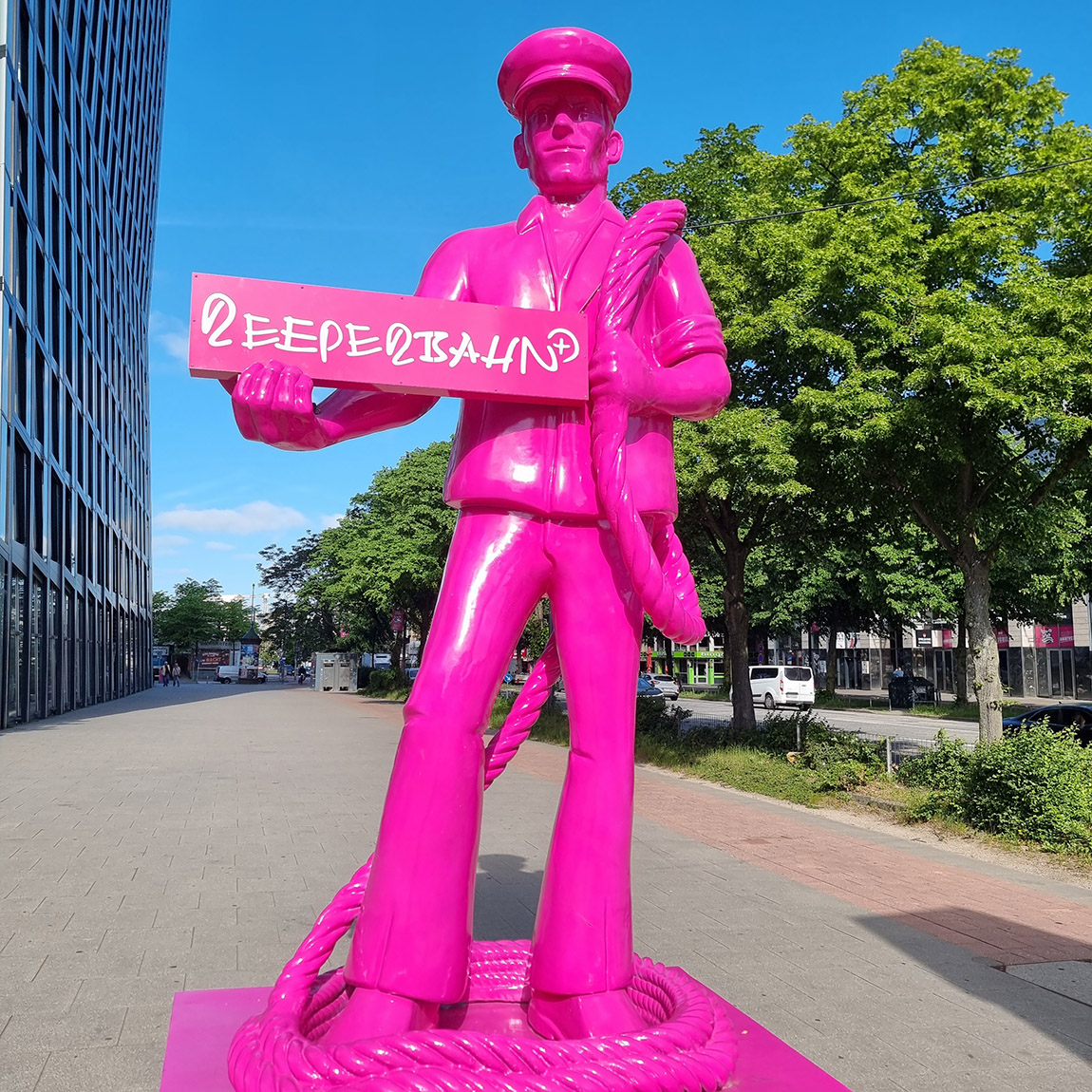
Statue of a ropemaker at eastern entrance to Reeperbahn. Photo: Wibke Carter
What followed was the Beatles’ true education. They played the Indra, the Kaiserkeller and later the Star-Club, often for six or seven hours a night, seven nights a week. The relentless Hamburg sets forced them to improvise, to develop stage presence and to transform from a raw Liverpool group into a tightly wound rock machine. John Lennon would later say that they were born in Liverpool but grew up in Hamburg.
Today, a Beatles-Platz with silhouette sculptures of the band marks the junction of the Große Freiheit and the Reeperbahn, and music pilgrims still come from across the world to walk in the band’s footsteps.
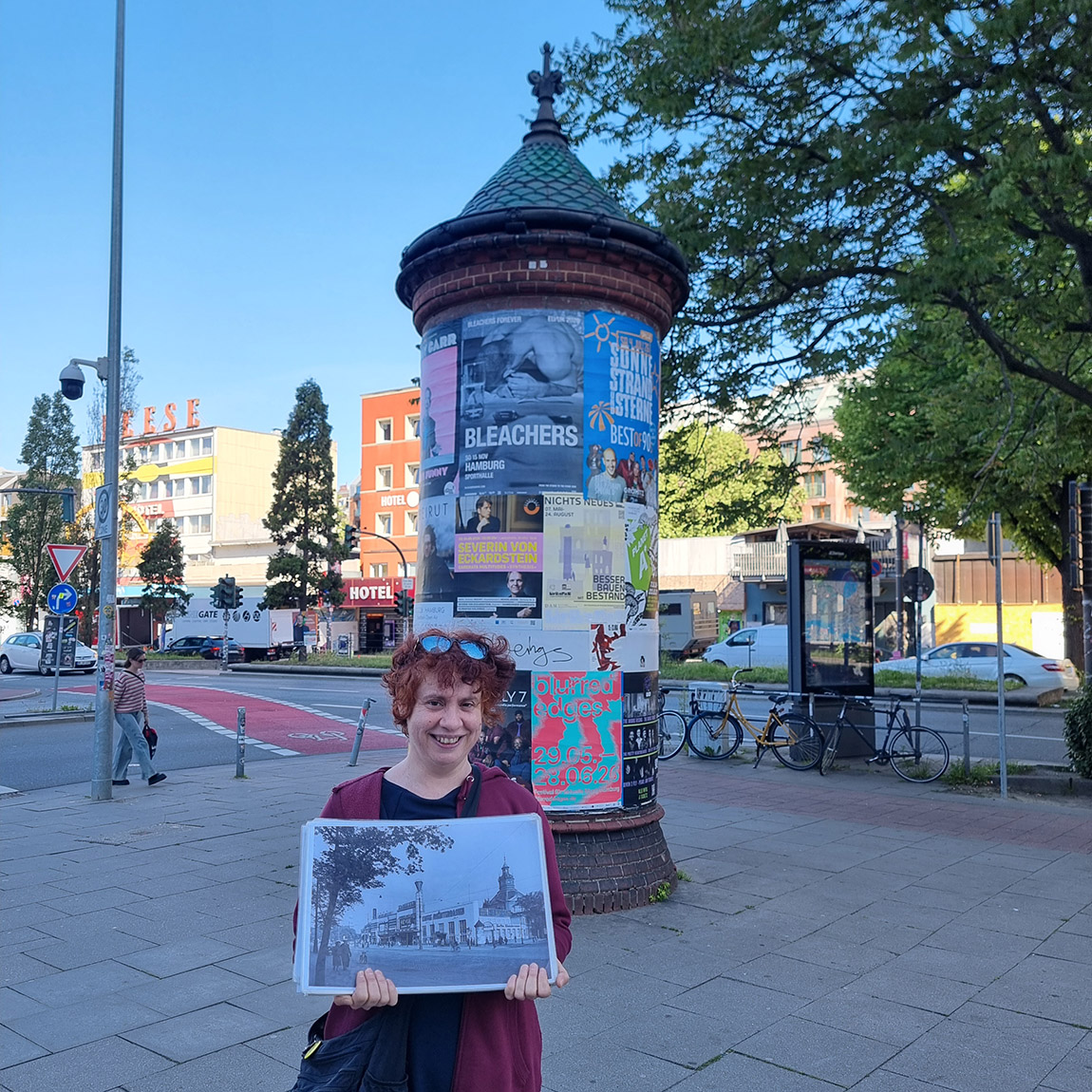
Tour guide Eva Decker. Photo: Wibke Carter
Decline, darkness and reinvention
Not all of the Reeperbahn’s history is glamorous though. In the 1970s and 1980s the district fell into serious decline: gang wars, drug dealing and the serial killer Fritz Honka made international headlines, and the Kiez (colloquial German term for a distinct local neighbourhood) became a byword for danger. Until the 1990s, St. Pauli was one of the poorest urban neighbourhoods in Europe.
Recovery came gradually. The Spielbudenplatz was rebuilt and reopened in 2006. The Reeperbahn Festival, launched the same year, grew into one of Europe’s most important music industry showcases. New cultural venues, bars and clubs began attracting a broader, younger crowd. The iconic Tanzende Türme, two twisting skyscrapers completed in 2012, now marks the street’s eastern end, a symbol of its reinvention.
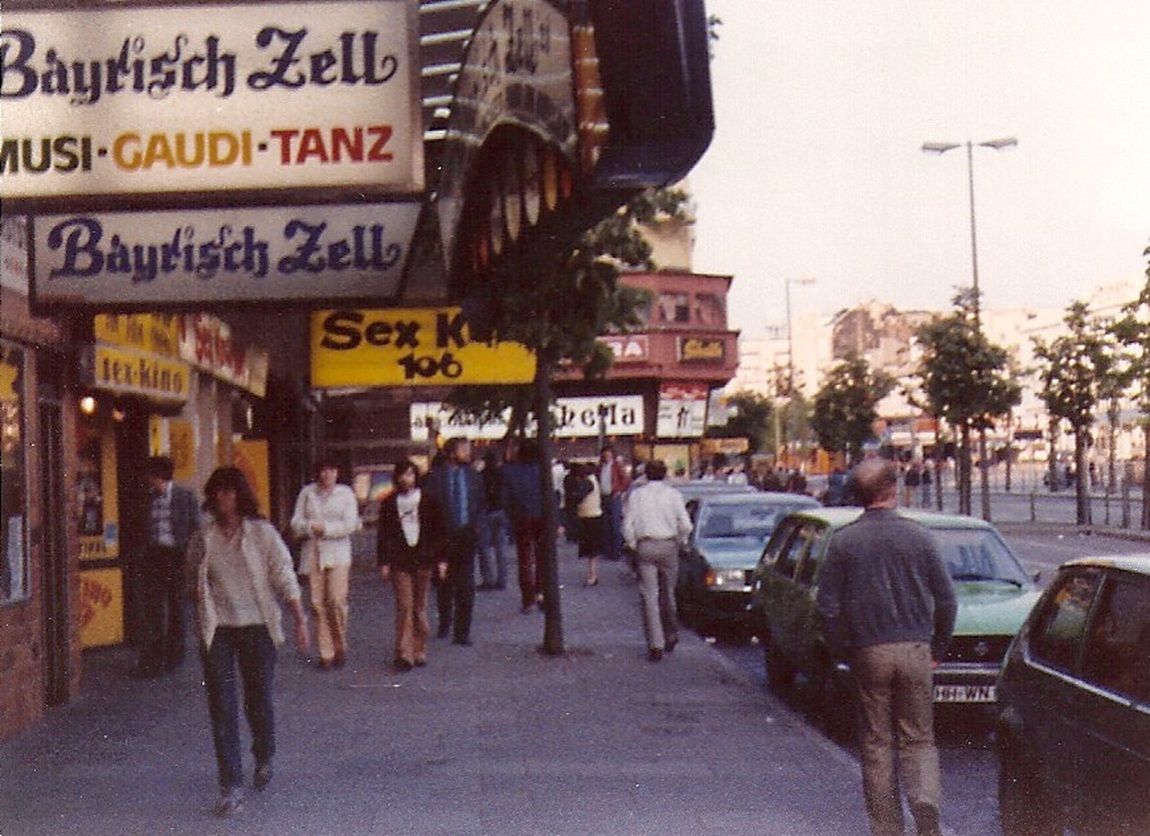
Red Light District Hamburg, Germany, 1981. Photo: RH Douglas (Wikimedia)
Celebrating 400 years
The anniversary launched on 30 April 2026 with a free event on the Spielbudenplatz, where Hamburg’s mayor Peter Tschentscher tapped the jubilee beer Reep Royal and thousands sang Udo Lindenberg’s Reeperbahn in a mass sing-along. The year-long programme features up to 400 events including readings, historical lectures and walking tours focused on the theme of displacement and all major venues are dedicating shows to the jubilee under the motto “400 Years – 400 Shows.”
The street that began as a dumping ground for those the city did not want has always been a place of contradiction: rough and creative, marginal and magnetic. As it turns 400, the Reeperbahn remains exactly that.
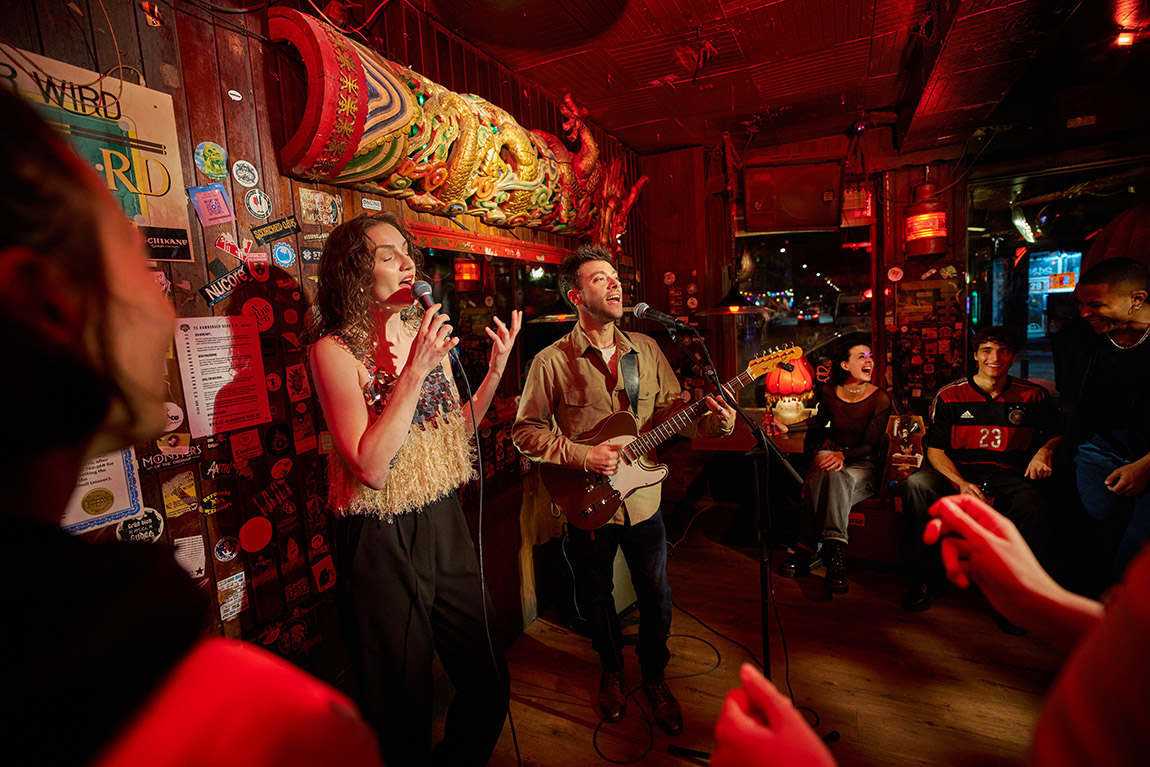
A music club at Reeperbahn. Photo: Christian Brandes
Reeperbahn Festival (16 – 19 Sept. 2026)
www.reeperbahnfestival.com/en
www.hamburg.de
www.eva-decker.de

Subscribe to Our Newsletter
Receive our monthly newsletter by email