A weekend at the Confluence: Koblenz
TEXT: WIBKE CARTER
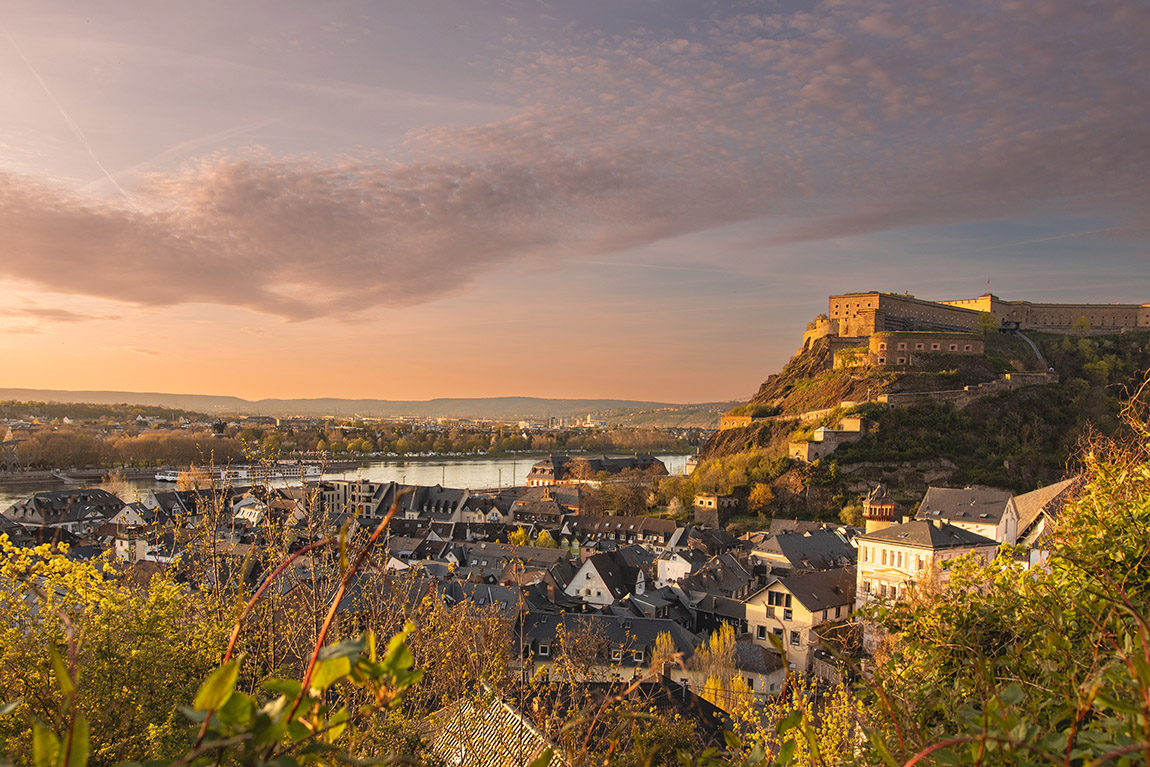
View towards Festung Ehrenbreitstein. Photo: © Koblenz-Touristik GmbH / Johannes Bruchhof
Where Father Rhine and Mother Moselle meet, a compact city of medieval towers, vineyard-draped hillsides and Rhineland charm rewards the curious traveller with a time to remember. Our writer Wibke Carter takes a stroll.
Friday: arrival and the Moselle
Arrive early afternoon, after about 90 minutes by train from either Frankfurt or Düsseldorf airports, and begin your Koblenz escape at FÄHRHAUS, a riverside retreat that takes its name from the old ferry crossing that once linked the two banks of the Moselle.
From the hotel, riverside footpaths lead through vineyards and wine-growing landscapes, passing old stone walls and gnarled vines that have been here for centuries. Take your time – this is one of Germany’s most celebrated wine regions and the terraced vineyards around Koblenz produce crisp, mineral-driven Rieslings that taste nowhere better than at their source.
Break the walk with a wine tasting at one of the local Weingüter such as Spurzem or Toni Müller in the suburb of Güls. Look out for estate-bottled Rieslings from the steep-slope Steillage sites: the slate soil gives them a flinty, almost electric character.
Back at FÄHRHAUS, surrender to the hotel’s signature stone massage, then dine at restaurant Landgang for local Rhineland cooking or Gotthardt’s by Yannick Noack (two Michelin stars) for fine dining at its very best.
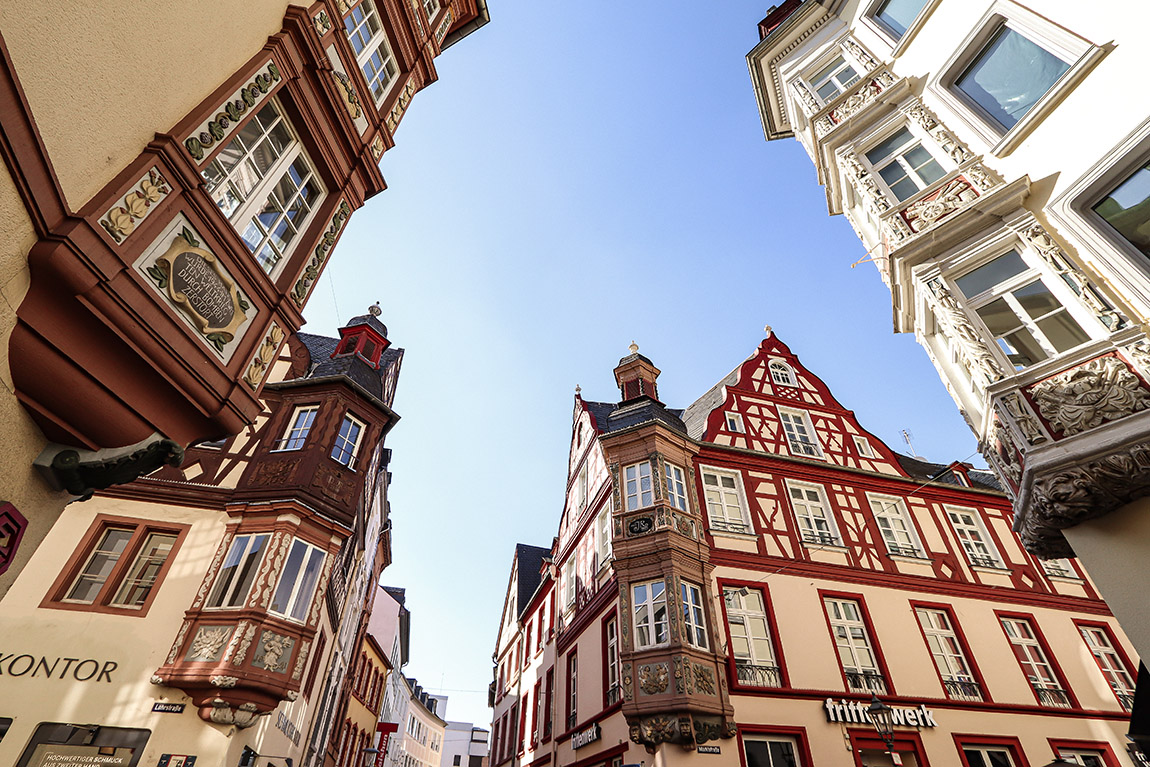
Altstadt Vier-Türme. Photo: © Koblenz Touristik GmbH / Johannes Bruchhof
Saturday morning: old town and its secrets
Koblenz is best explored on foot. The Altstadt preserves much of its medieval street pattern and many historic buildings, despite the extensive wartime destruction that reshaped much of the city. It is small enough to wander without a map and wrong turns result in new discoveries.
Head first to the Deutsches Eck (German Corner), where a 14-metre-high statue of Kaiser Wilhelm I presides over the confluence of Rhine and Moselle. It is one of those spots where geography creates great drama: two great rivers colliding in a froth of current, the fortress rising above, the hills stretching away in both directions.
The yellow walls of Festung Ehrenbreitstein loom across the Rhine, one of the largest preserved fortresses in Europe. Take the cable car as the views on the ascent alone are worth the fare. The fortress has stood since the 11th century; Napoleon had it dismantled, the Prussians rebuilt it bigger than before. On top, snacks and beverages can be purchased for a small sit-down lunch while enjoying the magnificent views.
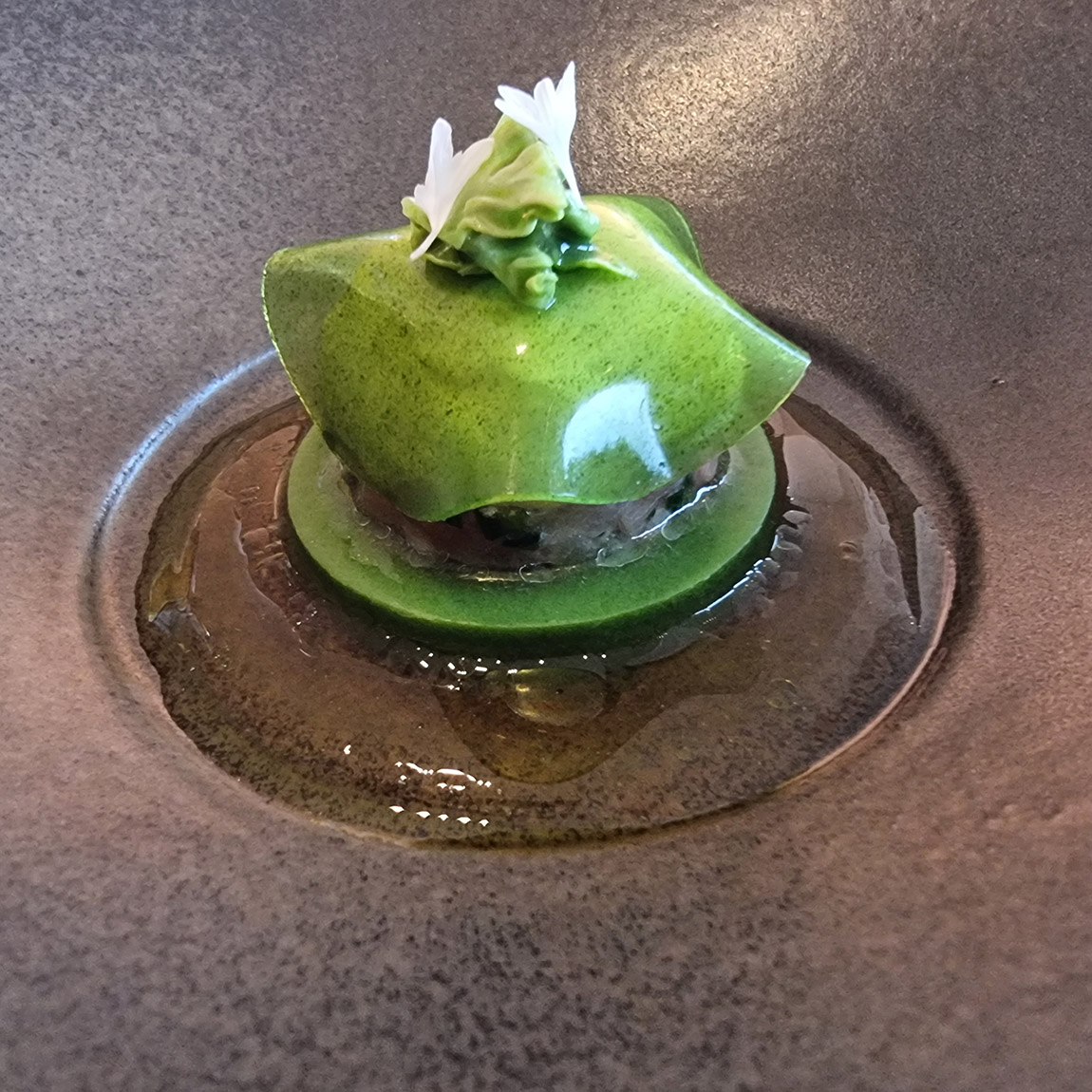
Fine dining dessert at Gotthardt’s by Yannick Noack. Photo: Wibke Carter
Saturday afternoon: sweet stops and fireworks
Back in the old town, duck into Entengässchen and Kunstgässchen, two pretty medieval lanes, lined with craft studios and the kind of café that appears to have been there for centuries. Nearby, the bronze Schängel fountain spits water at clueless passers-by every half-hour beside the Town Hall. Take a break and head to eGeLoSIa, an ice cream parlour ranked among Germany’s Top 20.
The Vier Türme, despite the name, are not four separate towers but historic corner houses, each crowned by an ornate projecting bay window (oriel tower). Look out too for the History Column, which charts 2,000 years of Koblenz in illustrated bands and the medieval Robber Baron relief whose eyes follow the walker who looks up.
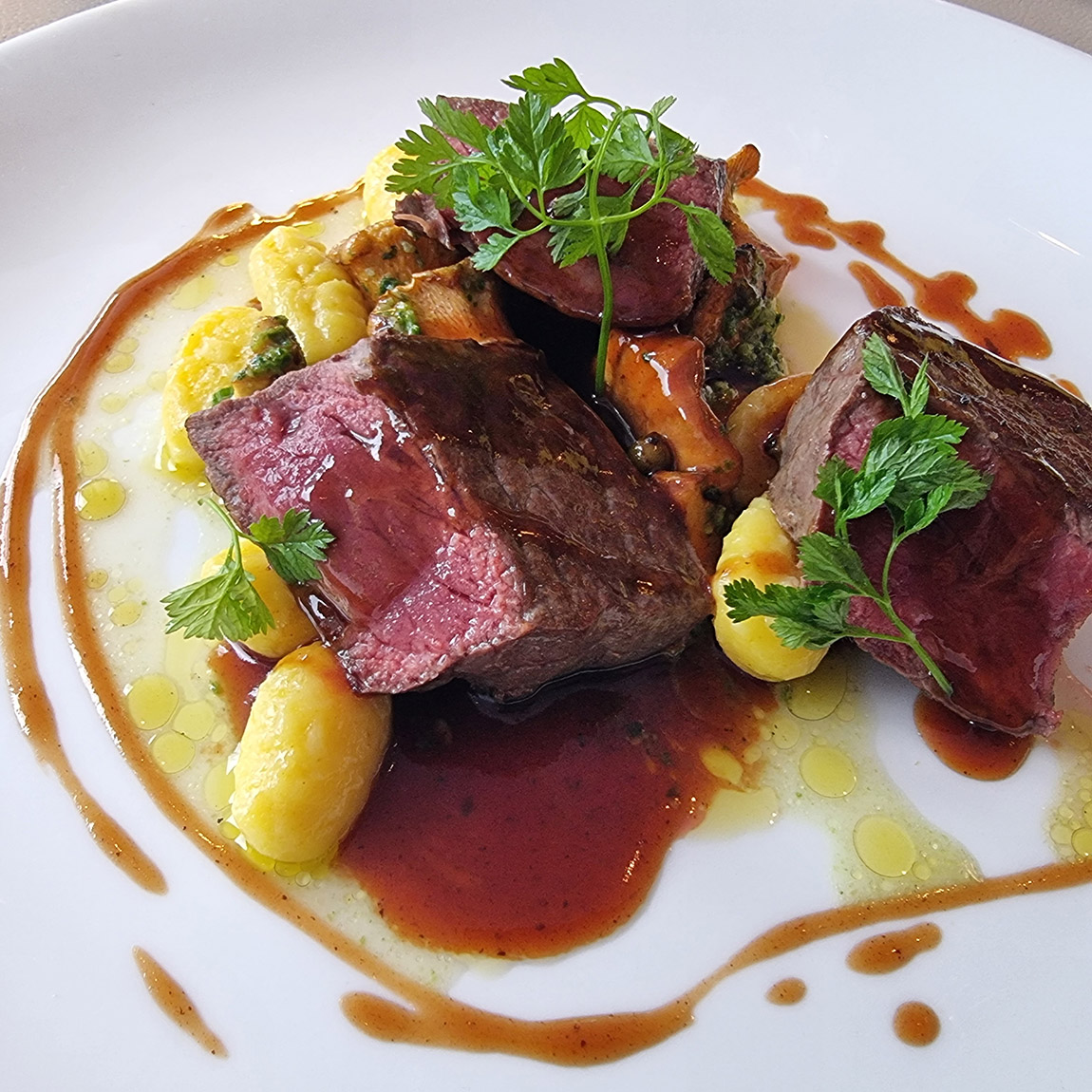
Meat course at the Landgang restaurant. Photo: Wibke Carter
No city tour is complete without Fräulein Diehl, a confectionery producing famously addictive toffees. The flavours range from natural to tonka bean and vanilla, and leaving with just one bag requires a discipline most visitors find beyond them.
Evening brings dinner at Gerhard’s Genussgesellschaft im Blumenhof: a garden courtyard near the riverbank, Moselle-leaning wine list and cooking rooted in the Rhine region. For a last drink outside, the Ufer-Bar invites on the riverbank until 10pm.
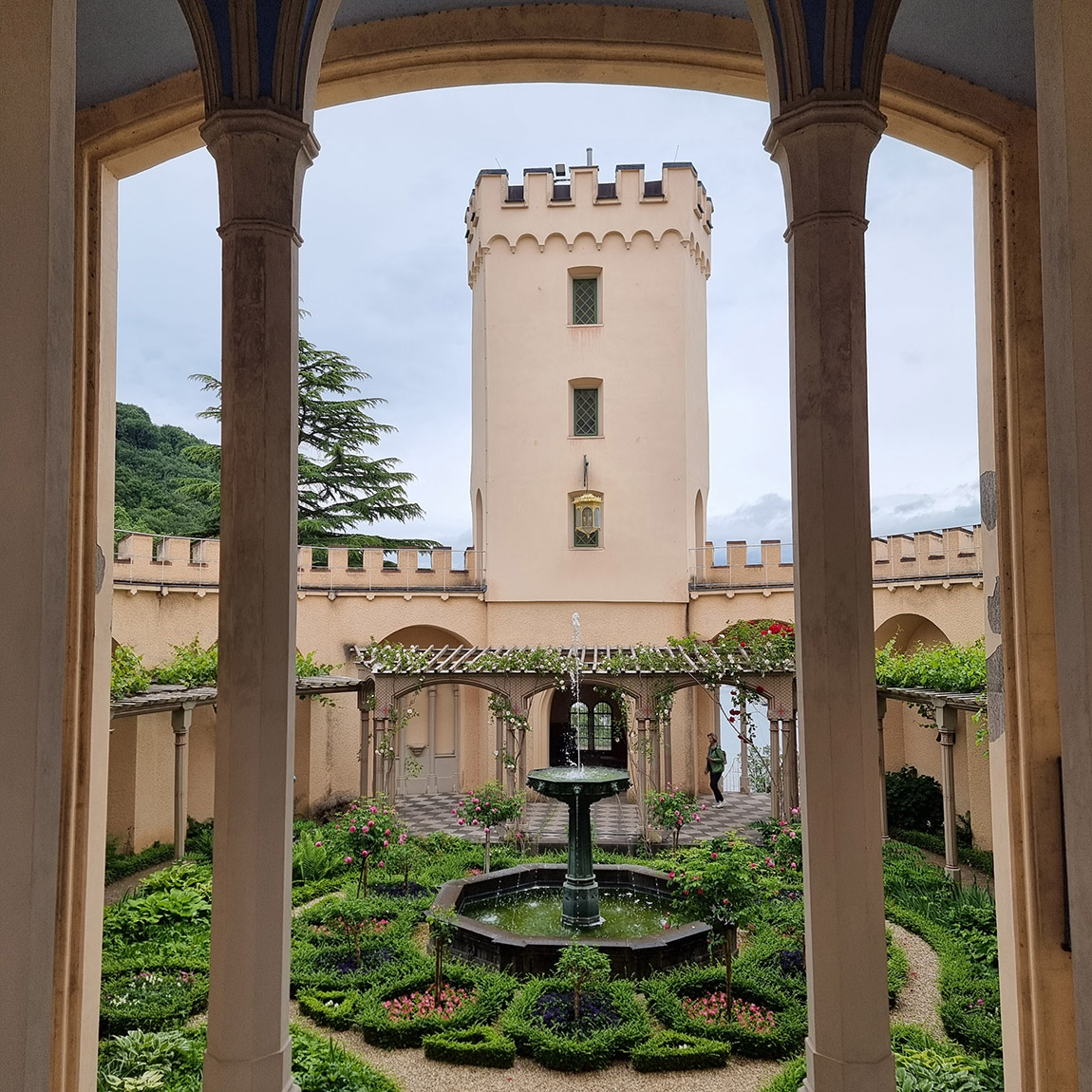
Garden of Stolzenfels castle. Photo: Wibke Carter
If your visit coincides with Rhein in Flammen (Rhine in Flames, 7 to 9 August 2026), stay on the river as long as possible. On Saturday, illuminated boats process along the Rhine while fireworks burst from Ehrenbreitstein above, their reflections fracturing the dark water below – operatic in scale, and entirely in keeping with a city that has always understood the drama of its setting.
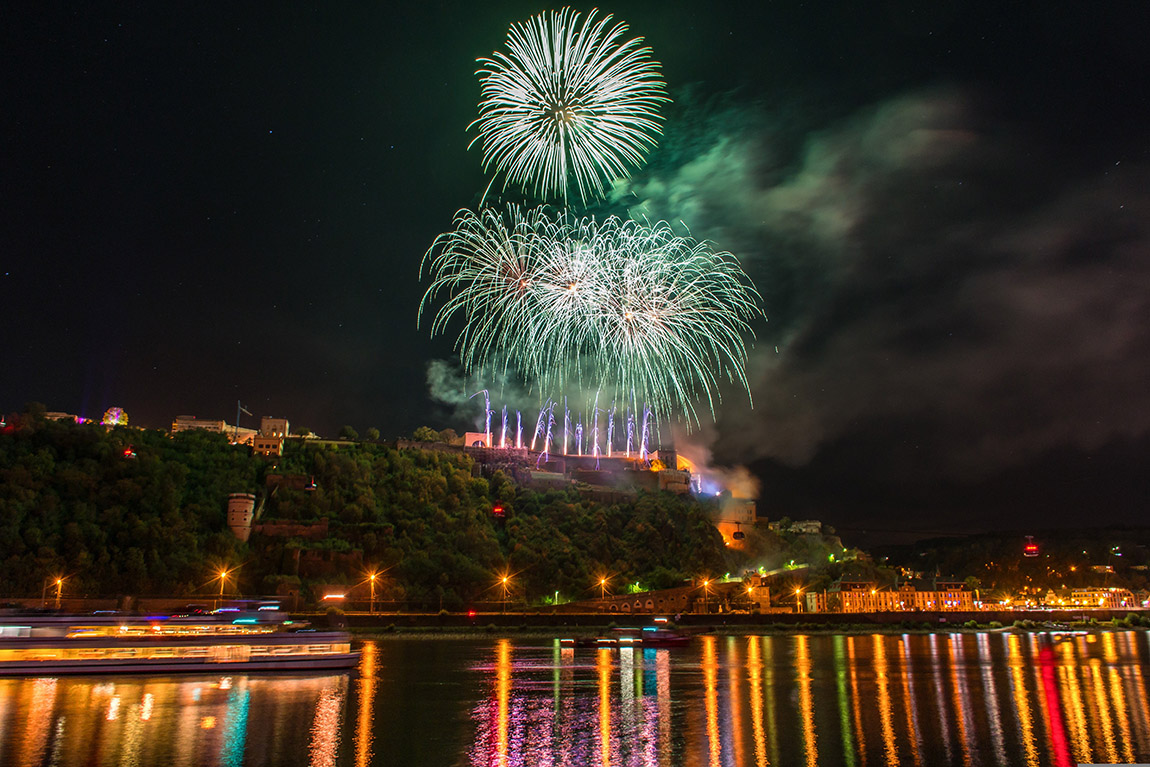
Rhein in Flammen. Photo: Pixabay
Sunday: a castle farewell
Check out of the hotel, store your luggage at Koblenz Hauptbahnhof and head south along the Rhine for a final flourish.
The Gothic Revival towers of Schloss Stolzenfels rise from the wooded hillside like a fairy tale illustration, which, in a sense, they are. Crown Prince Friedrich Wilhelm commissioned its reconstruction in the 1830s, enlisting architect Schinkel and landscape artist Lenné to create something that looked ancient but felt entirely Romantic. The result is painted ceilings, tapestries and armour arranged as if the knights had only just stepped out, terraced gardens falling to the river below.
Then it is time for the journey home. Koblenz does not overstay its welcome, which is precisely why you will want to come back.
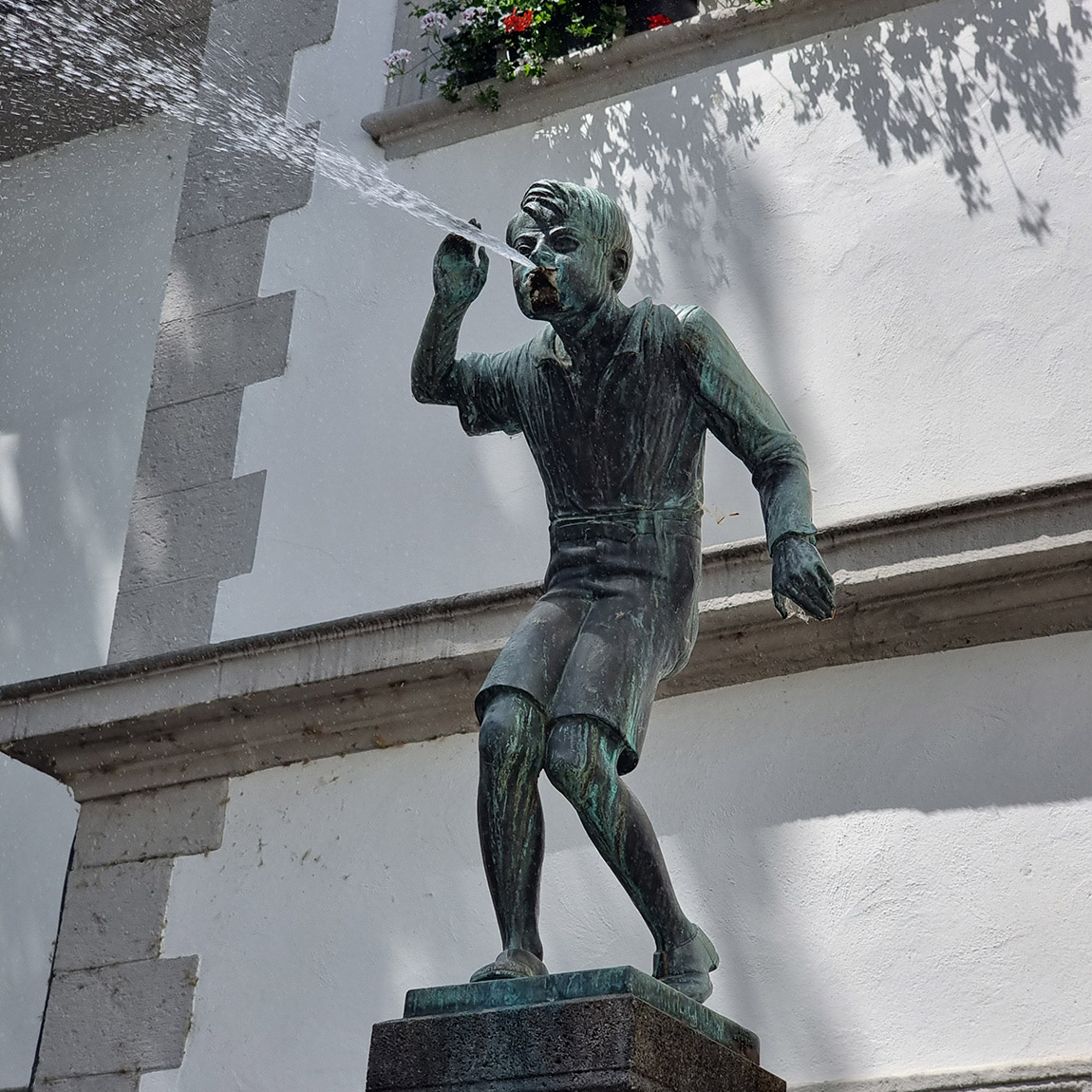
The Schängel fountain. Photo: Wibke Carter
Tourism: www.visit-koblenz.de
Hotel: www.fährhaus-koblenz.de
Event: www.gotthardts.de

Subscribe to Our Newsletter
Receive our monthly newsletter by email