Stuttgart: A weekend in the Cauldron
TEXT: WIBKE CARTER
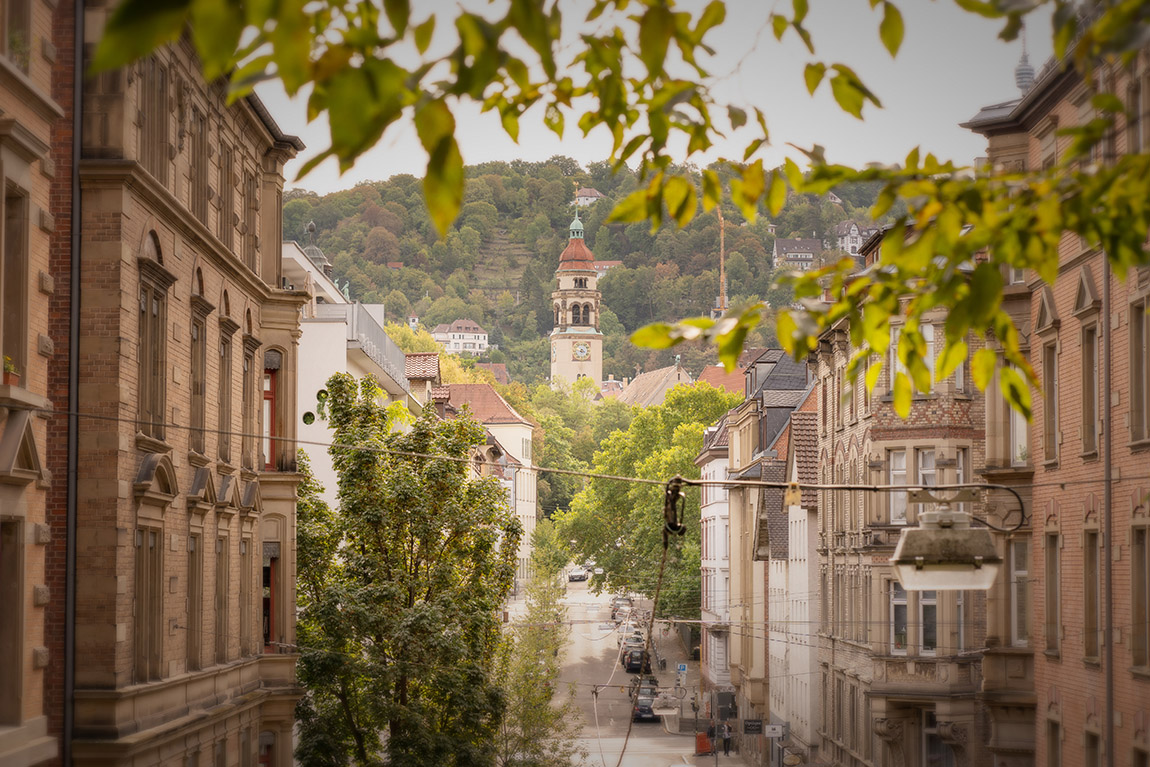
Stuttgart town scene. Photo: SMG Martina Denker
Ringed by vineyards and cradled between wooded hills, the city at the heart of the automobile’s birthplace has a green, slow-paced side that surprises visitors expecting little more than factories and motorways. Our writer Wibke Carter goes for a spin.
Friday, on the first day, arrive in the early afternoon, either by direct flight to Stuttgart or by ICE train via Frankfurt, reaching the Hauptbahnhof in a little over 90 minutes. Check into Scandic, a modern glass-fronted hotel in the redeveloped quarter beside the main train station, then take a short U-Bahn ride into the centre for a quick bite at Restaurant knitz, tucked inside Haus des Tourismus on the market square.
Start here with a leisurely afternoon walk through the historic centre, taking in the Neues Schloss (New Castle), Stiftskirche (Collegiate Church) and lively Schillerplatz, with cafés and shops along the way. Schlossplatz is the city’s living room, filled with skateboarders, students and tourists. For some retail therapy, Königsstrasse is the place to go.
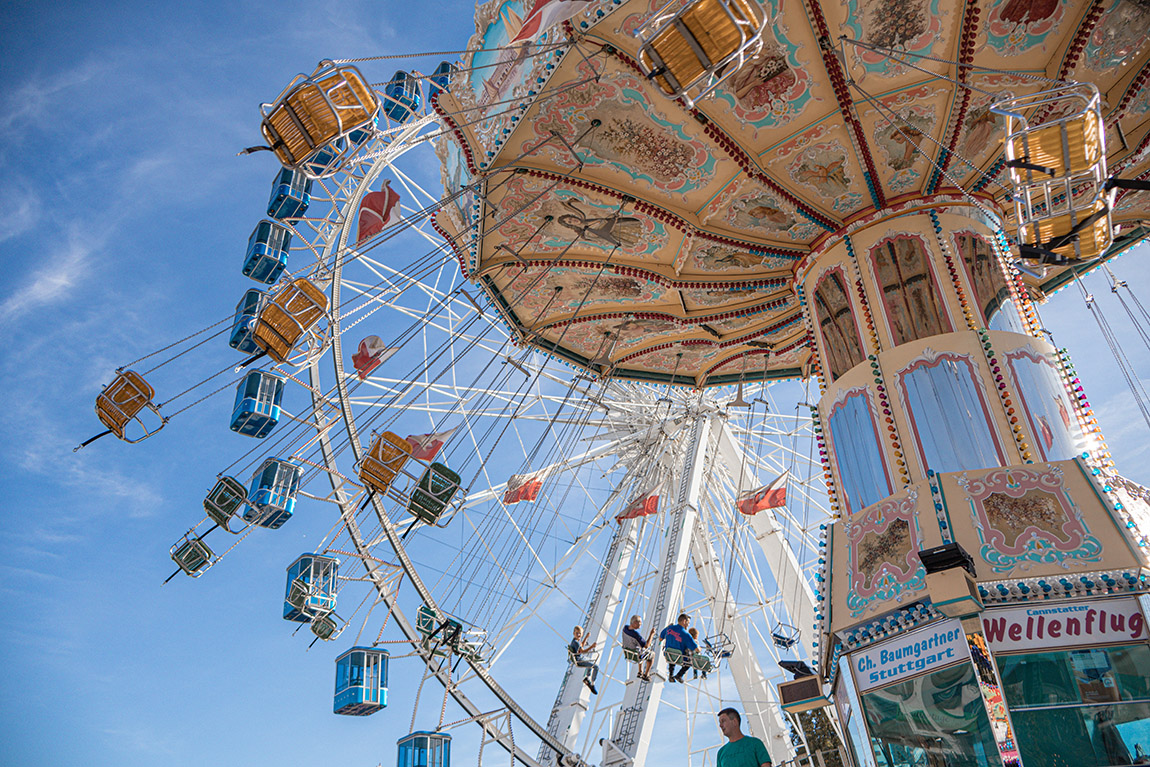
Cannstatter Wasen. Photo: SMG Sarah Schmid
Climb the Eugensstaffel, one of the hundreds of outdoor stairways locals use as shortcuts, to Eugensplatz and the Galateabrunnen fountain, where the city, which lies in a Kessel (cauldron), is suddenly at your feet. In warm weather, a scoop from the nearby Pinguin ice-cream parlour is the only sensible way to enjoy the view.
As the light softens, ride out to SWR Fernsehturm, the world’s first television tower built from reinforced concrete, and the blueprint for every one that followed. From the viewing platform, 150 metres up, the Neckar valley spreads out in ribbons of vineyards, and on a clear evening the Swabian Alps and the Black Forest edge into view.
Head back for dinner at Schellenturm, a 16th century tower built into the old city wall, in the Bohnenviertel – once the artisans’ quarter, now a knot of wine bars where the lanes stay lively long after the shutters have come down elsewhere.
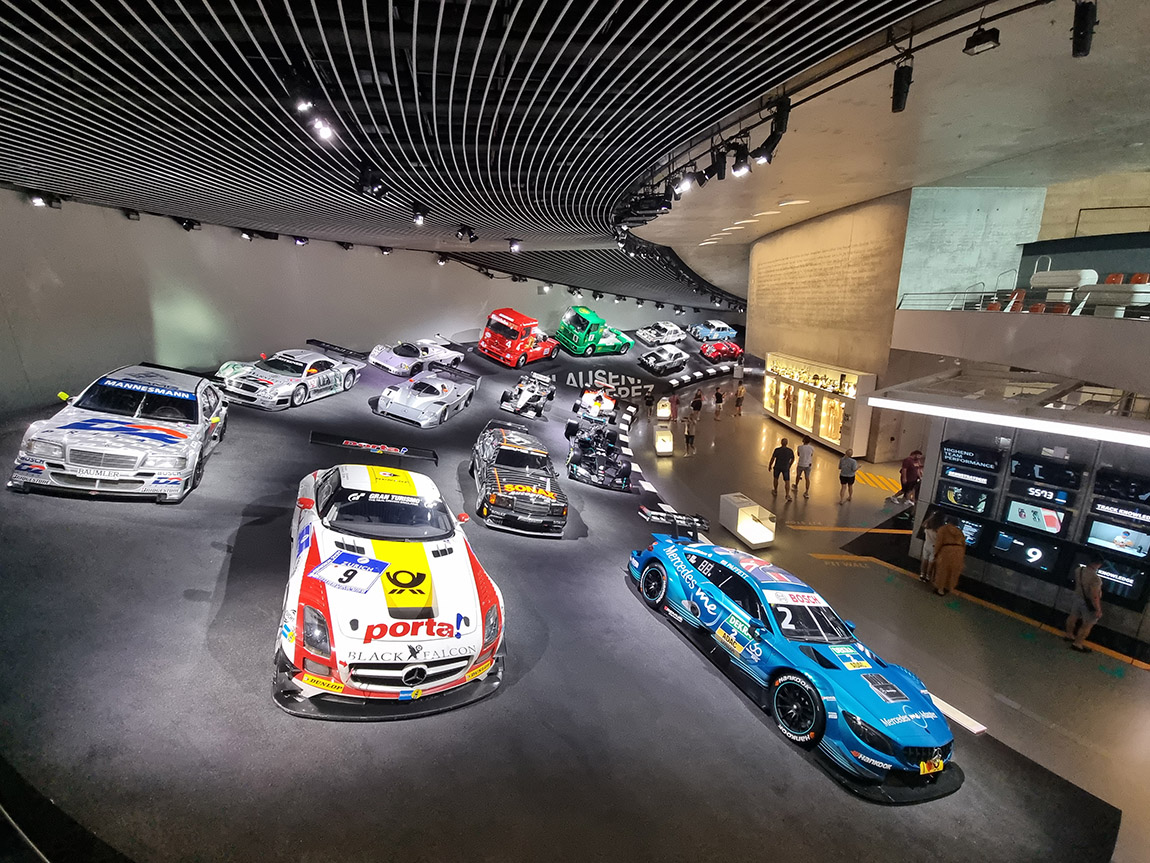
Racing cars in the Mercedes Benz Museum. Photo: Wibke Carter
Saturday: wheels and wine
Stuttgart’s hop-on, hop-off Citytour runs in open-top red double-deckers, a small wink at the city’s Mercedes-Benz pedigree. Take the Blue Tour and watch Schlossplatz and the Schweinemuseum (Pig Museum) slide by, followed by the sprawl of Cannstatter Wasen, the fairground beside the Neckar where the Volksfest takes over from late September to mid-October — second in scale only to Munich’s Oktoberfest — before the bus drops you outside the Mercedes-Benz Museum.
The company traces itself back to Carl Benz and Gottlieb Daimler, and the museum tells that story backwards: start on the ninth floor among the earliest, most improbable prototypes, then spiral down through 140 years of engineering until you land back in the present.
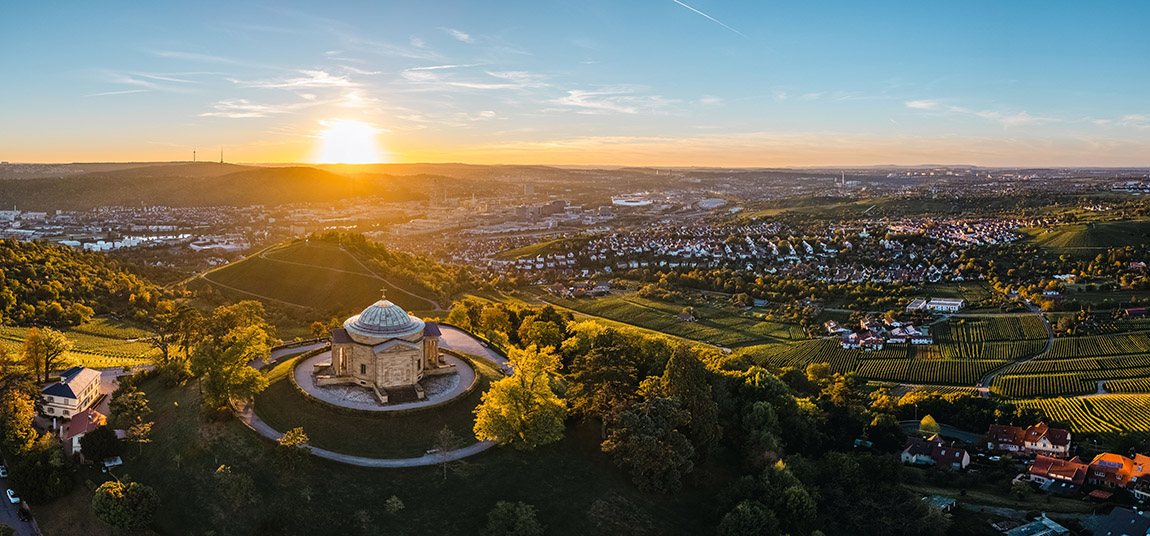
Grabkapelle. Photo: SMG Goldamsel Film
Switch to the seasonal Weintour (April to October), which winds through the vines to Uhlbach, Stuttgart’s own wine village tucked into the hillside. Lunch at Restaurant Perle sets you up for the Weinbaumuseum, housed in a 1979 former press house, where the story of Stuttgart’s winemakers unfolds before a tasting of regional Rieslings and Trollingers.
From Uhlbach, go by bus, or on foot if the wine has not slowed you down, to the Grabkapelle auf dem Württemberg, a domed neoclassical chapel on the hill where the Württemberg dynasty’s original castle once stood. King Wilhelm I built it in the 1820s to mourn his young second wife, the Russian Grand Duchess Katharina, and one look at the view over the vine-striped valley tells you why he chose this particular hill to grieve on.
Rejoin the wine tour, then switch back to the Blue Tour at the Mercedes-Benz Museum to take in what is left, before dinner at Weinstube Fröhlich, a proper Swabian wine tavern all dark wood and Trollinger by the glass, the kind of place where the day’s walking finally catches up with you over a plate of Maultaschen (similar to ravioli).
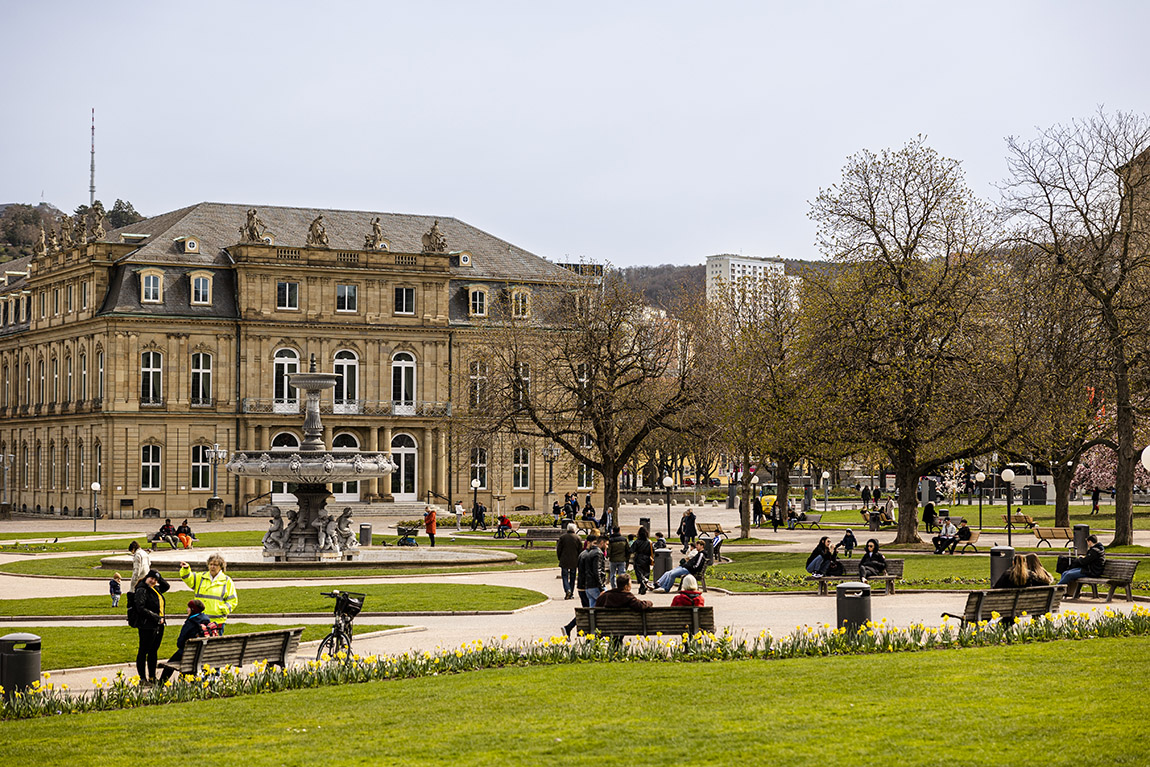
Schlossplatz. Photo: SMG Sarah Schmid
Sunday: an architectural farewell
Give Sunday morning to the Weissenhofmuseum, at the centre of the Weissenhofsiedlung, a 1927 model housing estate built under the artistic direction of Ludwig Mies van der Rohe, with contributions from Le Corbusier and other pioneers of modern architecture. The two Le Corbusier houses became Stuttgart’s first UNESCO World Heritage Site in 2016, and as the estate nears its centenary, a new visitor centre is going up to welcome the crowds still drawn by those clean white lines.
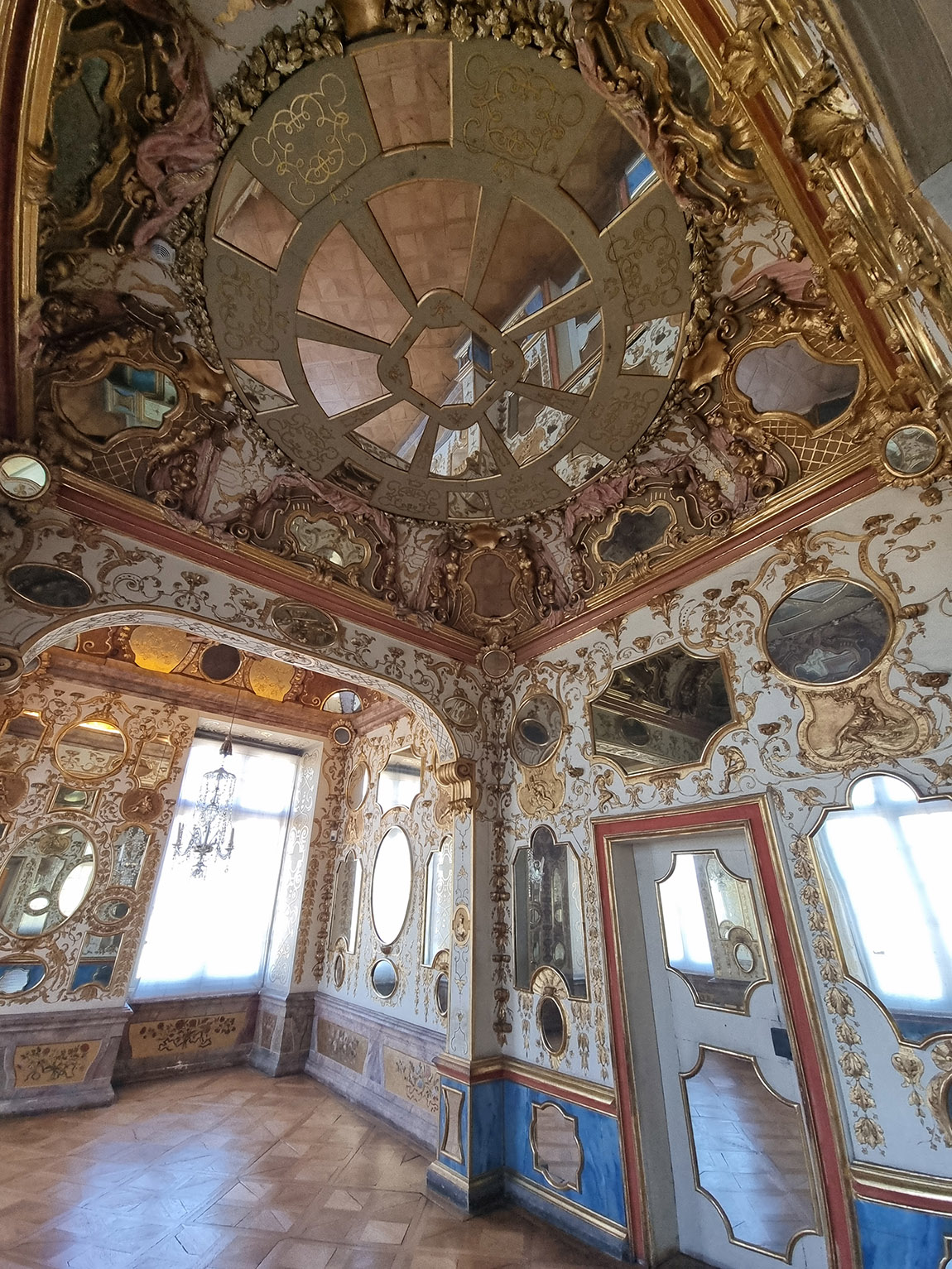
Mirror room inside Ludwigsburg palace. Photo: Wibke Carter
Prefer grandeur to modernism? Swap in Ludwigsburg Palace instead, a sprawling baroque residence about 30 minutes north of the city, so extravagant it has earned the nickname Versailles of Swabia. Wander the staterooms and courtly apartments, then step out into the formal gardens, complete with fountains, sculpted hedges and, in season, a fairy-tale landscape.
With an early-afternoon train or flight home, there is just enough time for one last coffee back at the station, before Stuttgart – half industrial powerhouse, half hillside wine village – lets you go.
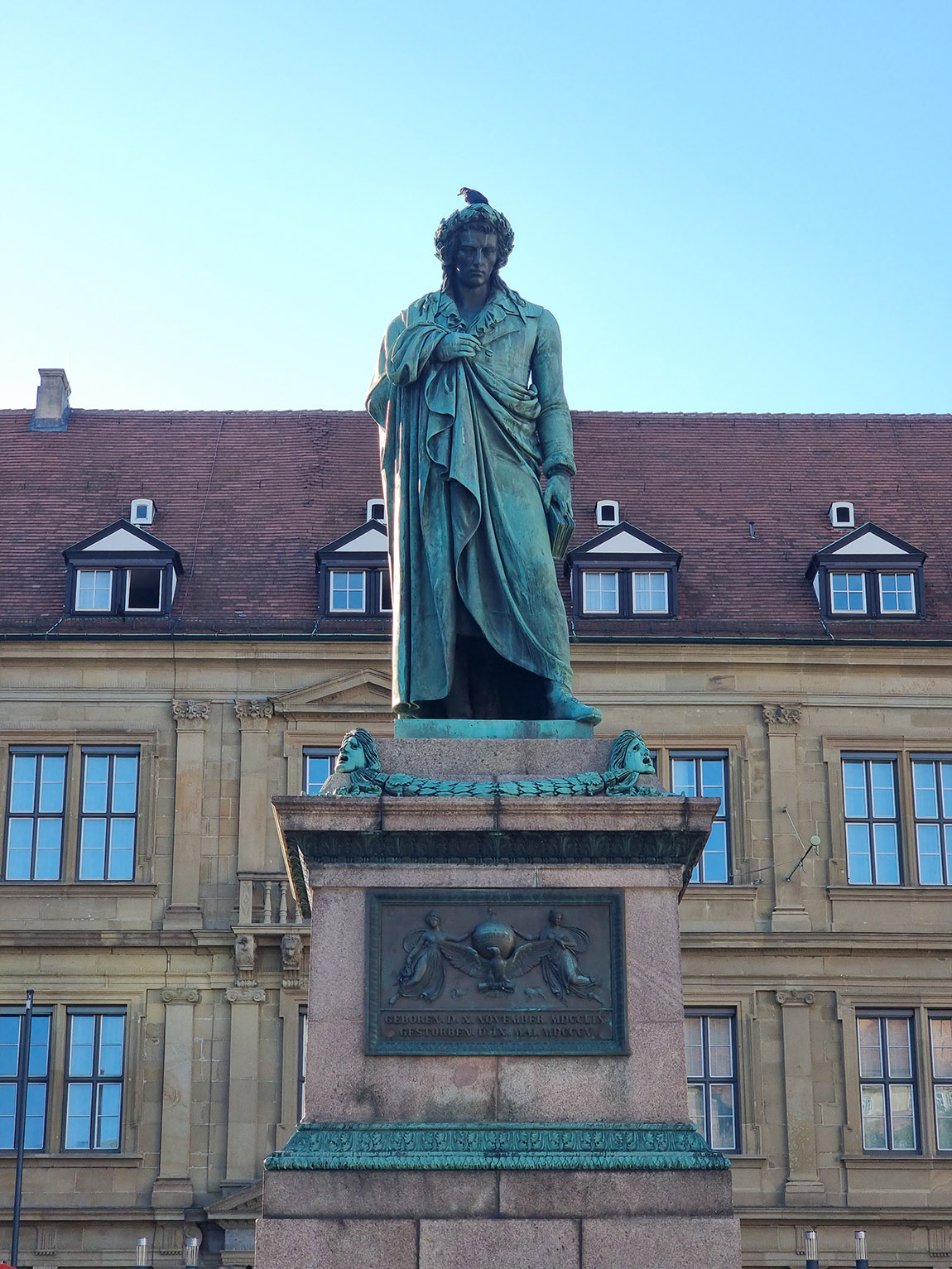
Statue of Friedrich Schiller on Schillerplatz. Photo: Wibke Carter

Subscribe to Our Newsletter
Receive our monthly newsletter by email