Zurich: The city that lives by the water
TEXT: NANE STEINHOFF
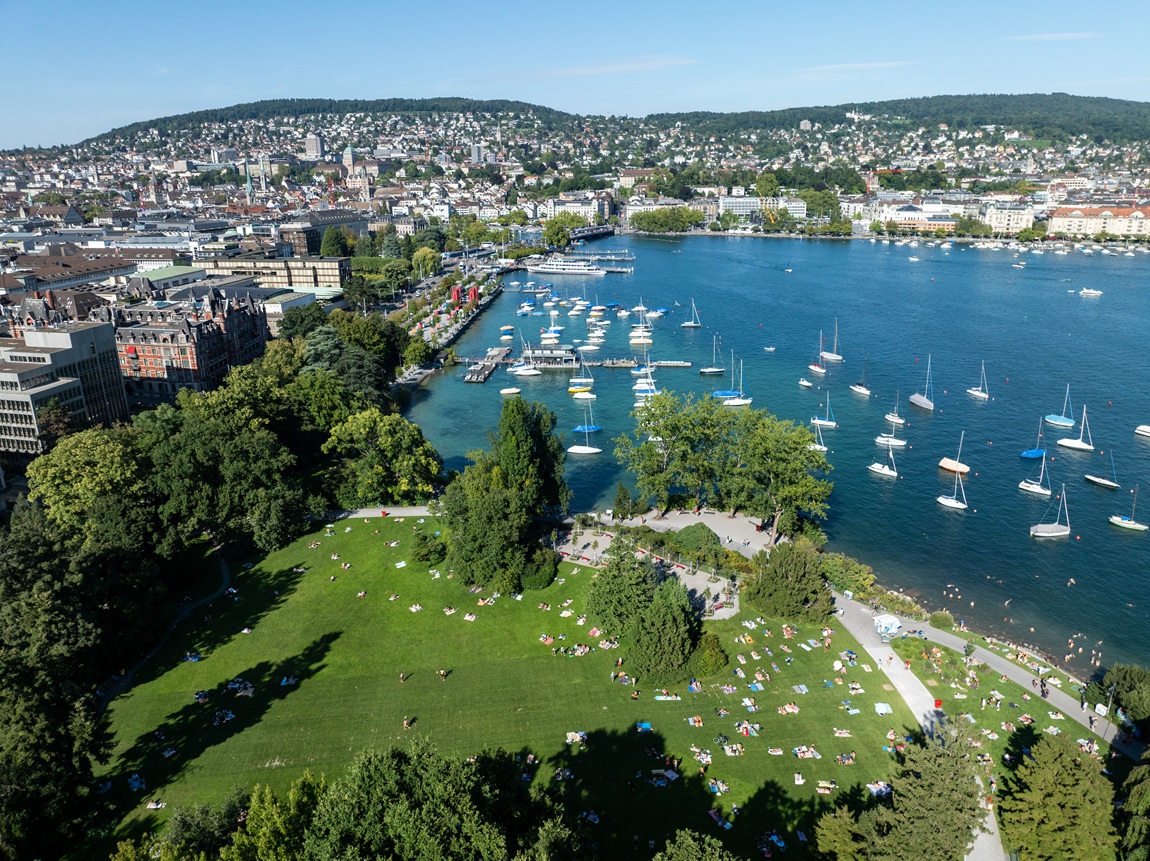
Rentenwiese. Photo: Cemil Erkoc / Zürich Tourismus
Zurich is defined by water. In summer, the lake, the river Limmat, the city’s lidos and its public fountains shape how residents use public spaces and how visitors experience the city.
In many European cities, visitors orient themselves by cathedrals, shopping streets or a single historic square. In Zurich, the pattern is different. The lakefront, riverbanks and quays do as much to organise the city as its old town or business district. Office workers sit by the water at lunch, commuters cross it by tram and boat, and swimmers step into the river within walking distance of major streets. Water is not ornamental here. It is part of how the city functions.
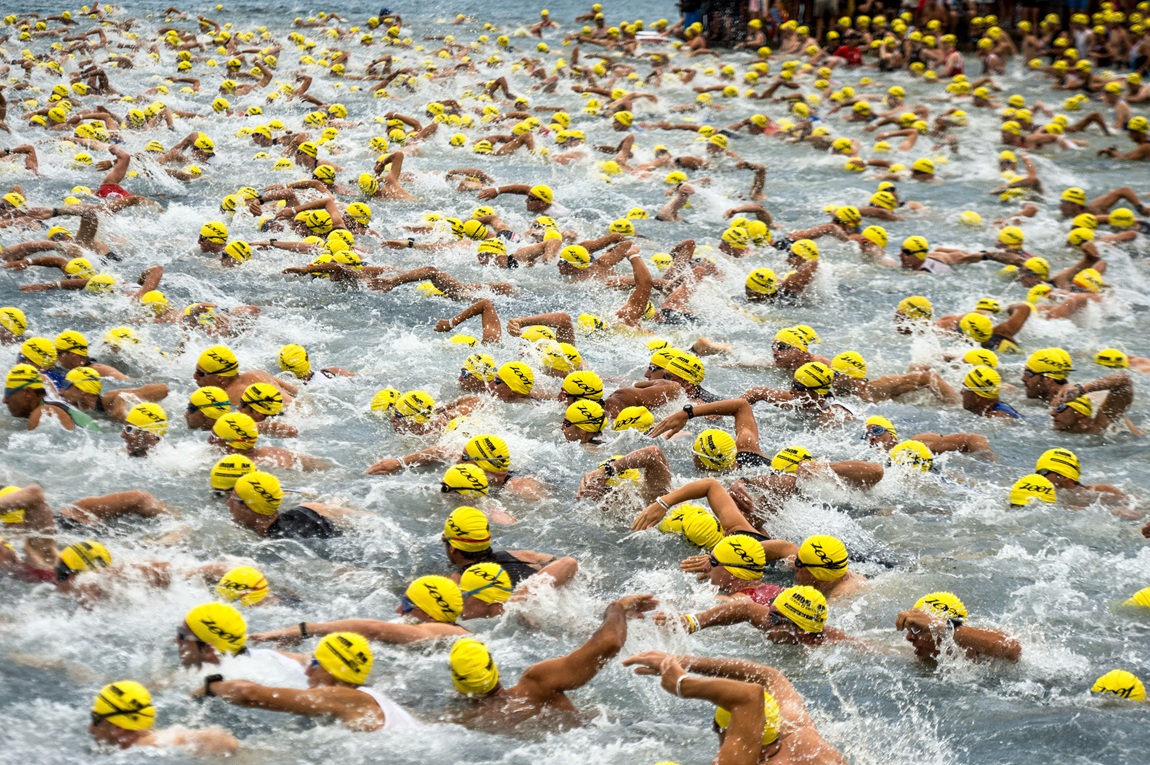
IRONMAN in Zurich. Photo: Zürich Tourismus
That starts with geography. Zurich sits at the northern end of Lake Zurich, where the Limmat flows out of the basin and cuts through the centre before meeting the Sihl. The smaller Schanzengraben canal adds another water corridor on the edge of the old town. Together, these waterways influence the city’s layout, its transport habits and its summer routines. They also help explain why the waterfront feels less like a leisure district than an extension of ordinary public space.
In summer, much of life moves towards the lake and the river. Zurich has more than 25 public lidos and more than 1,200 fountains. Bathing water quality is also a material factor. According to the Federal Office for the Environment, bathing water in Swiss lakes and rivers is generally very good, with more than 97 per cent of monitored bathing waters rated at least sufficient. In Zurich, that helps sustain a public culture built around swimming, boating and spending time outdoors close to the water. What can look at first like a postcard setting turns out, on closer inspection, to be part of the city’s daily infrastructure.
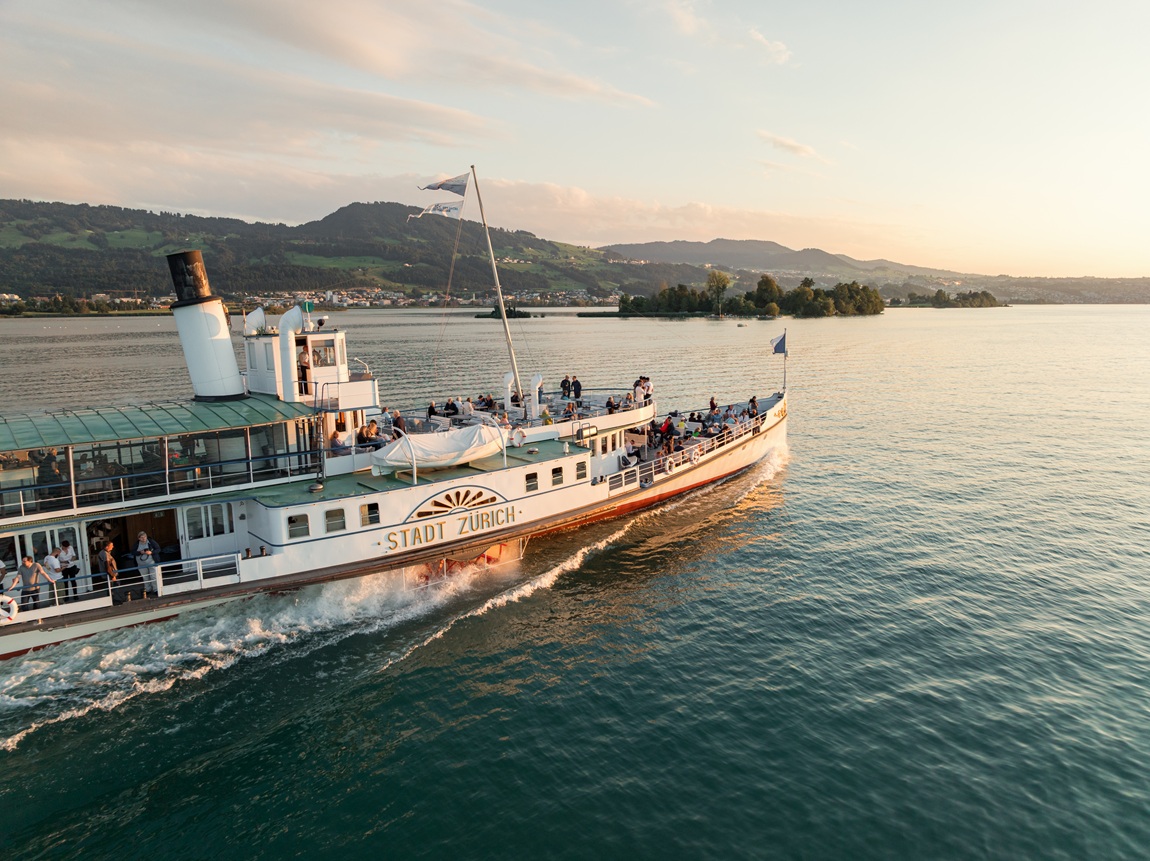
A steam ship on Lake Zurich. Photo: Cemil Erkoc / Zürich Tourismus
A bathing culture with the confidence of tradition
To understand Zurich in summer, it helps to understand the local bathing culture, which has a longer history than the city’s current image might suggest. Its roots reach back to Roman times as archaeological remains at Thermengasse show that bathhouses stood here as part of a Roman urban culture in which bathing was tied to hygiene, sociability and civic life. That early infrastructure did not survive intact into the modern city, but it established a precedent: water in Zurich was not only a resource or a trade route, but also a public space.
The modern tradition took shape much later, in the 19th century, when bathing became linked to public health. Running water and private bathrooms were not yet common, and city authorities began building bathhouses along the river and lake as practical facilities for washing as well as recreation. Zurich’s Frauenbad on the Limmat dates to 1837, and by around 1900 the city had built about 20 bathhouses, many of them strictly segregated by gender and governed by limited bathing times. In the early 20th century, attitudes shifted again. Bathing gradually moved beyond hygiene and towards exercise, leisure and time spent outdoors. Sunbathing decks were added, restrictions eased and the city’s baths became places to stay rather than simply places to wash. The opening of Strandbad Mythenquai in 1922 marked that change clearly, reflecting a broader view of swimming and outdoor life as part of modern urban culture. What survives in Zurich today is the result of those layers of history: a bathing culture with Roman origins, 19th century public health logic and a 20th century emphasis on recreation, all still visible in the way the city uses its water now.
Today, the city’s open-air baths, or badis, are not treated as regular part of urban life. On warm days, the lake and river act as public meeting points as much as leisure spaces. People arrive before work for a swim, return later with friends, or spend evenings on decks and lawns that remain busy long after office hours. Some of these facilities are historic bathhouses with separate swimming areas and long-established routines. Others have been adapted into hybrid spaces that combine bathing with food, bars or evening programmes. In each case, the point is similar: the water is not reserved for the edges of the city. It is built into the centre.
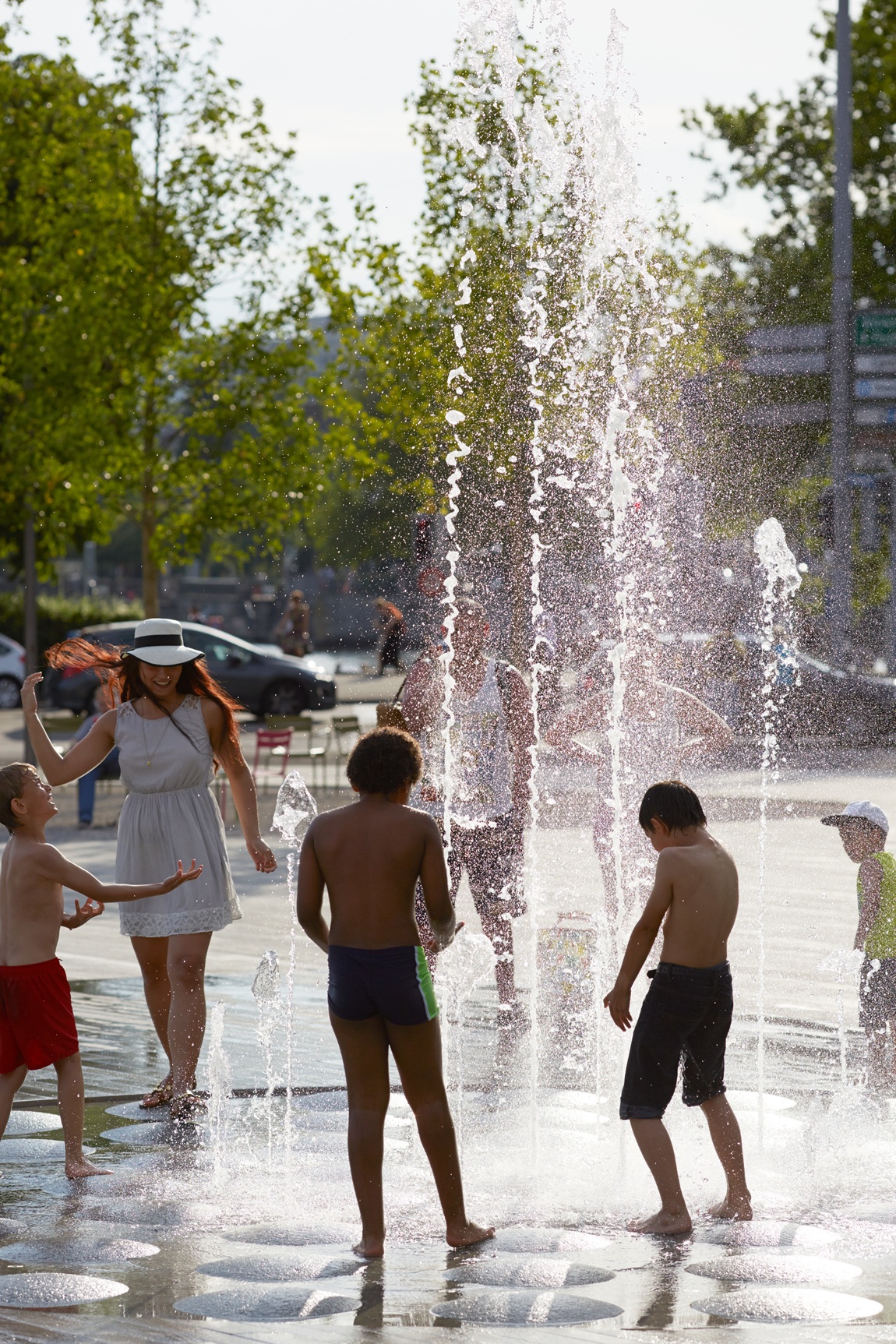
Sechseläutenplatz square in summer. Photo: Elisabeth Real / Zürich Tourismus
The Limmat is central to that pattern. River swimming in Zurich is routine rather than exceptional, and that distinction matters. In many cities, the idea of entering an urban river would still feel unusual or restricted. In Zurich, it is normal enough to be planned into the rhythm of the day. Official guidance recommends using designated entry and exit points, staying clear of shipping areas and not underestimating the current. Popular access points include the stretch near Dynamo, with exits further downstream near Oberer Letten.
Frauenbad Stadthausquai sits directly on the Limmat and remains one of the more distinctive central locations. Oberer Letten and Unterer Letten draw swimmers to the river in a more informal setting, while lakeside baths such as Seebad Utoquai, Seebad Enge, Mythenquai and Tiefenbrunnen open the shoreline to a broader summer crowd. For visitors, these places are more than swimming spots. They are vantage points for understanding how Zurich uses its waterfront: not as a separate leisure zone but as part of everyday circulation, recreation and social life.
For tourists, the range of water-based activities is broad without being difficult to access. Swimming remains the most direct option, but it is not the only one. Stand-up paddling is available on Lake Zurich, with rental and lessons at Mythenquai and Tiefenbrunnen, and the Schanzengraben offers a calmer stretch often used for paddling close to the centre. Pedalo rental from Pier 7 on the Limmatquai provides a slower way to be on the water, with views back towards the quays and church towers. A Lake Zurich cruise offers a different scale. The Lake Zurich Navigation Company runs scheduled round trips, and in summer its historic paddle steamers also operate on selected services. For first-time visitors, that mix matters. It means the city can be read from the water as well as from the street, whether through a short paddle session, a swim from a badi or an afternoon crossing on a steamer.
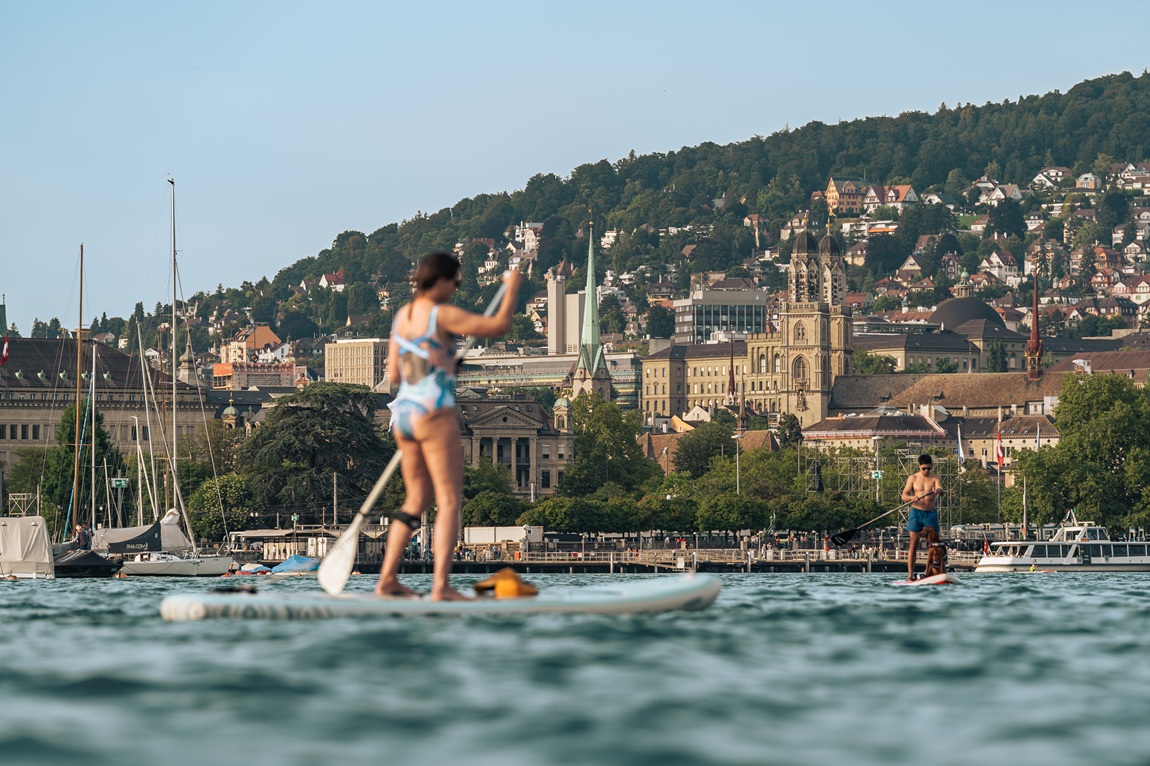
Stand-up paddling. Photo: Christian Meixner / Zürich Tourismus
Fountains, quays and a summer itinerary
Water is also present in smaller, more practical ways. Zurich has more than 1,200 public fountains, and around 800 are connected to the regular drinking water network. They appear across the city in squares, near churches, by tram stops and in residential streets. In summer, they serve a simple public purpose: they make it easier to move through the city on foot without constantly seeking shelter or a shop. That network says something about local priorities. Water in Zurich is not only scenic or recreational. It is also visible as public infrastructure, available in ordinary places and folded into ordinary routines.
The lakefront shows the same pattern at a larger scale. The quays and promenades are used for walking, sitting, swimming and boarding boats, often within the same afternoon. A practical summer route might start at Bürkliplatz, continue along the shore to Zürichhorn and include a stop at a lakeside bath, a boat landing or one of the open public areas used for swimming and sunbathing. July also brings several outdoor events that fit naturally into this setting. For example, the Allianz Cinema operates by the lake from 16 July to 16 August, while the organised public swim across Lake Zurich, Seeüberquerung, is scheduled for 1 July.
Zurich is often presented through its financial centre, luxury shopping streets and postcard views of the old town. None of that is wrong, but in summer it is incomplete. The stronger story is the one told by the lake, the river, the baths and the fountains. They shape how public space is used, how people spend time after work and how visitors move through the city. In summer, the best way to understand Zurich is not simply to look at the water but to follow it: along the quays, onto the boats, into the baths and, if conditions and confidence allow, into the river itself.
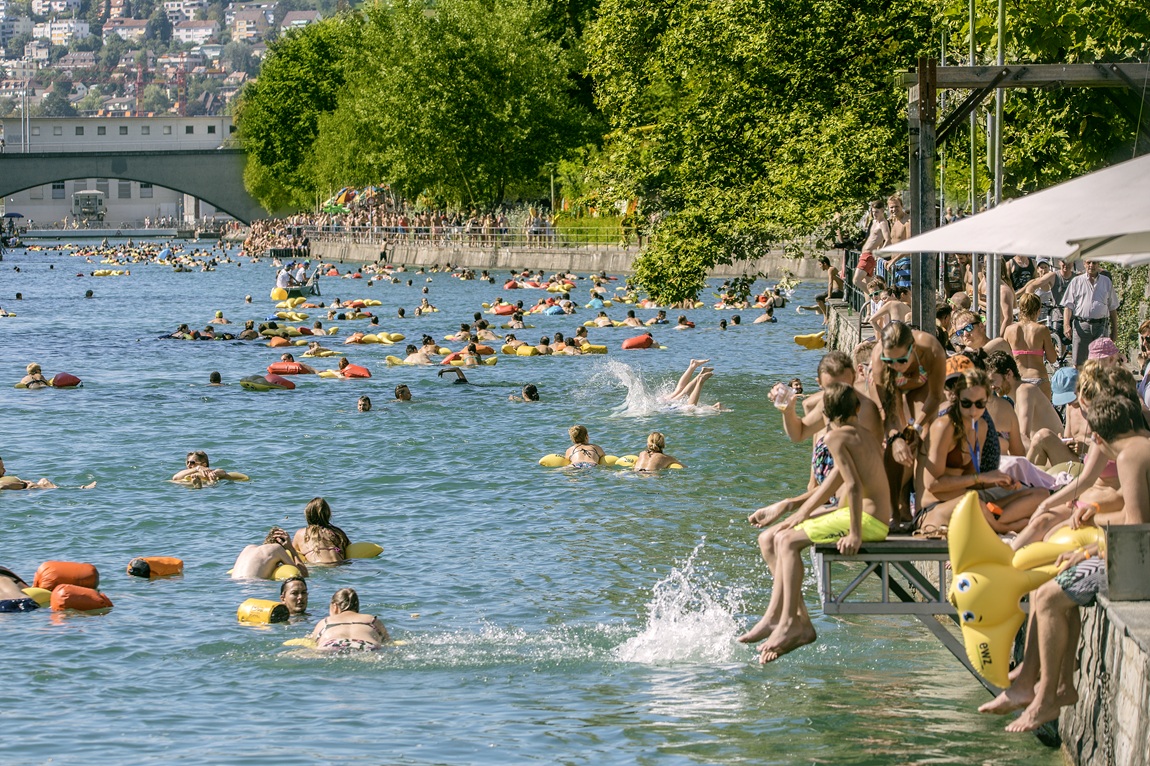
The Limatschwimmen swimming event. Photo: Ricardo Perret / Zürich Tourismus

Subscribe to Our Newsletter
Receive our monthly newsletter by email