Heligoland: The island with holes in it
TEXT: XANDER BRETT
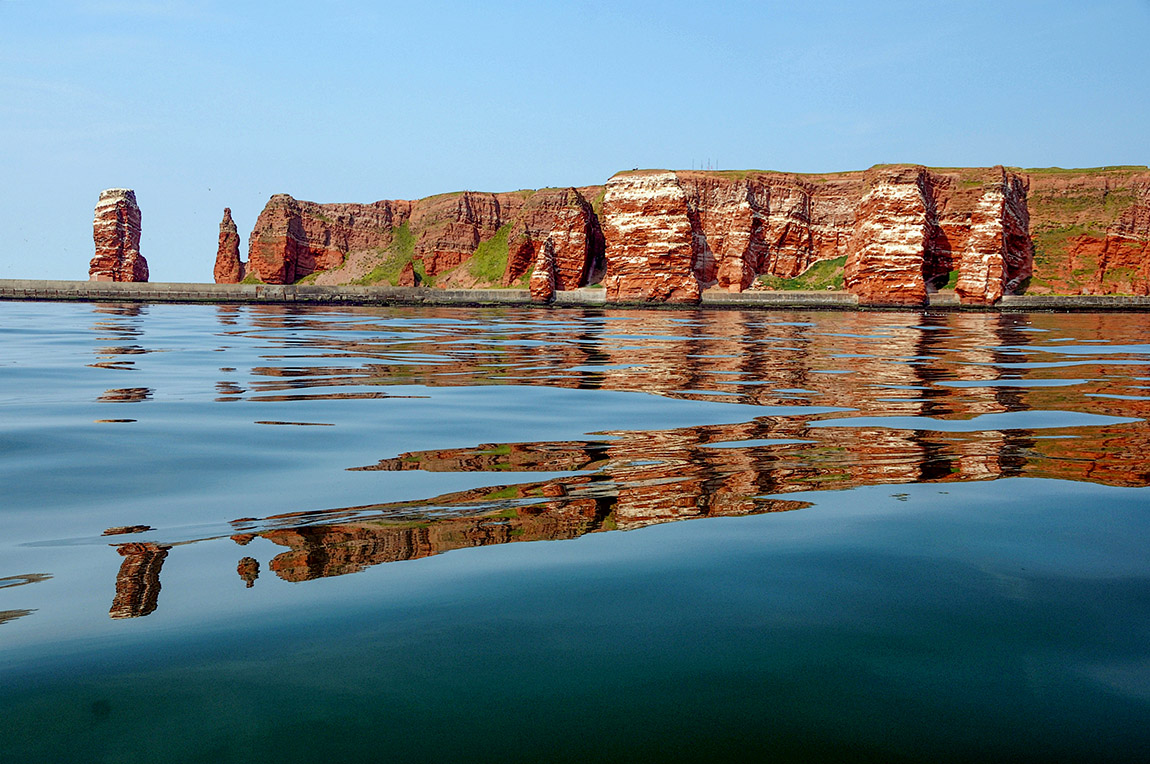
The Lange Anna. Photo: Sascha Stamm, Helgoland Tourismus-Service
Heligoland, once a military stronghold marked by history’s largest non-nuclear explosion, now balances its turbulent past with a thriving holiday scene, prompting journalist Xander Brett to explore whether its history or leisure appeal truly defines the island today.
It is a clear day but, surveying the horizon near two blue footprints that suggested a selfie spot, there is no sign of the mainland. Metal arrows point to various unobservable locations. Berlin, for instance, and the town of Cuxhaven from which I had set off. That is about 65 kilometres away.
Heligoland is a tiny, unexpected landmass in the middle of the North Sea. More precisely, it is a dot with dents in it. Indeed, before my eyes alight on the horizon, they meet the result of an explosion that sought to destroy a network of military installations that had turned a former and present-day holiday haven into a fortress.
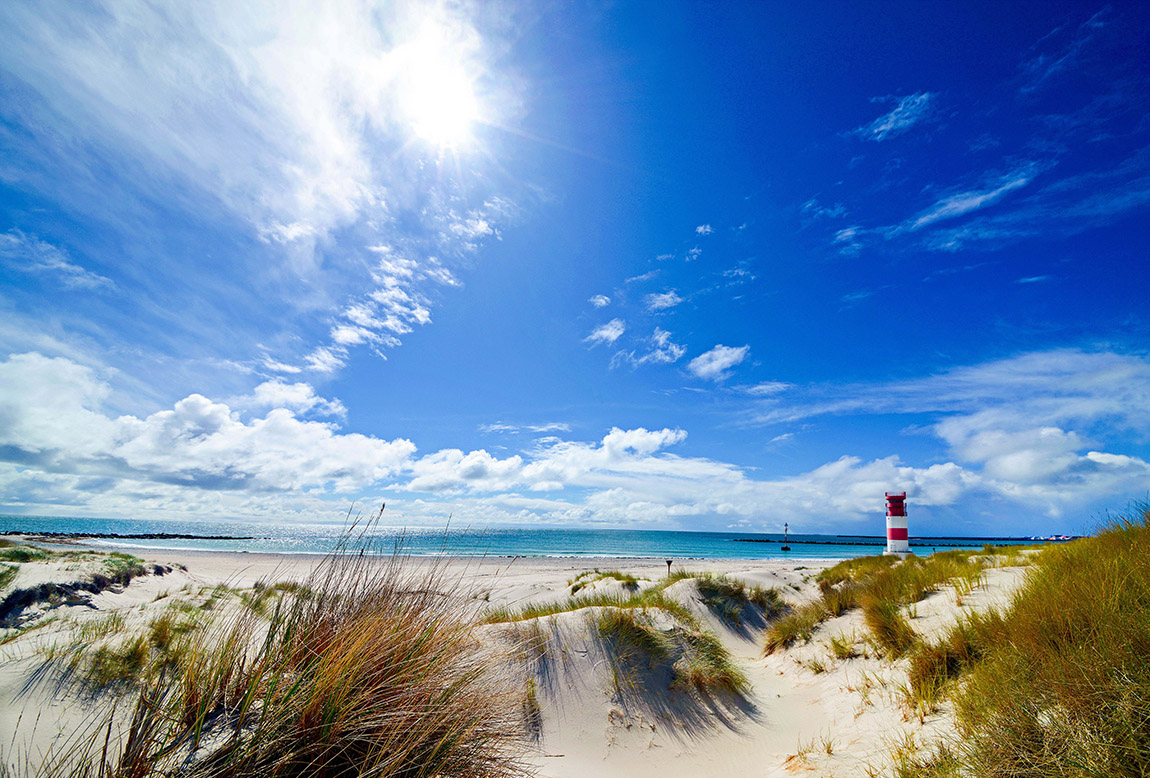
Photo: Ralf Steinbock, Helgoland Tourismus-Service
So large was the Royal Navy’s explosion of Friday 18 April 1947 – rather unimaginatively titled Operation Big Bang – some feared the entire island would be blown sky high. As it turned out, only the southern tip was left with the real scars of lasting damage. It is there that an enormous grass-filled crater is today the preserve of hikers and dog walkers. As I ascend steps beside it, I meet an ambulance creeping downhill. The island’s medical centre is located nearby.
At the top of the hill, I find Jens Kohlenberg, who learned about the explosion during numerous visits to the island. He insists, however, that the primary purpose of his trips has been to soak up Heligoland’s tranquillity. “When the tourist ships depart,” he explains, “you leave the rest of the world behind. It’s magic. The more you visit, the more you get to know the inhabitants. You become one with the island.”
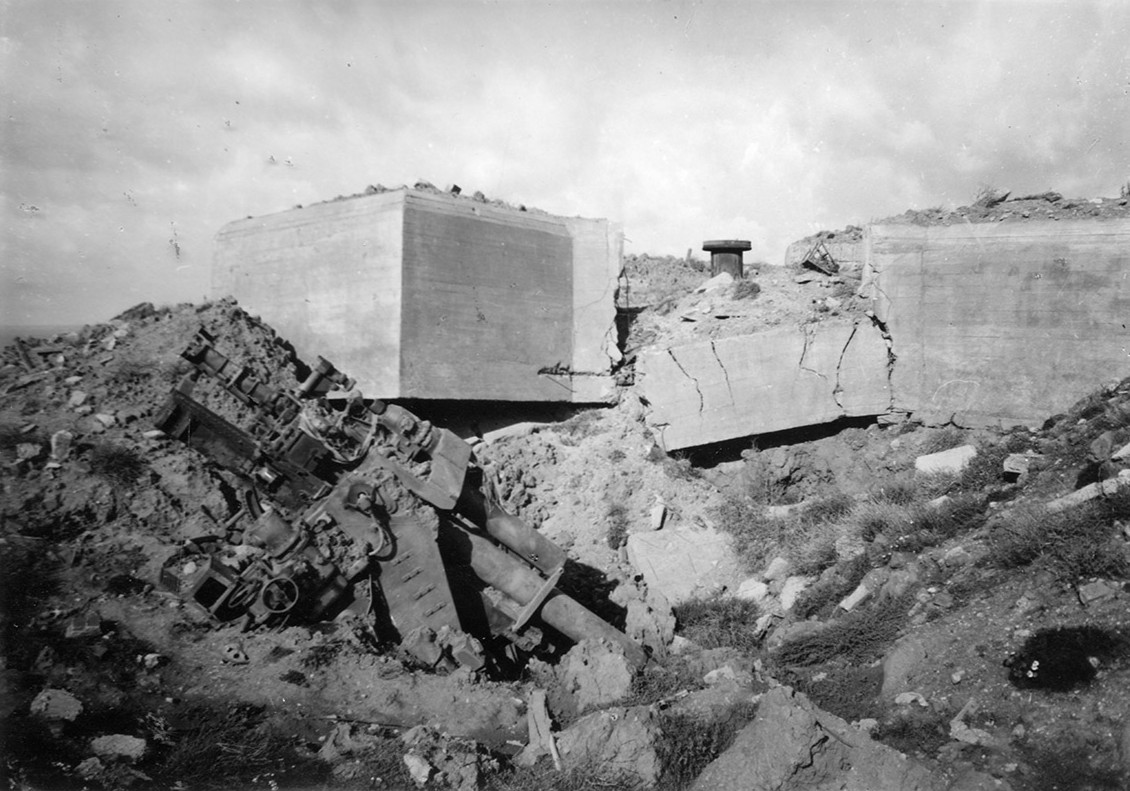
Post-explosion destruction on Heligoland. Photo: Franz Schensky
Kohlenberg and I are among Heligoland’s annual swarm of visitors. The island houses a regular population of just over 1,000, some of whom speak a North Frisian dialect unique to the outcrop. The smaller, sandier and much flatter island of Düne lies just over a narrow straight. It is accessible via a 6 euro return ferry trip and is occupied largely by an airport. A proposal to join the two islands via a land bridge was rejected in 2011.
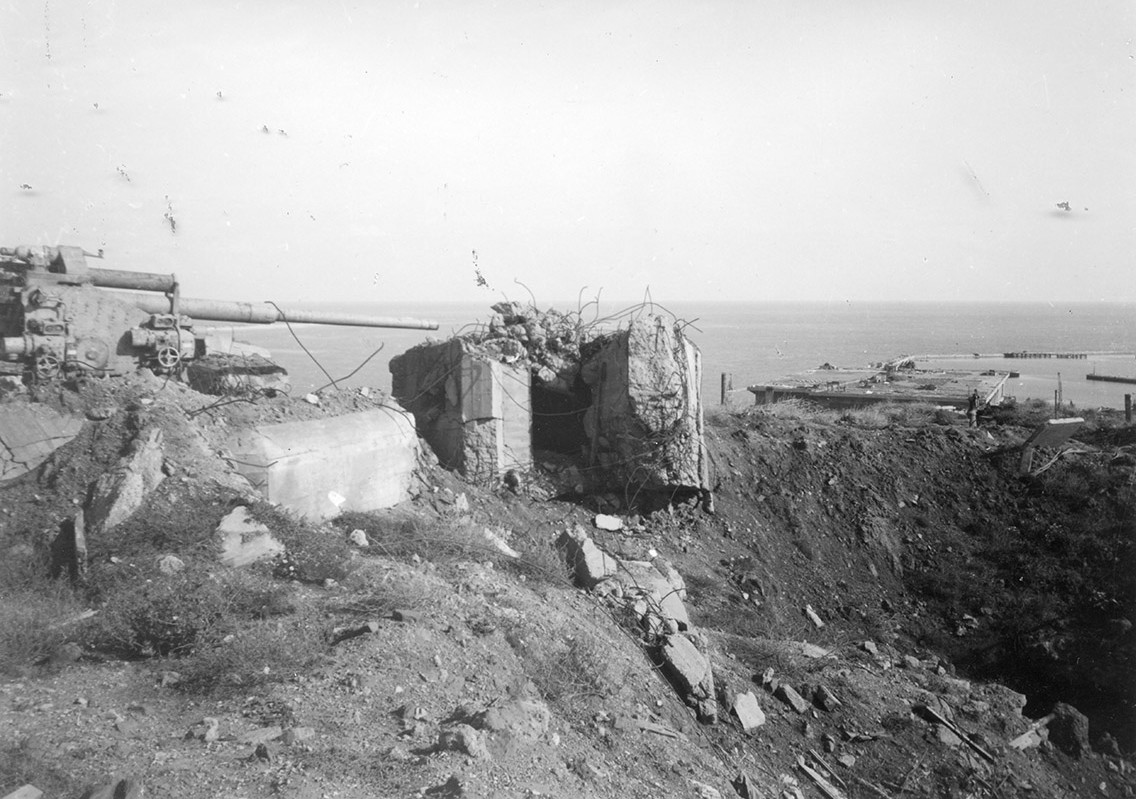
Wreckage on Heligoland. Photo: Franz Schensky
Heligoland has its own green, red and white flag, and, returning to the mainland, I face customs officers, presumably thanks to its duty-free shopping opportunities. Politically speaking, however, there is not much separating it from the mainland. Both Düne and the main island are part of the state of Schleswig-Holstein. It was here, in the early 1840s, that August Heinrich Hoffmann von Fallersleben wrote the lyrics to what would in time be adopted as Germany’s national anthem.
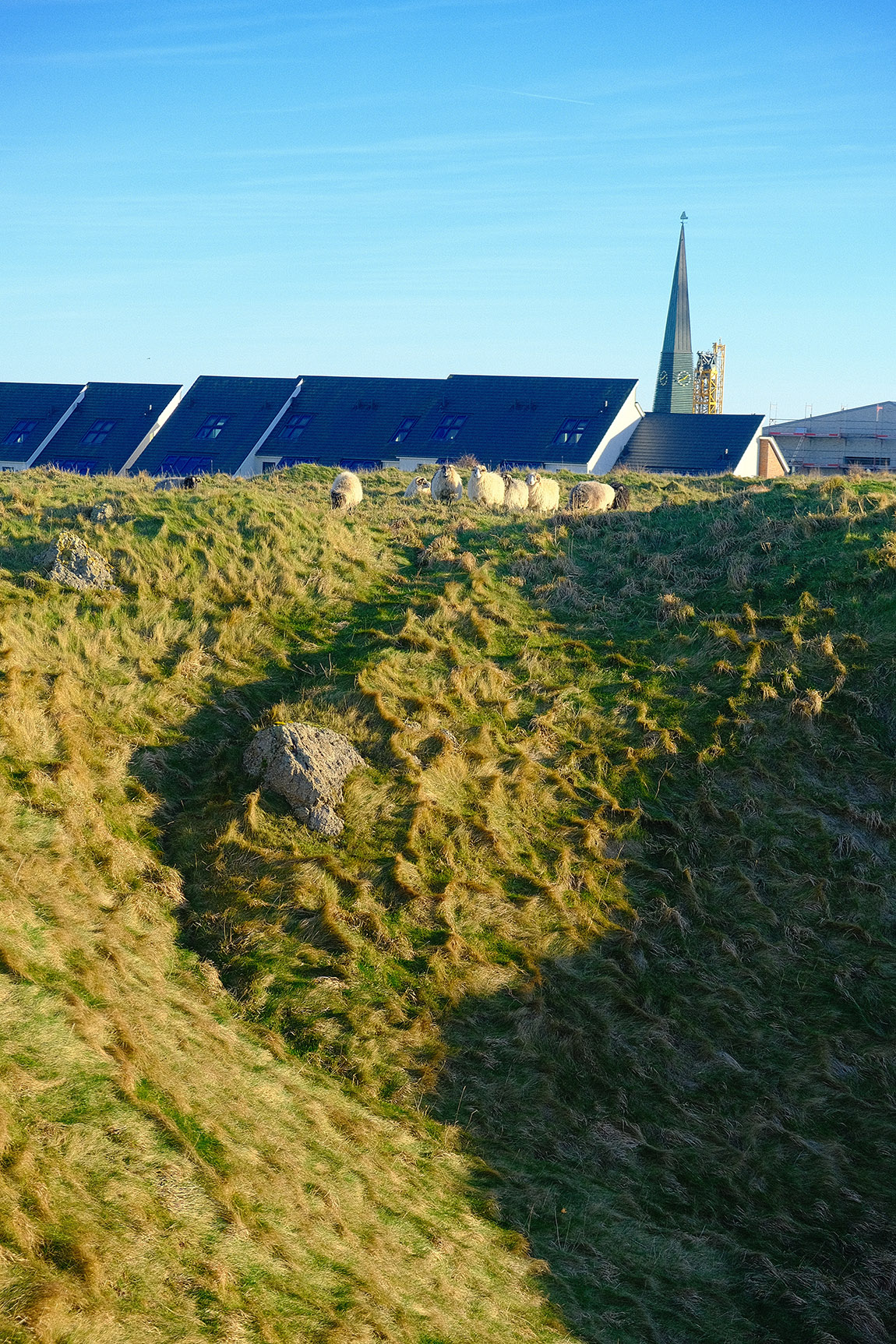
Explosion damage pictured this year. Photo: Luca Marie Korthals
Back then, though, when Hoffmann von Fallersleben was holiday, the island was under British rule, having been ceded to Britain by Denmark in the Treaty of Kiel, an annexation ratified by the Treaty of Paris. For some, Heligoland became a political refuge. For others, it served as a tranquil escape from a rapidly industrialising continent. Things changed in 1890, when a newly unified Germany was handed the islands in the Heligoland-Zanzibar Treaty. It was not long until a naval base sprang up on the island.
The civilian population was evacuated during the First World War, when gun emplacements were positioned along the cliffs. Inhabitants could return as the war ended, but barely two decades later the military base was reactivated. The Nazi government even initiated what it called Project Hummerschere, aimed at reclaiming land lost to erosion.
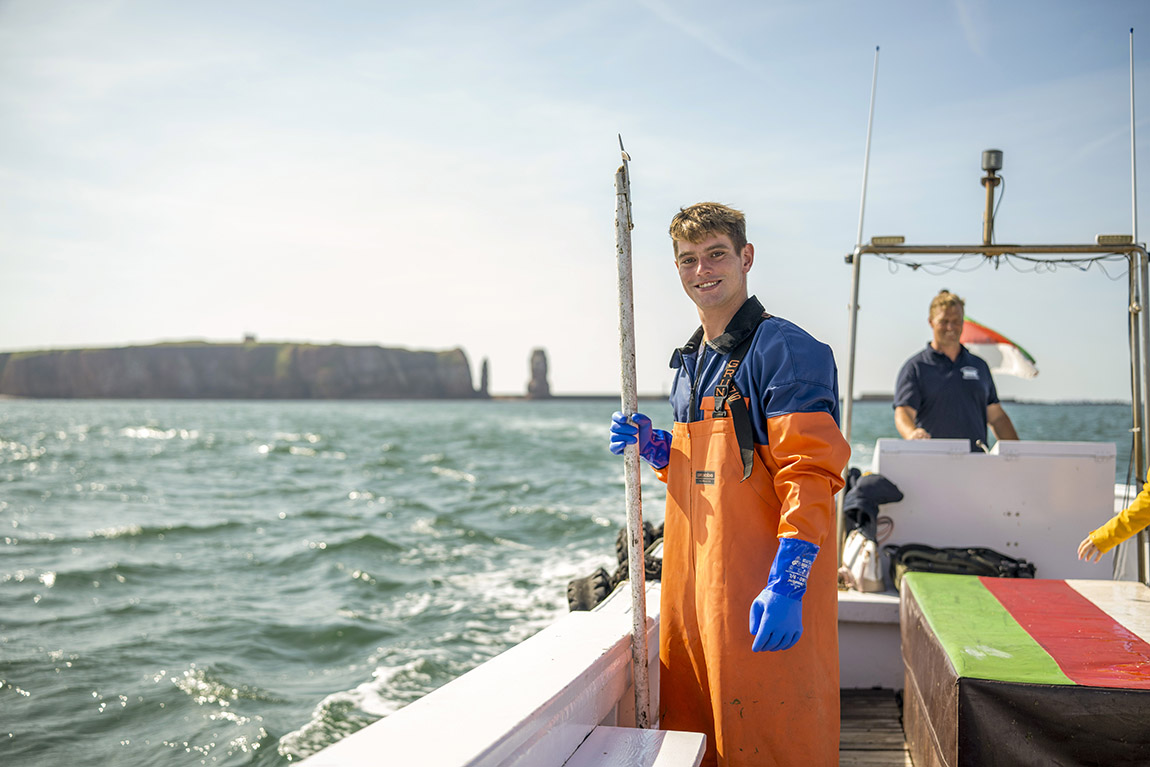
Lobster fishers off Heligoland on a traditional Börteboot. Photo: Till Werner, Helgoland Tourismus-Service
“You’re not so much visiting a battlefield as the ruins of the Anglo-German past,” says Jan Rüger, author of the book Heligoland: Britain, Germany, and the Struggle for the North Sea. “The island was fought over, but it wasn’t a battlefield in the way that many military tourists may be familiar with after visits to Normandy and the like. British soldiers only really landed on the island when there was no resistance.”
Outside Heligoland’s museum sits an unexploded Tallboy bomb dropped by British forces on Thursday 19 April 1945. Rüger suggests not only visiting that Museum Helgoland, but also the Oberland, where gun emplacements were inserted into the cliffs and where now there is a path to follow, with spots to gather information and get a sense of the lay of the land in times gone by.
Photo: Thorsten Meyer, Helgoland Tourismus-Service
“It’s a recent thing for people to tour remnants of the conflict,” Rüger continues. “In the 1950s and 60s, the island was rebuilt as a decidedly pacifist tourist resort that was meant to look like Denmark or Sweden. It has only really been since the 1990s that there has been interest in excavating and making former military sites accessible.”
The occasional history buff aside, Rüger says that touring past battlefields “isn’t such a big thing” for the German public and is instead “more of an Anglo-American pastime.” Many readers of Rüger’s book, indeed, are British and American, and some have written to tell him that they have visited the island and found touring former military sites interesting. Often, Rüger explains, those visitors hold a personal connection to the island, often through a parent, grandparent or great-grandparent who was engaged in military operations around the island.
Despite the arrival of such visitors, however, and despite increased interest in Heligoland’s not so distant history, if it was not for waves of visitors necessitating a higher proportion of souvenir shops, the settlement in Heligoland’s south would simply resemble any other small northern European town.
A tall transmission tower overlooks multicoloured structures. Just behind it sits a lighthouse: reportedly the only building to survive the 1947 explosion. The red rock Lange Anna (Tall Anna), a 47-metre-high stack – Heligoland’s most recognisable landmark – sits at the island’s northern tip, sheltered by a breakwater.
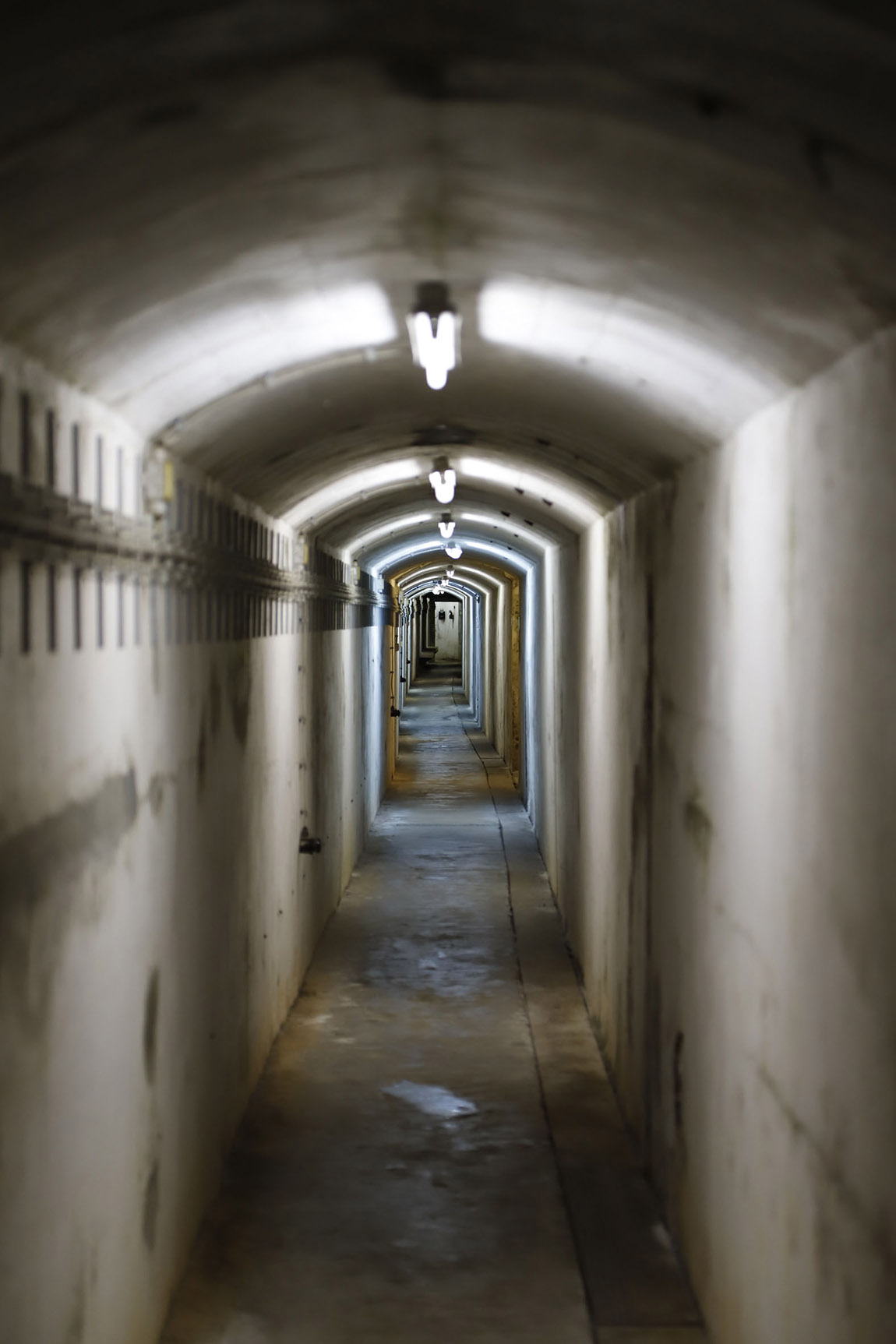
A bunker on Heligoland. Photo: Ottmar Heinze
A walk around both Heligoland and Düne can be completed in a few hours, and the speed with which one can tour the destination means that I am far from the only tourist making a day trip from the mainland. I had opted for a catamaran from Hamburg that picked me up in Cuxhaven before pushing on to Heligoland, docking about 75 minutes later. Hoists were engaged as luggage was unloaded – a routine that had presumably gone unchanged for decades.
“It was huge until the 1980s,” says Rüger, when asked whether the fact that Heligoland was tossed between three powers in the 19th century, and the fact that it was the birthplace of the national anthem’s lyrics, allows it to occupy a place of significance in the German national psyche. “There was a boom period in the 1960s when very large numbers of West German visitors went over to the island,” he explains. “They went to enjoy duty-free discounts and sit on the beach, of course, but they were also there because they thought the island mattered.”

Seal pup. Photo: Carsten Hase, Helgoland Tourismus-Servic
Heligoland is still a tourist hotspot but few, surely, are there out of patriotic duty. Its rhythm is quieter today and it has fallen back to a state it enjoyed before the Napoleonic Wars, when the tiny – if strategically located – island was heaved onto the European stage.
“In August 1990,” says Rüger, “when the centenary of the cession of the island from Britain to Germany was celebrated, it wasn’t a huge deal in the German media. It was a local event, whereas in the 1950s or 60s, it would’ve been a national event broadcast everywhere.” But, while the island’s symbolic presence might have faded, reminders of its history remain impossible to ignore. The gaping gash of a crater – explosive damage – still greets passengers as ferries dock.
Heligoland is a small island that played a large part in history. History buffs or not, it is only natural that visitors should be inquisitive about its peculiar wartime and peacetime past.
Photo: Sascha Stamm, Helgoland Tourismus-Service

Subscribe to Our Newsletter
Receive our monthly newsletter by email