Cornelia Brelowski: Of Imperial Botany and Education
Text: Cornelia Brelowski
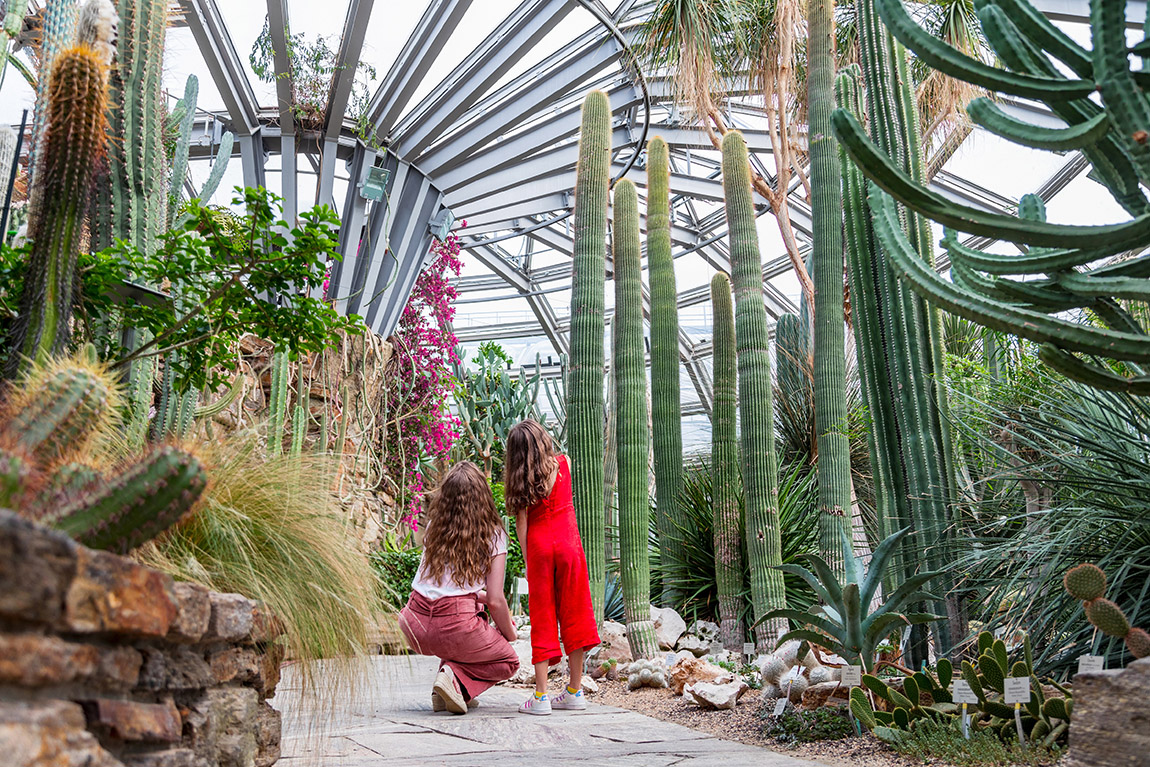
Cactus House. Photo: © Botanischer Garten Berlin, Christiane Patić
It’s confusing: Berlin’s Mitte borough translates as centre of Berlin, which it indeed used to be in pre-war times, after which the city – or half of it – acquired a new, second centre in the west around Kurfürstendamm. Since the wall came down in 1989, the Berliners consequently have two centres to choose from, and people from Charlottenburg would probably still call Berlin-Mitte Ostberlin.
The opposite is also true (guilty as charged): the Botanical Garden Berlin is so far away from where I live nowadays that I’m sometimes tempted to call the area the Wild West. It’s only Steglitz, but from Mitte it’s quite a ride, especially for cyclists. What unites the two though is that Mitte was the official city centre in times of the last emperor Wilhelm II, grandson to Queen Victoria, under whose tutelage the Botanical Garden Berlin was established in its current spot in Steglitz, and opened to the public in 1904. Today, it’s fused with the Free University in nearby Dahlem (even further west), and forms a science hub as well as an educational centre. The stunning expanse of the gardens includes a generous cluster of greenhouses with sections for every possible climate zone – in which you can take a trip around the world within an hour or two, depending on your curiosity and sign-reading patience. Gigantic cacti await the goggling visitor as well as ferns, flowers and tropical trees of mind-blowing shapes and height. Spreading far beyond, the 14 hectare grounds include an arboretum with 1,800 tree species, an Italian garden, a medicinal herb garden as well as a scent-and-touch garden.
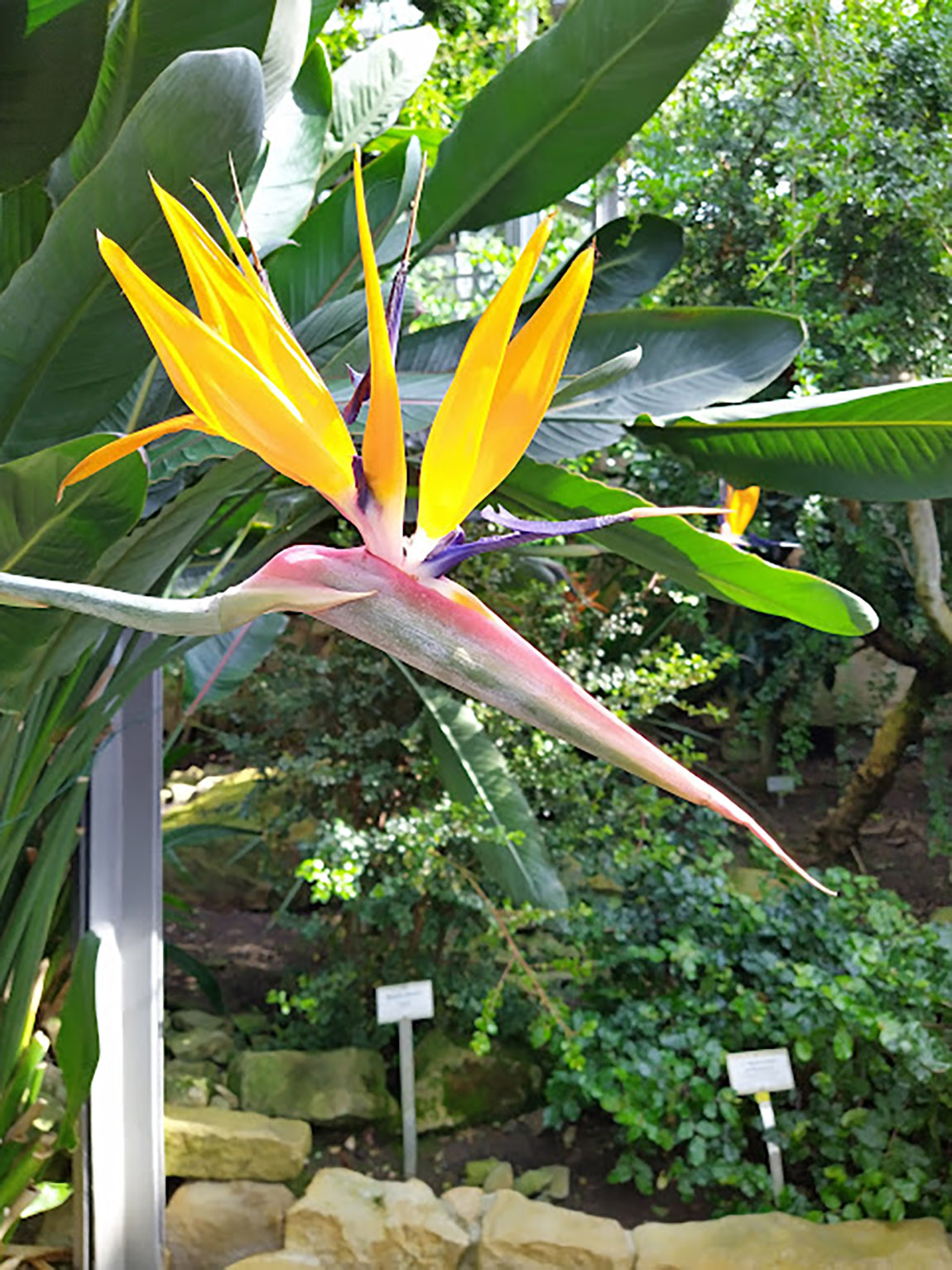
Bird-of-paradise flower. Photo: Cornelia Brelowski
The connection to science and the Free University means that ironically, the senate’s current budget cuts are hitting the Botanical Garden from two sides at once – both in terms of core funding due to general major cuts to Berlin’s universities and in the construction sector in the context of a list of cuts published in 2024 – which also includes the renovation of the Mediterranean House, a historic glass and steel structure with art deco elements, and possibly the most attractive of the green houses.
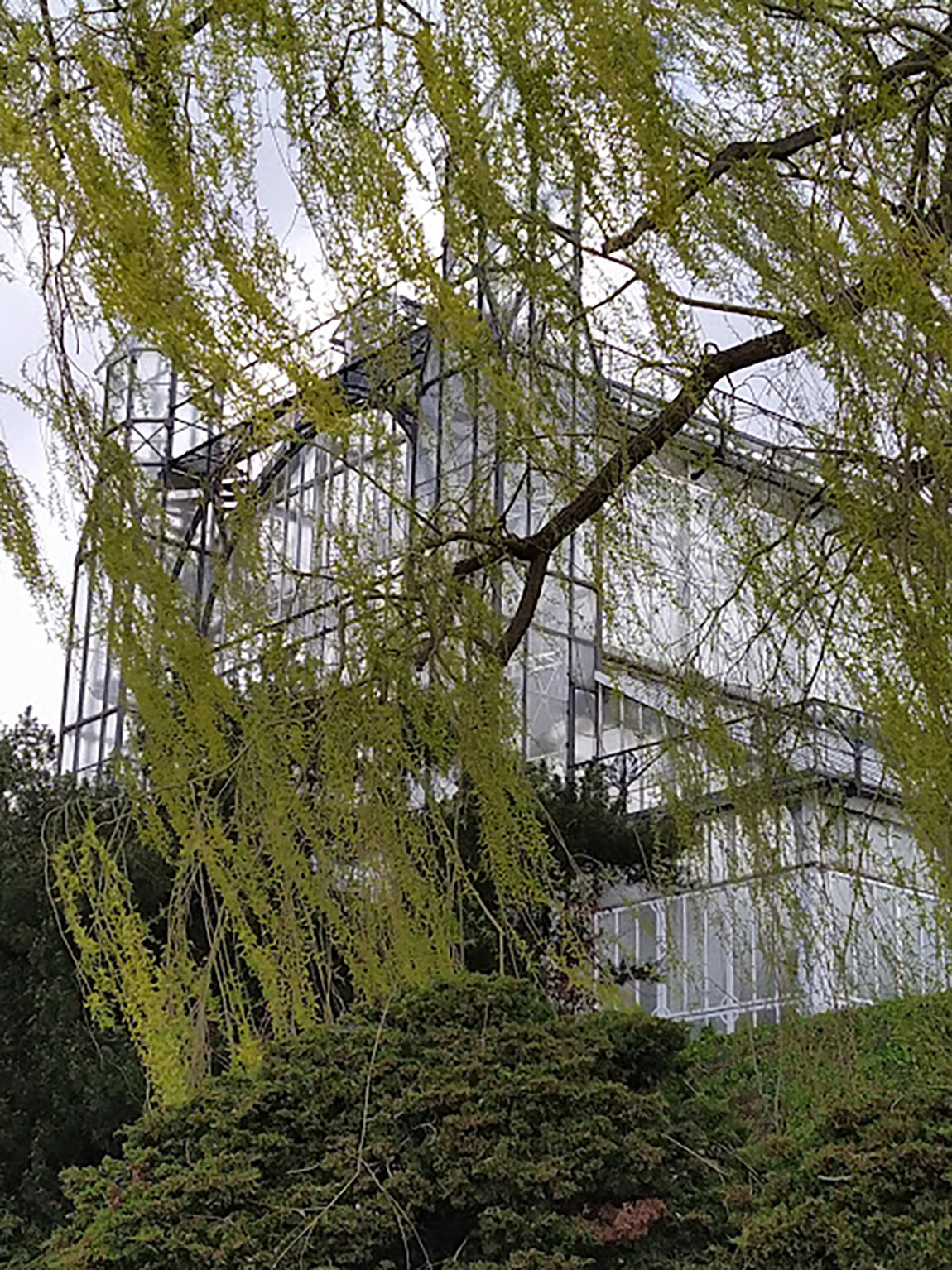
Mediterranean House. Photo: Cornelia Brelowski
In case you exit to the east and have a little extra time, consider wandering along the road at the left-hand side until you reach a little side street called Am Fichtenberg. Following it and turning right, you will find a historic structure in pristine shape with a clock at the front. Situated just off the main road, this building was the very first Berlin high school for girls, founded by empress Auguste Victoria to make sure that German women could finally achieve the necessary school diploma to be accepted at university. Fittingly called Kaiserin Auguste Victoria-Lyzeum, it was erected after plans of architect Hans Heinrich Müller and opened in 1912. Magically untouched by WWII, the picturesque structure at Rothenburgstraße 18 today still houses a (mixed) high school.

Photo: Coline Mattée

Subscribe to Our Newsletter
Receive our monthly newsletter by email