Tiny housing: the future of living?
TEXT: ANNA ENGBERG
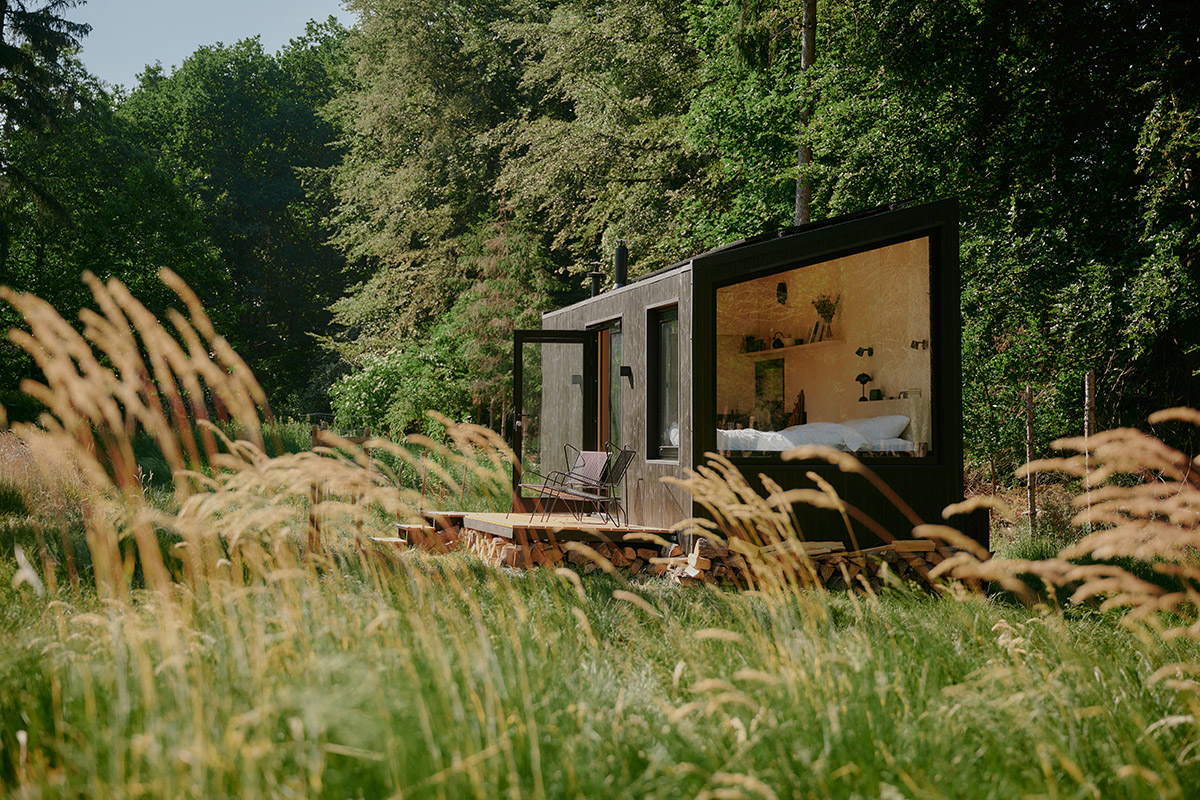
Cabin of the German tiny house hospitality start-up Raus. Photo: Raus/Noel Richter
For a long time, tiny houses have been more than just a trend – they stand for minimalism, sustainability and new living concepts in times of rising rents and property prices. In Germany, Austria and Switzerland, tiny house settlements are now becoming increasingly common. Where are the opportunities, and where are the challenges?
Tiny houses are currently springing up like mushrooms. At least that is what you can conclude when looking at current developments in Germany, Austria and Switzerland. The tiny house village Mehlmeisel in the German Fichtelgebirge region is of course a prime example. Here, residents have now grouped over 25 tiny houses together – and with 37 spaces in total, the area has even more potential.
“Tiny house settlements are becoming more frequent, especially around urban centres,” states Fabian Müller, who exhibited with his company VILCOMO at NEW HOUSING 2025 in Karlsruhe in southern Germany at the end of June. The tiny house property developer tracks interest in the construction of tiny houses in German-speaking countries via the heat map of his digital Flächenbörse (www.die-flaechenboerse.de). Here, prospective homeowners and landowners can register free of charge for their city or region and express interest in building a tiny house or making their land available. “Anyone can place a dot on our map of Germany. We check whether the sites are suitable for building and connect the parties.”
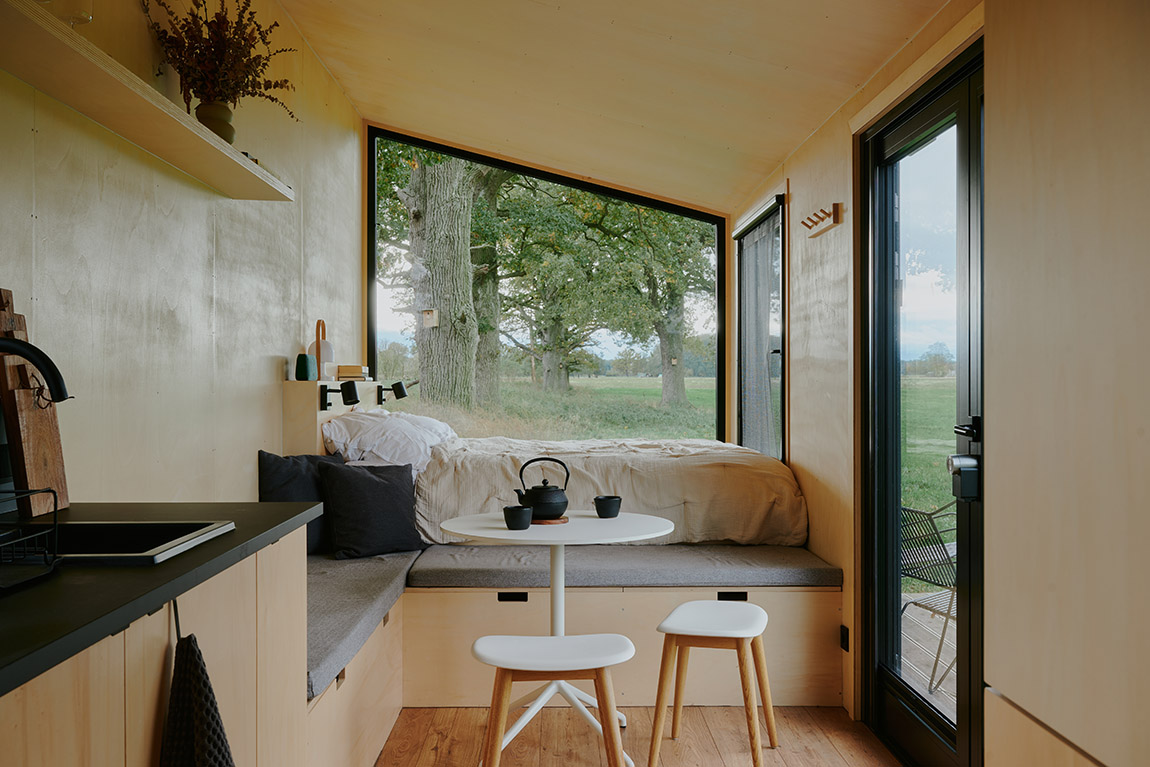
Cabin of the German tiny house hospitality start-up Raus. Photo: Raus/Noel Richter
Students and best agers: tiny residential park in Heidelberg
“Alongside real villages like Mehlmeisel, there are also many small mini districts with just two to four tiny houses in German-speaking countries,” reports Müller, who is currently developing a tiny housing park in the German university city of Heidelberg with a project partner. “The demographic challenge here is that we have to satisfy students and researchers as well as best agers, groups with very different ideas of living,” he says. Tiny housing is an attractive form of housing for best agers in particular. Their demand is extremely high – not least because it is affordable living space: “This group also appreciates ageing together, with communal gardens and time with neighbours.” The city of Heidelberg is now considering which proposals to implement – based on its own structure.
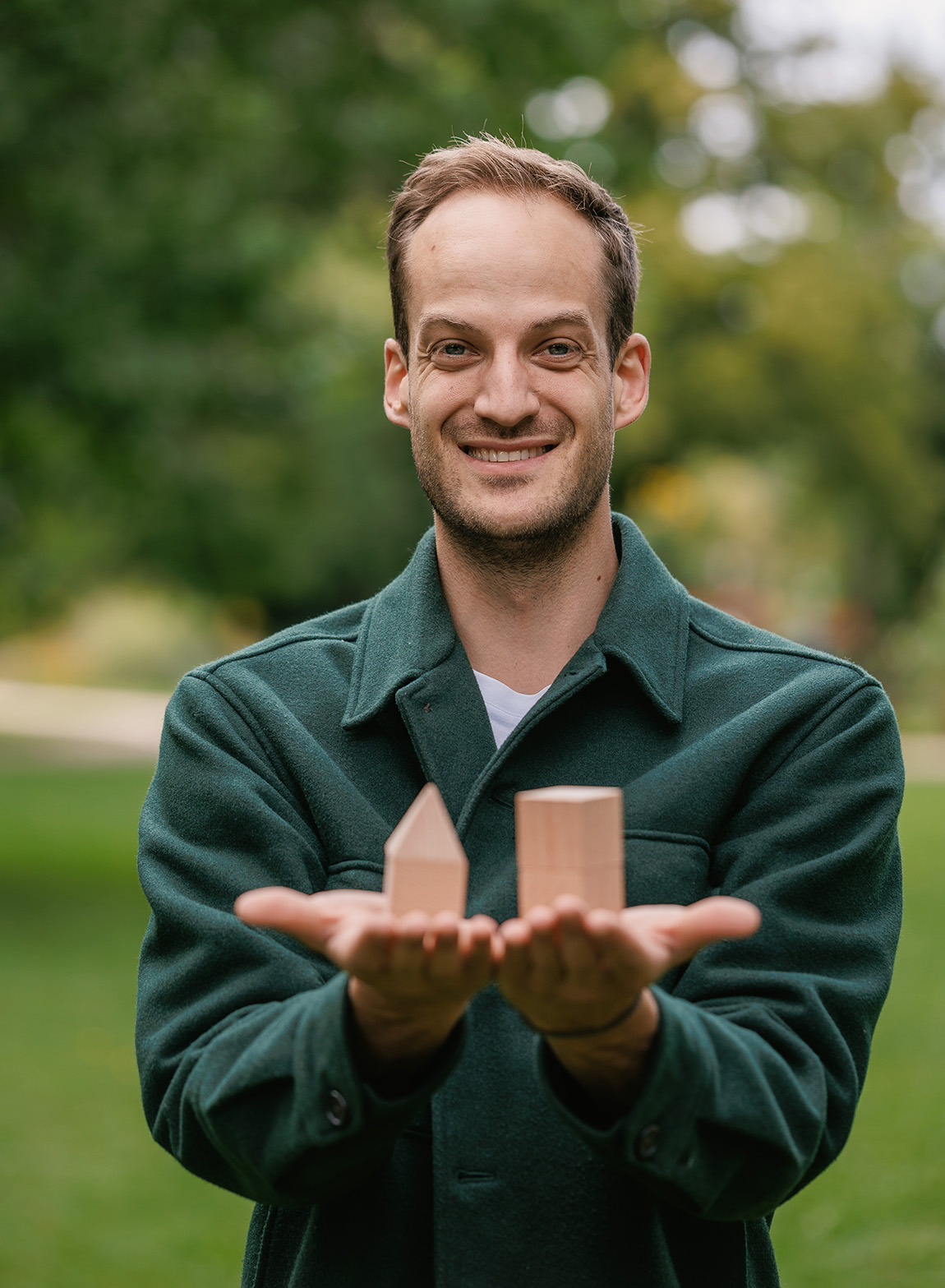
Fabian Müller, founder of Vilcomo. Photo: Vilcomo
The tiny house park in Heidelberg is not the first project of this kind that Fabian Müller has been working on. In Singen, on the Swiss border towards Lake Constance, he is also developing a much smaller housing project in which a total of four tiny houses will be erected: “Just like in Heidelberg, there is an extreme need for living space and someone who can solve it,” he explains. The urban area is being leased so that tiny houses can be set up and rented out. The waiting lists for such tiny house parks in cities with a tight housing demand such as Heidelberg and Singen are equally long.
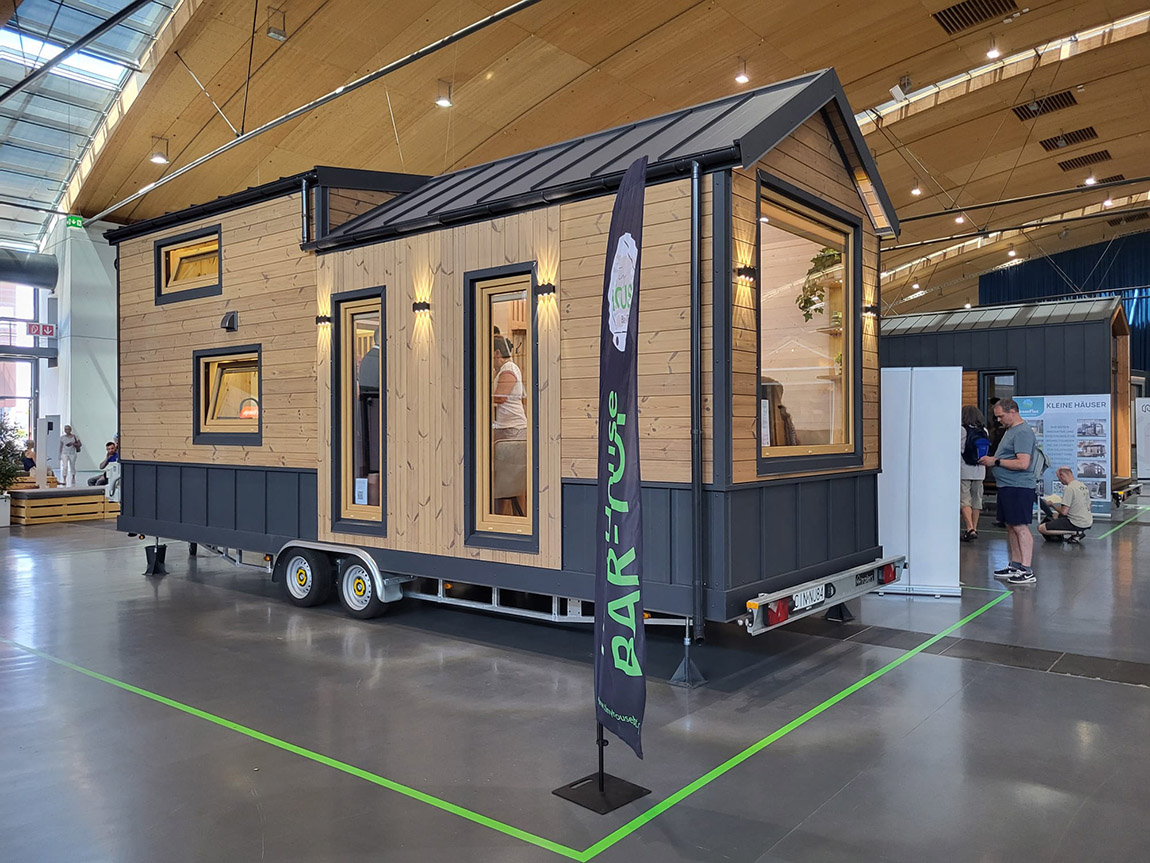
NEW HOUSING is the leading trade fair for tiny housing in German-speaking countries and Europe’s largest festival for tiny housing. Photo: Ginger Aschenbrenne
Over 100,000 empty building plots in Germany alone
“I specialise in cities with an increased need for living space,” explains the tiny house property developer. Essentially, this involves temporarily activating areas that are not suitable for conventional development. “Of the 100,000 undeveloped plots of land in Germany that are being held back as an investment, almost all of them could be leased and used temporarily for tiny housing,” he says. Landowners could, thus, generate passive income and create living space in cooperation with the municipalities.
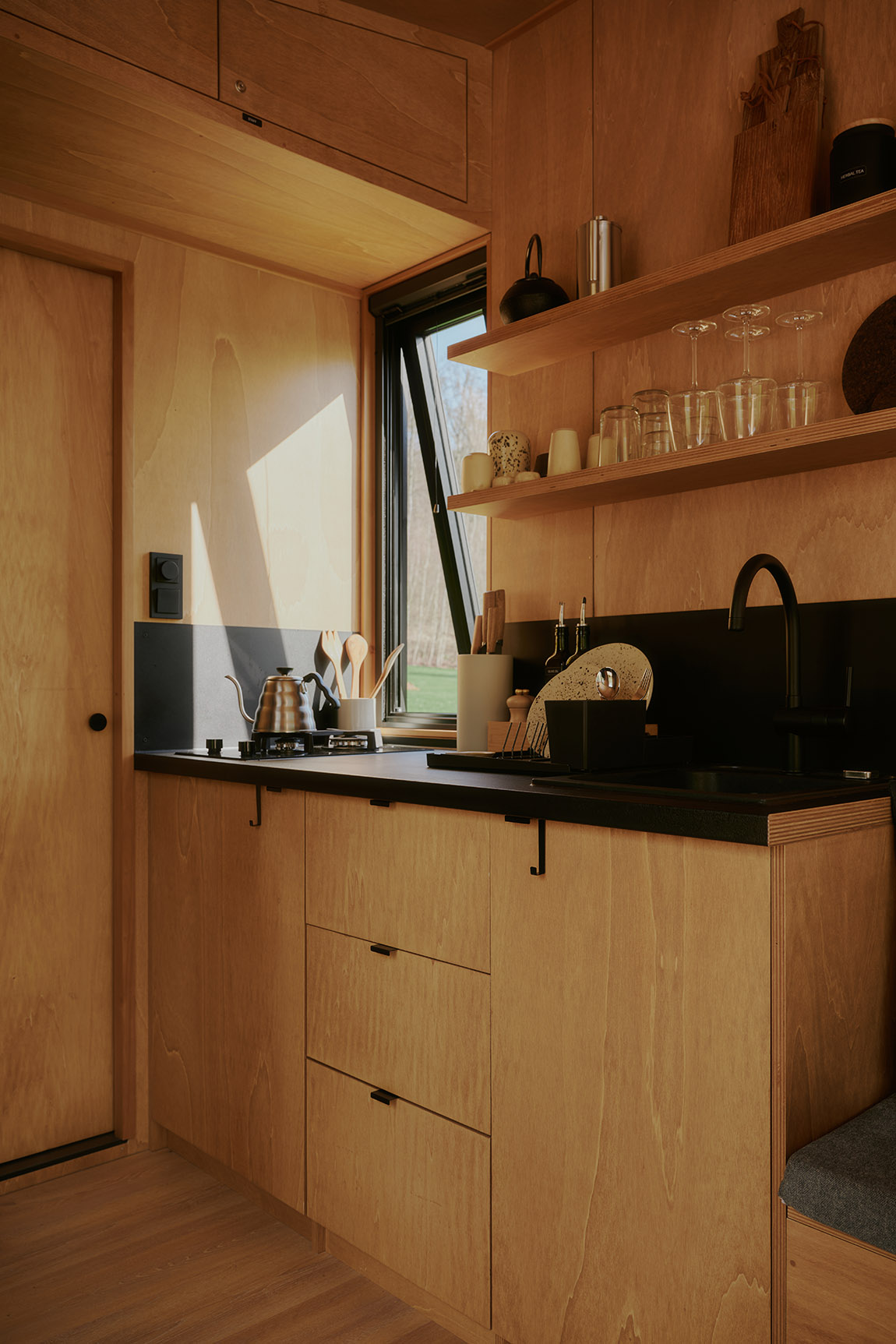
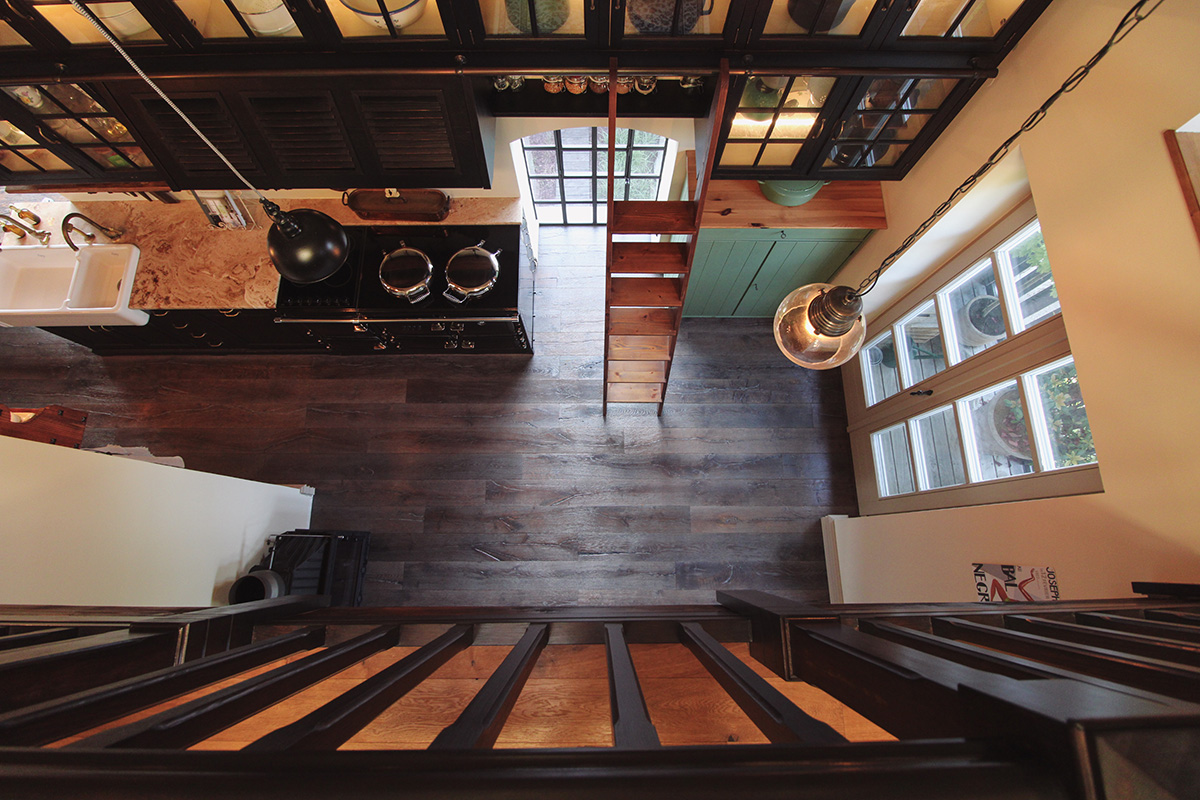
Kitchen area in a cabin of the German tiny house hospitality start-up Raus. Photo: Raus/Noel Richter
This involves a rethink in the activation of building land and among decision-makers: “With Tiny Housing, we no longer plan for infinity, but only for certain periods of ten to thirty years, for example. This allows us to activate green spaces temporarily and benefit from the acceleration factor of serial construction,” says Müller, summarising the advantages and opportunities of tiny housing. For him, the aim is to utilise areas which are not suitable for high-rise buildings or apartment blocks instead of leaving them empty, in the interests of space efficiency.
Based on his diverse project experience, Müller knows that planning sovereignty ultimately lies with the municipalities. “Building law is the same all over Germany. In the end, the decision is municipal, meaning that the approval is the responsibility of the city.”
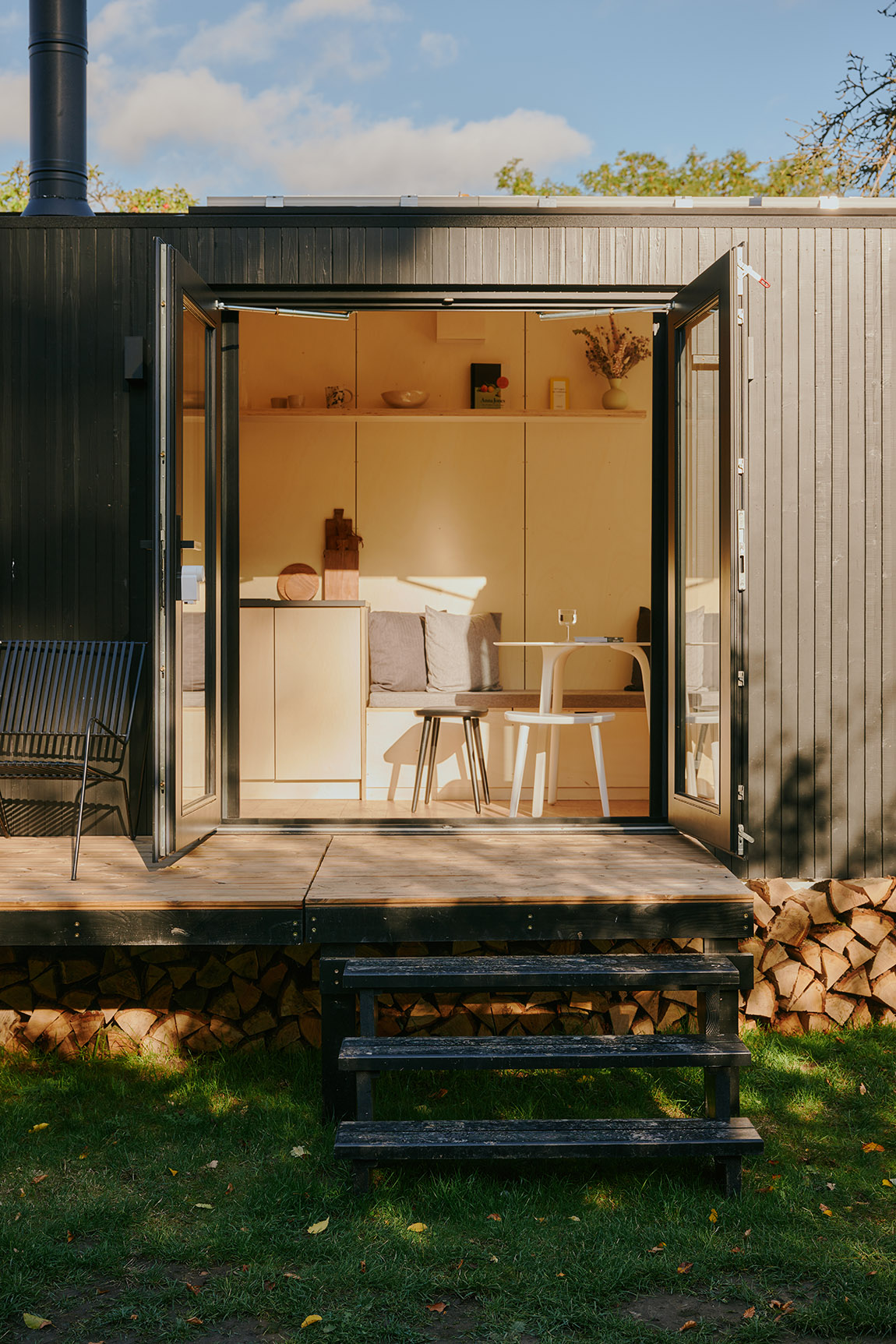
Cabin of the German tiny house hospitality start-up Raus. Photo: Raus/Noel Richter
It is not enough to simply own a plot of land
Another major problem with tiny houses, in Müller’s view, is the way they are portrayed in the media. “Buying and building them is often simplified in the media. Unfortunately, it’s not enough just to buy a tiny house and put it on a plot of land,” he clarifies. “As with conventional house construction, you need a building permit, technical installations, electricity, water, sewage, a foundation, and much more. This is often concealed.”
In order to simplify this process for all parties, the developer and consultant has specialised in tiny housing in German-speaking countries for three years, and carries out feasibility studies and profitability checks. This way, he helps to develop land up to the final tiny house plot. “I support cities and municipalities, as well as landowners and investors, by conceptualising the entire process. I help with the concept, pricing for possible leasing, check the technical implementation, clarify financing with the banks, obtain planning permission, and market the entire project based on interests.”
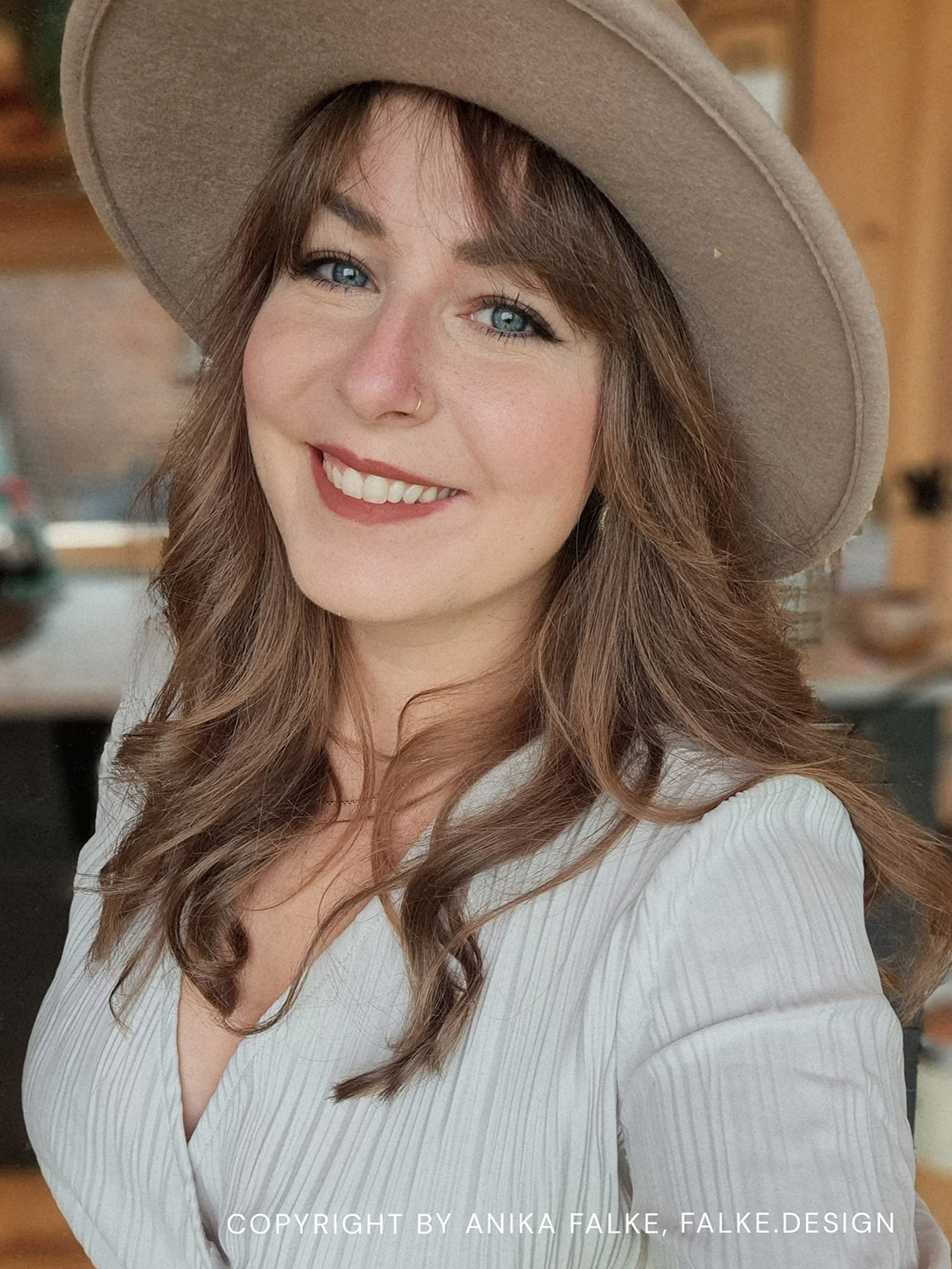
Anika Falke, interior and product designer, co-founder of Tiny University. Photo: Anika Falke/falke.design
Tiny University: planning and realising your own tiny house
Interior and product designer Anika Falke was also present at NEW HOUSING this year. She and her partner have been living in their self-designed, built and patented tiny house for almost five years. Together with two other experts, she founded Tiny University in 2024, which provides an online learning platform for people interested in tiny houses, among other things.
Here, the three women pass on their combined practical knowledge to others and cover the entire tiny house journey step by step. “From the personal mindset and minimalism in everyday life to the search for a plot of land, planning and approval processes, financing and choice of manufacturer through to questions about renting, potential returns, risks and possible tax benefits,” lists Falke, who held a total of six workshops at the trade fair on three main topics relating to tiny houses, from planning to their usage as investment.
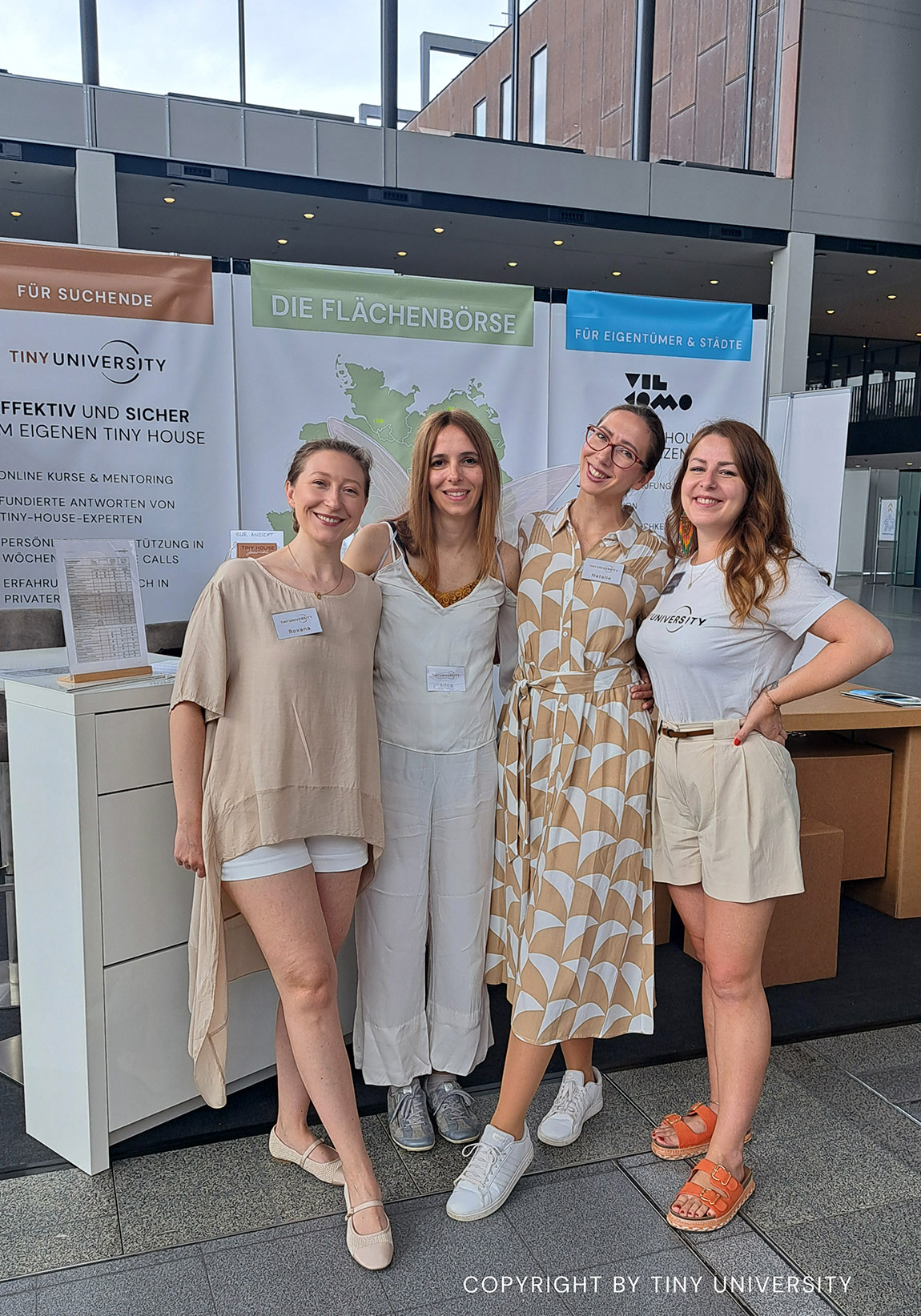
The team behind Tiny University at NEW HOUSING 2025 in Karlsruhe, Germany. Photo: Tiny University
Creating spaces that meet needs
As a consultant, it is important to her to create spaces that not only meet the needs of their users, but can also be flexibly adapted to changing living circumstances. “Very few of my customers live in specially designated tiny house developments,” she says: “The majority opt for an individual solution, usually on their own or leased land.” She sees the reasons for this in the fact that individual locations can often be realised more quickly and flexibly than complete housing estate projects.
“The modular construction allows for you to react flexibly to changes in life and extend, move or dismantle the tiny house as necessary,” says Falke, emphasising the advantages of living in a tiny house. The possibility of utilising small plots of land that are difficult to build on, such as gaps between buildings or slopes, is also particularly attractive. Overall, the expert sees numerous opportunities for the future of living in tiny houses.
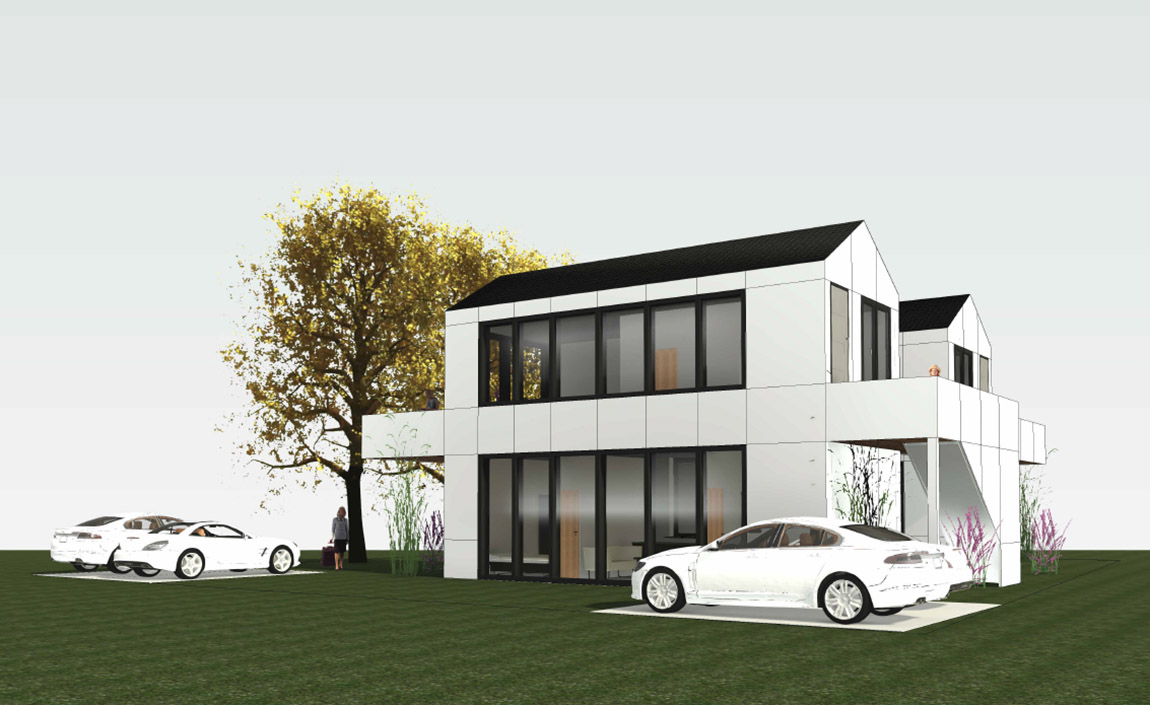
Sketch of the tiny housing project in Singen on the Swiss border towards Lake Constance. Photo: Vilcomo
80 per cent of tiny house projects fail due to a lack of preparation
According to Falke, the biggest challenge on the way to your own tiny house is often confusion caused by contradictory information, such as unclear or incorrectly formulated enquiries to landowners or local authorities, the rejection of building applications, a lack of knowledge about building regulations, materials or energy requirements, or the choice of an unsuitable or dubious manufacturer. According to the expert, an estimated 80 per cent of failed projects in German-speaking countries do not fail because of the idea, but due to inadequate planning and a lack of legal understanding.
Given the complexity of the topic and the regional differences in regulations, she advises early planning combined with expert advice. Participants can acquire the required knowledge at Tiny University, for example. “For many people, it’s first about defining their basic needs and goals in life and developing the right mindset. This starts with clearing out your household goods, where you end up only owning what you need and what makes you happy,” says Falke.
In a basic course, the expert at Tiny University (www.tinyuniversity.de) then provides all the information relevant to making decisions about tiny house living in Germany. With thorough planning, the actual implementation of the construction takes up comparatively little space, explains Falke. “Applying for planning permission, commissioning the manufacturer, civil engineering work and organising the delivery and connections on the property are ultimately much less time-consuming than the necessary preparation.”
On the rise: tiny house tourism
Tiny house settlements in the DACH region are not only being used as permanent housing solutions to create necessary living space, but also increasingly as holiday accommodation. Julian Trautwein, co-founder and CEO of the hospitality start-up Raus from Berlin, has based his business model on this. His young company has already set up over 80 cabins in idyllic natural regions in Germany and Austria – and rents them out to holiday guests.
“This form of tourism is on the pulse of the times,” he says. Holidaymakers nowadays want to focus on the essentials and experience more nature, freedom and self-determination. “Many of our guests leave our cabins after their stay thinking: why not always travel like this?” he reports. This is why tiny housing has the potential to become a real alternative for future forms of living. “Especially in the context of a shortage of space, rising construction costs and the desire of many people for a reduced lifestyle,” he adds.
Tiny houses enable temporary, flexible living
However, the deeply rooted notion of sedentariness and traditional living in Germany still stands in the way: “Temporary, flexible living, as made possible by tiny houses, does not yet fit into the municipal or political ideas of living space or tourism development in many places,” he says, wishing to see more openness and new approaches – also in terms of sustainability. “Tiny houses are not automatically green. The crucial factor is how they are built, operated and embedded in the environment.” This starts with the location concept and goes on to resource-saving design.
There is no doubt, as tiny houses do not require full-surface soil sealing and solid concrete foundations, that they are more environmentally friendly to build. The small size and flexibility also make it more practical to lease land – an important aspect in times of housing shortages and rising property prices. Even though much is still under construction and there is a wide variety of concepts, tiny housing as a flexible and sustainable form of housing is actually a real alternative for the future in German-speaking countries today – given the preparation is thorough and they are legally implemented.
According to a recent Statista* survey, one in three people in Germany over the age of 60 now lives alone. This trend is set to continue in the coming years, particularly in large cities where there is a lack of affordable single-person flats. Tiny house parks can create a social balance here – and they are also an inspiring and realistic option for people who want to live consciously and resource-efficiently without having to compromise on living quality.
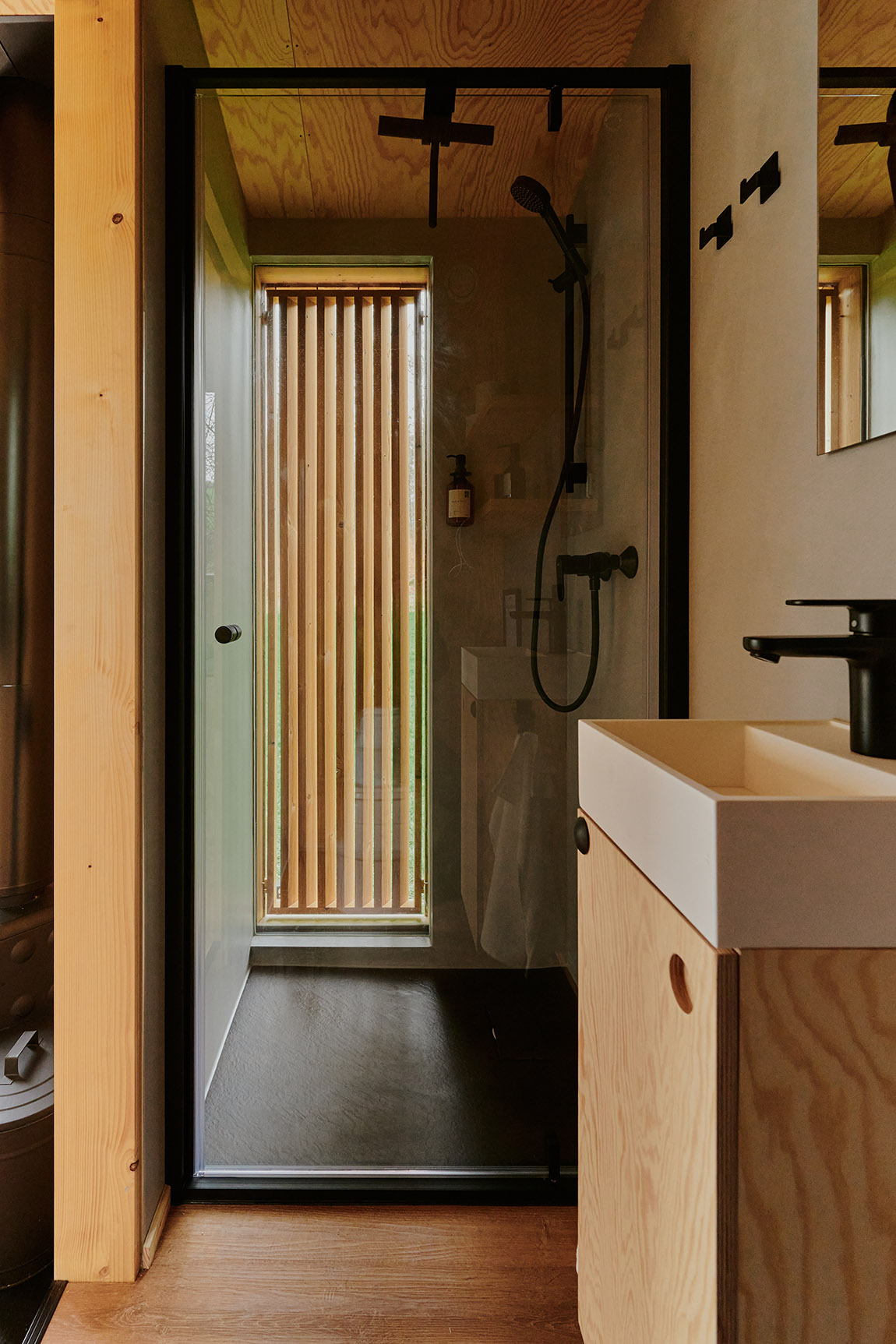
Bathroom in a cabin of the German tiny house hospitality start-up Raus. Photo: Raus/Noel Richter
Fabian Müller, entrepreneur at VILCOMO since 2022. The developer and consultant originally comes from municipal consulting and building land development and works for landowners, investors and municipalities in the DACH region. With VILCOMO, he has specialised in tiny housing in order to increase the potential of living space and building land activation for municipalities. With Flächenbörse, he created an overview that shows where the interest in tiny house living is greatest. This way, he wants to give landowners the opportunity to take the first step.
(
www.vilcomo.de)
Sources: *Federal Statistical Office (Destatis) 2025, according to Mieterzeitung 03/2025.

Subscribe to Our Newsletter
Receive our monthly newsletter by email