Want seconds? Festive Christmas dinner recipes from Germany, Switzerland and Austria
TEXT: NANE STEINHOFF | PHOTOS: UNSPLASH

In need of inspiration for this year’s Christmas dinner? Or travelling to Germany, Switzerland or Austria in December and need to know what to order? Just in time for the festive season, we have asked the Discover Germany, Switzerland & Austria team for their favourite Christmas recipes. Here they are.
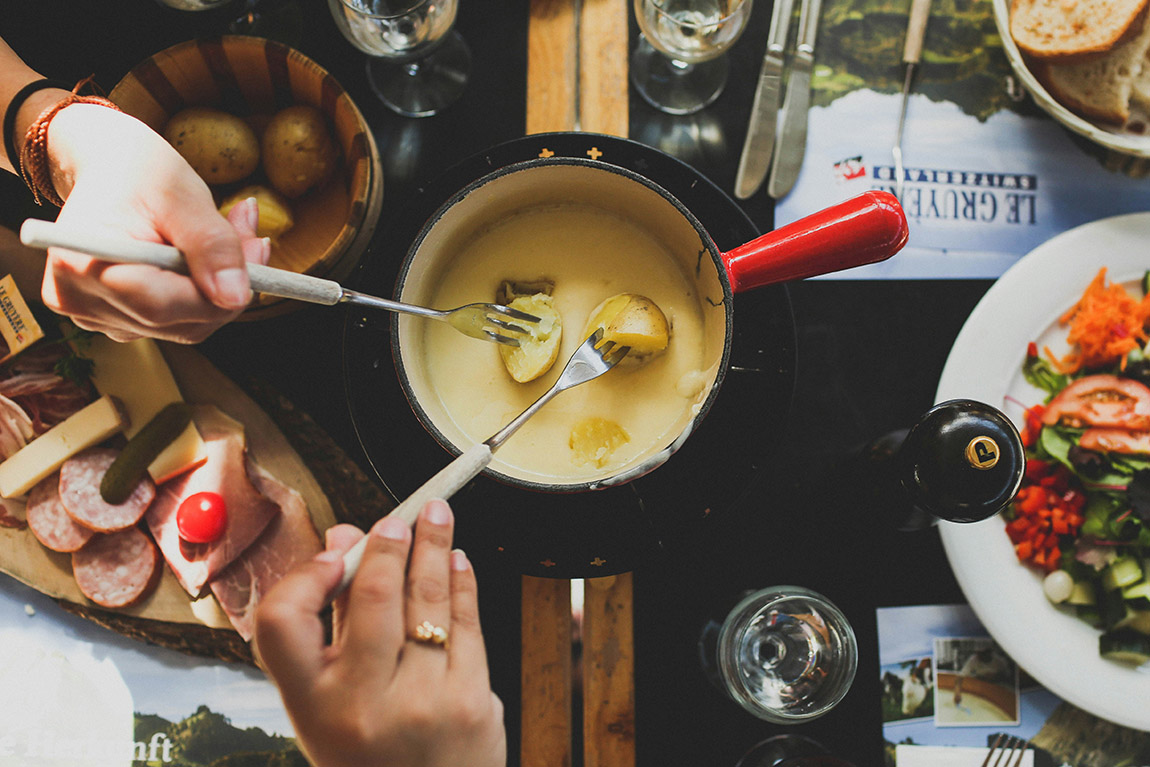
When it comes to favourite Christmas dinners in Germany, Switzerland and Austria, tradition and regional tastes come together. In most German households, the same dish is traditionally served at Christmas. According to the Holiday Special of the Statista Global Consumer Survey, potato salad with sausages (36%) comes first among people surveyed in Germany, but roast ducks (27%), raclette (23%) and goose (20%) are also popular, closely followed by fish (16%) and fondue (14%). In Switzerland and Austria, festive tables often include raclette and fondue, inviting friends and family to gather round and share a warm, convivial meal. These dishes reflect the spirit of the season – simple, hearty and perfect for celebrating with loved ones.
Let us take a closer look at our favourites:
German favourite: potato salad with sausages
Sounds simple? Well, this is why it is so loved on busy Christmas days. This is indeed one of the number one favourite meals for Christmas Eve. Around one-third of the population serves potato salad with sausages. This perfectly demonstrates the saying that less, in this case, really is more. Simple in preparation and execution, and always fantastically delicious and perfectly suitable for larger groups, potato salad is just an all-around treat.
Complemented with wieners, bratwurst, schnitzel or meatballs, the recipes for potato salad are as diverse as their cooks. Effectively every German family is following some kind of traditional, years-old recipe, that has always worked and, of course, produces the best salad in the whole world. Some people use beetroot, some gherkins, most people add onions, some apples and eggs. Some serve fresh bread or crispy toast, others do not. Naturally, the ingredients are always bought at the same store and have to be produced by the same companies. All of this makes the potato salad game easy for newcomers. Our top tip: do not look online or in a cookbook for the perfect recipe. Just ask a German friend about their way of doing it and you really cannot go wrong.
Austrian favourite: roasted goose
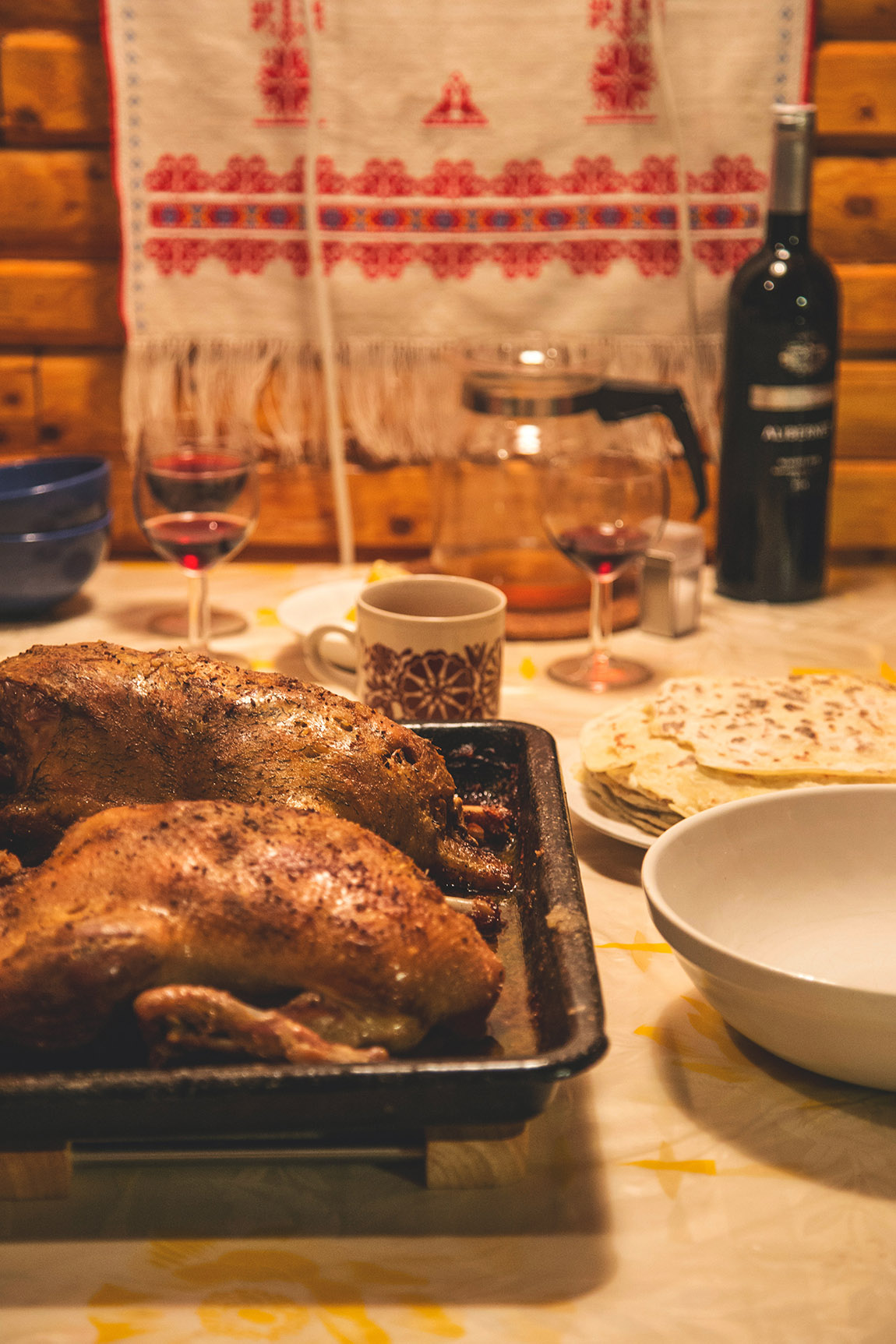
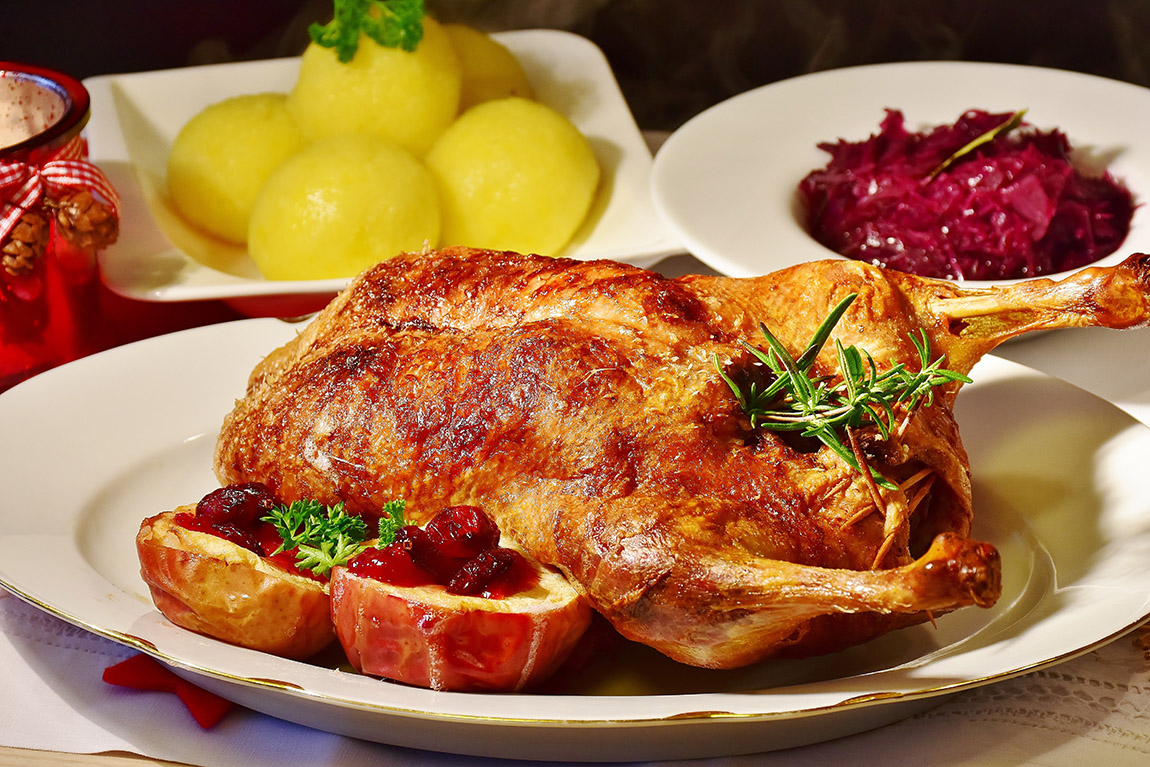
The tradition of serving goose for Christmas dinner in Austria has deep historical roots and is closely linked with centuries-old customs. The Christmas goose, often referred to as the St. Martin’s goose, originally marked the end of Lent on 11 November, when a festive roast was prepared to celebrate the conclusion of fasting. Over time, this tradition carried over to the Christmas season, with goose becoming the highlight of festive tables across Austria. The meal is cherished for its rich flavour and tender meat, and is typically presented with classic accompaniments such as red cabbage and dumplings. Today, enjoying roast goose at Christmas reflects both Austria’s reverence for culinary heritage and its love of gathering family and friends for a hearty, celebratory feast.
The Christmas goose is also a firm favourite in Germany and Switzerland. Statistics from 2015 show that Germans eat 23,000 tonnes of goose annually, while most of these geese get purchased between October and December, in time for Christmas and New Year’s. If you decide to opt for a roasted goose this year, make sure to put all of your efforts into preparing the meat so that it becomes succulent and not too tough. The side dishes can usually be kept quite simple as the meat is the star of the meal. Pair with a glass of fruity red wine and enjoy!
Swiss favourite: raclette
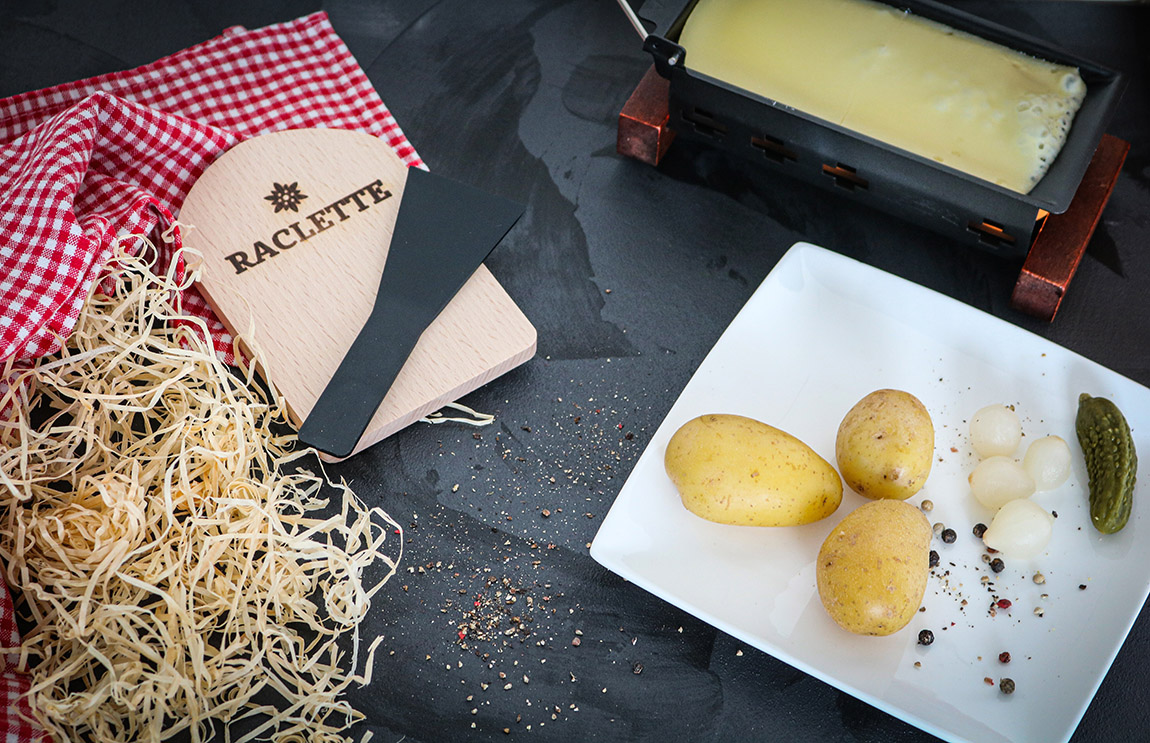
Raclette enjoys immense popularity on Christmas Eve in Switzerland, where it has become synonymous with festive gatherings and hearty winter fare. The dish, with its origins steeped in Swiss tradition, is cherished not only for its rich, melting cheese but also for the convivial atmosphere it fosters. Families and friends gather around the electric tabletop grill, customising their plates with a variety of ingredients, which adds a playful and interactive element to the celebration. Its appeal lies in the communal spirit, minimal preparation, and the leisurely pace at which it is enjoyed, stretching the festive meal into a long evening of togetherness.
The modern way to serve raclette is using an electric tabletop grill with small pans, in which the special raclette cheese and other ingredients are heated. If you need inspiration about what to fill your small pans with, here are our favourites: fresh onions, sliced gherkins, ham, mushrooms and salami. The pick is yours and every family’s raclette spread looks different. So, get creative!
Duck
Another firm favourite of the DACH region around Christmas is the roast duck, another beloved bird that is served during the festive season. Think crispy skin, and tender, juicy meat. What is not to love? The custom of filling loved ones’ bellies with duck and goose at Christmas dates back to around 700 AD. Back then, people fasted during the entire Advent season and so no meat – apart from fish – was eaten. Lent ended on 24 December 24, which wealthier families celebrated with a pig roast on 25 December. The meat was refined with spices and served with apples. The poorer population served liver sausage or black pudding instead of a roast, which is why sausages with potato salad are still on the Christmas menu in some families to this day. Lent began and later ended with the roast goose – the traditional St. Martin’s goose – on 11 November, which is why the goose increasingly became a common alternative to pork.
Christmas carp
According to tradition, carp is prepared for Christmas dinner in many areas of Germany, Switzerland and Austria. Why it is carp of all things may be because this is a native fish that is relatively easy to obtain. In addition, many monasteries had their own carp breeding and could therefore easily support themselves. The preparation of carp differs significantly in the different regions of Germany. While in the south, the fish is traditionally cut into pieces, breaded and fried, in the north, the ‘blue carp’ variant is very common. The carp is gutted and then carefully cooked in boiling water with the scales still on – this gives it a bluish colour, which gave this method of preparation its name. Another option is to fill the gutted carp with potatoes and seasonal vegetables and then roast it in the oven.
Regardless of preparation, simple side dishes such as boiled potatoes, carrots and celery, potato salad or cucumber salad are prepared with carp. In Thuringia, the traditional Thuringian dumplings complete the festive meal.


Subscribe to Our Newsletter
Receive our monthly newsletter by email