Waltzing through time – Vienna’s exhilarating ball season
TEXT: NANE STEINHOFF / DR NORBERT LINZ, WIENTOURISMUS
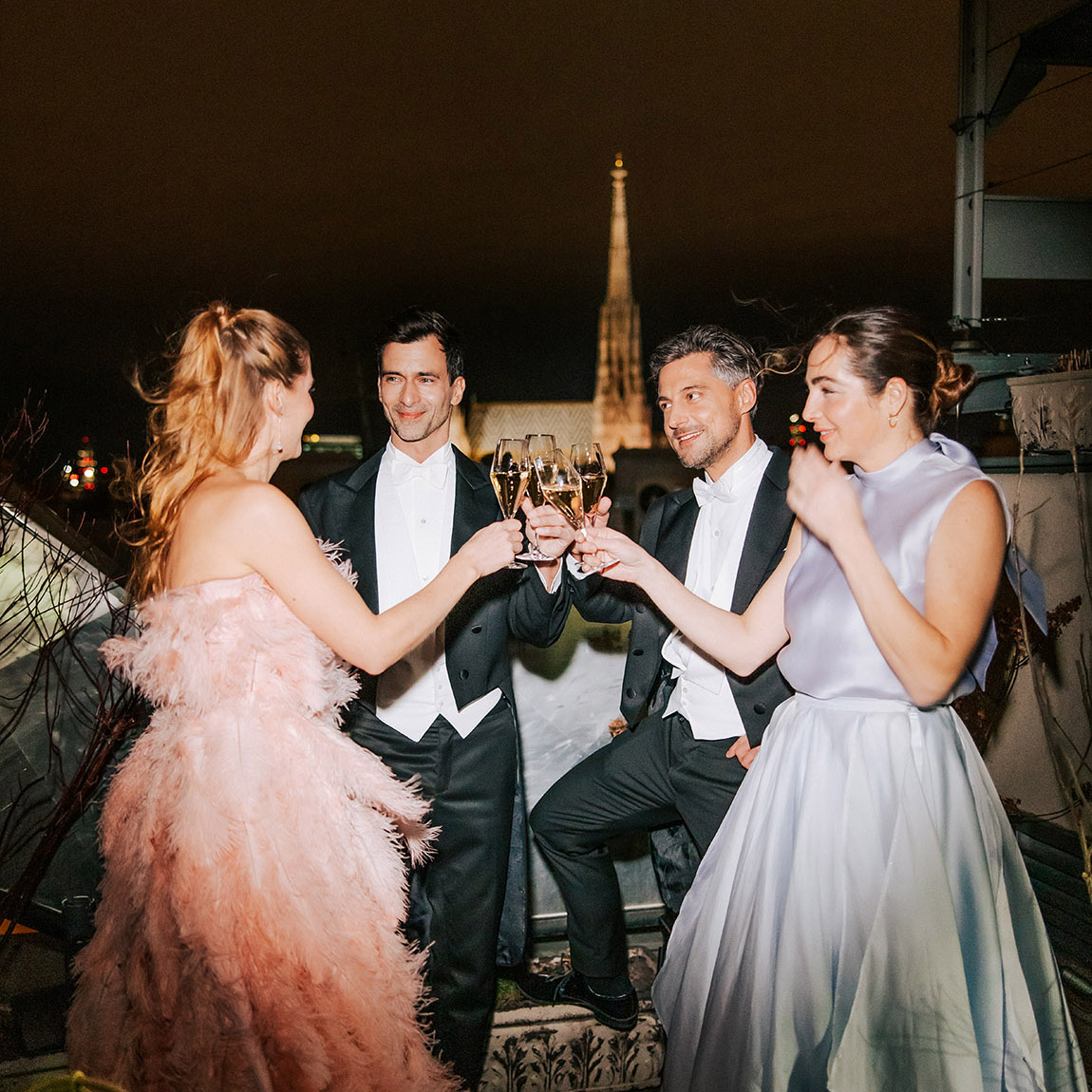
Kaffeesiederball, Hotel The Guesthouse, St. Stephen's Cathedral. Photo: © WienTourismus/Paul Bauer/Couture by Eva Poleschinski
Towards the end of each year, Vienna, the world’s ball capital, bursts into a whirl of elegance and exuberance as ball season descends. While the city’s gilded palaces, stately concert halls, and centuries-old coffeehouses offer a perennial backdrop of romance and culture, it is during the ball season that Vienna’s soul blazes to life in a spectacle of tradition and music.
Vienna’s ball season is not just a run of fancy parties – it is a citywide celebration that really brings the place to life. When winter rolls in, Vienna transforms into the ultimate spot for dancing, dressing up, and having a blast. Whether you are waltzing in a grand old palace or just soaking up the atmosphere, there is a sense of excitement that everyone shares. Each year, from November all the way into spring, the city throws hundreds of balls – some with all the glitz and glamour, others more laid-back and fun. But no matter the vibe, they are all about honoring tradition, loving music, and welcoming anyone who wants to join the party.
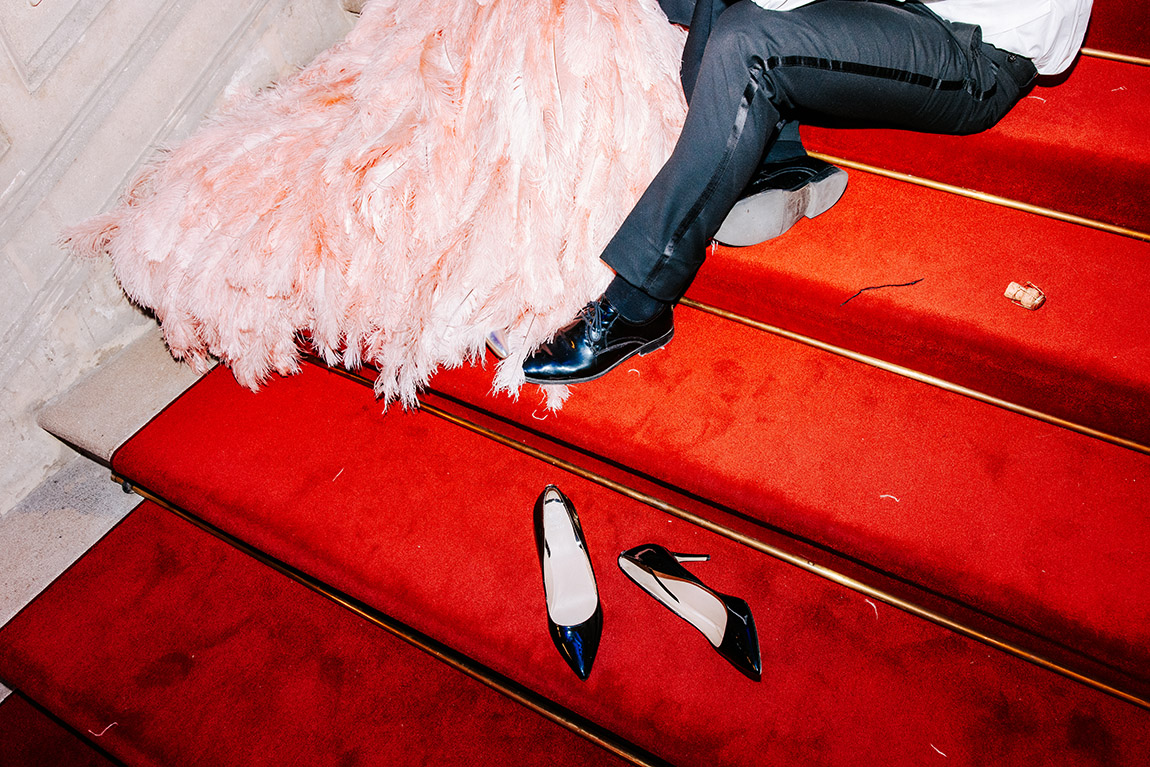
Kaffeeesiederball, Hofburg. Photo: WienTourismus/Paul Bauer/Couture Eva Poleschinski
But how did this tradition start? Balls experienced their first flush of widespread popularity at the Congress of Vienna in 1814/15. Numerous royals and politicians from the length and breadth of Europe flocked to the capital of the Habsburg monarchy to redefine the continent’s borders in the wake of Napoleon’s defeat. The Viennese hosts made every effort to ensure that their venerable guests were entertained during their extended stays in the city. One distraction followed the next, but whatever they were, the proceedings were always heavily influenced by 18th century court ceremonial.
Various aspects of this have survived, often with few changes, at the traditional balls that take place in the city to this day. Not only important from a social point of view, Vienna’s balls also have a wider economic significance. According to the Vienna Economic Chamber, the average ball guest spends EUR 320. Of this amount, EUR 200 goes on the event itself (ticket, table reservation, food and drink) and around EUR 120 on preparations (hair styling, clothing, dancing lessons). The 2023/24 season alone attracted around 540,000 ballgoers and generated revenue of about EUR 175 million.
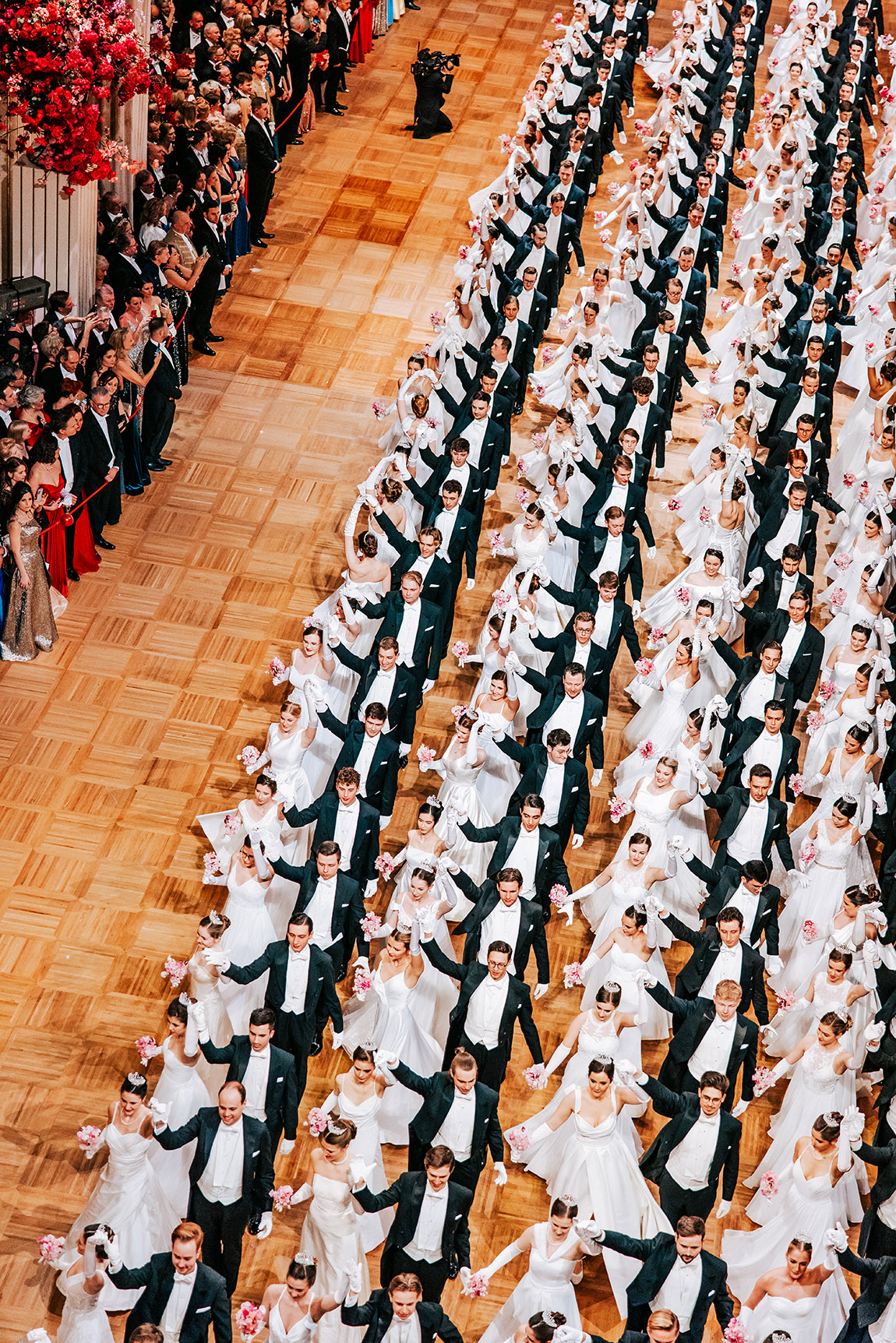
Opera Ball, State Opera. Photo: WienTourismus/Paul Bauer
A feat of logistics
Let us pull back the velvet curtain and peek behind the scenes of Vienna’s spectacular ball season, where logistics and tradition collide in the most dazzling way. The party kicks off on 11 November – Fasching, the city’s carnival launch – when dancers take over the Graben shopping street. It is a festival for everyone: pros lead the moves, but locals and tourists alike jump in to shake off the winter blues, spinning through the signature Viennese waltz. And, here is a secret: the fun does not stop for Lent anymore. Vienna’s ball calendar stretches into spring, sometimes even summer because, frankly, no one wants the party to end. There are more than 400 balls every year, with some boasting crowds of 6,000 decked-out revelers. Pulling this off takes serious behind-the-scenes hustle – committees plan for months, invitations become works of art, and legendary venues like the Musikverein’s Golden Hall and the imperial Hofburg palace get transformed overnight. For the flashiest events, even the Federal President signs off as patron, and honorary bigwigs get their names printed right on the invitation.
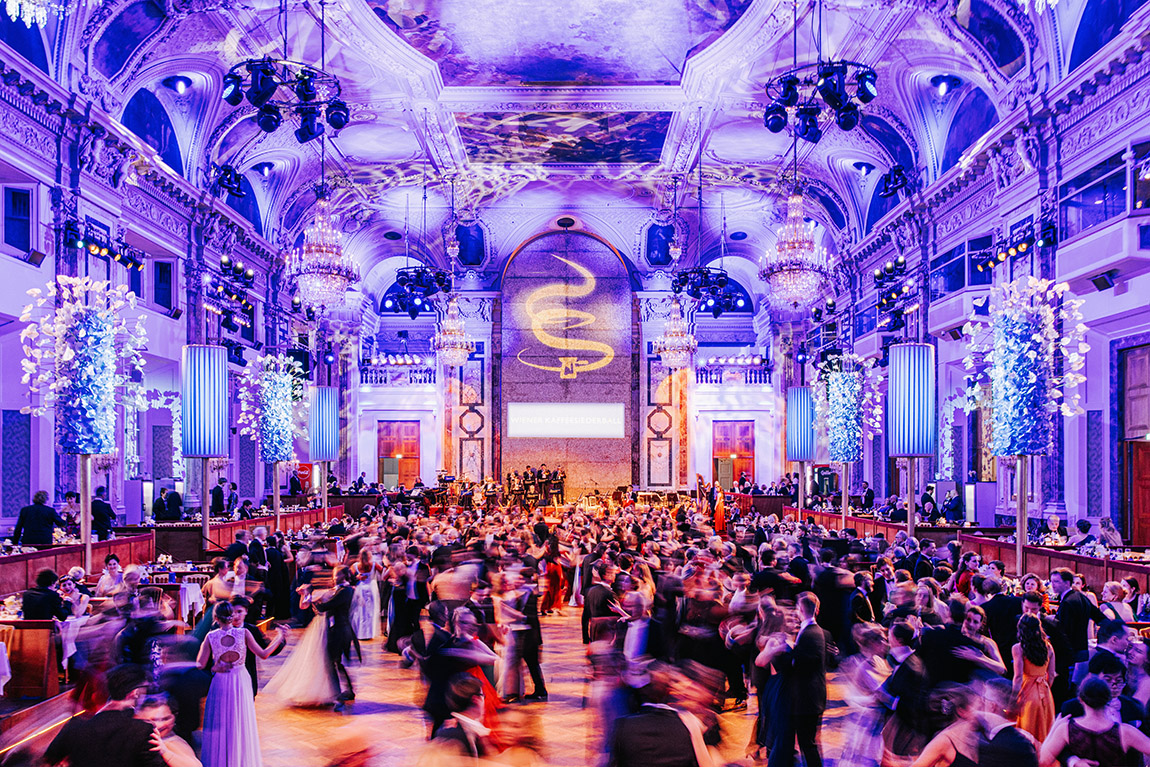
Kaffeesiederball, Hofburg. Photo: WienTourismus/Paul Baue
Sure, tickets for the Opera Ball are famously pricey – especially if you manage to land a coveted box seat – but do not let that fool you. Vienna’s ball season is surprisingly open to all. Regular tickets for most events are totally affordable, and you do not need a reserved table to soak up the vibe. Some say the best moments are found roaming the ballroom, nibbling at the buffet, or grabbing a cocktail where you might just hear some old-school Schrammelmusik drifting from a pop-up wine tavern.
Now, let us talk style: dress codes are no joke here. Women go full-length with gowns or traditional Austrian outfits, and men suit up in tails or tuxedos, often sporting medals and badges for extra flair. At the Opera Ball, tails are a must – leave your wristwatch at home and opt for a classic pocket watch (ballroom etiquette, you know). At other balls, a neat black suit or tux and bow tie will do, while neckties are totally off-limits. What is interesting to observe is how many young people are genuinely into following these classic rules. It is not just about the clothes; the whole evening is a slick production, full of ceremony, sparkle, and old-school elegance, just waiting for you to step in and make it your own.
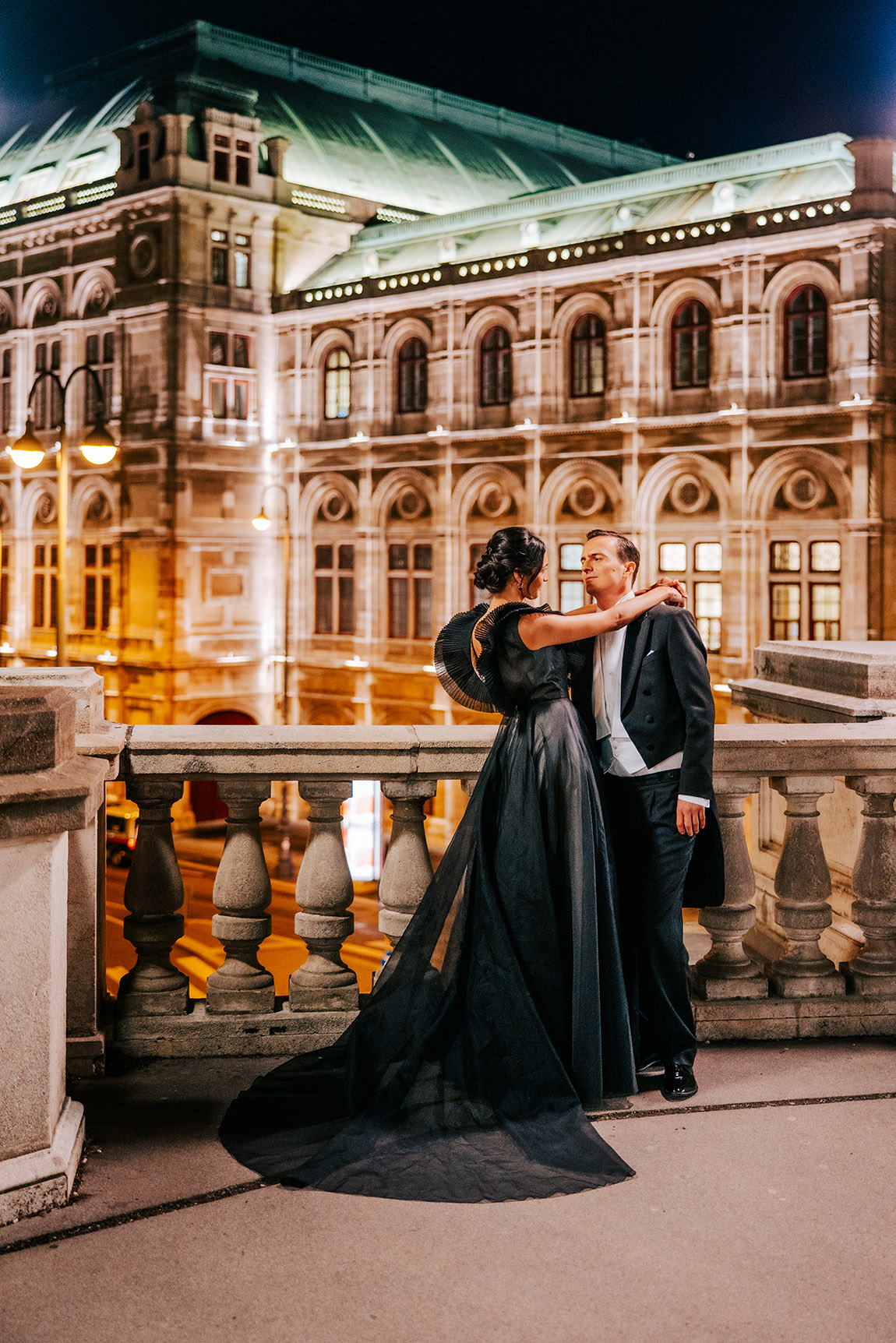
Opera Ball, State Opera. Photo: WienTourismus/Paul Bauer/Couture Elfenkleid
Come waltzing
Ready to hit the dance floor? Even if you do not know your left foot from your right, Vienna has you covered. just pop into one of its famous dance schools for a quick waltz lesson. Places like the legendary Rueff school make it easy with walk-in classes, so you can show up and get spinning in no time.
On the ball night, the opening ceremony officially starts the night’s festivities. Here is where the debutantes – young women making their first grand entrance – step onto the floor in stunning white dresses, their hair crowned with sparkly tiaras, gloves up to their elbows and tiny flower bouquets in hand. Arm in arm with their tuxedoed partners, they glide out as the orchestra plays Fächer-Polonaise by Carl Michael Ziehrer (a big deal back in the imperial court days). Then comes the first waltz, spinning counterclockwise – trickier than you might think! Maybe that is why those dance classes are always full. Once the opening is over, the dance master shouts ‘Alles Walzer!‘ and everyone joins in, now twirling clockwise.
On the night, no need to worry about getting bored; all sorts of dances get their moment, and the music goes from full orchestras to thumping discos. Look out for the Damenspende – a fun little gift for the ladies, sometimes something fancy like a fan or just a sweet treat, while guys might get a book or gadget now too. Midnight is usually when things really get interesting. Expect surprise performances, dance numbers, and especially the wild quadrille – a fast, slightly chaotic group dance where the dance master shouts out the moves. It is a bit of a mess, but that is half the fun and gives everyone a jolt of energy. Good thing, because these parties can last till 5am. When it is finally time to wrap up, the ballroom lights go low, the orchestra plays the bittersweet Brüderlein fein, musst nicht gar so traurig sein, and everyone takes the floor one last time. But the night is not quite over until you have slurped down a spicy bowl of goulash in a cozy coffeehouse, or grabbed a sausage from a street stand as the sun comes up.
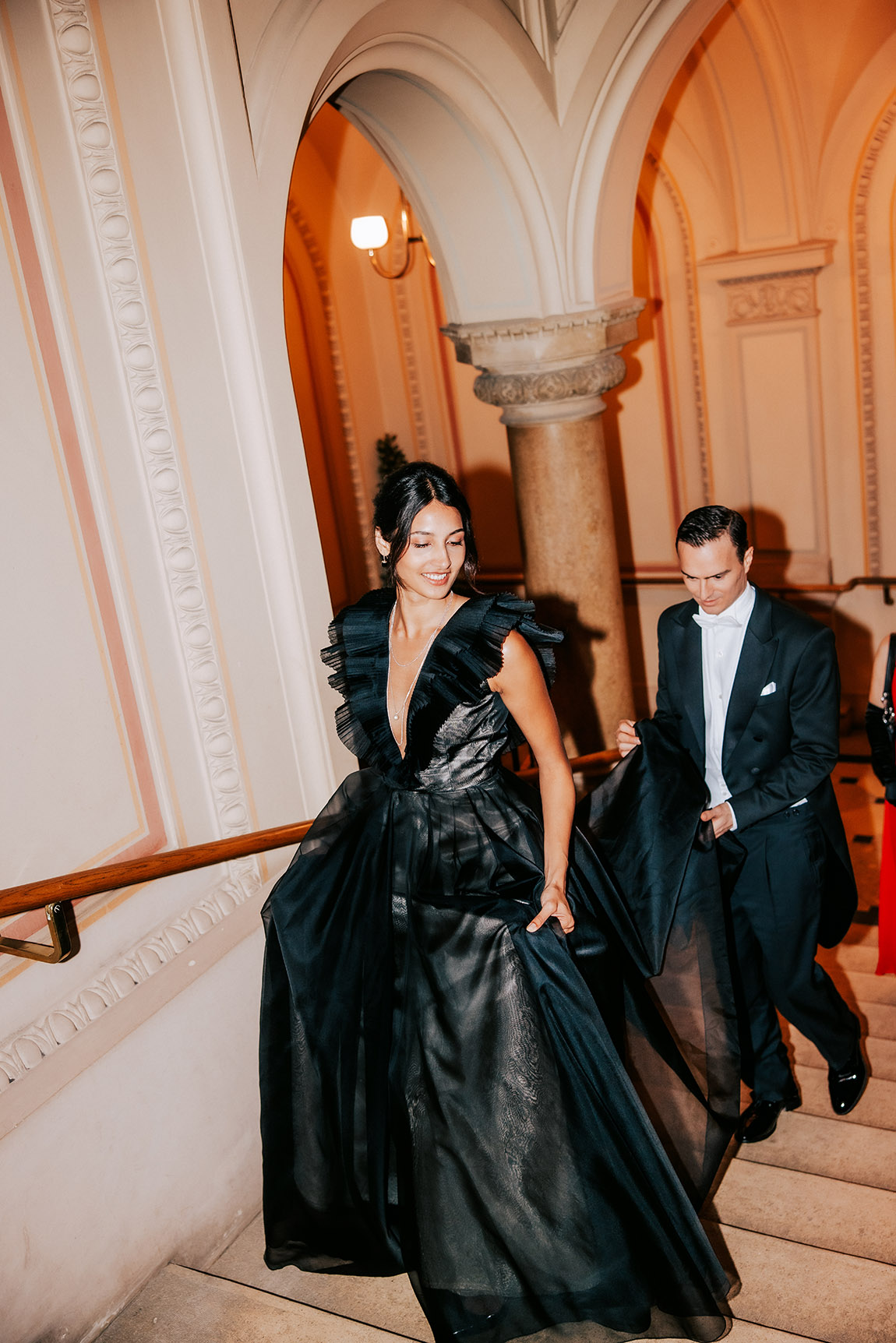
Opera Ball, State Opera. Photo: WienTourismus/Paul Bauer/Couture Elfenkleid
A closer look
Each year, on the last Thursday before Ash Wednesday, the Vienna State Opera transforms into the grand stage for the most illustrious ball of all. This dazzling affair draws together prominent cultural icons, influential business leaders, and esteemed politicians from Austria and beyond. Unsurprisingly, the entire evening is broadcast live on television, capturing every glamorous moment, from guests stepping onto the red carpet and the pageantry of the opening ceremony to interviews with the night’s distinguished attendees.
For many Viennese, however, it is not the Opera Ball but the Philharmonic Ball that represents the high point of the season. It has the reputation of being a ball for artists organised by artists. While it is smaller and has a lower media profile, the quality of the guests is said to be superior. The prestigious Coffeehouse Owners’ Ball is a more formal affair. This ball is highly appreciated by the local population because of its typically Viennese ambience and is virtually regarded as a smaller version of the Opera Ball. It is also the largest traditional ball in the Vienna carnival calendar, with about 4,500 guests. Guests at the Vienna Confectioners’ Ball enjoy what is presumably the sweetest night of them all, with upbeat waltz sounds and around 3,000 cake-related prizes at the Hofburg. A slightly alternative but no less festive waltz is danced by Vienna’s LGBT+ community during the carnival season. The glittering Rainbow Ball takes place in the historical setting of Parkhotel Schönbrunn. Other highlights in Vienna’s ball calendar are the Vienna Science Ball or the Vienna Refugees Ball which features a seriously diverse musical line-up.
Why do the balls of Vienna continue to enchant, year after year, century after century? Perhaps it is because they offer a rare opportunity for collective joy – a chance for people from all walks of life to gather beneath gilded chandeliers, united in their love of music and movement. To attend a Viennese ball is to experience history and modernity at the same time. Whether you are a first-time visitor or a seasoned local, the exhilaration is the same. For a few hours, the boundaries between past and present blur, and the city is yours to be lost in.
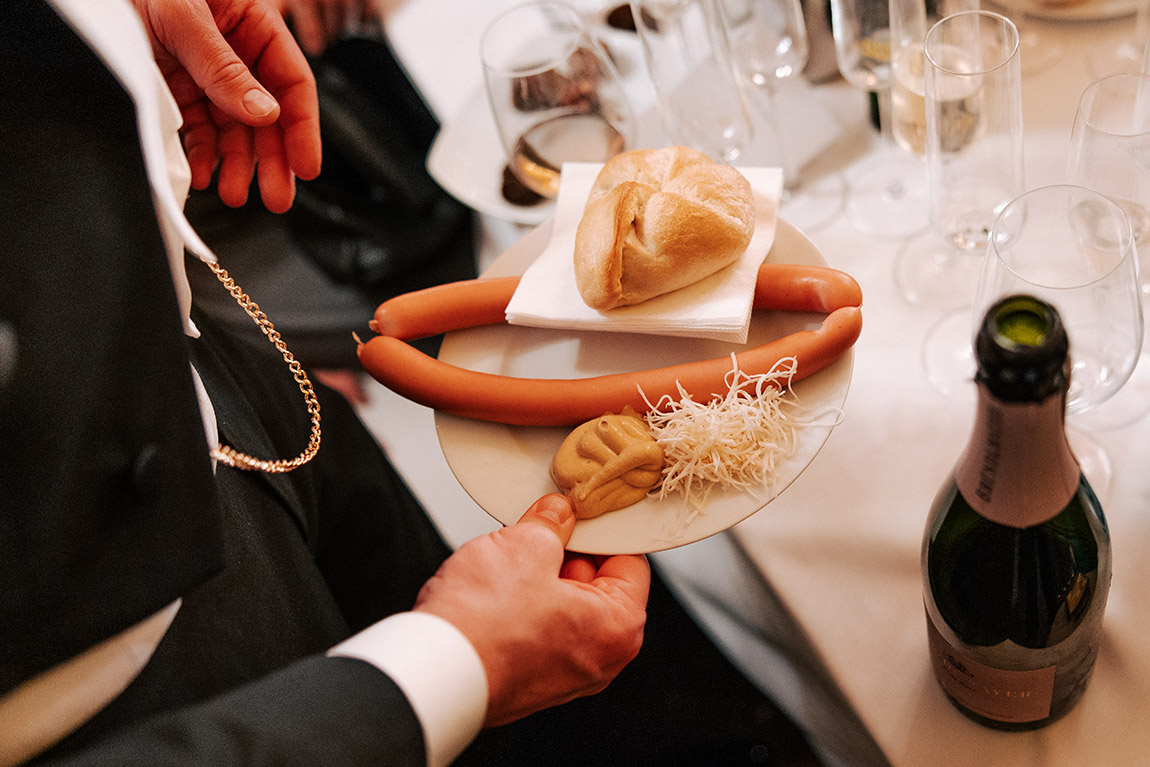
Philharmonikerball, Musikverein. Photo: WienTourismus/Paul Bauer

Tickets should be purchased from the organisers well in advance. There are tickets with and without seats.
The exact dates of the balls can be found on the respective event websites or here: www.wien.info/en
Elmayer dance school, www.elmayer.at
Rueff dance school, www.tanzschulerueff.at
Vienna Opera Ball, www.wiener-staatsoper.at
Vienna Philharmonic Ball, www.wiener-staatsoper.at
Coffeehouse Owners’ Ball, www.kaffeesiederball.at
Vienna Confectioners’ Ball, www.zuckerbaeckerball.com
Vienna Rainbow Ball, www.regenbogenball.at
Vienna Science Ball, www.wissenschaftsball.at
Concordia Ball, www.concordiaball.at

Subscribe to Our Newsletter
Receive our monthly newsletter by email