The frozen elixir
TEXT: NANE STEINHOFF | PHOTOS: WWW.DEUTSCHEWEINE.DE
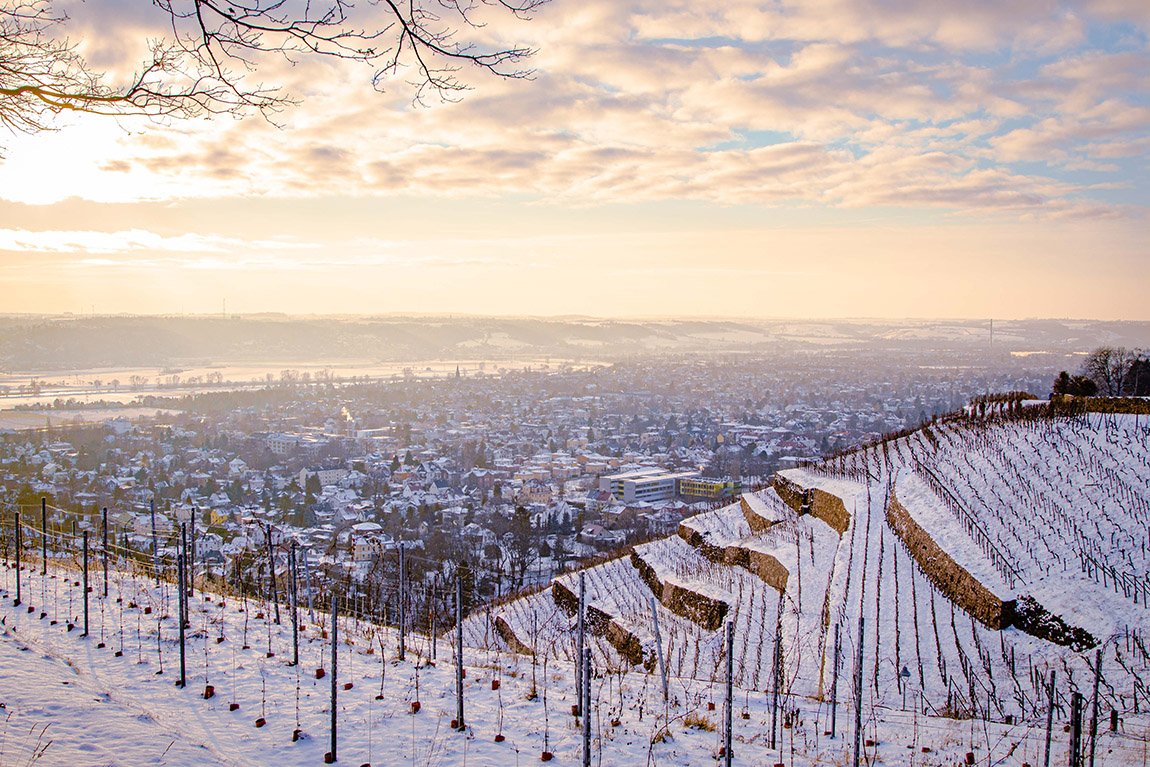
View over Radebeul vineyards in winter. Photo: Florian Kneffel
Recently, I have come across a truly special tale about wine – a tale shaped by weather, tradition, and a lot of skill: Germany’s ice wine. A rare treat, this special wine is known for its bold flavours and the daring way in which it is made.
Ice wine, or Eiswein as it is known in German, is more than a dessert wine; it is a product of patience, risk, and a touch of luck. Its creation depends on the perfect confluence of weather and willpower, resulting in a golden, aromatic wine with remarkable sweetness balanced by vibrant acidity. The allure of ice wine lies not only in its flavour but in the drama and unpredictability of its production.

Wine harvest with use of special ice.
NATURE’S GAMBLE AND HUMAN GRIT
While Canada is the world’s largest ice wine producer due to the country’s ideal climate for that specific type of wine (Canada produces more ice wine than all other countries combined), Germany and Austria come in second and third place when it comes to the volume of ice wine production.
According to The WineBarn, an award-winning German wine specialist and German wine importer in the UK, German ice wine “is popular for festive occasions, and also makes an exquisite aperitif on its own,” which best complements fruity desserts, ice cream or a cold sorbet.
The production of ice wine is a fascinating and demanding process that sets it apart from other wine styles. It begins with winemakers leaving healthy grapes on the vine well past the usual harvest, often into the depths of winter. The crucial element is the weather: the grapes must freeze naturally at temperatures of -7°C or colder. This hard frost freezes the water inside the grapes but leaves the sugars and other dissolved solids unfrozen, concentrating their flavours and sweetness.

Harvesting ice wine is an exercise in both patience and quick action. Grapes are typically picked in the early morning hours, while still solidly frozen, and pressed immediately. The frozen water content stays behind in the press, resulting in a thick, intensely sweet juice that will become ice wine. Because of the challenging conditions and the small volume of juice extracted, yields are exceptionally low – sometimes less than a tenth of a typical harvest.
The WineBarn explains just how rare the perfect harvest of ice wines really is: “Germany’s 2018 yield produced very large grapes that were particularly healthy, which led growers to chance leaving a portion on the vines in the hope of an Eiswein harvest later. It certainly paid off, as the 2018 vintage has been one of the best in years.”
Fermenting this syrupy juice is also tricky due to the high sugar content, which slows yeast activity and keeps alcohol levels relatively low, often around 7 per cent. Only select grape varieties, such as Riesling and Silvaner, are suited to this method, thanks to their ability to maintain lively acidity and complex aromas throughout the process.

GENESIS OF A CHILLED DELICACY
Germany’s association with ice wine dates back to the late 18th century. The first documented ice wine vintage was crafted in 1794 in the Franconia region, when an unexpected frost forced vintners to harvest frozen grapes. It was a lucky accident. Instead of discarding the crop, they pressed the icy fruit, producing a small amount of intensely flavoured wine – a discovery that would become a celebrated tradition.
Throughout the 19th and 20th centuries, the practice spread across Germany’s wine regions, evolving from accidental innovation to intentional artistry. By the mid-20th century, ice wine had gained international prestige, with German producers refining techniques and setting benchmarks for quality that inspired winemakers worldwide. Over time, other regions and countries also adapted the idea, notably Canada where in the 1980s vintners realised that their cold winters offered ideal conditions for the production of ice wines. Canada quickly evolved into the world’s largest producer of ice wine.

REGIONAL FOCUS
Germany’s wine landscape is diverse, but certain regions have become synonymous with exceptional ice wine. The Rheingau and Mosel valleys, with their steep slopes and proximity to rivers, offer microclimates that can deliver the critical freeze required for ice wine production. Here, old vines and traditional practices intersect with modern innovation, creating wines of remarkable purity and finesse.
Other regions, such as Pfalz, Nahe, and Franken, have also produced notable ice wines, each reflecting local terroir through subtle differences in aroma and structure. The interplay of soil, aspect, and weather means that no two ice wine vintages are ever quite the same, making each bottle a unique expression of its origin.

AN UNPREDICTABLE FUTURE
While the drama of harvest has always defined ice wine, recent decades have brought new challenges. Climate change has rendered the reliable freeze increasingly elusive, with milder winters disrupting the delicate balance required for successful ice wine production. Producers must now contend with greater uncertainty, sometimes waiting in vain for temperatures to drop, or risking grapes to rot, birds, or wild animals.
In some years, entire regions may produce no ice wine at all – a stark reminder of the wine’s dependence on nature’s whims. As the frequency of suitable freezes declines, German winemakers are exploring new approaches, such as site selection at higher elevations, or experimenting with alternative grape varieties that better withstand variable conditions. There is growing interest in hybrid grape varieties and adaptive vineyard management, as well as collaboration across regions to share best practices for safeguarding ice wine’s legacy.
Technology, too, is playing a role, from advanced weather tracking to innovations in vineyard design that improve the odds of a successful freeze. Some producers have begun to diversify, focusing on other styles of sweet wine or exporting their expertise to colder climates abroad. Yet, there remains an inherent risk; ice wine is, and always has been, a gamble.
A SYMBOL OF PRESTIGE
Despite its rarity, German ice wine occupies an outsized place in the global wine market. Coveted by collectors and connoisseurs, it commands premium prices and has become a hallmark of German winemaking excellence. Its reputation for purity and balance sets it apart from ice wines produced elsewhere, particularly those made using artificial freezing techniques.
Within Germany, ice wine is both a source of regional pride and a cultural touchstone, often enjoyed on special occasions or paired with fine desserts. Its presence at auctions and in luxury hospitality further cements its status as a wine of celebration and distinction. However, as supply diminishes, there is an increasing awareness that every bottle represents not just craftsmanship, but also an encounter with nature’s generosity.
German ice wine is a testament to the interplay between climate, culture, and creativity. Its history is marked by both accidental fortune and deliberate mastery, while its production remains one of the wine world’s most daring pursuits. In the face of climate change and market pressures, the spirit of ice wine or Eiswein endures – defined by resilience, innovation, and a willingness to embrace risk for the sake of extraordinary reward.

Bismarck tower in winter. Photo: Florian Kneffel

Subscribe to Our Newsletter
Receive our monthly newsletter by email