Spotlight on Locarno
TEXT & PHOTOS: WIBKE CARTER
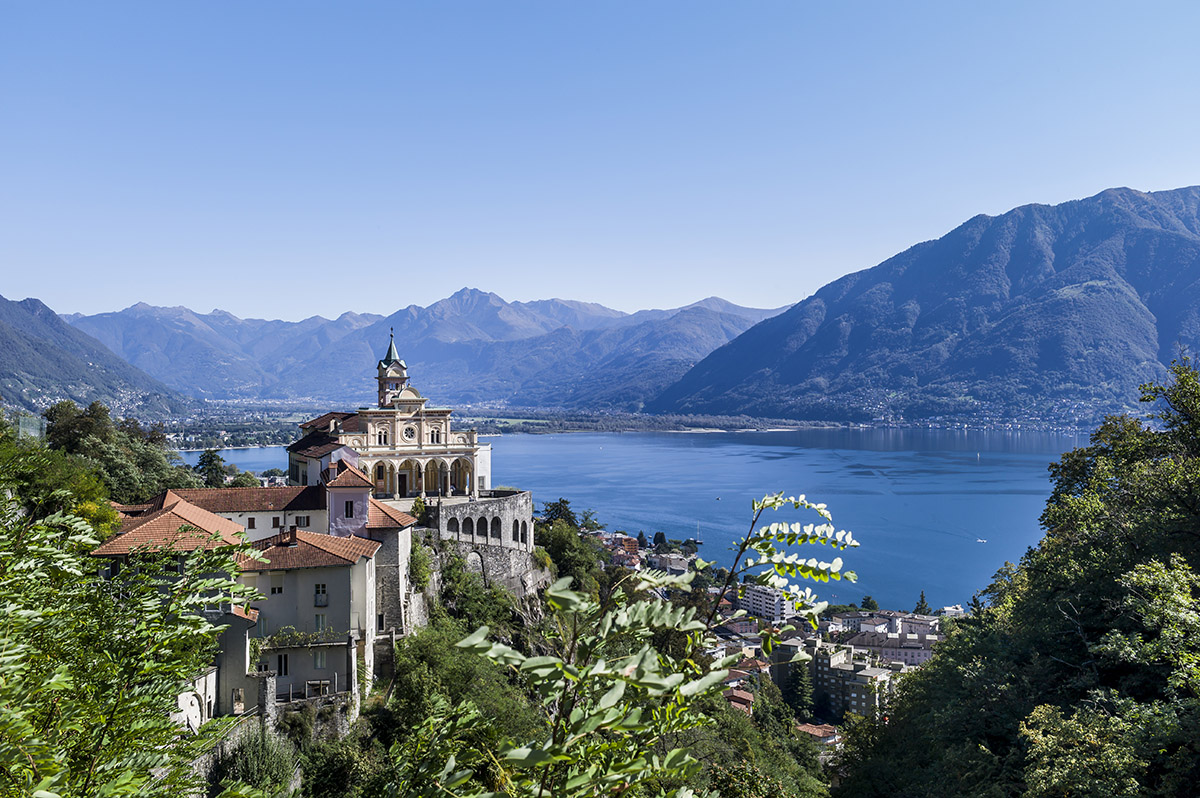
Sacro Monte Madonna del Sasso in Locarno. Photo: Alessio Pizzicannella
Nestled along the shores of Lake Maggiore, the Swiss town Locarno transforms into a cinematic hotspot every August during its prestigious film festival. But beyond the glitz and glamour, there is a lot more worth discovering as our writer Wibke Carter found out.
Locarno’s origins trace back to Roman times, when it served as a strategic settlement along ancient trade routes. Later on, it came under the control of Milan’s powerful Visconti family, who captured the castle (open to the public and home to two museums) in 1342 and expanded it as a fortress and administrative centre. Italian influence prevailed for centuries until 1803, when the modern canton of Ticino joined the Swiss confederation. Today, Locarno is a pleasant hybrid between the southern dolce vita and the northern efficiency. Citrus fruits and pastel-coloured houses replace the expected cheese fondue and wooden chalets, while trains, of course, run perfectly on time like everywhere else nationwide.
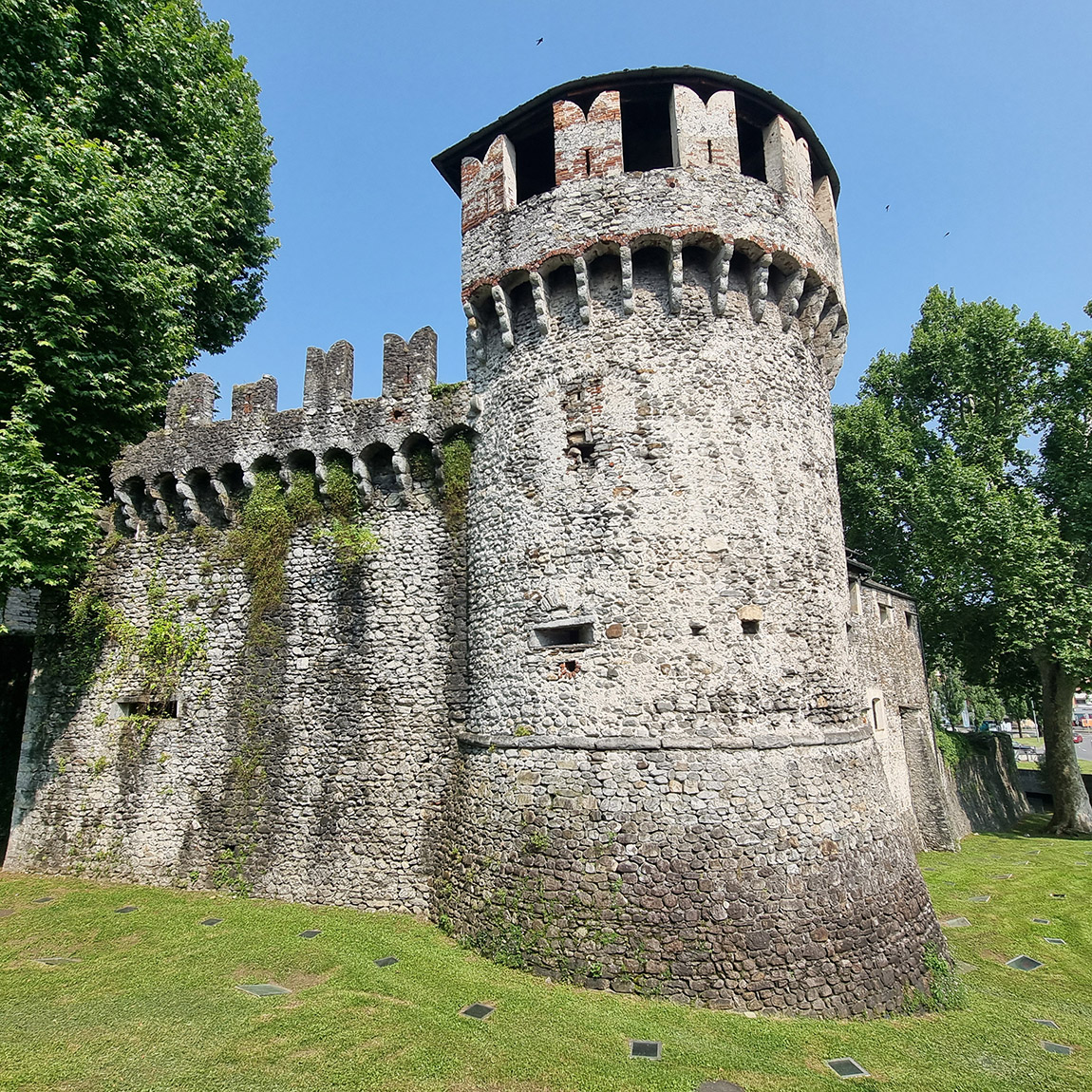
Castello walls in Locarno.
From shoreline to summit
The waterfront forms the town’s beating heart, where palm-lined promenades stretch endlessly between cafés, restaurants and hotels. Here, with the majestic Alps as a backdrop, the rich and famous take centre stage, while steps away the Piazza Grande hosts open-air screenings and concerts during warm summer evenings. “A few years ago, we had Elton John play here,” tour guide Brunella Posca recalls proudly. Locarno also hosts the Moon & Stars music festival, bringing international pop and rock stars in July. Every Thursday, a popular farmers’ market is held in the piazza, where producers from the neighbouring villages sell their wares.
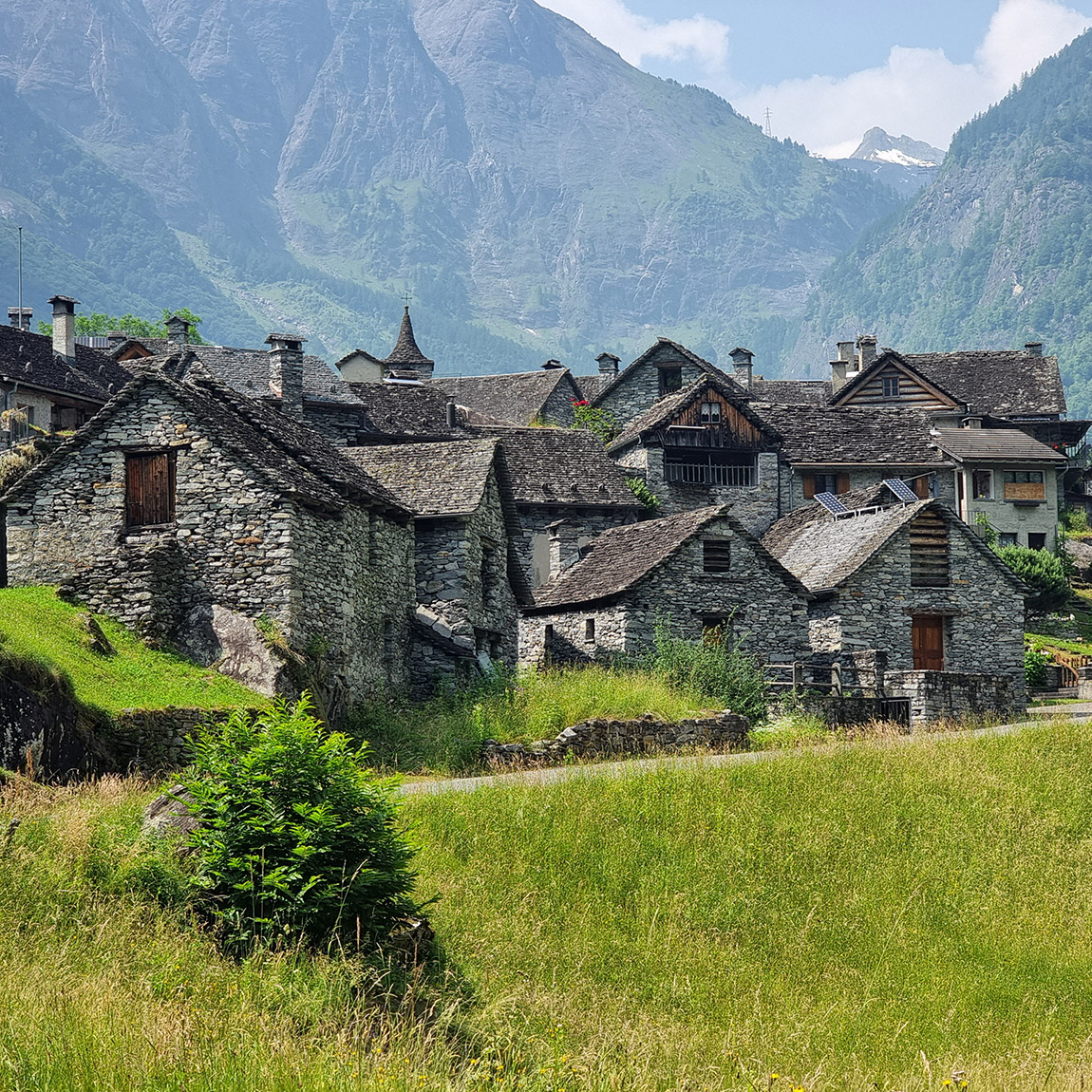
Traditional houses in Vallemaggia.
It is an easy journey from the lakeshore to mountain tops, thanks to the funicular railway, which climbs from the town centre to the sacred Madonna del Sasso sanctuary, perched dramatically above Lake Maggiore since 1487. This pilgrimage church, with its baroque architecture and panoramic terraces, offers sweeping views across the lake. For higher altitude thrills, the gondola lifts from Orselina, only a few steps away, and ascends through pristine forests to Cardada’s alpine meadows at 1,340 metres where Casa Colmanicchio is a favoured stop for hikers. The journey continues via chairlift to the Cimetta peak at 1,670 metres, where 360-degree vistas encompass the entire Ticino region, Lake Maggiore, and the snow-capped Swiss and Italian Alps.
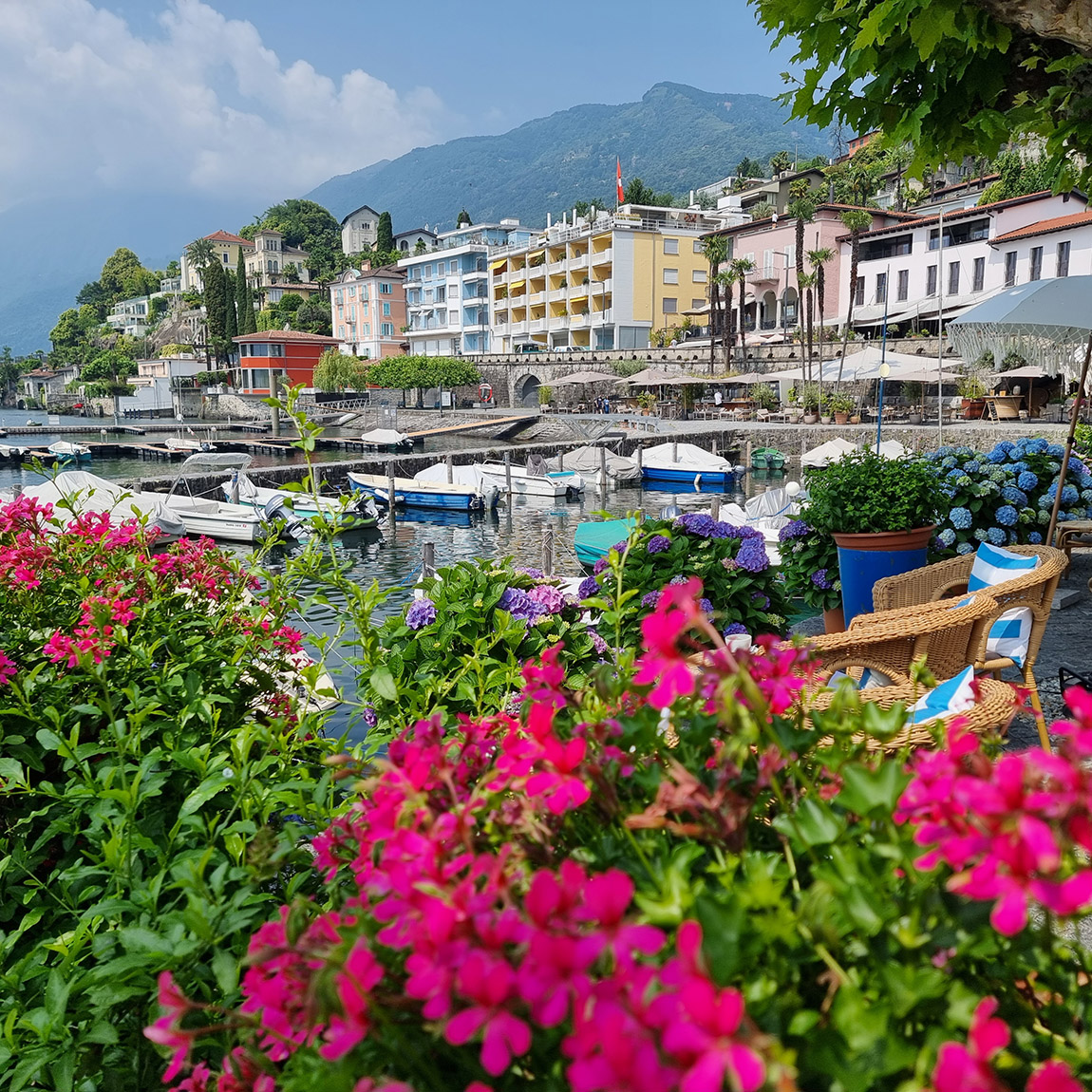
Ascona waterfront.
Tradition and transformation
The Maggia river separates glamorous Locarno from serene Ascona. “This used to be a fishing village,” says Posca. “Life here was hard, and many people from Ticino migrated to the US and South America in search of a better life. Later, in the early 20th century, Monte Verità above the town became a legendary colony for artists, philosophers, and free thinkers, including Hermann Hesse, Carl Jung, and Isodora Duncan.” In contrast to more modern-looking Locarno, Ascona’s waterfront charms with colourful old buildings and the Chiesa dei Santi Pietro e Paolo’s high campanile as an iconic landmark.
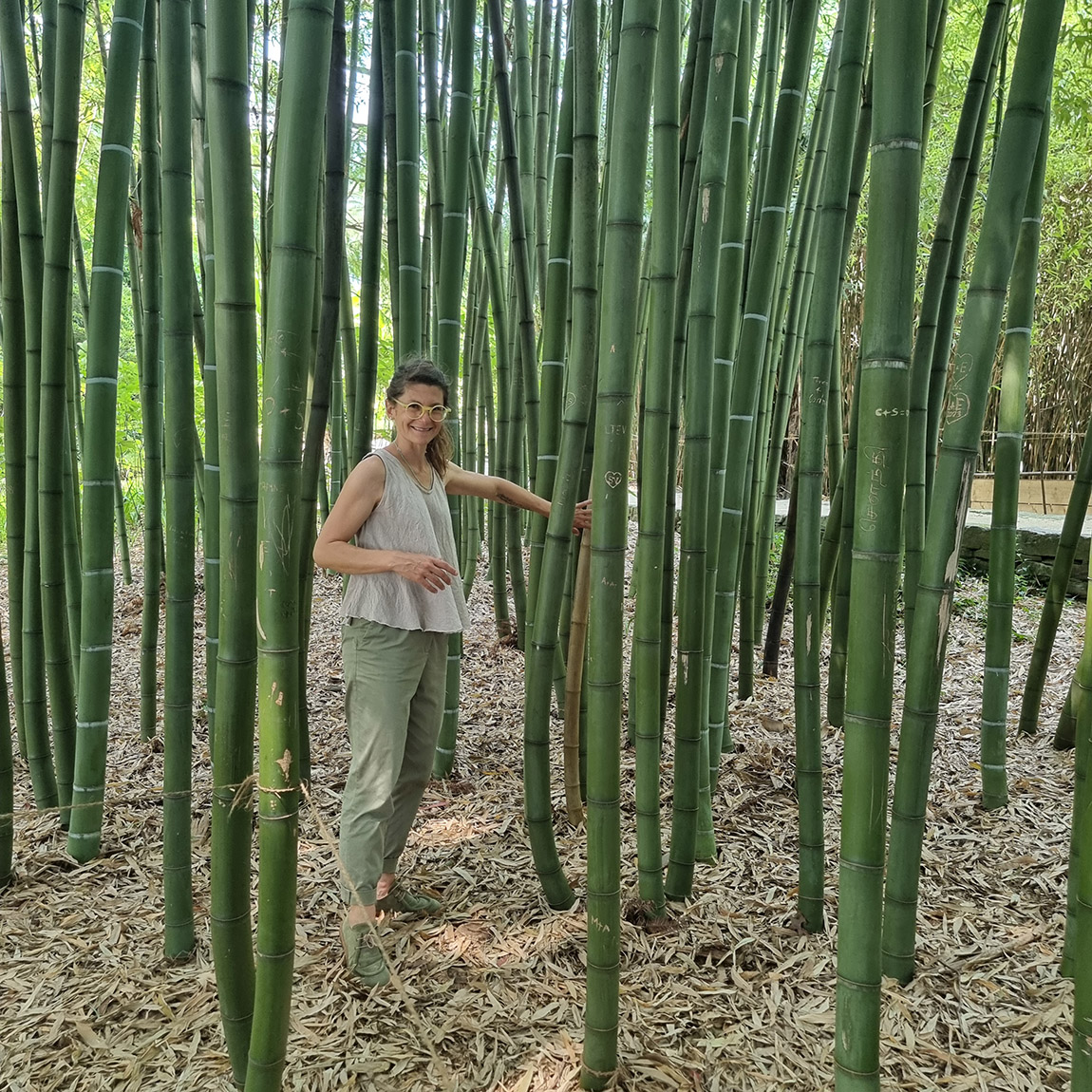
Guide Simone Schmid amongst bamboo trees.
Only 15 minutes by boat lies Isola di Brissago, Switzerland’s only insular botanical garden, where around 2,000 subtropical and Mediterranean plants thrive. “This island was bare rock when purchased by Baroness Antoinette Saint Léger, a Russian aristocrat and passionate botanist,” explains guide Simone Schmid. “Over time, she brought in soil and exotic plants to create a cultivated paradise.” The botanical garden, celebrating its 75th anniversary this year, features rare specimen like a Sicilian fir, thought extinct until the 1950s, or a jade vine, endemic to the Philippines.
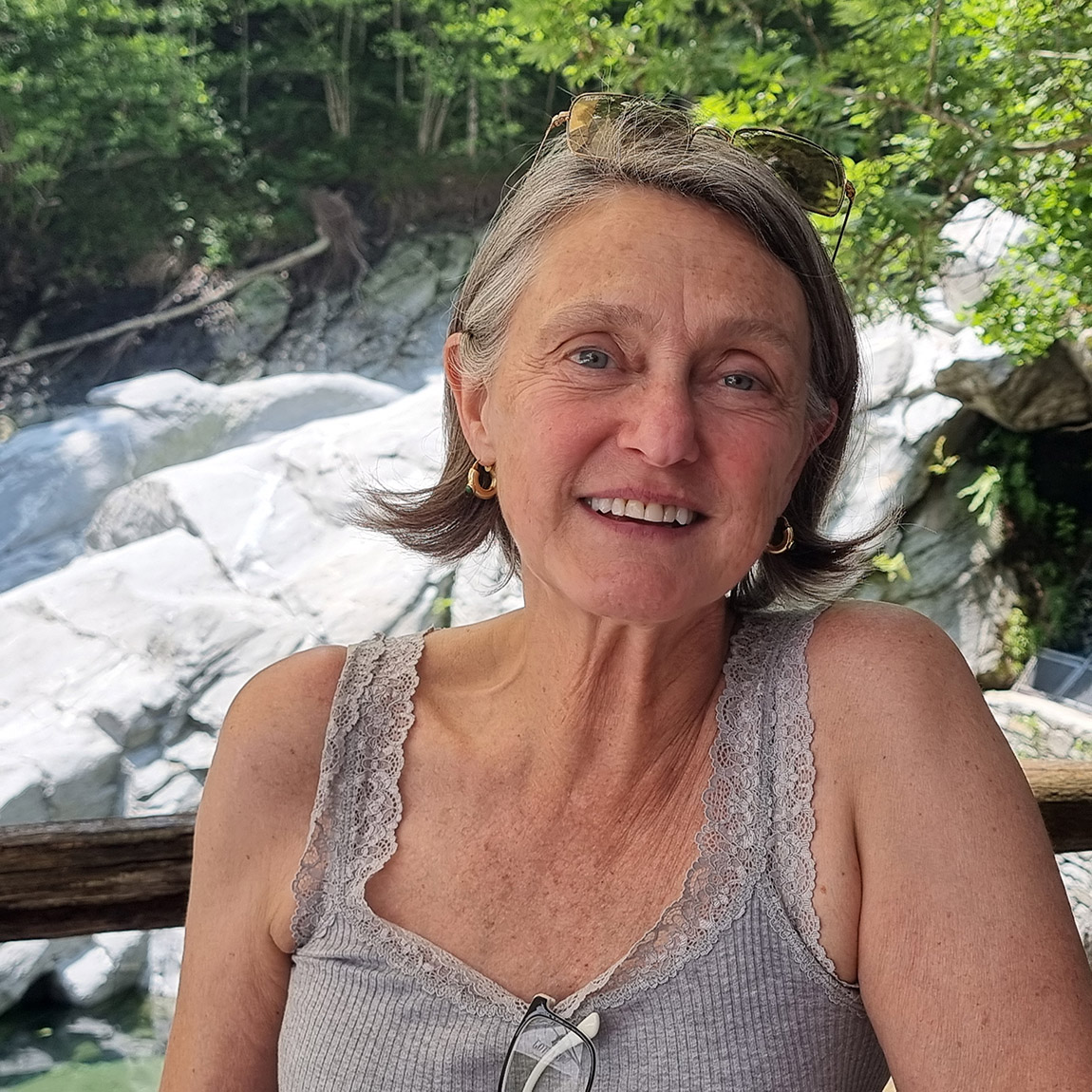
Guide Simone Schmid.
Vallemaggia
If time allows, a daytrip to Vallemaggia, a rugged valley just outside Ascona and Locarno, is worth undertaking. This can easily be done by public transport or for those not afraid to tackle windy mountain roads by car. Spread throughout the valley are century-old villages with grottos, rustic stone-built taverns unique to Ticino. “Traditionally, these structures were carved into hillsides or erected under boulders as food storage cellars. The temperature remains 8-9 degrees all year round,” explains guide Anna Bezzola. “Now they serve homemade meals, cold platters and local wine for example from the Bondola grape. Authentic grottos can be identified by their granite tables.” But local stone is not just found in grottos, barns and houses, but also in the Church of San Giovanni Battista in the small village of Mogno. Designed by Ticino architect Mario Botti, the bold cylindrical form alternates Peccia marble and Maggia granite, featuring an inclined glass roof that floods its minimal interior with natural light. Built on the site of its 17th century predecessor, destroyed by a 1986 avalanche, the church symbolises human resilience – its thick stone walls rising defiantly toward the sky.
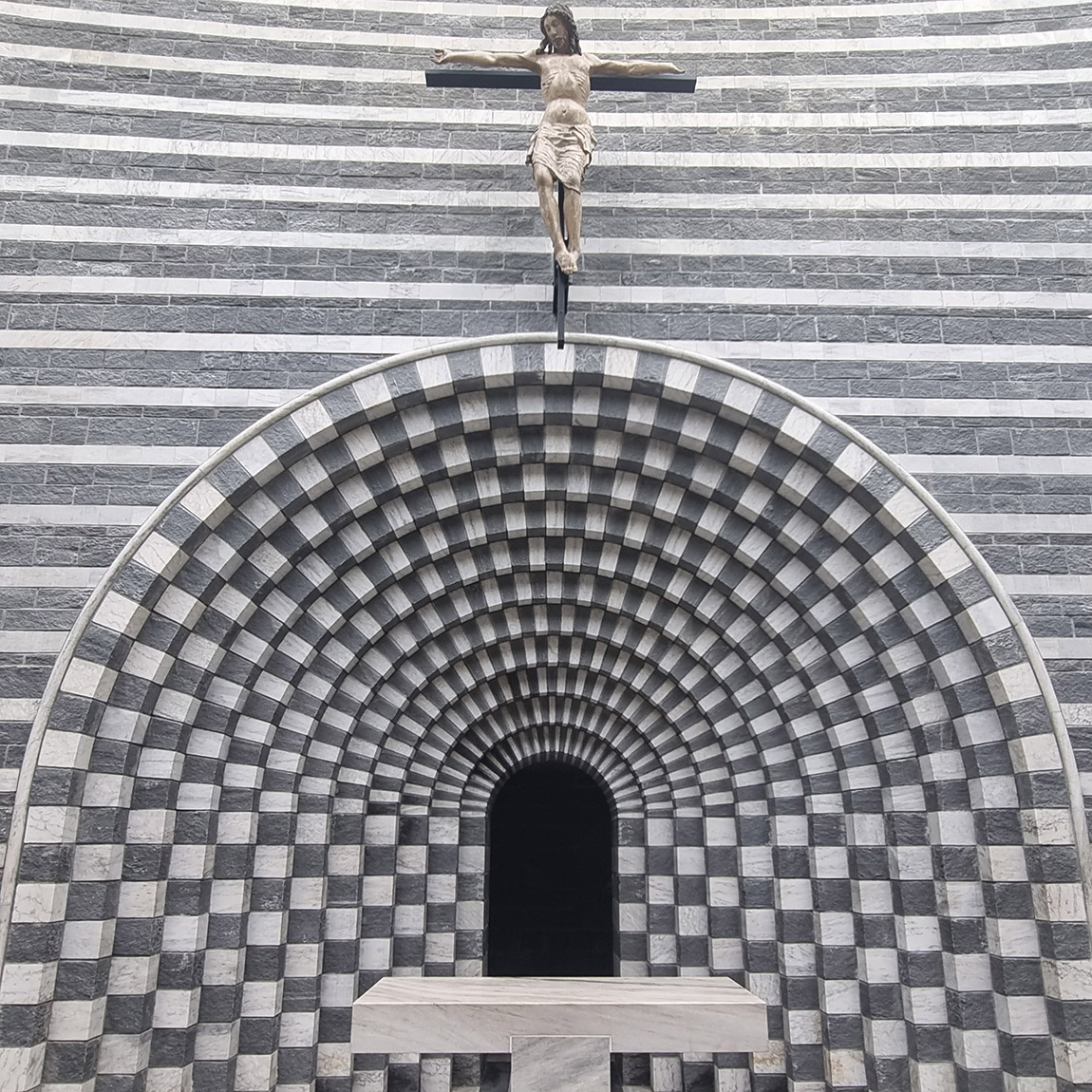
Interior of the Church of San Giovanni Battista.
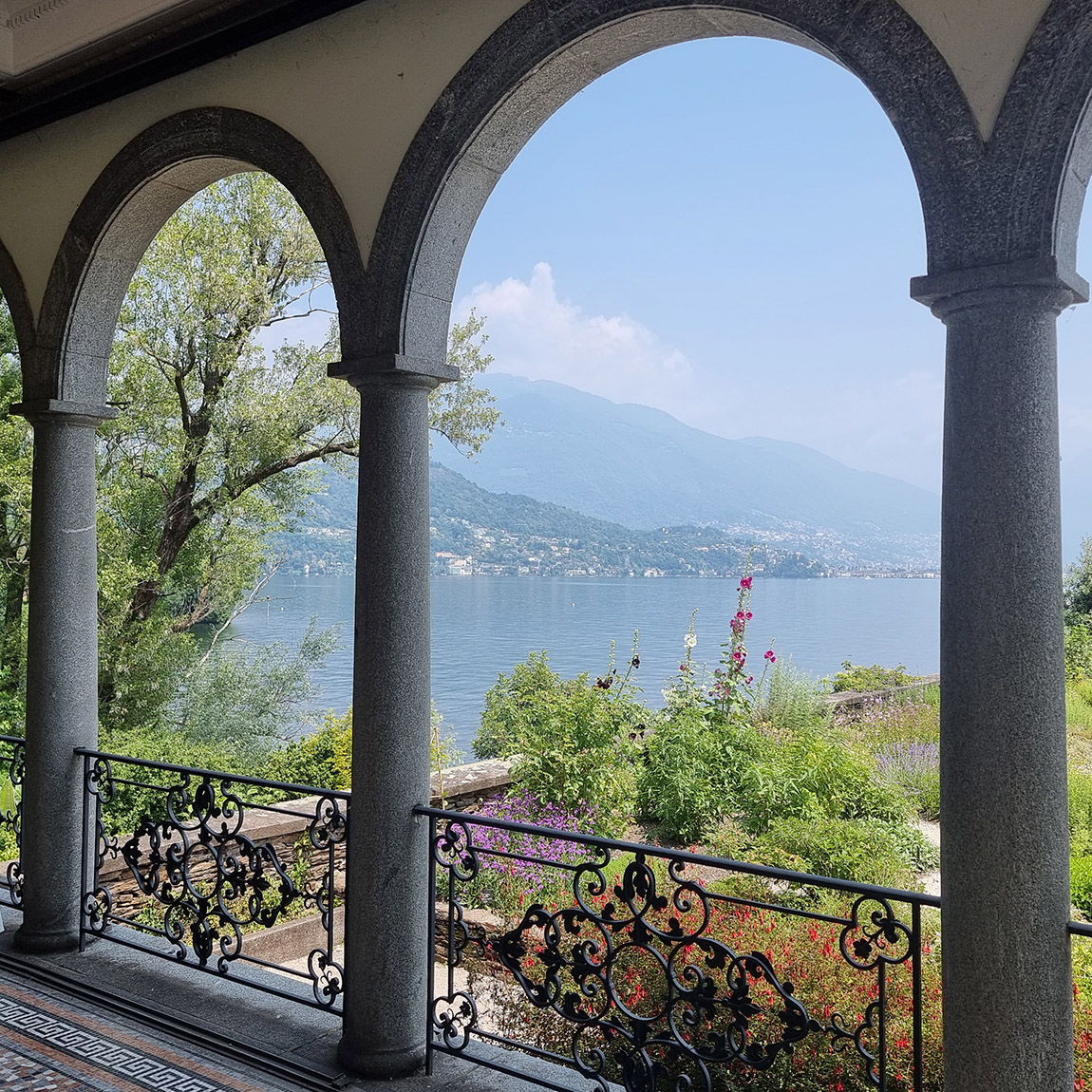
View from Villa Emden on Isola di Bressago over Lake Maggiore.

Information: www.ticino.ch
Stay: www.giardinohotels.ch
Eat: www.antico-borromeo.ch
Do: www.isoledibrissago.ti.ch

Subscribe to Our Newsletter
Receive our monthly newsletter by email