Savouring the tides
TEXT: NANE STEINHOFF | PHOTOS: NORDSEEKÜSTE NORDFRIESLAND, MARKUS ROHRBACHER
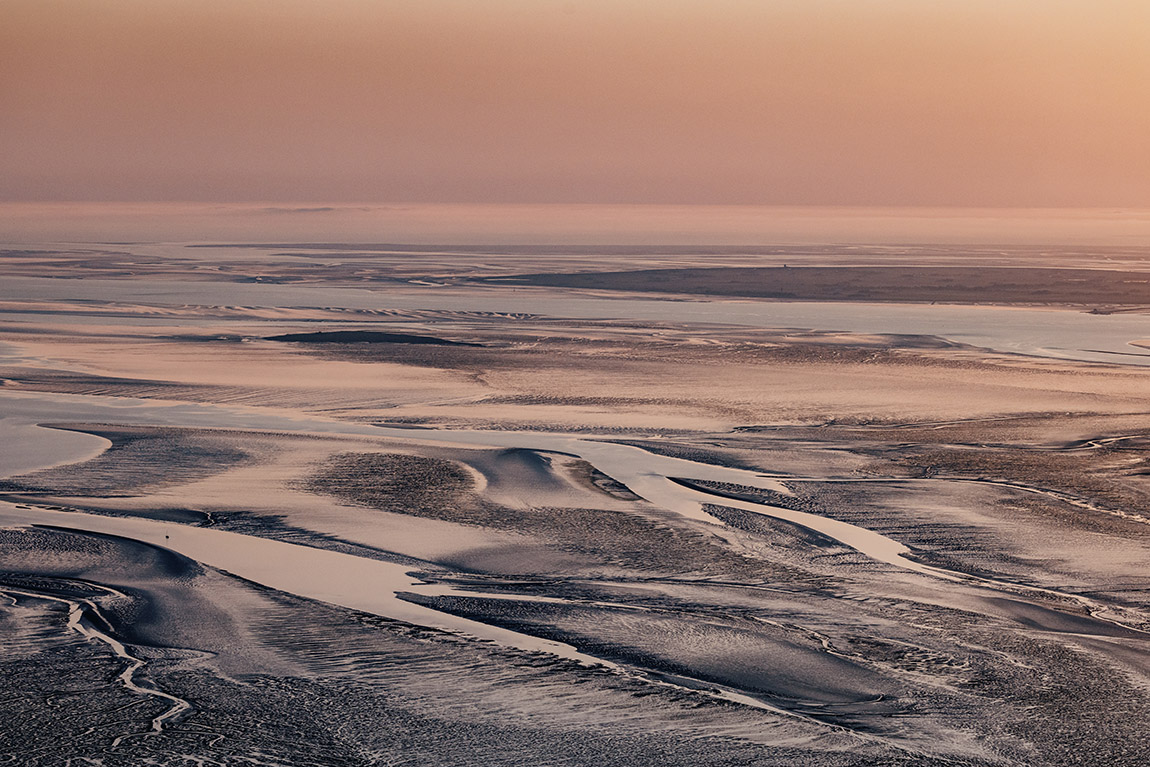
The Wadden Sea from above.
Where the tides shape both land and life, Schleswig-Holstein‘s North Sea islands and coastal towns offer a culinary journey as dynamic as the shifting shoreline. Here, tradition runs deep: crabs are piled high atop buttered bread, mussels are simmered in fragrant broths, and family-run restaurants glow with warmth on stormy winter nights.
Germany’s North Sea region is famed for its picturesque landscapes of endless salt marshes, shifting sand dunes, and vast tidal flats. Yet for the discerning traveller, it’s the local cuisine that provides perhaps the most memorable immersion into island life. From the wild mudflats of the Wadden Sea to the lush farmland on Föhr, local chefs transform simple, sea-fresh ingredients into hearty, soulful dishes that speak to the character of Schleswig-Holstein’s wind-kissed North Sea coastline.

Chef Felix Gabel in his herb garden. Photo: Sabine Braun, Hotel Budersand
As a long-term resident of the UK, I thoroughly miss the culinary delights of German cuisine on a daily basis, from sauerkraut to rye bread and delicious cheeses. But as I’m originally from Schleswig-Holstein, Germany’s northernmost state which borders the Baltic Sea as well as North Sea, my real passion is seafood. Freshly peeled shrimp, sumptuous fish sandwiches and humongous plates of pickled herring with Bratkartoffeln (fried potato slices) are what I love most about visiting home, and part of my DNA. Thus, when I received the invitation to discover more of Schleswig Holstein’s culinary North Sea delights, I jumped at the chance.
Culinary tradition on the North Sea islands and along the mainland’s coastline is deeply tied to the harvest of the sea. Crabs and shrimp are the pride of the region. Lightly boiled and piled high atop buttered black bread, these sweet, delicate morsels are the definition of North Sea freshness. Locals eat them simply, perhaps with a few drops of lemon, or in a Fischbrötchen, the classic fish sandwich enjoyed throughout the region. Other favourite fish sandwiches are typically filled with herring, mackerel or smoked salmon, and garnished with onions, pickles, or remoulade. Krabben, or North Sea shrimp, are another staple, often served simply on fresh bread or as a topping for salads, showcasing the freshness of the catch and the close connection to the sea. In autumn and winter, mussels take centre stage. Harvested from the tidal flats, they are simmered in white wine with leeks, carrots and onions, or baked in cream and herbs, filling island kitchens with a briny perfume.
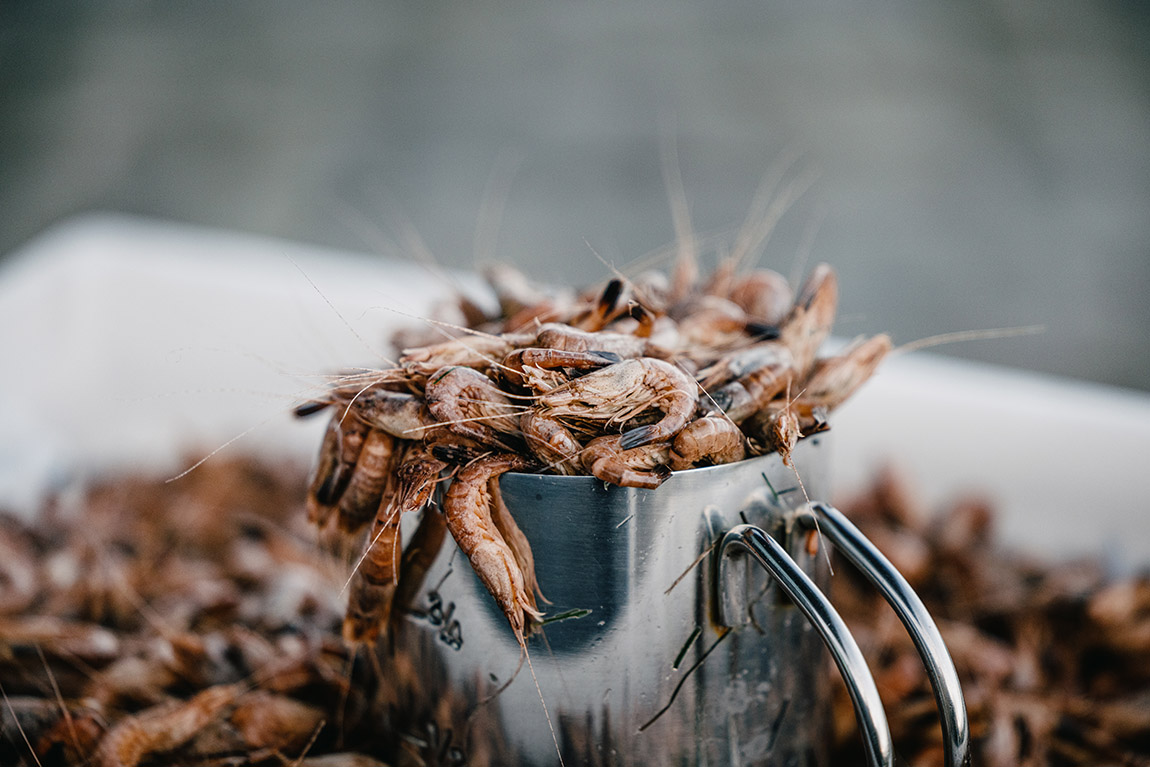
Krabben or North Sea shrimp in Dagebüll.
Yet the region’s culinary prowess extends far beyond the bounty of the sea. On Föhr, often called the Green Island thanks to its lush dikes and farmland, local farms yield a cornucopia of potatoes, cabbages, and root vegetables. A traditional dish here is Föhrer Rübenmalheur, a hearty stew of turnips, pork, and smoked sausage, while local dairies produce rich butter and tangy buttermilk, and small bakeries turn out fragrant loaves of Friesentorte, a multilayered cake filled with whipped cream and plums. On Amrum, the sense of island identity is just as strong. Here, village inns serve warming bowls of Grünkohl mit Pinkel, a regional winter specialty of kale slow-cooked with smoked sausage and bacon, often accompanied by sweet, steamed potatoes.
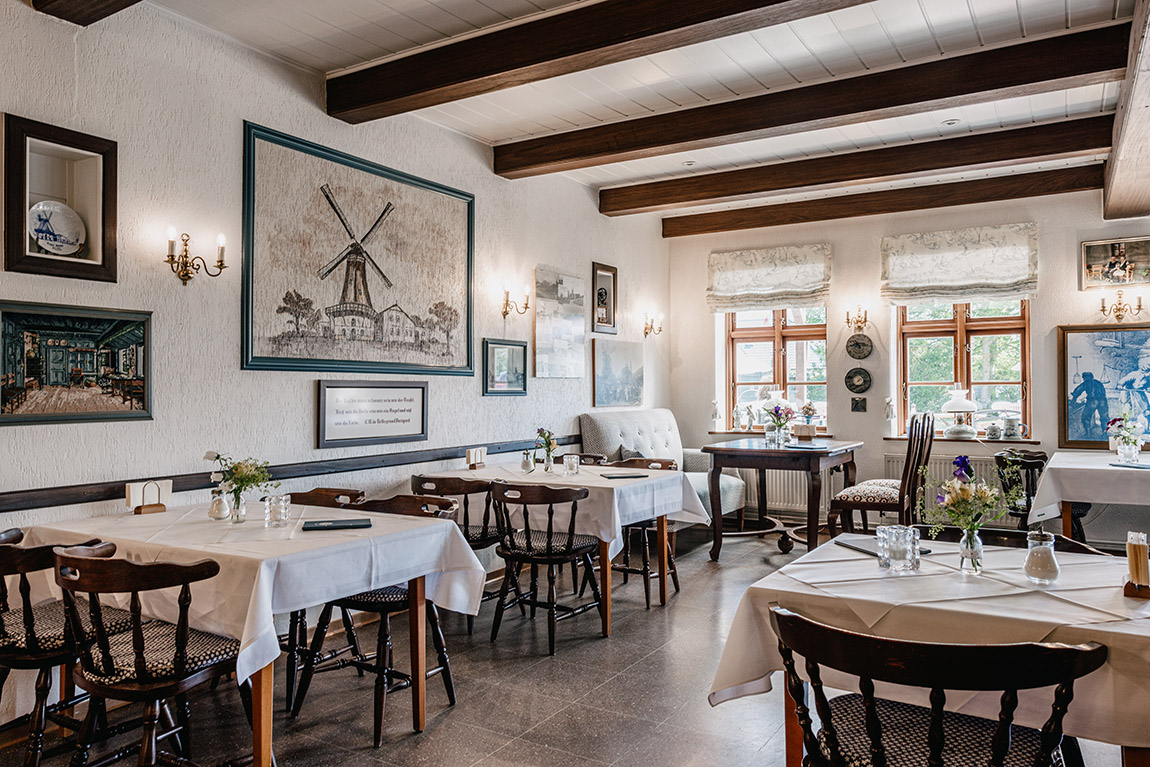
Café Engelmühle on Nordstrand.
For many travellers, the highlight of a Nordsee culinary journey is the famous Labskaus. This sailor’s dish – once a staple on long sea voyages – may look humble, but its flavours are rich and deeply satisfying. A mash of corned beef, potatoes, and beets, Labskaus is topped with a fried egg, pickled herring, and gherkins. No visit to Schleswig-Holstein’s North Sea region would be complete without sampling the legendary local oysters. On Sylt, for instance, oysters are shucked fresh at the table and served on ice with a splash of lemon or mignonette. Here, you can also wander the tidal flats of the Wadden Sea, an UNESCO World Heritage site, at low tide. These mudflat walks reveal an astonishing world: crabs, shellfish, and the famous ‘Small 5‘ of the Wadden Sea – edible crab, mussels, North Sea shrimp, mud snail, and Sylter Royal oyster. These creatures not only sustain the marine ecosystem but also underpin the islands’ culinary identity.
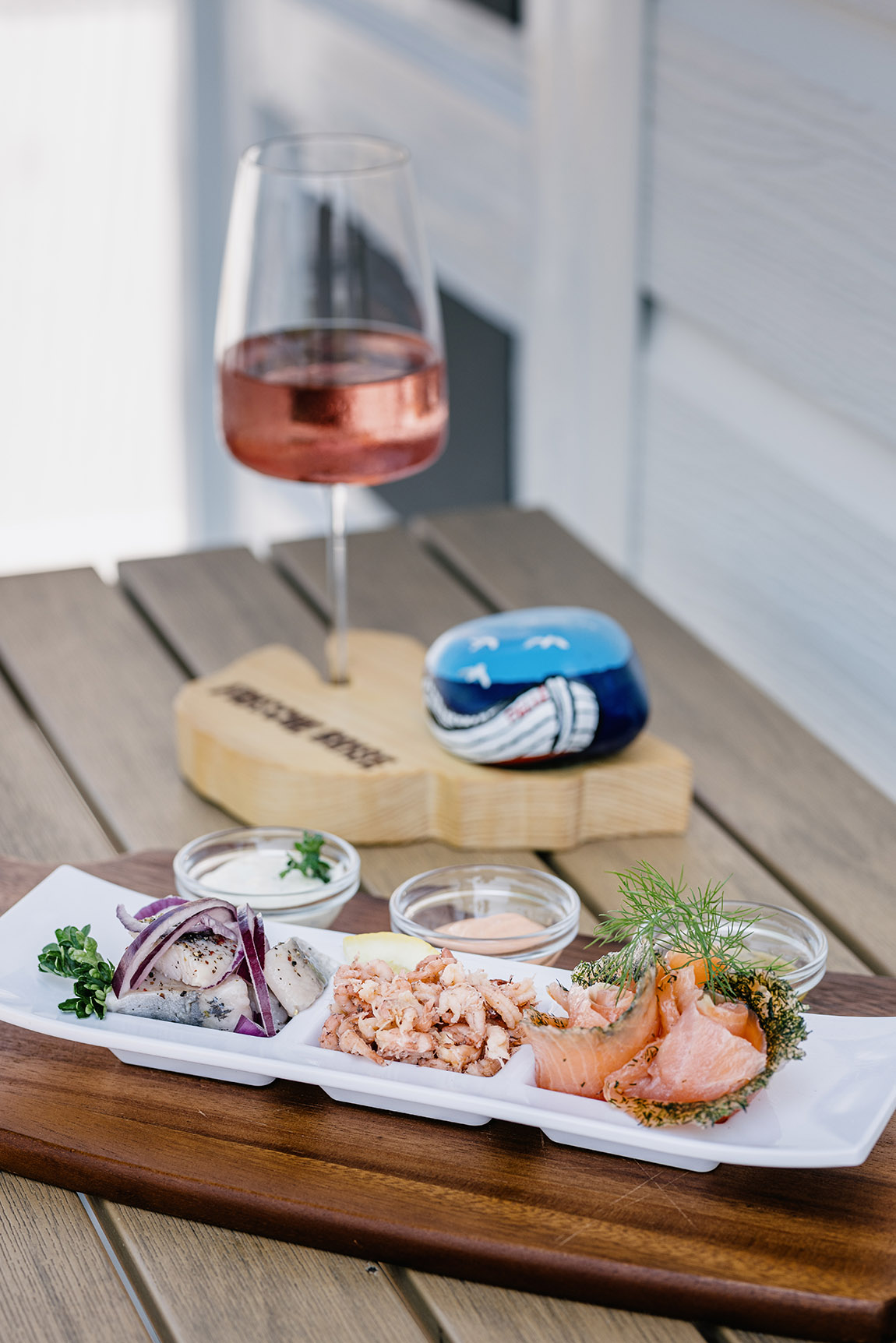
Krabben or North Sea shrimp in Dagebüll.
Culinary excellence, local focus
On Sylt, too, local restaurants elevate sea-fresh ingredients with creative flair. At KAI3 in Hörnum, chef Felix Gabel’s Nordic fusion style draws on traditional methods like fermentation and pickling, blended with modern culinary ideas. His menu shifts with the seasons: young vegetables and crustaceans in summer, heartier flavours and fermented notes in winter. “The North Sea gives me authenticity, clarity, and a direct connection to the origin of the food,” Gabel says, emphasising respect for the region and curiosity.
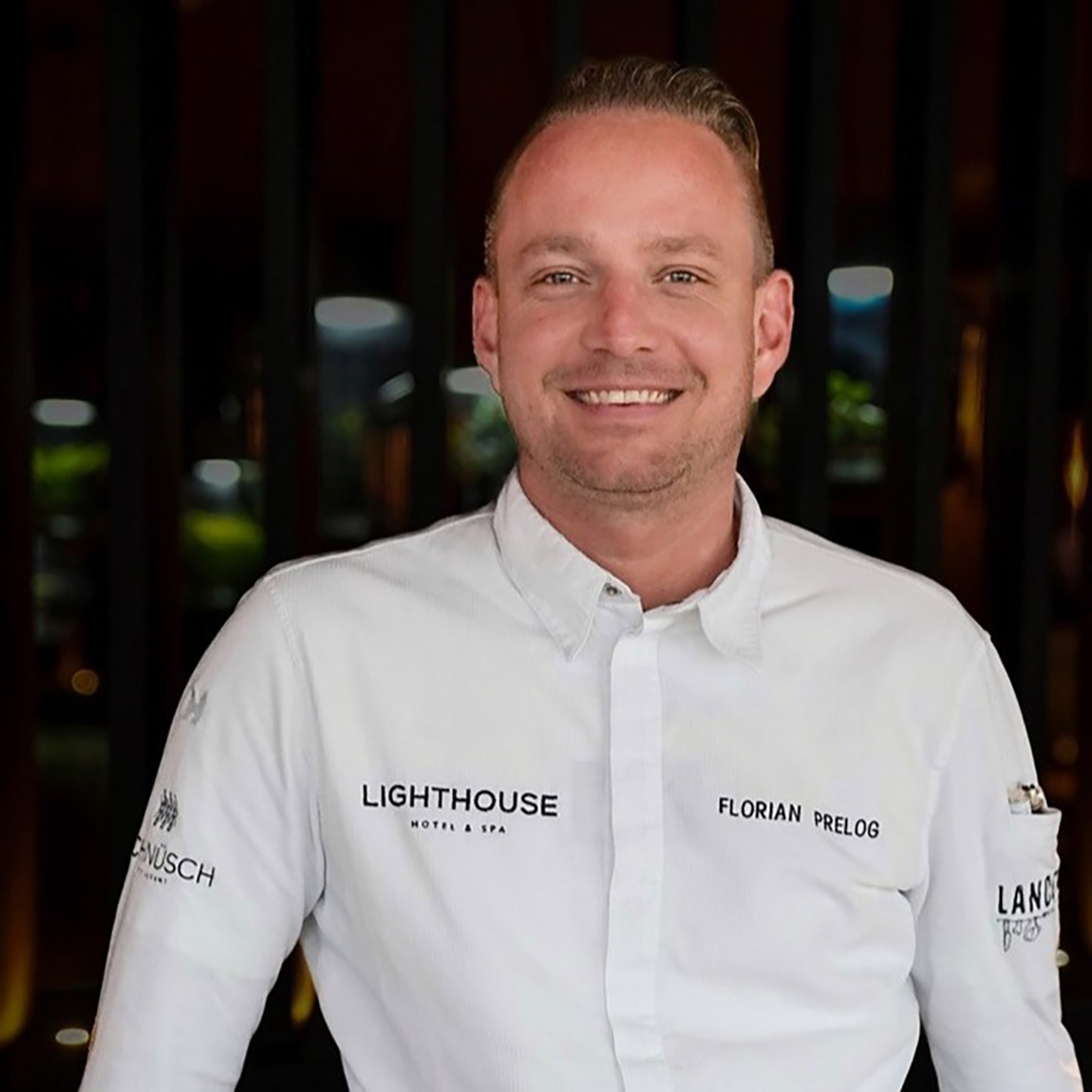
Chef Florian Prelog at the Lighthouse Hotel & Spa. Photo: Caroline Wehmer
KAI3’s dishes reflect the landscape and sea, incorporating the ‘Small 5’ (crab, mussel, shrimp, mud snail, and oyster), which might appear as aspic or praline. Hörnum mussels, harvested just offshore, epitomise the region’s freshness and are a house speciality. The North Sea’s rugged climate also produces robust vegetables such as aromatic cabbage, crisp beets, and distinctive potatoes. The menu features lamb from salt marshes, Sylt game, and locally grown berries.
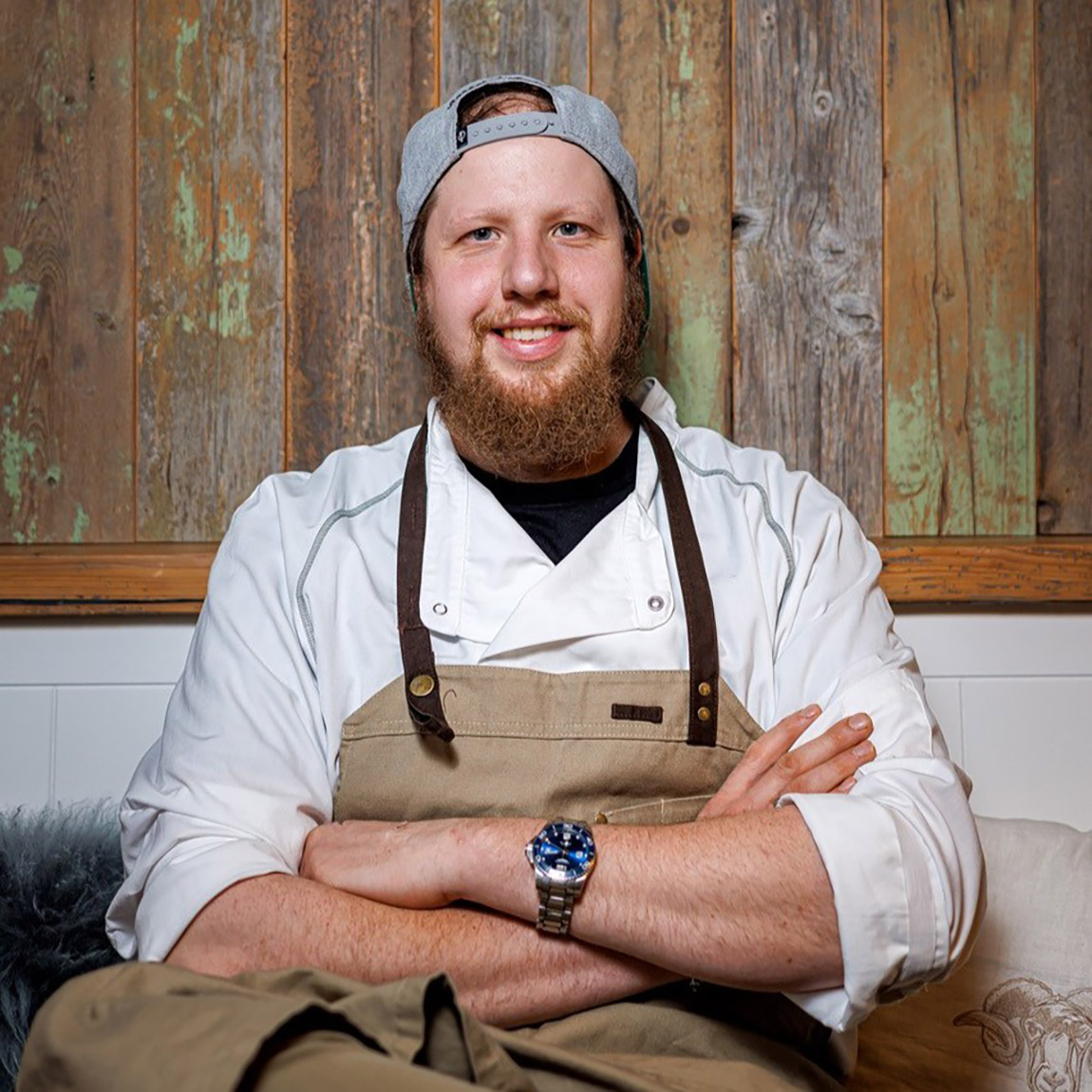
Chef Joseph Sauer at Hotel Zweite Heimat. Photo: Hotel Zweite Heimat
Beyond the islands, towns like Büsum, Sankt Peter-Ording, and Wyk auf Föhr showcase a new generation of chefs blending regional pride with global inspiration. At Büsum’s Lighthouse Hotel & Spa, chef Florian Prelog champions sustainability and animal welfare, sourcing from the hotel’s own James Farm. The kitchen team produces smoked fish and meat in-house, ensuring transparency and minimal waste. Prelog’s resourcefulness means that the same smoked fish might reappear as Stremmellachs at lunch, in a sandwich, or at breakfast. “I want our guests to experience something they haven’t tasted before,” he says, blending adventure with respect for Schleswig-Holstein’s land and sea.
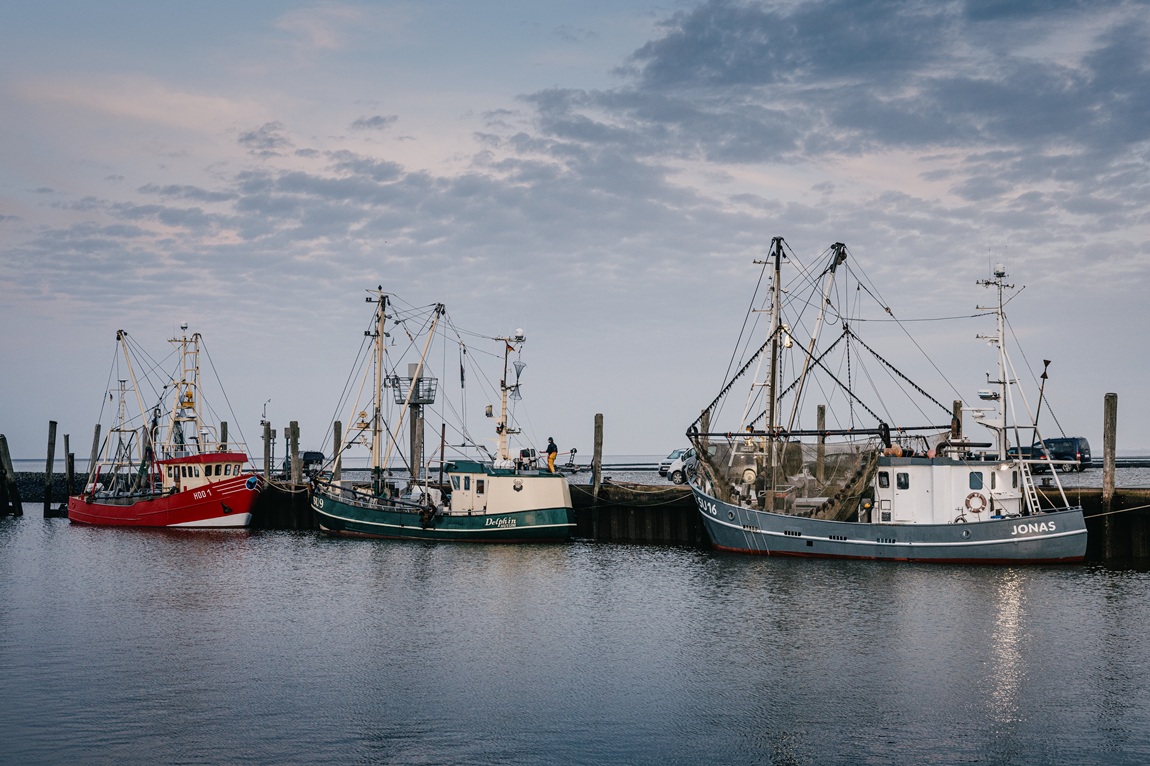
North Sea shrimp fishing boats in Dagebüll.
In Sankt Peter-Ording, Hotel Zweite Heimat offers a second home experience, where chef Joseph Sauer crafts menus celebrating regional and seasonal produce. The team collaborates on monthly four-course menus, each themed around seasonal ingredients, such as potatoes in September or Hokkaido pumpkin in October. Partnerships with local producers ensure that every dish reflects the land, from Eiderstedter raspberries to local vegetables. Classic North Frisian dishes like Krabbenstulle and Matjesfilet connect guests to family traditions in the hotel’s cosy Pesel room.
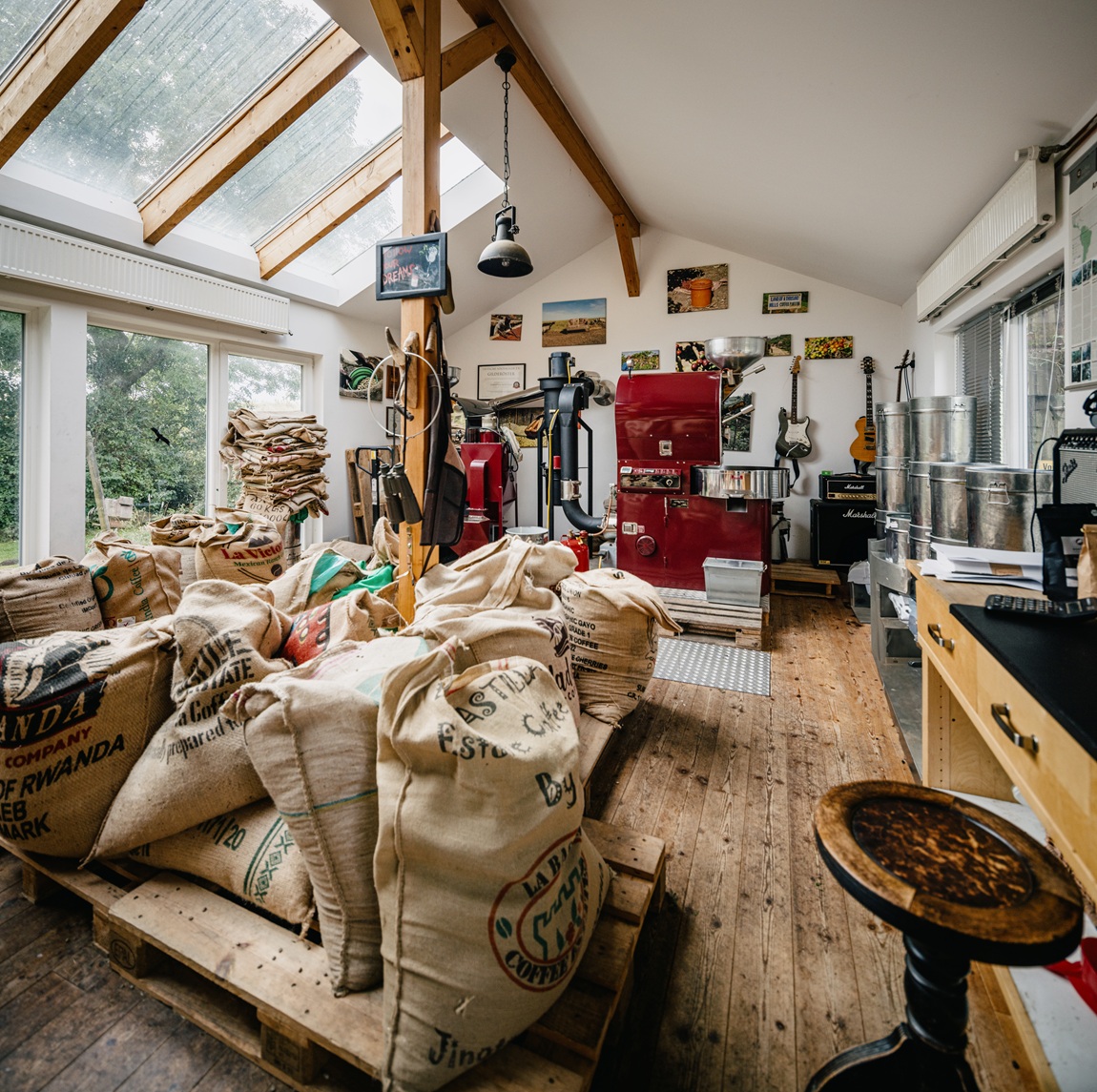
Coffee roasting company.
On Föhr, the Green Island, chef Axel Krause at Restaurant Hemkes highlights simple, honest ingredients – local cucumbers, tomatoes, lamb, and village bread. With experience in Michelin-starred kitchens, Krause offers refined yet approachable dishes: roast beef with hash-brown fries, Königsberger Klopse with caper sauce, and creative desserts like basil-marinated fennel on white chocolate mousse. “The North is my muse,” he says, “and our kitchen is open to the world, but always grounded in local, seasonal fare.”
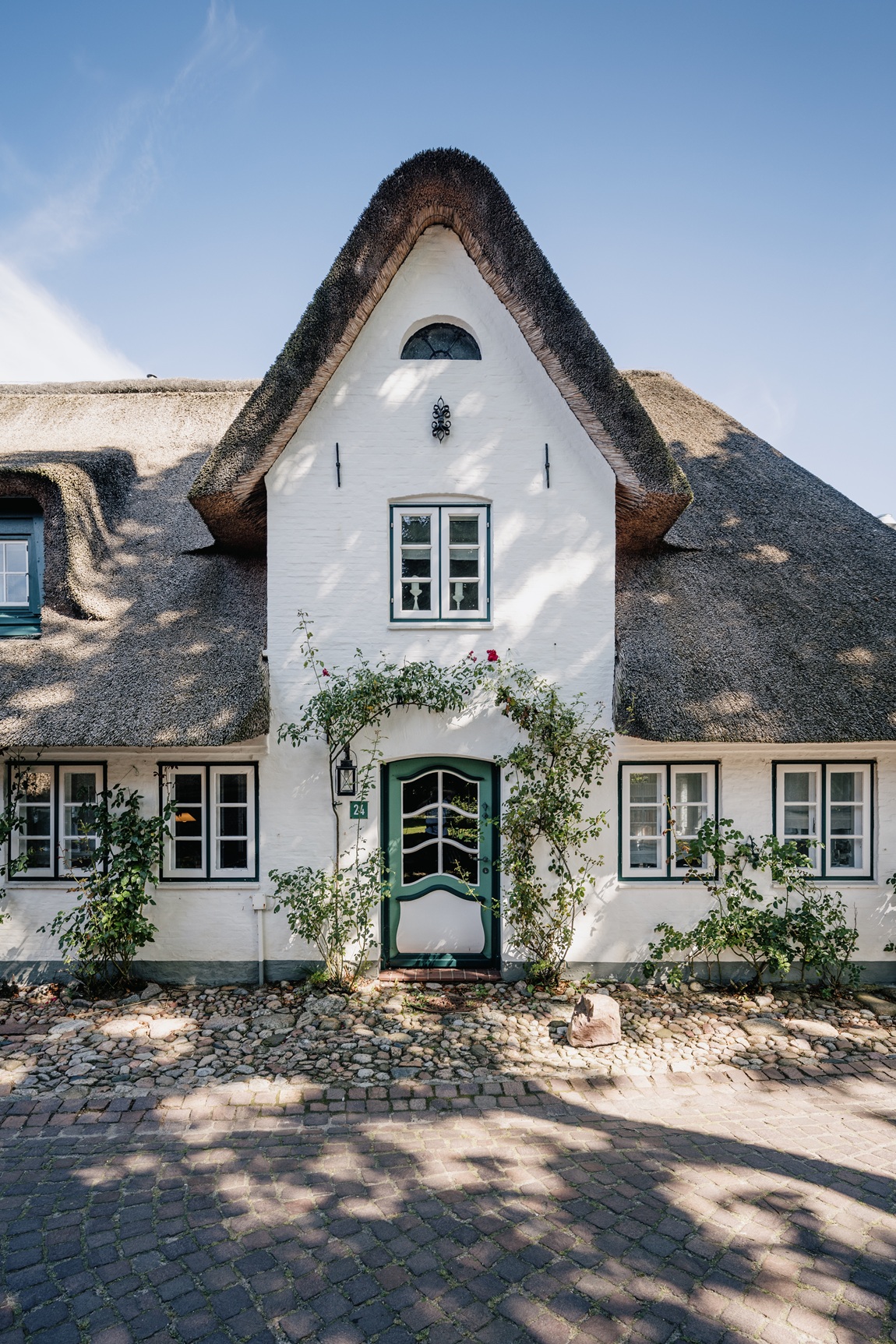
A traditional house in Nieblum on Föhr.
While the islands guard their traditions closely, culinary innovation is always on the horizon. Adventurous chefs now experiment with foraged sea herbs, wild beach asparagus, and the region’s fabled sea buckthorn. Menus shift with the seasons, so come hungry and curious to Germany’s North Sea shores and let the flavours guide you. You will be sure to find food for the soul – seasoned with salt and shaped by the wind and the sea.
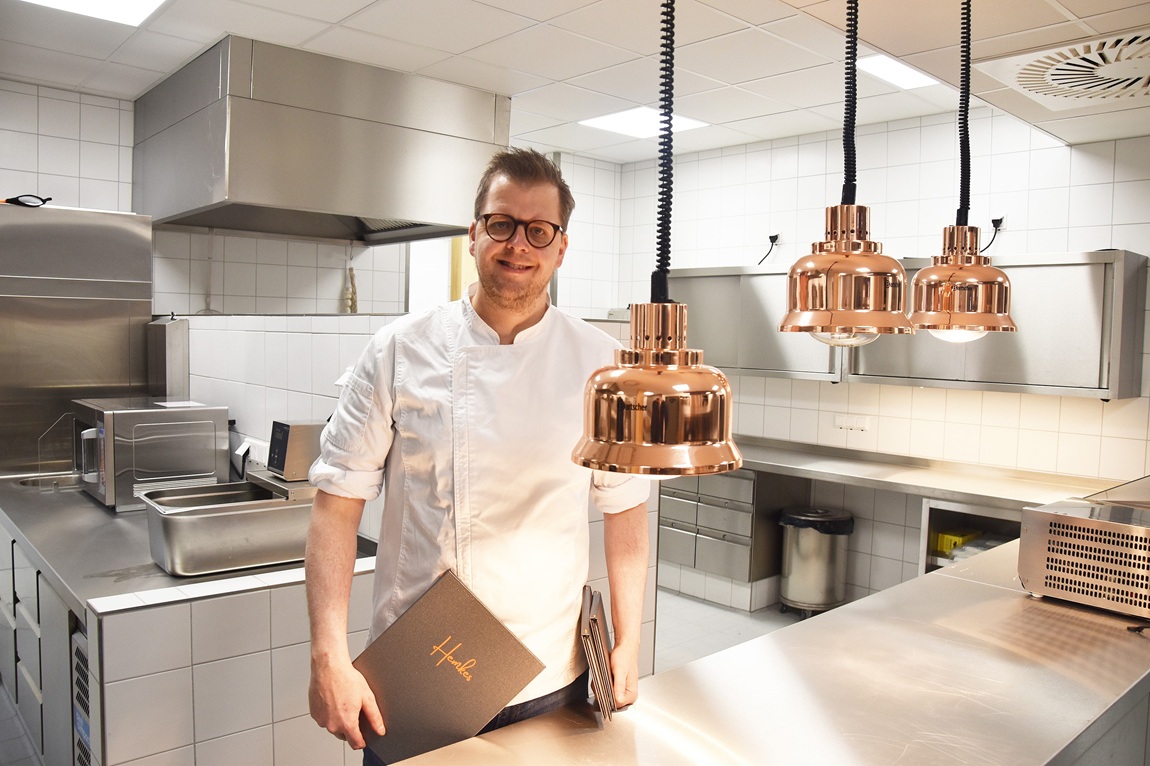
Chef Axel Krause at Restaurant Hemkes. Photo: Wilhelm Brinkmeier

Further information on the many special restaurants found in the region: www.nordseetourismus.de/genuss-gastronomie

Subscribe to Our Newsletter
Receive our monthly newsletter by email