Independent, progressive, relevant: the Vienna Secession
TEXT: SILKE HENKELE | PHOTOS: SECESSION/ JORIT AUST
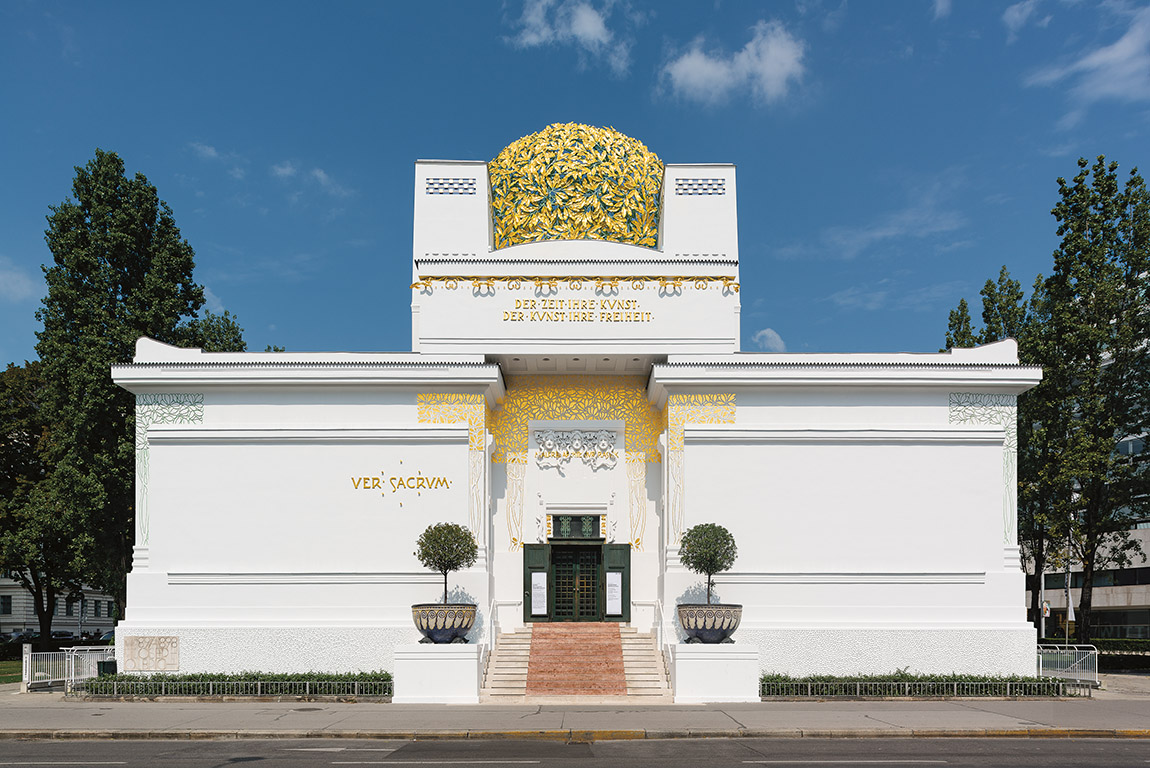
Secession entrance.
For more than a century, the Vienna Secession has stood for artistic freedom and new beginnings. With its striking architecture and the famous golden cupola, it is not only one of Vienna’s landmarks but also one of the world’s most important artist-run exhibition spaces for contemporary art.
“The Vienna Secession is one of the oldest artists’ associations in the world with a decidedly progressive programme. At the same time, it is highly topical,” explains marketing coordinator Elisa Mirbach-Eder. “Our strength lies in our independence. Here, artists themselves decide what is put on display. That makes us agile, courageous and closely attuned to the questions of our time.”
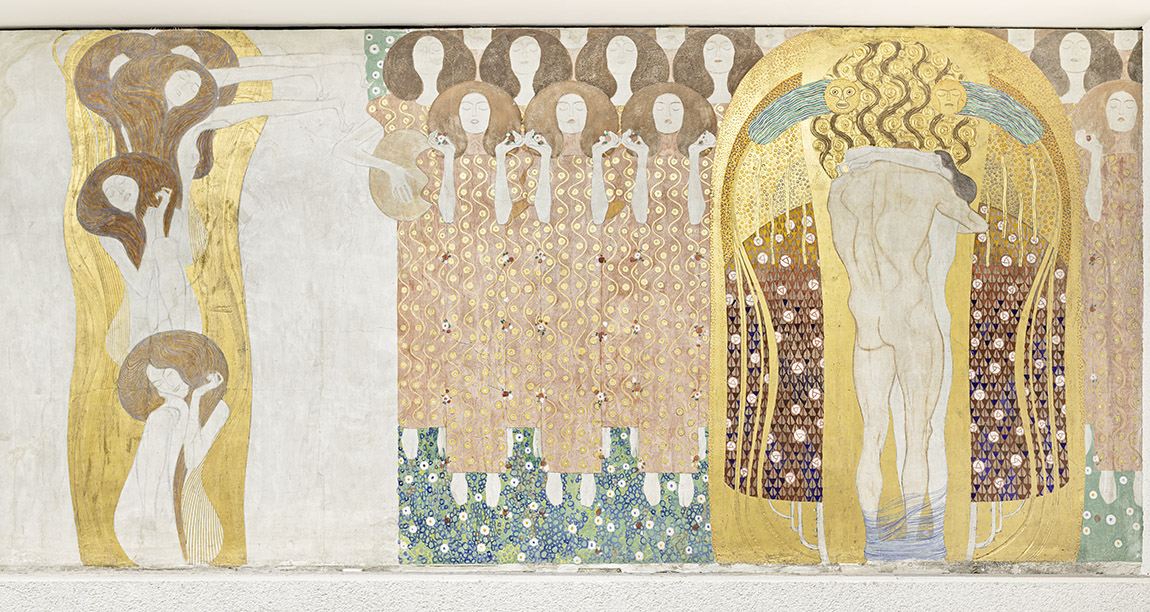
Klimt II.
The movement was founded in 1897 by a group of artists around Gustav Klimt, who consciously turned away from historicism and the academic exhibition policies of the art establishment. Their credo still appears in golden letters above the entrance: To every age its art. To art its freedom. “This sentence is not a historical quotation but our mandate to connect the heritage of this iconic building with the art of the present,” says Mirbach-Eder.
A highlight for visitors from around the world is Gustav Klimt’s Beethoven Frieze. Created in 1902, this monumental work is considered a key piece of Klimt’s oeuvre and of Viennese Art Nouveau. “Beethoven Frieze translates Beethoven’s music into a monumental visual narrative. It creates a unique connection between music, image and space, and shows the creative freedoms the group claimed for itself at the time.”
The curatorial programming of the exhibitions is determined democratically by the board, which operates collectively under the presidency of Ramesch Daha. The board is elected every two years by the association’s approximately 400 members. The programme features international presentations that reflect current developments in contemporary art worldwide. These exhibitions are made possible in part thanks to Erste Bank, the Secession’s main sponsor since 1998.
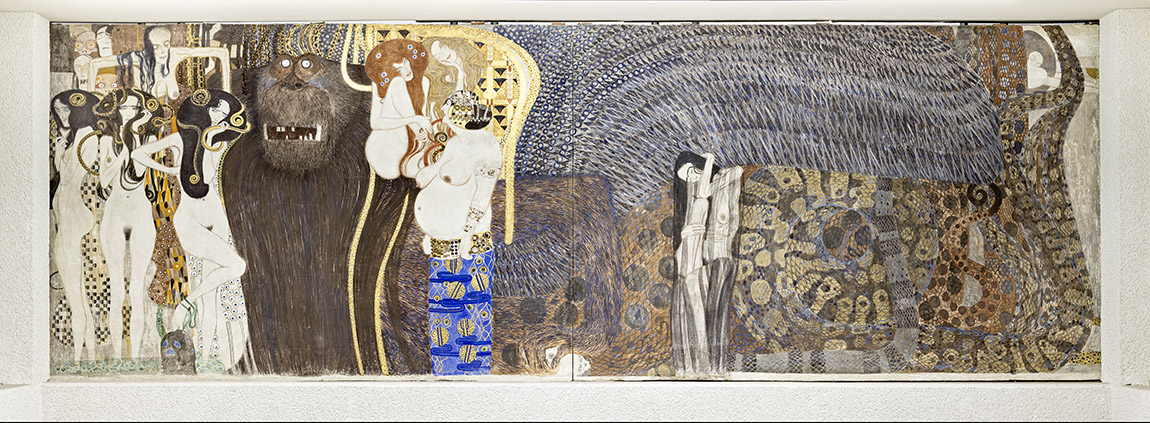
Klimt I.
In recent years, artists such as Susana Pilar Delahante Matienzo, Vivian Suter, Christine Sun Kim and Alex Da Corte have set powerful accents. One particularly memorable intervention took place in 2024, when Delahante Matienzo temporarily turned the famous cupola black by covering the gold leaves with nylon stockings. “This work resonated far beyond the building itself and reached a large number of people.”
With ten to 15 exhibitions each year – featuring Ndidi Dike, Marianna Simnett and Reba Maybury from early March 2026 – the Secession continually offers new perspectives. Education and accessibility play a central role: visitor information in German, English and Plain Language, multilingual audio guides and guided tours make even complex content accessible. Since 2025, the initiative Free Art for All has sent a strong signal of inclusivity. Thanks to the generous support of hearing aid audiologist Neuroth, admission is free on the first Wednesday of every month.
The Association of Visual Artists Vienna Secession: a place rich in history and a driving force for contemporary art.
Web: www.secession.at
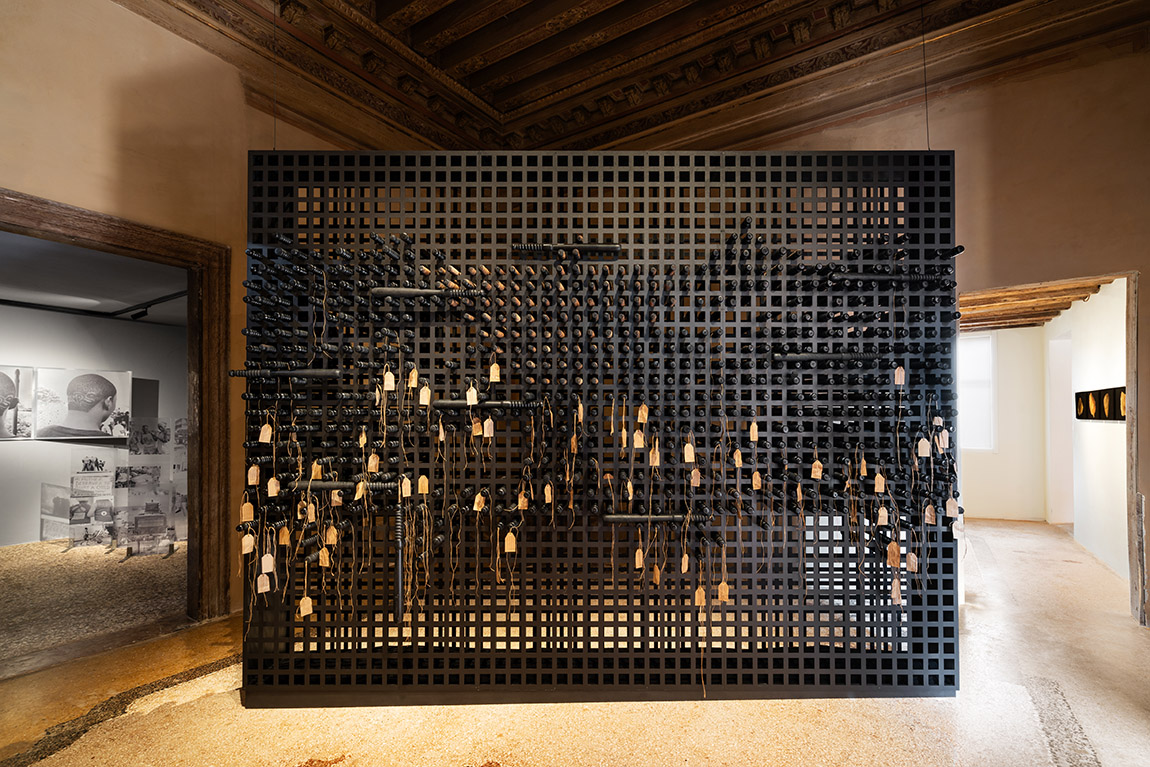
Ndidi Dike, Blackhood A Living Archive, 2024, Installationsansicht, Nigeria Imaginary, Pavillon Nigerian Pavillion, La Biennale di Venezia. Foto: Marco Capelleti Studio.
Unabhängig, progressiv, relevant: die Wiener Secession
Die Secession steht seit über einem Jahrhundert für künstlerische Freiheit und Aufbruch. Mit ihrer markanten Architektur und der berühmten goldenen Kuppel ist sie nicht nur ein Wahrzeichen Wiens, sondern auch eines der international bedeutendsten, von Künstler:innen geführten Ausstellungshäuser für zeitgenössische Kunst.
„Die Secession ist weltweit eine der ältesten Künstler:innenvereinigung mit einem dezidiert progressiven Programm. Gleichzeitig ist sie hochaktuell”, erklärt Marketingverantwortliche Elisa Mirbach-Eder. „Unsere Stärke liegt in der Unabhängigkeit! Künstler:innen entscheiden bei uns selbst, was gezeigt wird. Das macht uns beweglich, mutig und nah an den Fragen unserer Zeit.”
Gegründet wurde die Secession 1897 von einer Gruppe von Künstlern um Gustav Klimt, die sich bewusst vom Historismus und der akademischen Ausstellungspolitik des Kunstbetriebs abwandte. Ihr Credo steht noch immer in goldenen Lettern über dem Eingang: ‚Der Zeit ihre Kunst. Der Kunst ihre Freiheit’. „Dieser Satz ist kein historisches Zitat, sondern unser Auftrag, das Erbe des ikonischen Gebäudes mit der Kunst der Gegenwart zu verbinden”, so Mirbach-Eder.”
Ein Höhepunkt für Besucher:innen aus aller Welt ist Gustav Klimts Beethovenfries. Das monumentale Werk, geschaffen 1902, gilt als Schlüsselwerk Klimts und des Jugendstils. „Der Beethovenfries übersetzt Beethovens Musik in eine monumentale Bilderzählung. Er schafft eine einzigartige Verbindung zwischen Musik, Bild und Raum und zeigt, welche kreativen Freiheiten sich die Gruppe damals herausnahm.”
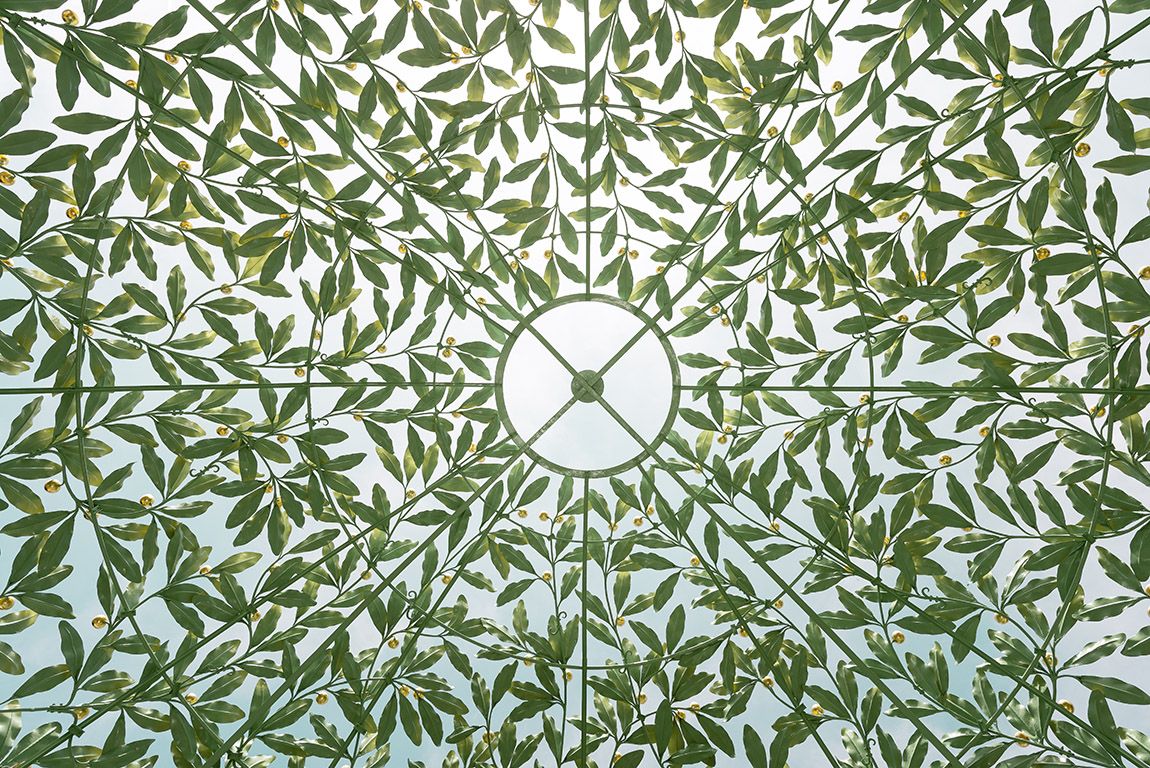
Die berühmte Kuppel.
Die inhaltliche Programmierung der Ausstellungen erfolgt demokratisch durch den Vorstand, der unter der Präsidentschaft von Ramesch Daha als Kollektiv agiert. Der Vorstand wird alle zwei Jahre von den rund 400 Mitgliedern der Künstler:innenvereinigung gewählt. Gezeigt werden internationale Präsentationen, die aktuelle Entwicklungen der zeitgenössischen Kunst weltweit aufgreifen. Möglich werden die Ausstellungen auch dank der Ersten Bank, die seit 1998 Hauptsponsorin der Secession ist.
In den letzten Jahren setzten etwa Susana Pilar Delahante Matienzo, Vivian Suter, Christine Sun Kim oder Alex Da Corte starke Akzente. Besonders in Erinnerung blieb eine Intervention aus dem Jahr 2024, bei der Delahante Matienzo die berühmte Kuppel durch das Beziehen der Goldblätter mit Nylonstrümpfen temporär schwarz färbte. „Dieses Werk hat weit über das Haus hinaus gewirkt und viele Menschen erreicht.”
Mit zehn bis 15 Ausstellungen pro Jahr – ab Anfang März werden Ndidi Dike, Marianna Simnett und Reba Maybury gezeigt – bietet die Secession ständig neue Perspektiven. Vermittlung und Zugänglichkeit spielen dabei eine zentrale Rolle: Informationen auf Deutsch, Englisch und in Leichter Sprache, multilinguale Audioguides und Führungen machen auch komplexe Inhalte erfahrbar. Ein starkes Zeichen für Niederschwelligkeit setzt seit 2025 das Angebot ‚Freie Kunst für alle’: Dank der großzügigen Unterstützung des Hörgeräteakustikers Neuroth ist an jedem ersten Mittwoch im Monat der Eintritt frei.
Die Vereinigung bildender Künstler*innen Wiener Secession:Secession: Ein geschichtsträchtiges Haus, wegweisend für zeitgenössische Kunst.
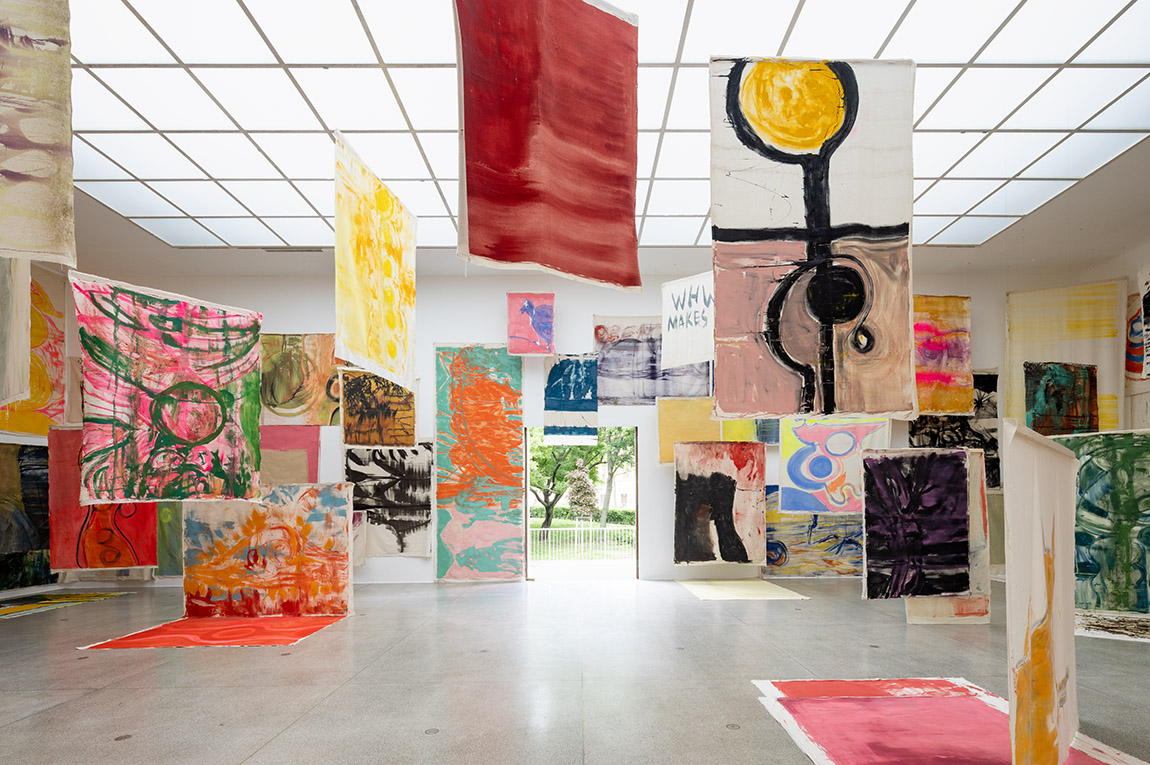
Vivian Suter, A Stone in the Lake, Installationsansicht, Secession 2023.
Web: www.secession.at

Subscribe to Our Newsletter
Receive our monthly newsletter by email