Bavarian Flower Power
TEXT & PHOTOS: NORBERT EISELE-HEIN
From homeopathic remedies to lifestyle lemonades and natural aspirin – the flower and herb walks around Reit im Winkl not only work their magic on one’s calves but also broaden horizons, as travel writer and photographer Norbert Eisele-Hein finds out.
“In the Middle Ages, alchemists believed that if you could absorb the glimmering drop of morning dew in the flower of the lady’s mantle, you could create the legendary Philosopher’s Stone,” according to our walking tour leaders. The sun is just climbing over the surrounding mountains. Already, the first rays are breaking through the branches of the mixed forest, conjuring up fairytale-like light on the hiking trail. They dissolve the morning mist that hovers mystically over the meadow, as if by magic. What a captivating start! We can certainly understand the alchemists’ enthusiasm.
Right at the beginning of our flower and herb hike from picturesque Reit im Winkl up to Wetterkreuz, we are thoroughly impressed by trained herb hiking guide Sylvia Schmuck and the plant-savvy horticultural engineer Tina Robok’s holistic approach.
We pass the public swimming pool on the edge of town, and Tina points out a lush wildflower meadow: “Look, ragged robin, knotweed, yarrow, bird’s-foot trefoil, a whole array of orchids… Of course, most hikers walk right past here, almost without a second glance, but it’s worth pausing for a moment to absorb the splendour of colours and shapes, and of course, the intoxicating fragrances. To allow yourself this incredibly enriching moment of flower power.” How right she is, especially as the sun is currently igniting thousands upon thousands of sparkling beacons in the droplets of morning dew. We quickly realise that today isn’t about altitude or summits – and that’s a good thing. Because today we’re opening the door to visual and olfactory delights and a corresponding broadening of our horizons.
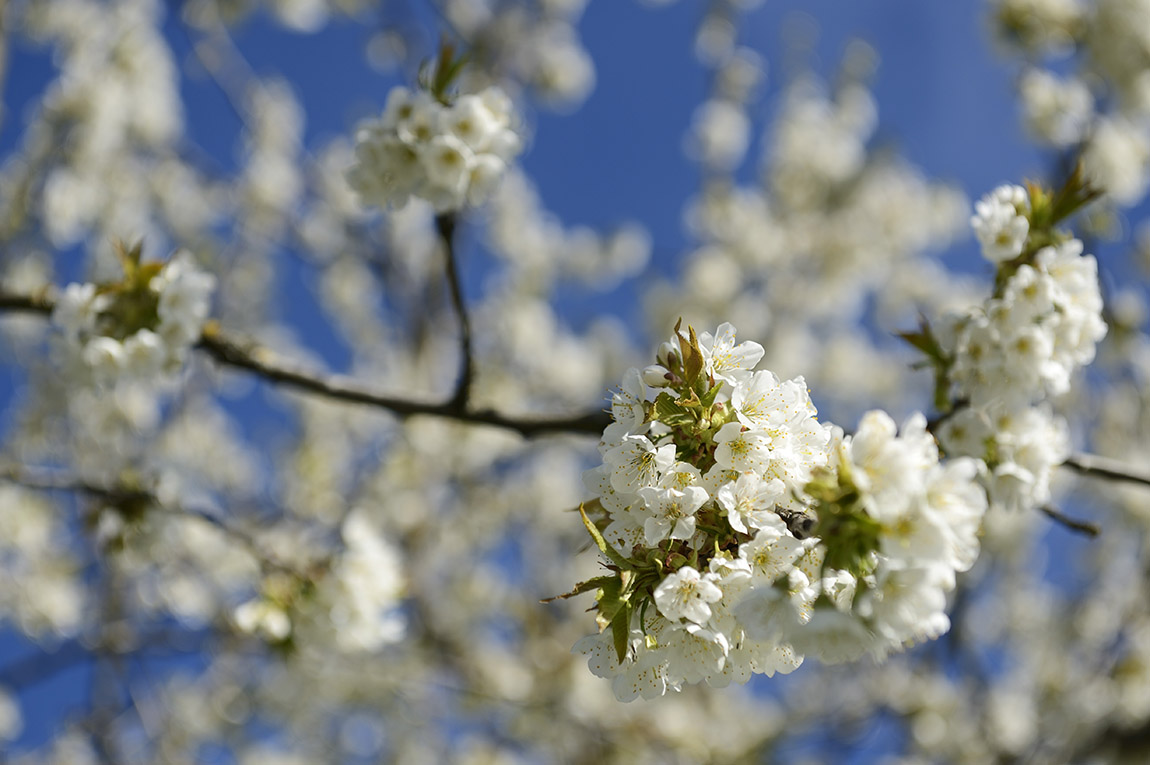
A little above the path, purple, red, and blue columbines reach towards the summer sky. Their exemplary bell-shaped blossoms resemble a creative work of art. Sylvia shows us comfrey. “It helps with bone and muscle ailments. Crushed leaves applied to the joints work wonders. In homeopathy, comfrey is also used in the form of globules. After flowering in autumn, the roots can also be made into a tea, but be careful – if consumed in excess, it can be hard on the liver.” We turn our gaze from the hillside to the picture-perfect village, where, directly behind it, the majestic Wilder Kaiser mountain range rises like a monolith. Dominating the scene is a huge elderberry tree, soon to reach 20 metres in height. Us city dwellers usually only know elderberry as a shrub. “During wartime, elderberry often provided the only vitamins,” Sylvia tells us, recounting stories from her mother. “As a syrup, it’s now also used in lifestyle lemonades and tastes excellent in the Hugo cocktail. And elderflower fritters, that is blossoms fried in batter, are a fine delicacy for dessert.”
We leave the local mountain and, on the way to the Amthorsteig trail, pass a magnificent linden tree. Tina immediately dispels a common myth: “Such specimens are often said to be up to 800 years old, but in reality, they are at most 250 to 300 years old. The linden is considered a wonderful source of nectar for bees, as you can already hear from the busy buzzing and humming from afar.” Sylvia then takes us back to the Germanic tribes of the Middle Ages: “Linden trees were usually dedicated to the goddess Freya; they often stood in prominent locations, and justice was frequently dispensed beneath them. This aligns with the psychotherapeutic view that linden trees represent light and strength and create a positive atmosphere.”
We hike for a while on the Kapellensteig trail and then turn onto the Hausbachfallsteig trail. We leave the via ferrata, which leads more athletically inclined hikers through the gorge above the picturesque waterfall, to our right. To the left, we huff and puff our way up a few steep switchbacks on a gravel path reinforced with logs. Sylvia spots a white-flowering meadowsweet. The name doesn’t overpromise. It smells of almonds and marzipan. “Among the Germanic tribes, meadowsweet gave mead its distinctive flavour, but it was also used in honey wines and for brewing beer later on. When vanilla was still exotic and prohibitively expensive, it enhanced cakes in many bakeries. Thanks to its salicylic acid content, it acts as a natural aspirin, helping to relieve pain and reduce fever. It’s also incredibly effective as a cold remedy tea. Meadowsweet is therefore also an excellent medicine.”
Right by the path, not far from a bench, Tina spots a strange plant with a deceptively innocuous name. “The common butterwort, Pinguicula vulgaris, possesses a characteristic that is rare in this country. This blue-violet bladderwort is a carnivorous plant,” she explains. It takes a keen eye to spot the pearl-like adhesive on the inside of its fleshy, fuzzy leaves.
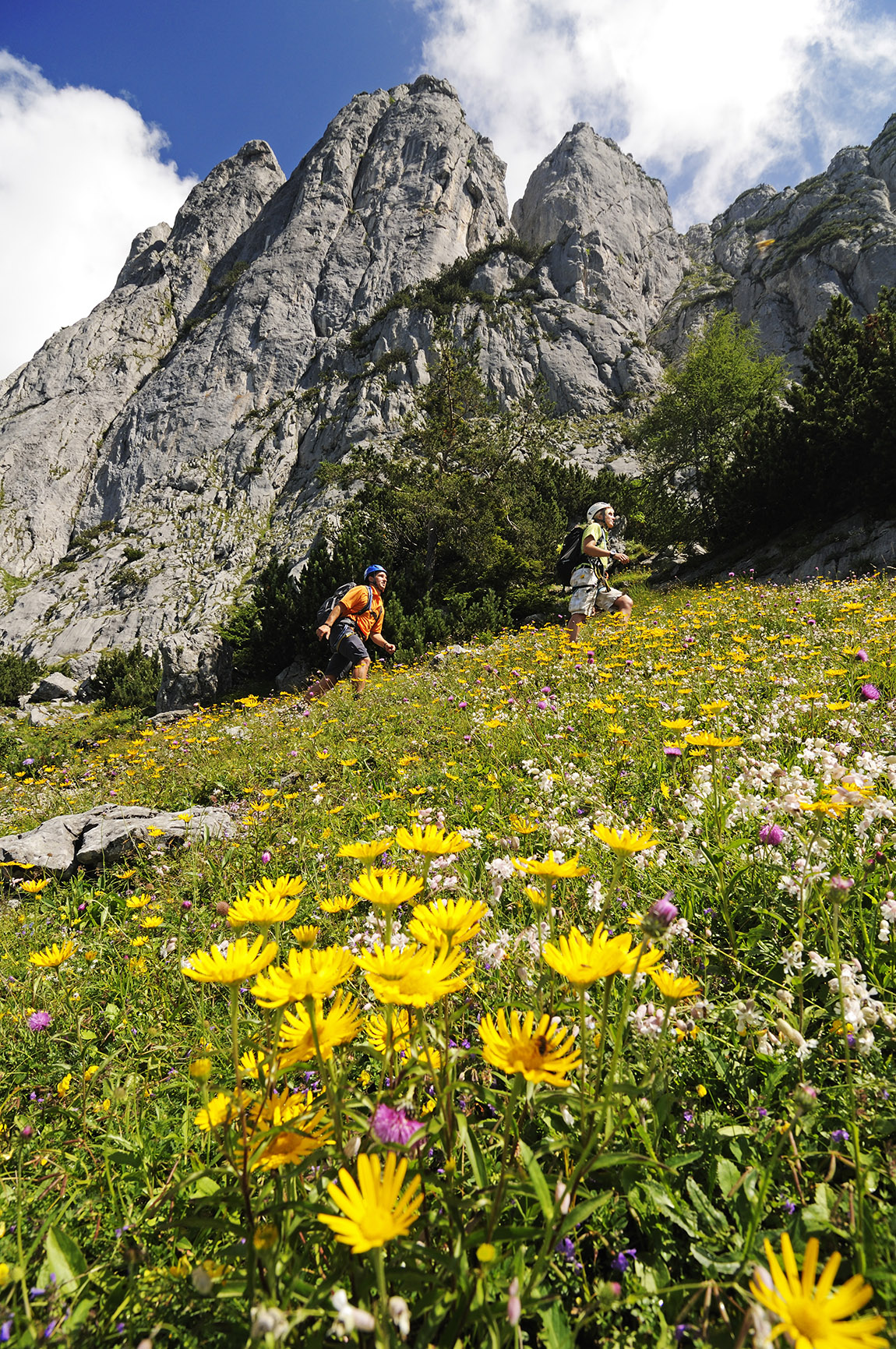
Shortly before reaching the Glapfalm farm, the hiking trail leads us right through a lush alpine meadow. Here, the ladies can’t seem to stop listing and identifying all the different species: “Thistle, meadow buttercup, speedwell, chervil, bellflowers, daisies, campion, sorrel, bugle, hawkweed, yellow rattle…” We even spot lady’s bedstraw in this colourful, botanical feast. “Lady’s bedstraw has always been used to curdle milk. Today, it’s only used by a few dairies in the Swiss Emmental region because synthetic rennet is much easier to process for industrial production,” Sylvia confides.
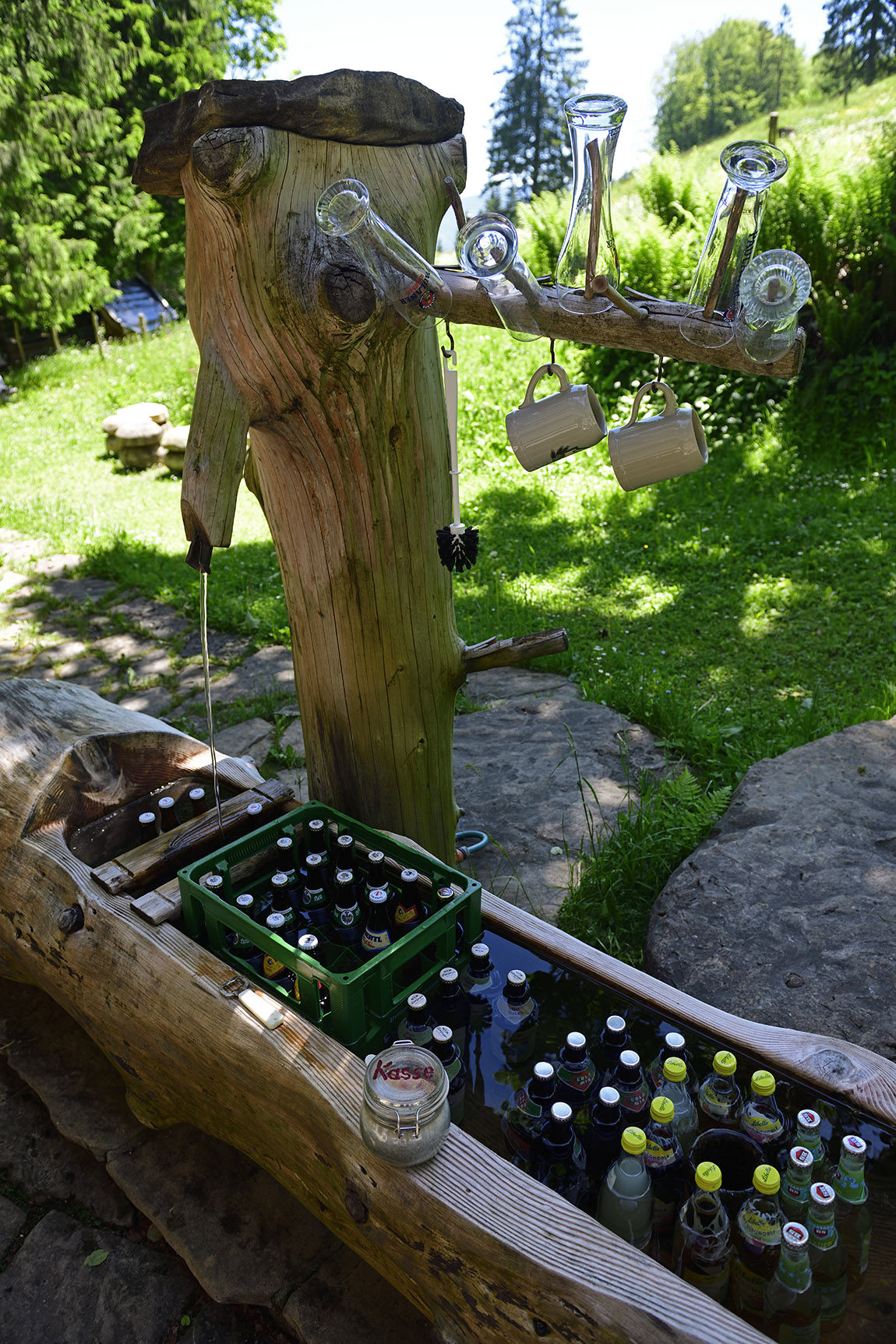
The nearby Glapfalm is also a sight to behold. It’s not officially managed, but the farmer has placed a few crates of drinks in a trough constantly cooled with spring water, which can be paid for on the honour system using a mailbox. After a leisurely break, we continue our hike uphill past a carpet of sweetly scented lily of the valley to the 1,061-metre-high Wetterkreuz – a rewarding panoramic summit.
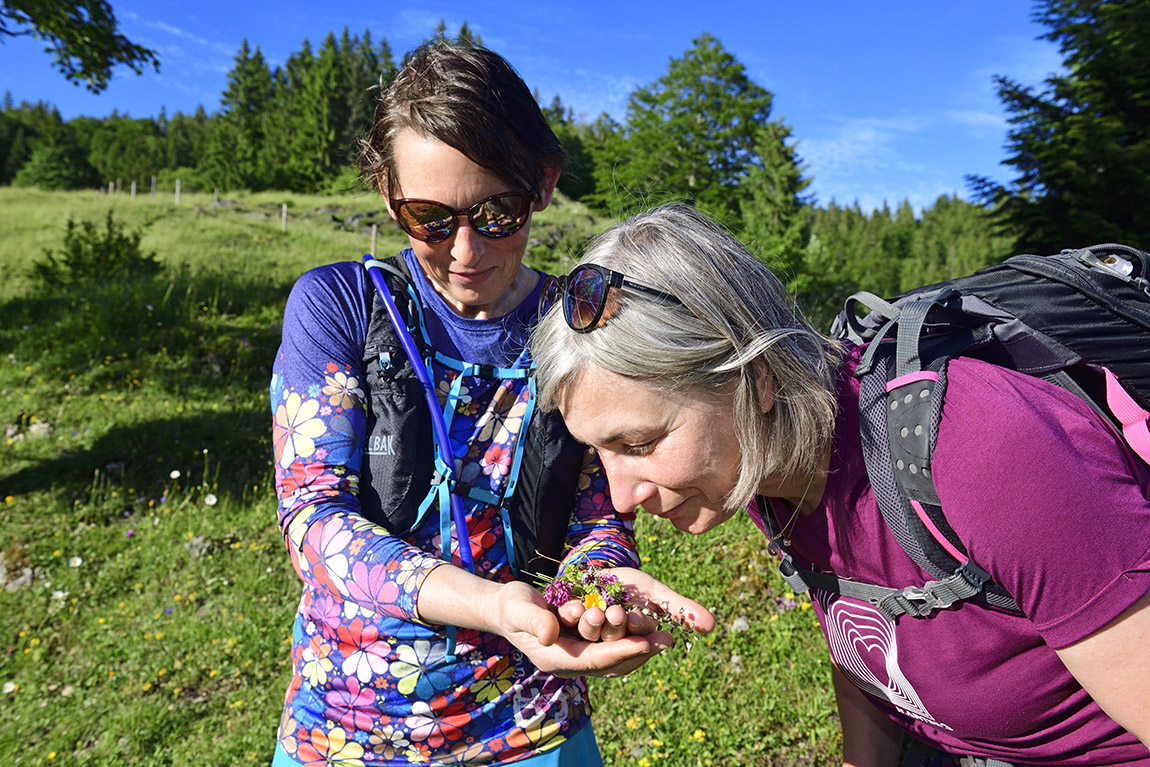
Tina directs our attention away from the jagged peaks of the Wilder Kaiser and the almost idyllic, green-hued Chiemgau Alps, towards the Rosa canina. The common dog rose thrives right behind the imposing summit cross. What a banal name for such a bright pink-flowering plant! Especially since it bears red berries in autumn, which – who would have guessed? – can be made into delicious rosehip jam. The descent repeatedly leads us into the pharmaceutical realm of alpine flora. Next to a stately fern, the compact leaves of Hepatica nobilis, the liverwort, huddle close to the forest floor. They are poisonous, but in the right dose, they help treat hepatitis and cirrhosis of the liver. Not far from there, we discover the lungwort Pulmonaria. “Most people probably know the pink and purple spotted herb as Pullmoll in the form of cough drops. And look here: ribwort and broadleaf plantain soothe itching, work fantastically against blisters on the feet and wounds. The leaves can be placed in your new hiking boots as a preventative measure. You can also make a kind of meadow plaster for wounds or an effective cough syrup from them.”
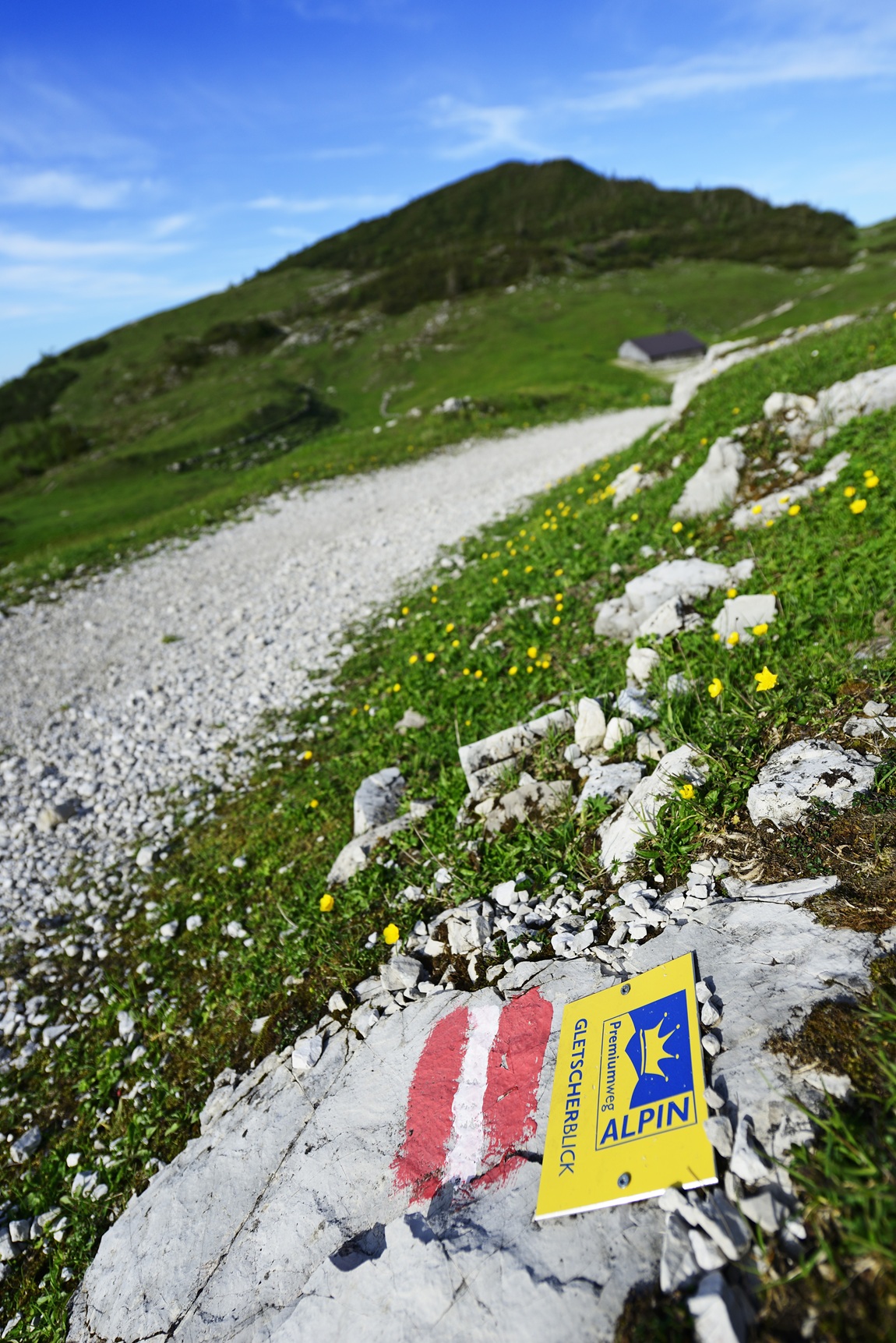
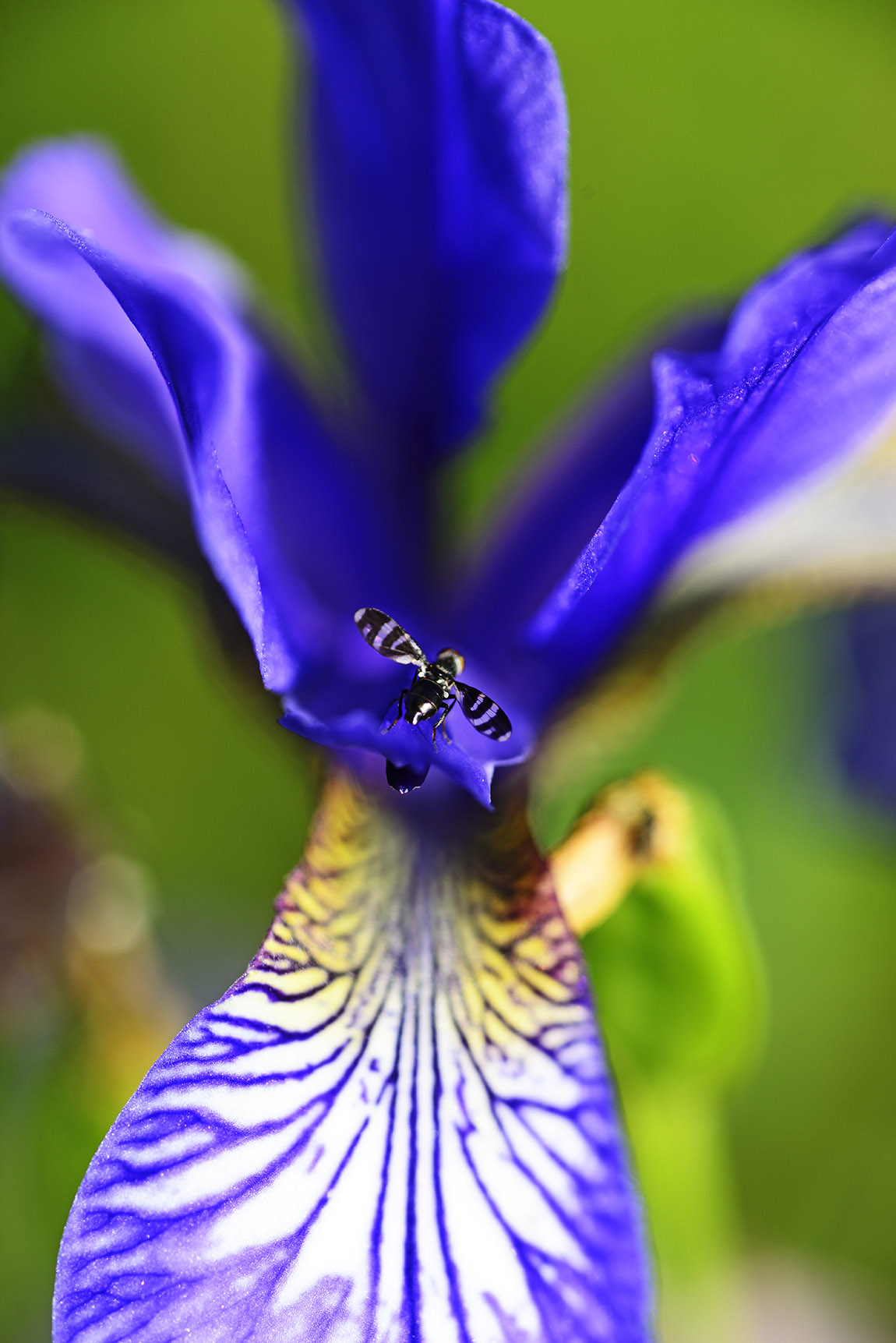
Throughout this special hike, Sylvia and Tina captivate us with fascinating stories about medieval mysticism, pharmacy, and traditional herbal medicine, not only giving our calves a good workout but is also truly enriching us with valuable information. “Our next hikes will take us to Siberian irises at the Weitsee lake and to alpine heights around Reit im Winkl, where spring gentians, other gentians, and entire fields of pink mountain rhododendrons carpet the slopes,” they tell us as we say goodbye. We’re in – because hiking combined with learning is truly enjoyable.
More information about the free tours: www.reitimwinkl.de/gefuehrte-wanderungen

Subscribe to Our Newsletter
Receive our monthly newsletter by email