Inside Germany’s ‘brutal lokal’ food movement
TEXT: JOSEPH PHELAN

Frankfurt’s Seven Swans has been at the forefront of vegan cooking for almost a decade. Photo: Katharina Dubno
From urban allotments to restaurant-run food forests, a new generation of German chefs is finding ways to bring food production closer to the kitchen.
Across Germany, a growing number of chefs are taking an increasingly regional approach to sourcing, focusing not only on the ingredients themselves, but where they come from and how they are produced.
This mindset has a name: brutal lokal. Coined by Berlin restaurant Nobelhart & Schmutzig more than a decade ago, the idea is simple: choose to cook with what can be grown, raised or foraged in the surrounding area, rather than relying on global supply chains.
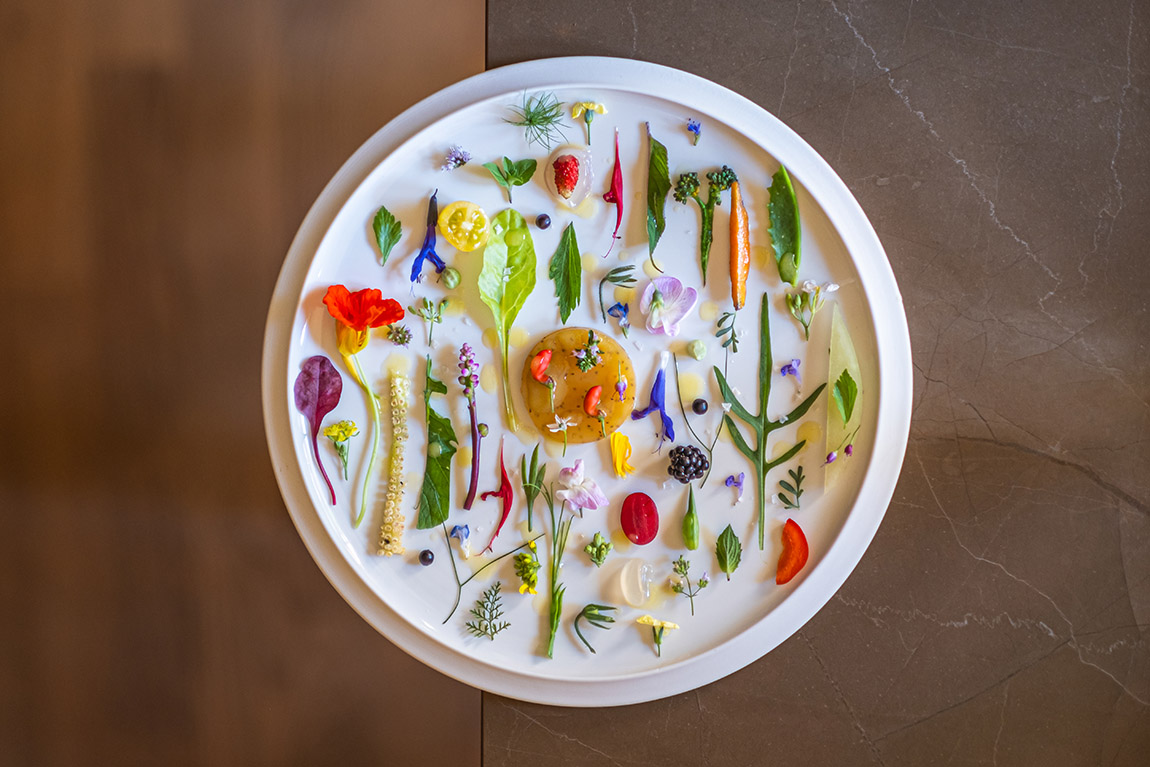
Horváth is one of a growing number of German restaurants cooking with produce grown close to home. Photo: Julian Redondo
At Horváth, a two-Michelin-starred restaurant in Berlin, it is a philosophy that has fundamentally altered what is considered worthy of being put on a diner’s plate. The kitchen deliberately avoids imported luxury items like caviar or exotic produce, choosing instead to elevate regional vegetables like celeriac, onions and potatoes. “Local sourcing is everything to us,” says Benjamin Roesch, Horváth’s assistant managing director. “Nearly all of the ingredients we use can be bought within about 500 metres of our restaurant.”

Horváth Restaurant. Photo: Stephanie Pollak
Horváth’s fruit, vegetables and herbs arrive twice a week from Girrbachs Gemüse, a small biodynamic farm just west of Berlin, while dairy products and biodynamic flour are sourced through Platform2020, a partner found via the pioneering Die Gemeinschaft network.
Launched in 2017 by Nobelhart & Schmutzig and Horváth, Die Gemeinschaft is a community uniting over 140 chefs, farmers and artisanal producers across Germany. Created to connect rural agriculture and urban kitchens, the group promotes regenerative farming, fair working conditions, and direct distribution channels.
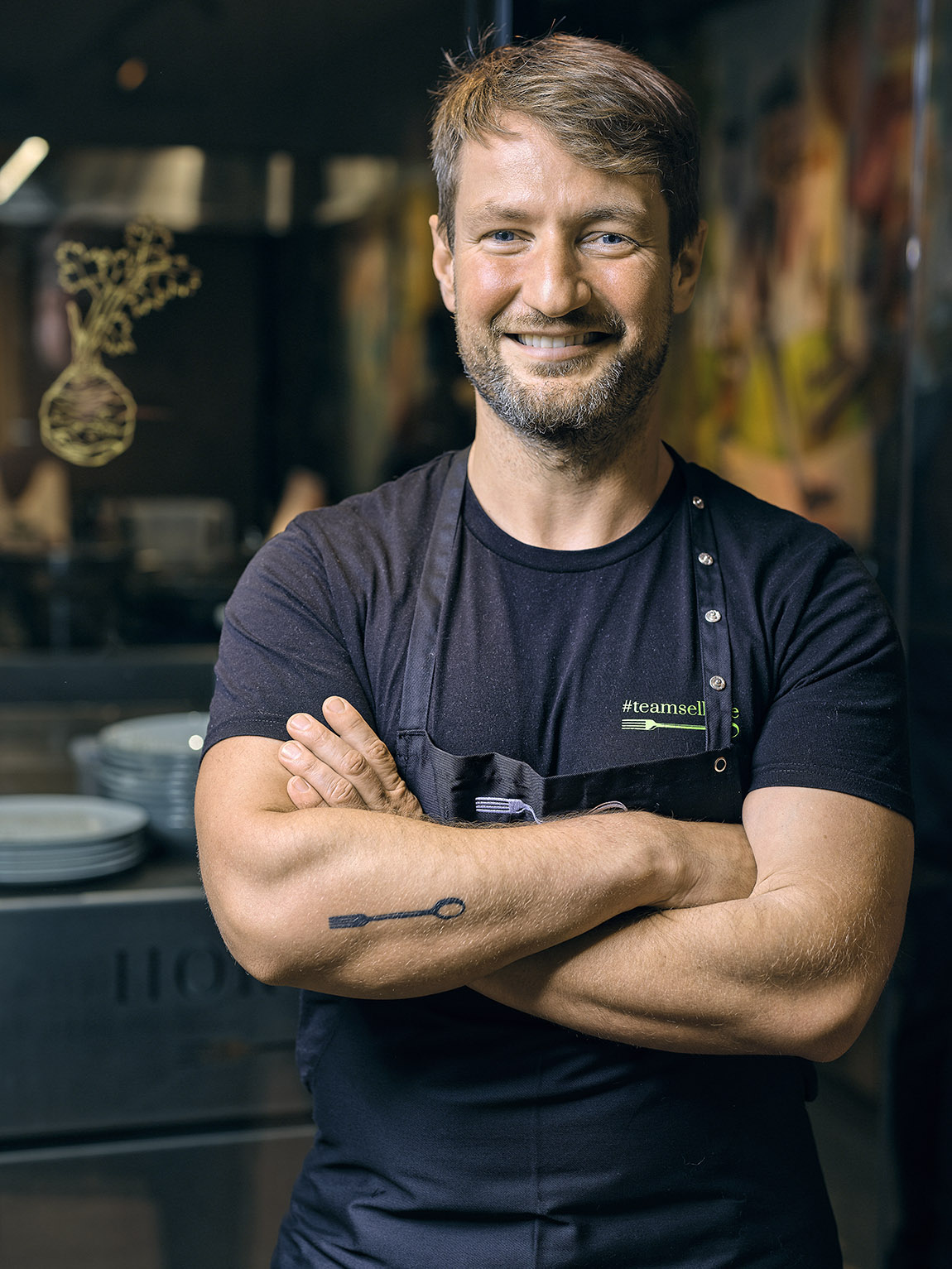
Sebastian Frank, chef and owner of twoMichelin-starred Horváth. Photo: René Riis
For Horváth, committing to hyper-local supply chains even drove a shift in menu design. The restaurant went fully vegetarian several years ago, in part because it was difficult to find high-quality meat and fish that could be sourced responsibly, but also because the team recognised that world-class ingredients could be found right on its doorstep. “I think this is actually one of the biggest USPs of Berlin’s food scene: the way we work sustainably,” Roesch says.
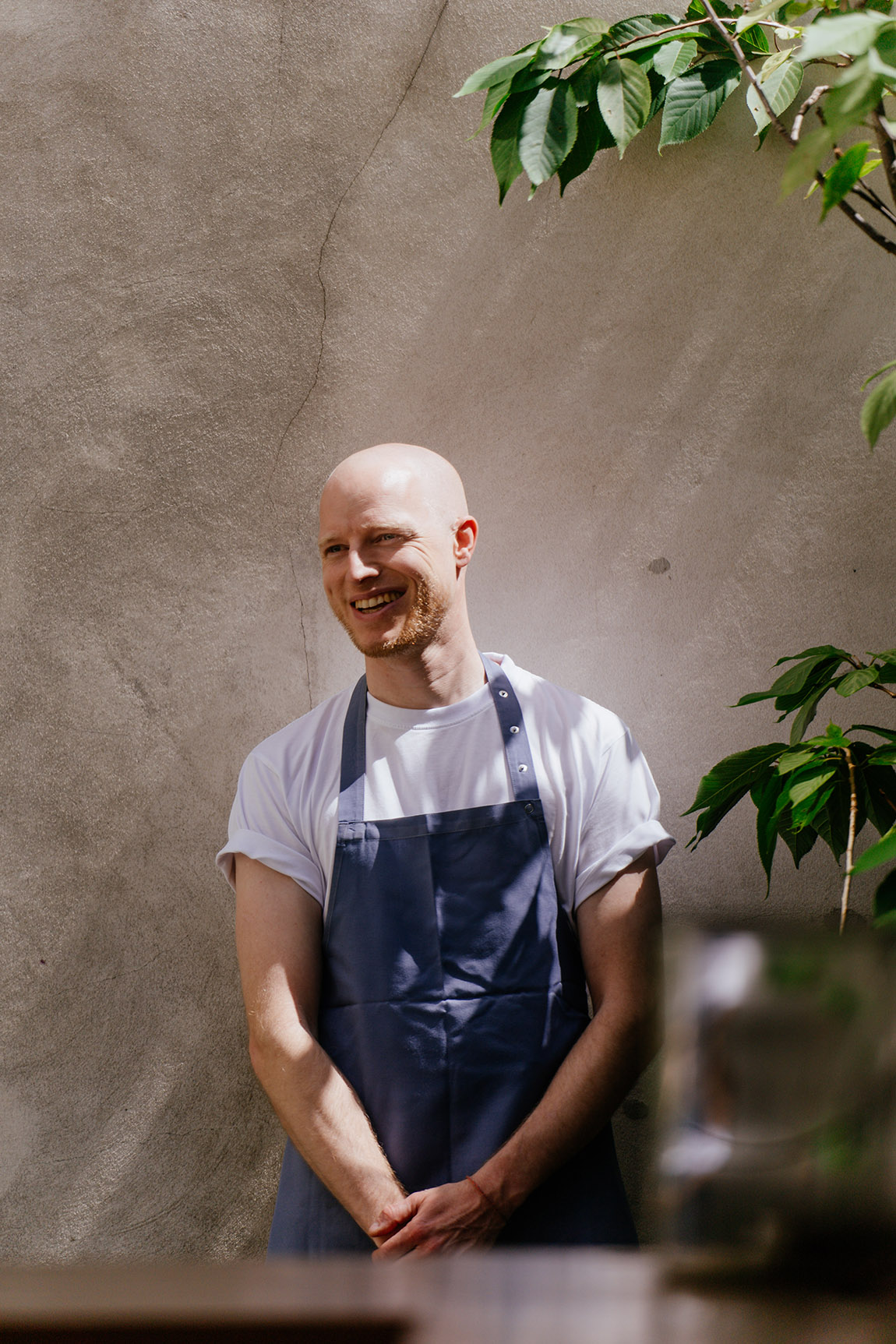
Andreas Rieger. Photo: Lukas Freitag
Berlin has a long history of urban food production and self-sufficiency. Its Kleingärten, or allotment colonies, have been part of the city for more than a century, giving residents space to grow their own fruit and vegetables. Similar allotments can be found in cities across Germany, although Berlin has a notably large network of them.
Many of these allotment spaces have traditionally had a Vereinslokal; a clubhouse-cum-restaurant where gardeners can gather for a beer and something to eat. Bollenpiepe, on Berlin’s northern edge, is a contemporary interpretation of the Vereinslokal: an upscale neighbourhood restaurant and allotment-garden pub with a vegetable-first menu.
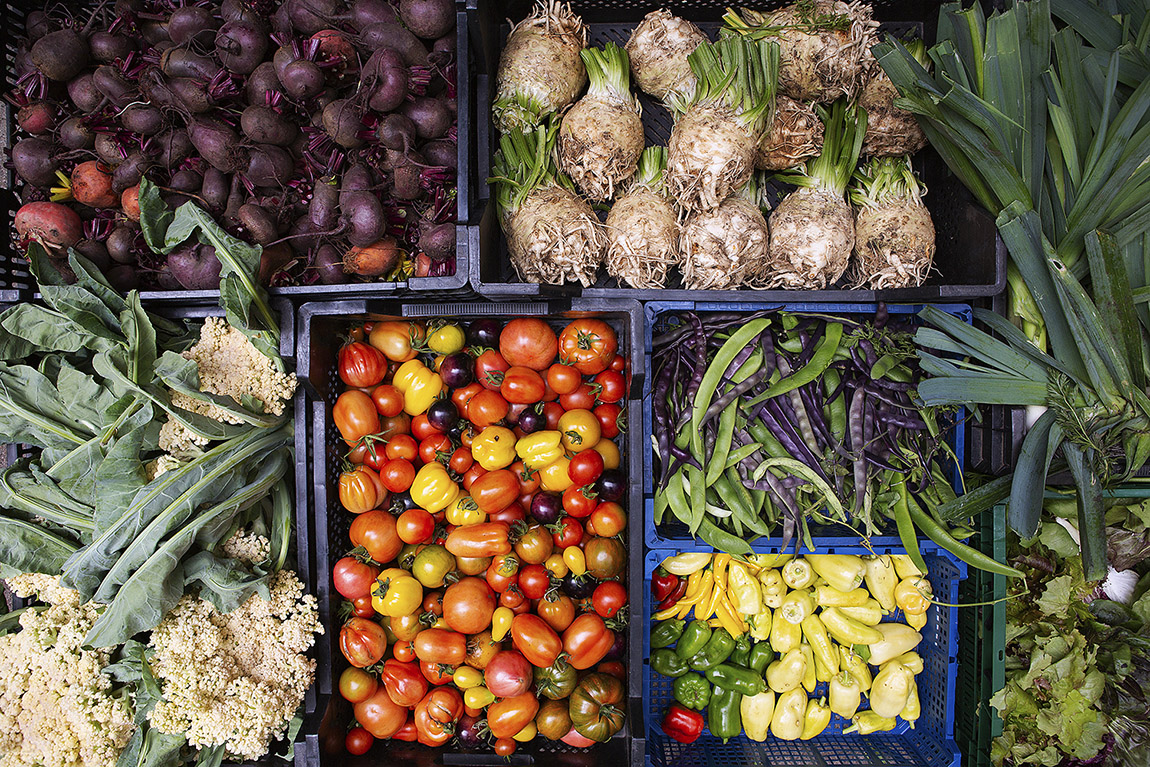
Michelberger Farm grows its own tomatoes, chard, and edible flowers, supplying its menus with fresh, seasonal harvests. Photo: Michelberger
When the restaurant first opened, neighbouring gardeners would knock on the door to ask whether the kitchen wanted their surplus vegetables. Now they simply drop off whatever they do not take home, knowing that the restaurant will be able to make use of it.
“We get vegetables, herbs and fruits from the allotments around us. We’re able to tell our customers that some of the food they’re being served is from plots that they can see from their table, and many people seem to like hearing that,” says Matthias Krüger, Bollenpiepe’s managing director.
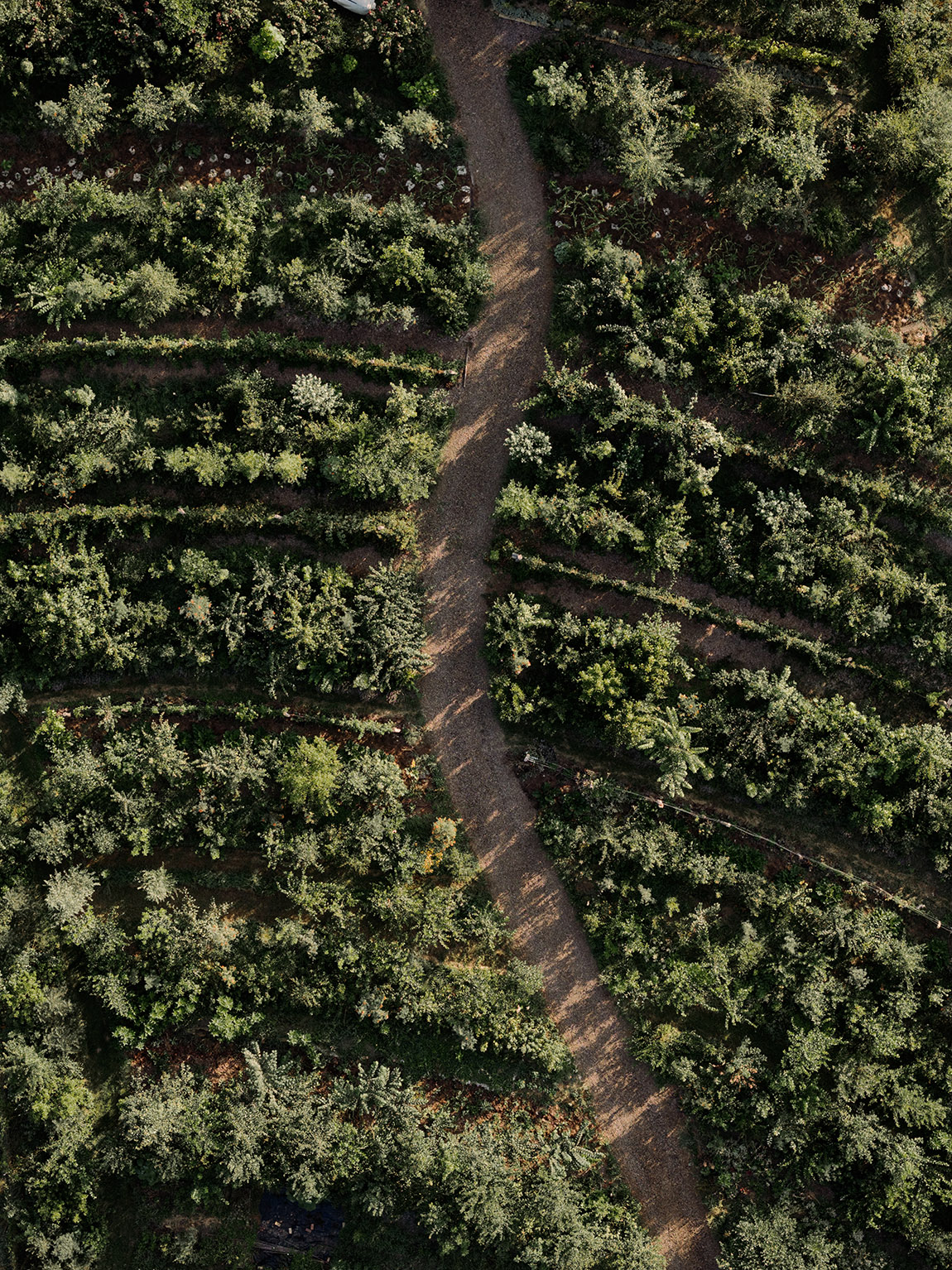
The team at Michelberger are working to restore agricultural land and grow fresh, quality ingredients. Photo: Michelberger
Alongside its patchwork of 70,000 allotment plots, Berlin also has community gardens where food is grown collectively. At Prinzessinnengarten, a social and agricultural project growing food on disused cemetery land, queries from restaurants have been mounting.
“In recent years, we’ve received an increasing number of requests for consultations and to share experiences on the topic of small-scale local food production,” says Hanna Burckhardt, who is part of the garden’s management team.
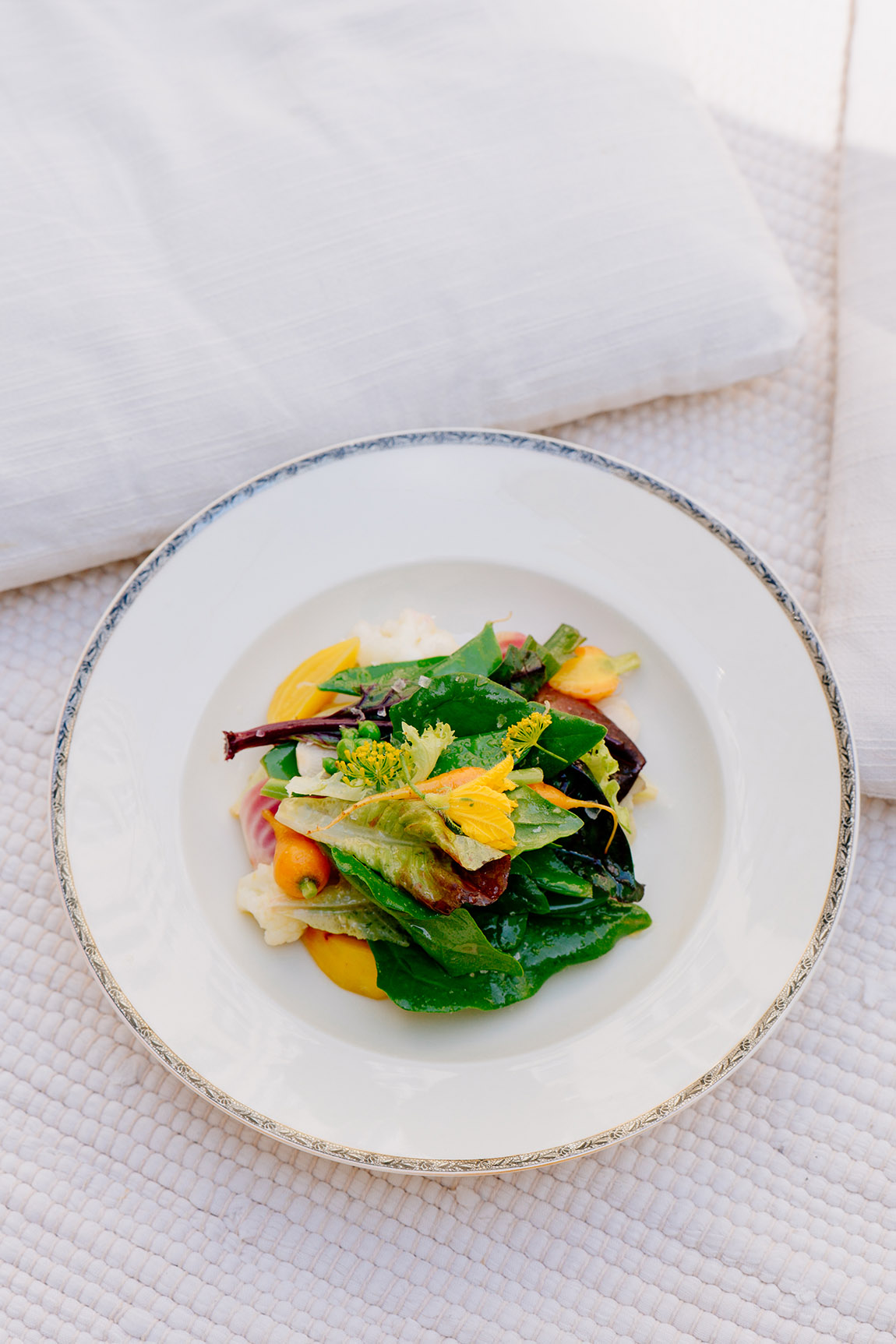
Michelberger’s menu draws on regional farmers, hunters, and producers, as well as its own food forest. Photo: Michelberger / Lukas Freitag
Various Berlin restaurants have already been supplied directly by Prinzessinnengarten produce, while the project’s own café cooks with vegetables and wild herbs from the grounds, turning much of what they are unable to serve fresh into syrups. For Burckhardt, the growing interest in small-scale local food production reflects people’s desire, sharpened by the climate crisis, “to actively participate in shaping their surroundings” and find alternatives to industrial food production.
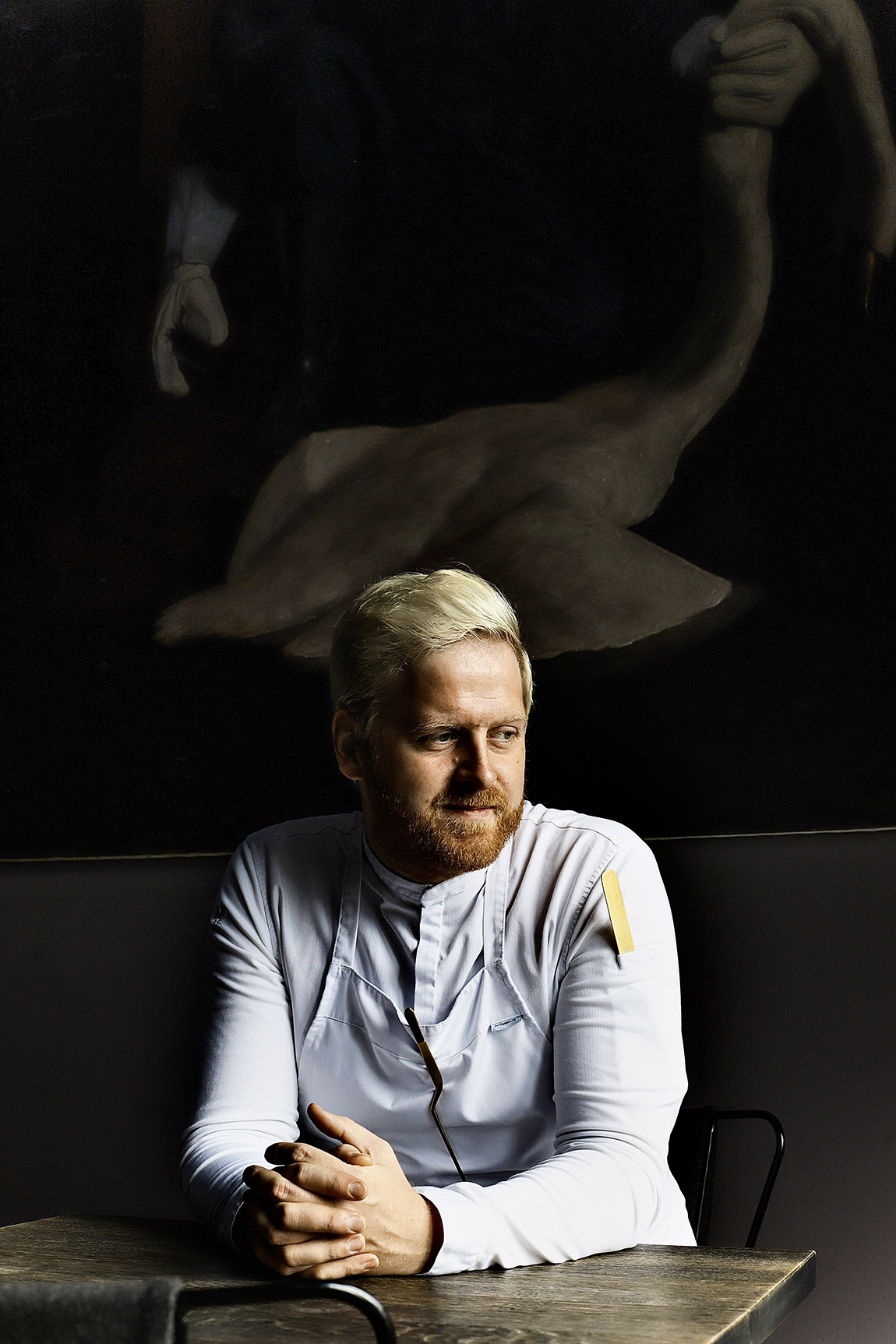
Ricky Saward. Photo: Seven Swans
In the Spreewald region, southeast of the capital, the Michelberger Hotel has run its own syntropic food forest since 2018, growing produce using a dense planting system that mirrors a natural ecosystem.
For culinary director Andreas Rieger, the food forest functions like “a seasonal radar,” informing the kitchen of what is ready to use now, and what will be available in the coming weeks. It has also, he notes, taught the team to be flexible, given that they routinely have to adapt their menus when weather impacts the week’s harvest.
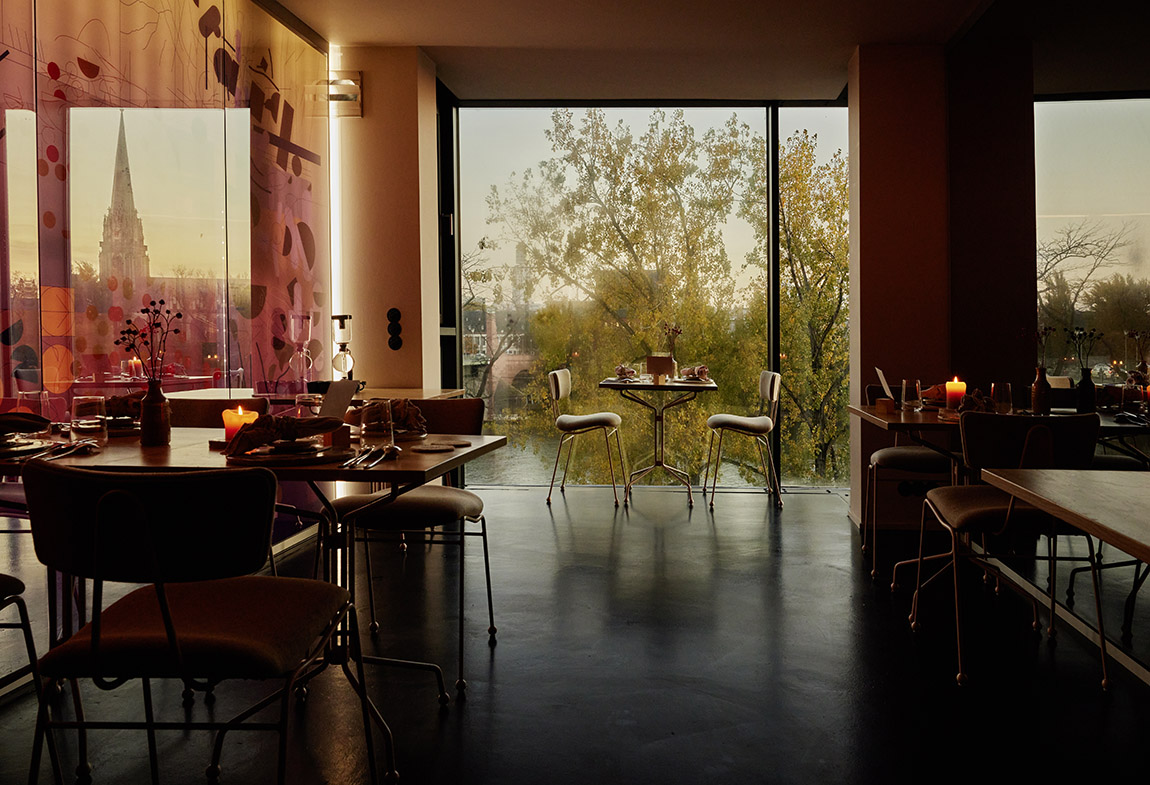
Floor-to-ceiling windows at Seven Swans allow diners to look out over the River Main. Photo: Katharina Dubno
Rieger sees the burgeoning interest in local sourcing as part of a wider shift in how food is valued, with a growing number of restaurants and households “empowering the producers” in their own regions. He believes the benefit is not just in knowing where ingredients come from, but in discovering what they can become when traditional produce is combined with contemporary techniques.
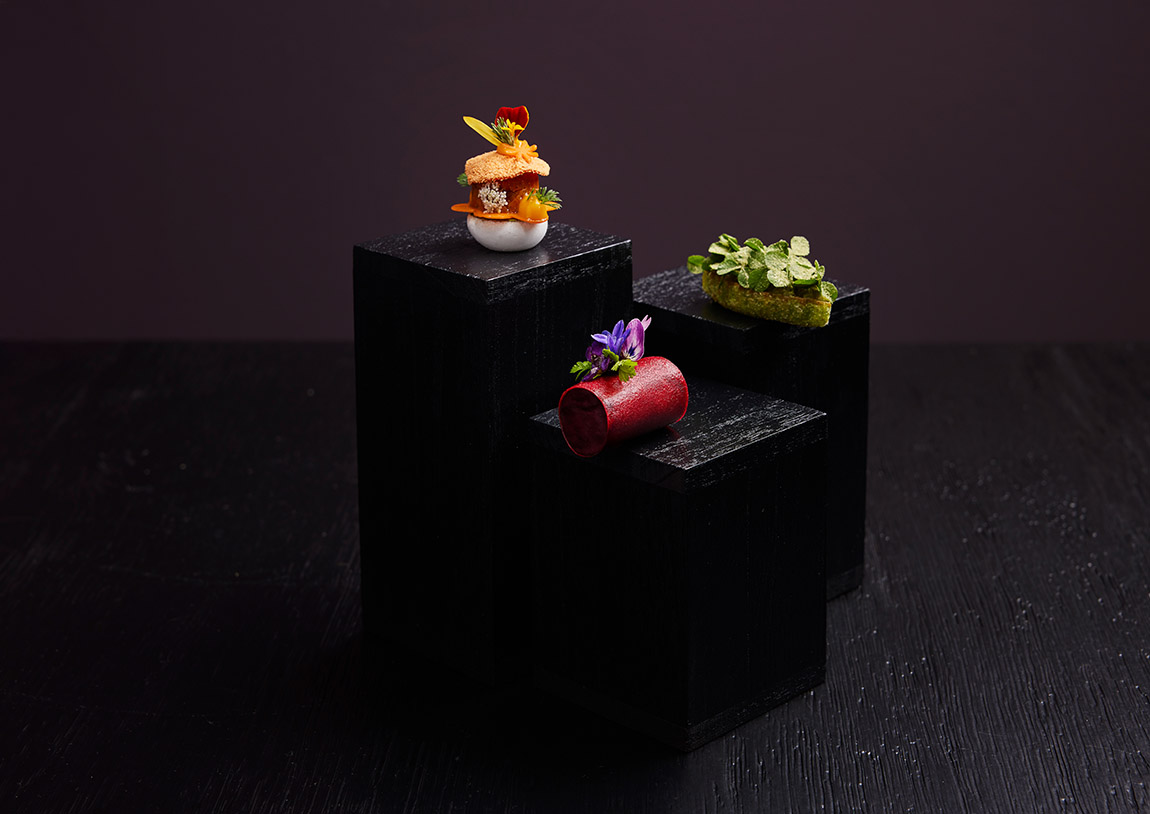
Seven Swans uses local ingredients to create elegant, stylish dishes. Photo: Katharina Dubno
It is unlikely that anyone in Germany embodies this philosophy more completely than Ricky Saward, the first chef in the world to win a Michelin star for vegan cooking. At Seven Swans in Frankfurt, his kitchen works almost entirely with ingredients grown by small local cooperatives, in the restaurant’s own plots, or foraged from the surrounding countryside, with the season determining what appears on the plate.

Seven Swans offers guests a choice of wine pairing or non-alcoholic alternative, each curated to complement the menu. Photo: Katharina Dubno
His dedication to the brutal lokal way of thinking extends to what the restaurant refuses to use. If it cannot be sourced from the surrounding region, it does not enter the kitchen: that means no chocolate, no citrus, no spices of any kind. Instead, seasoning comes from salt from the Bad Nauheim saltworks, located around 20 minutes from the restaurant’s front door.
Saward admits that relying entirely on local produce is by no means straightforward. “Cooking vegan, regional and sustainable food is the most challenging thing I’ve done in my career,” he says. “The key is not to rest on your laurels, to keep pushing forward. You have to stay hungry and driven.” Saward believes that the growing interest in this kind of cooking reflects a broader shift in what German diners expect from their restaurants, noting that consumers increasingly read labels, ask questions, and research what they eat before choosing where to spend their money.
“I’m not saying that the future will be entirely vegan. But it will be more conscious,” he concludes.

Everything on the Seven Swans menu reflects Ricky Seward’s aim to turn meals into art. Photo: Katharina Dubno

Subscribe to Our Newsletter
Receive our monthly newsletter by email