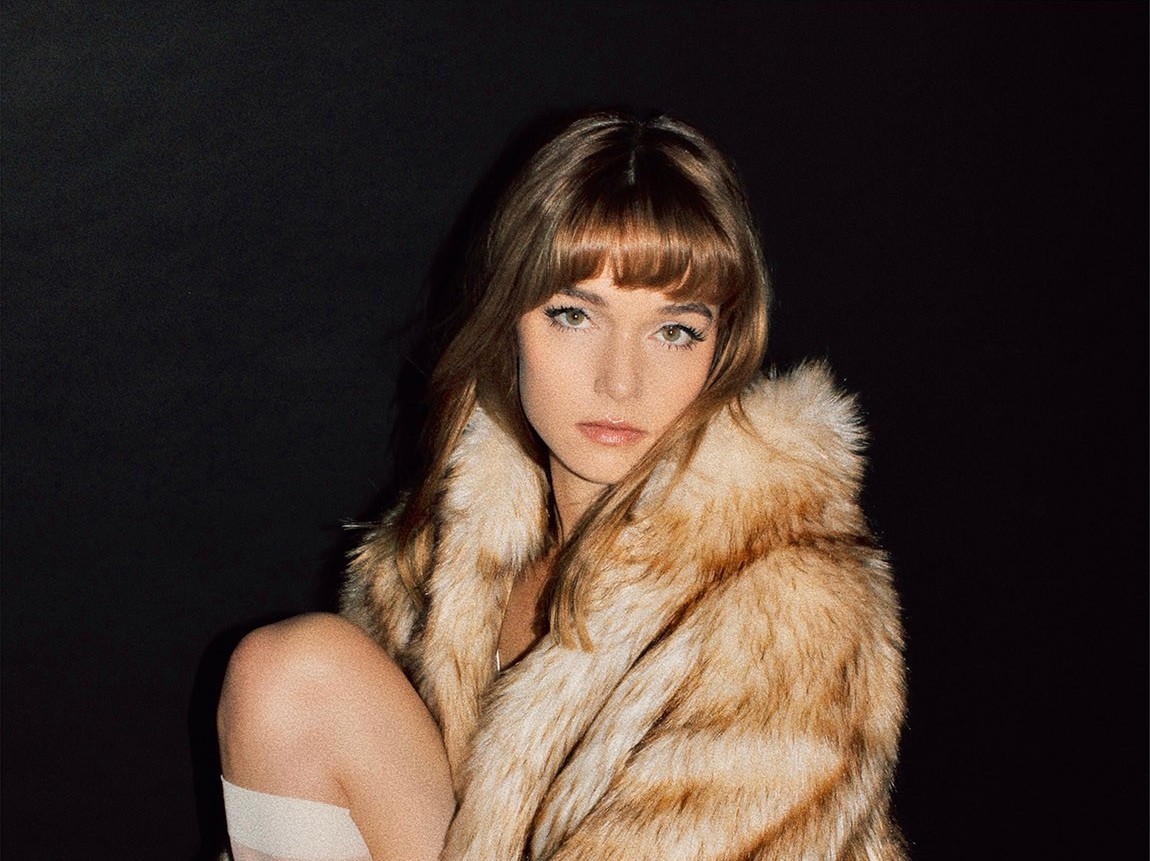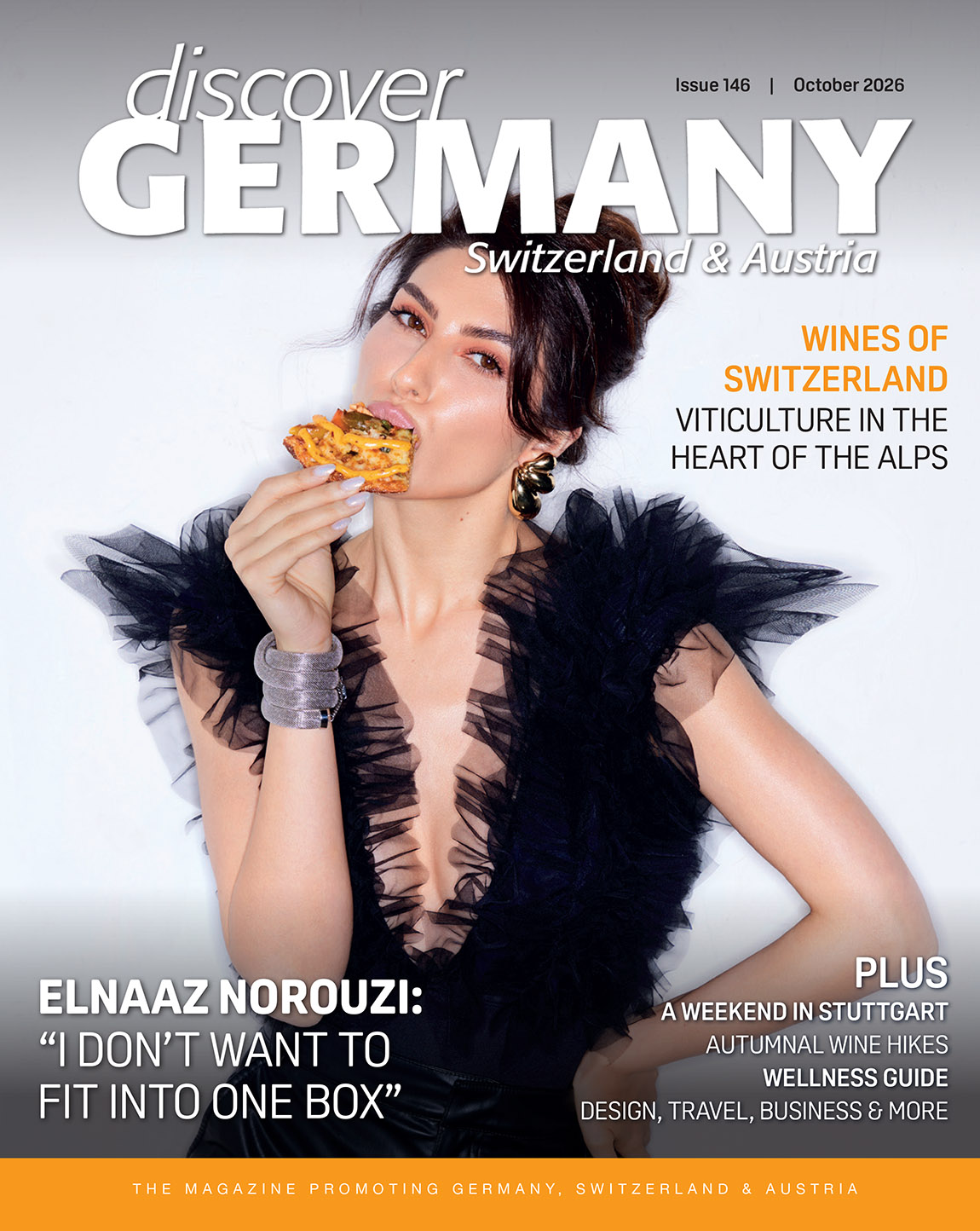
Elnaaz Norouzi: “I don’t want to fit into one box”
TEXT: NANE STEINHOFF

© Abishek Masurkar
Actress Elnaaz Norouzi has crossed borders, languages and industries. As she steps into her first Hollywood leading role in The Fix alongside Liam Neeson and Zachary Levi, she reflects on patience, identity, ambition and the worlds that shaped her, from Tehran and Hannover to Mumbai, and Bollywood to international cinema.
Before the streaming breakthrough, before the international film sets, before audiences knew her as Zoya Mirza and Jamila in the Netflix series Sacred Games, Elnaaz Norouzi was a child in Germany sitting in front of the television, dreaming of one day becoming an actress. “Acting was actually the dream long before modelling,” she says. “As a little girl, I was fascinated by the people I saw on television. I would imitate actors, copy their expressions and memorise entire scenes.” To her, commercial breaks became somewhat of a private acting school: “One advertisement would finish and I could already recite it before the next one.”
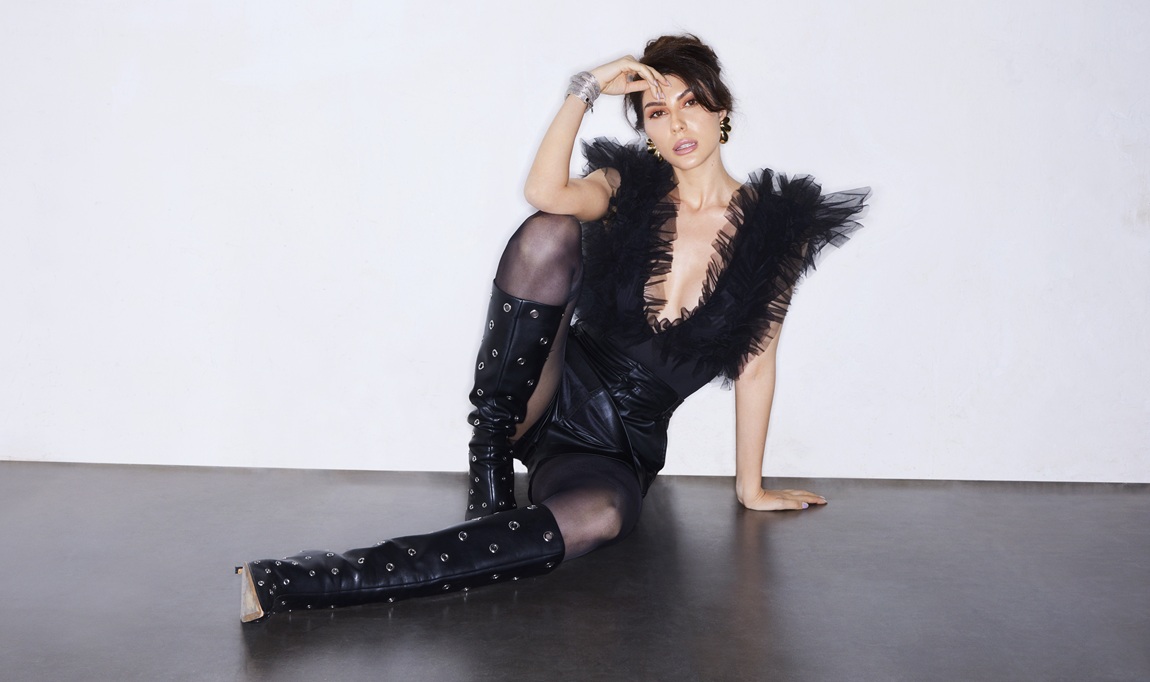
Photo: Abhishek Masurkar
When she was 14, she started modelling which carried her into professional spaces, across countries and in front of cameras, but it did not replace her original dream. “Modelling gave me the courage to leave what was familiar, travel and become comfortable in front of a camera,” she explains. The larger leap came later, when she moved to India to pursue acting seriously. Bollywood was not an obvious route for a young woman raised in Germany, but Elnaaz has rarely seemed interested in obvious routes. “Perhaps that was exactly why I wanted to try it,” she says. “I’m a bit crazy that way, I love challenges.”
Since then, that appetite for risk has become the through-line of her career. Born in Tehran, raised in Hannover and professionally formed in Mumbai, Elnaaz speaks about place not as a fixed concept, but as reinvention. “I always say that I have three homes: Tehran, Hannover and Mumbai,” Elnaaz says. “Hopefully one day, I’ll be able to add Los Angeles as a fourth.”

Photo: Abhishek Masurkar
The patience to say no
Her first acting project in India was not chosen casually. In Netflix’s Sacred Games, Elnaaz played Zoya Mirza and Jamila, entering one of the defining Indian streaming series of its moment. “Sacred Games changed everything,” she says. “It was my first acting project in India, so I was very conscious that whatever I chose first would introduce me to the industry.”
There had been other offers, some of them “financially very attractive” but she refused to let urgency decide the shape of her beginning. “I kept saying no because I didn’t want my first project to simply be the first opportunity that came along,” she remembers. The gamble paid off. Sacred Games became a hit globally and earned international recognition, opening doors and changing the tone of conversations around her. “Personally, it also confirmed something I had believed for a long time: sometimes saying no to the wrong opportunity is just as important as saying yes to the right one.”
After the success of Sacred Games, Elnaaz continued working across many Indian and international productions such as Apple TV’s Tehran. India, she says, did not simply make her an actress, it changed the way she moved through the world. “I wasn’t only entering a new film industry. I was learning an entirely new country and culture at the same time.” The beginning demanded observation, humility and adjustment. “The greatest thing India taught me was patience, and also that different doesn’t mean wrong. I learned to observe and not to judge, to understand how other people think and to adapt without losing who I am.”
That lesson is visible in the way Elnaaz talks about Indian storytelling itself. She sees its emotional directness not as excess, but as fluency. “Indian storytelling understands emotion instinctively,” she explains. “Cinema works when an audience recognises something human in a character, even when that character’s life looks nothing like their own. Indian cinema has never been afraid of emotion. It understands that audiences want to laugh, cry, fall in love, feel anger and leave the theatre having felt something.”

Photo: Abheet Gidwani
Many languages, no single box
If Sacred Games made the industry look at her differently, reality television gave audiences a chance to hear her differently. On the Indian version of The Traitors, Norouzi found a format that appealed because it required “strategy, observation and intelligence.” It also offered public proof of something she knew privately. “People had seen me act in Hindi, but there were still people who assumed that perhaps I simply memorised my lines phonetically,” she says. “On The Traitors, there is nowhere to hide.”
As seen on The Traitors, Elnaaz works across many languages, including Farsi, German, Hindi and English. “Speaking a language and acting convincingly in that language are two very different things,” she says. “Acting is difficult enough in your mother tongue; doing it in your third, fourth or fifth language requires another level of command because you cannot be translating in your head while trying to feel something truthfully.”
“Farsi connects me to where I was born, German to where I grew up, Hindi to the industry where I built so much of my career, and English has opened an entirely new international chapter.” If casting sometimes struggles with artists who cannot be neatly categorised, she no longer sees that as a weakness. “Being difficult to put into one box can occasionally make people wonder where exactly you belong,” she says. “I’ve learned to see that as a strength. I don’t necessarily want to fit into one box.”
Germany remains one of those boxes she has carried. Hannover, where her parents still live, returns her to the girl she was “before all of this happened.” The German influence is practical, too: “Discipline, preparation, reliability and punctuality are so deeply ingrained in me that I don’t really think about them anymore,” she says. “If call time is a certain hour, being late simply isn’t an option in my mind.”
Yet her gratitude runs deeper than professionalism. “My family had to flee Iran, and Germany gave us the opportunity to build a new life, gave me an education and eventually citizenship.” That freedom of movement later became career mobility. “I may not have German ancestry, but I feel very German in many ways. The country raised me.”
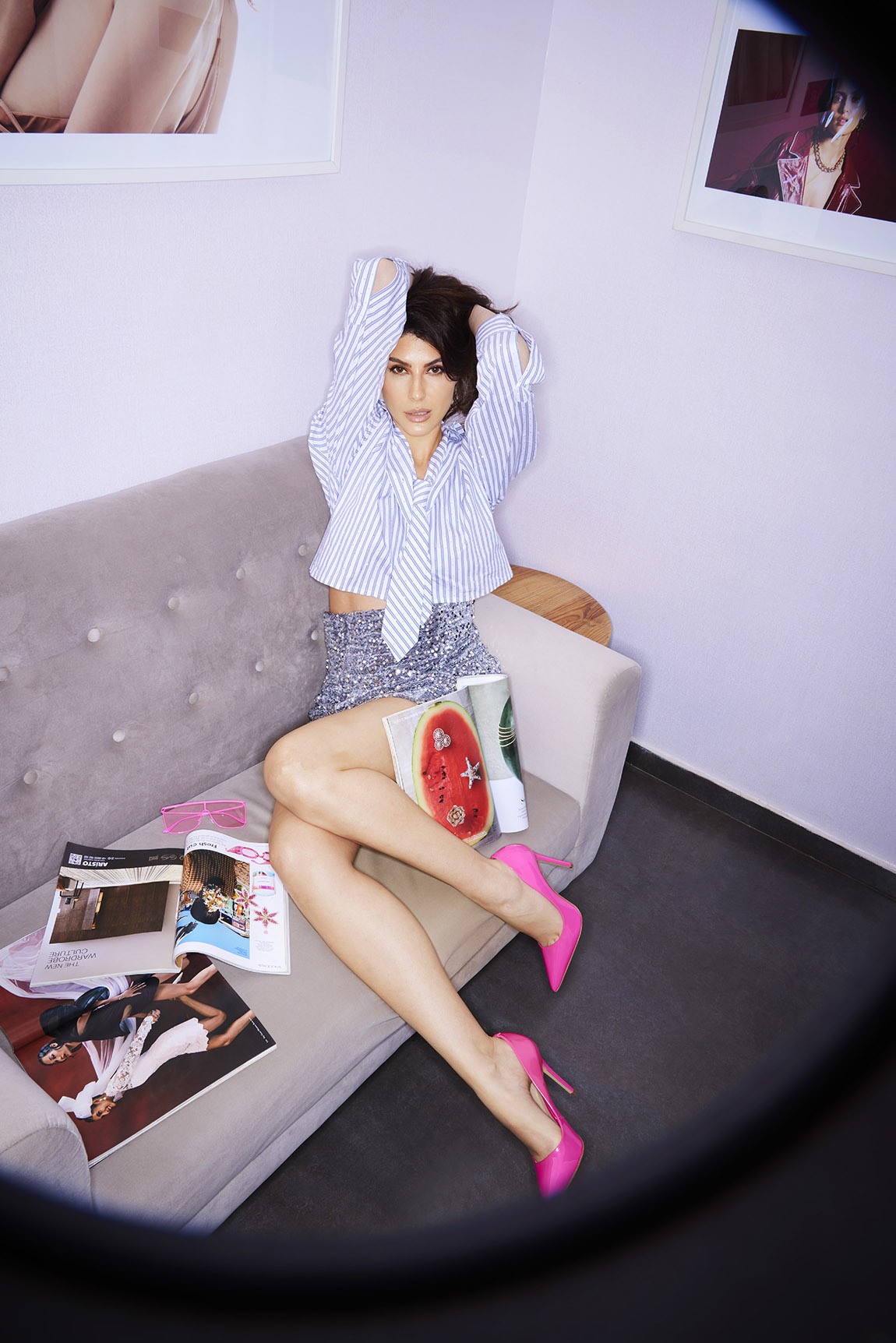
Photo: Abhishek Masurkar
Hollywood and the next leap
Now, with The Fix, Elnaaz steps into what she describes as “a major step forward” – her first leading role in a Hollywood film. The Iran-set action thriller which came to cinemas on 11 September stars alongside Liam Neeson and Zachary Levi, but what drew her first was her character Zara. “Zara was the kind of character actors hope for because she has so many layers,” she says. “The different layers gave me the opportunity to explore a wide emotional range.”
Nourouzi adds: “The story is also set in Iran, which obviously has a very personal connection for me. When you put all of that together – the character, the director, the cast, the story and the personal connection – it was one of those projects where I couldn’t find a reason not to want it.”
She describes the film as a thriller layered with “action, suspense, politics, relationships and characters whose motivations aren’t always what they first appear to be,” while also hoping it sparks curiosity about Iran beyond reductive headlines. “Iran is often discussed internationally in simplified terms,” she says. “The film is first and foremost a thriller, not a history lesson, but I hope it sparks curiosity in people who may know very little about Iran and its past.”
Watching Neeson and Levi work up close confirmed something she hopes to carry forward. “What struck me most was how effortless great experience can look,” she says. “They’re present, prepared and incredibly natural.” The atmosphere challenged another assumption: “A serious set doesn’t have to feel serious every second. You can work at a high level and still have fun, be generous with the people around you and enjoy what you’re doing.”
Elnaaz is also clear about the acting roles she wants next: “I want roles that demand something from me that I haven’t had to give before. One of my biggest dreams is to lead a proper action film. I’ve had a taste of action in India, and I train in mixed martial arts, but I would love a role where the physicality is genuinely central to the character.” She adds: “If a role frightens me a little because I don’t immediately know how I’m going to do it, that’s usually a good sign.”
Ultimately, she never wants to stop growing: “I don’t want to choose one country, one language or even one form of expression if I don’t have to.” It is a fitting manifesto for Elnaaz, whose life has been shaped by departure, reinvention and return.
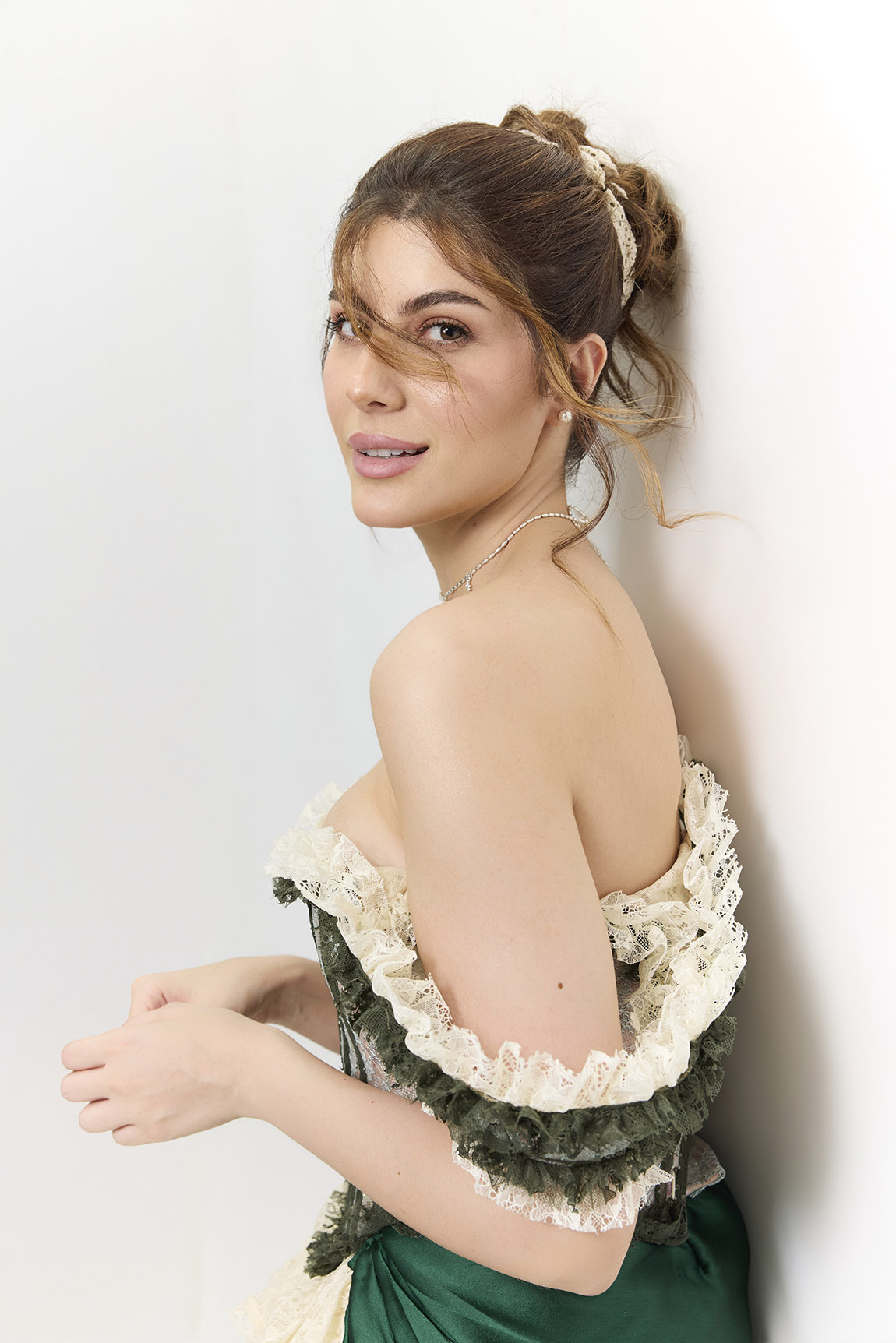
Photo: Abheet Gidwani

Subscribe to Our Newsletter
Receive our monthly newsletter by email