From amateur football to the Bundesliga
TEXT: DANIEL BARTHOLD
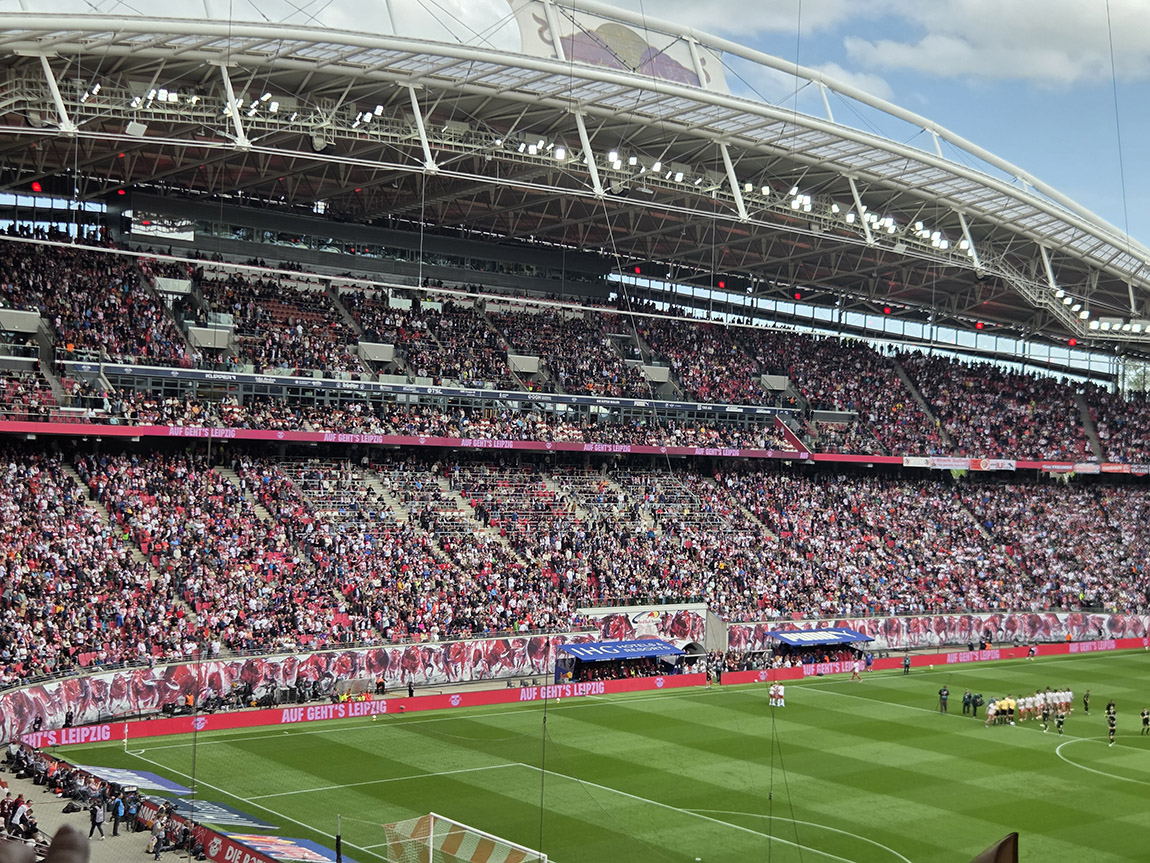
Leipzig Arena.
Football fan culture in Germany is said to be second to none on the European continent. From big arenas in the cities to small grounds in villages, watching football can be a lot of fun. Amid the 2026 World Cup, join writer Daniel Barthold on a tour from Franconia to Saxony filled with history, food, tradition and newly founded clubs.
The south-east of Germany is all about tradition and history. Old towns, countless food options and lovely train journeys. My trip from Nuremberg in Bavaria to the city Hof, near the border to Saxony, was off to a bad start though. Due to construction work, there were no direct trains, and a bus replacement service brought me from the largest city in Franconia to the small town of Pegnitz. From there, a local train service took a bit over an hour to Hof and its beautiful Central Station.
The city lies on the river Saale in Upper Franconia with a population of just over 46,000. If you like local breweries, grilled sausages and a quiet atmosphere compared to the bigger Bavarian hubs, Hof is a perfect city for you. And there is a small but very traditional football team. Bayern Hof is a club that used to play as high as the second tier of the German league pyramid but now plays in the Bavarian League North – the 5th tier and hence, non-professional football.
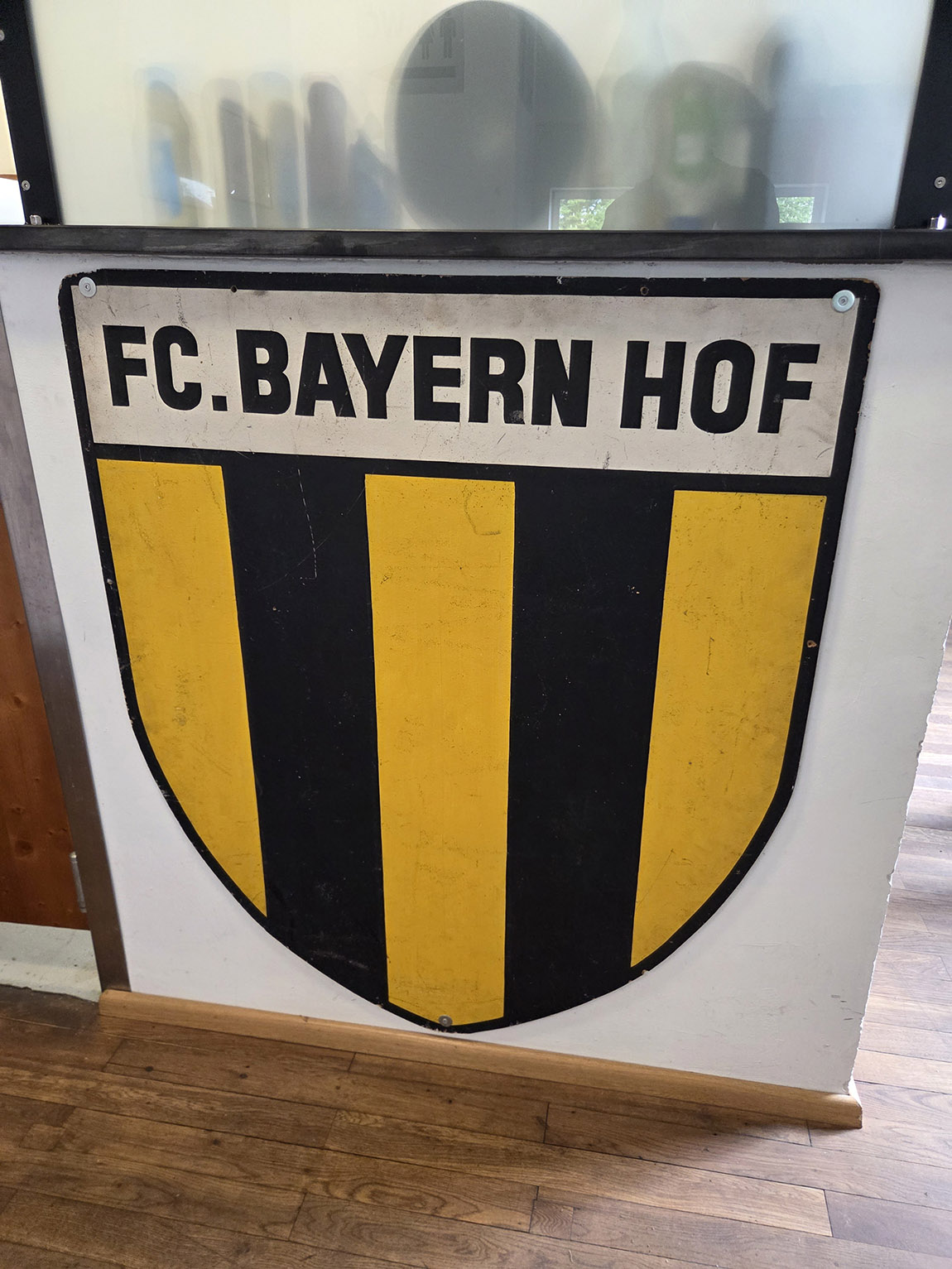
Old logo, FC Bayern Hof.
I was lucky enough to attend the final home match of the season, including an emotional farewell to leaving players in front of a crowd of 775 on a lovely, sunny Friday evening in the stadium. The ground Grüne Au is amazing because it ticks all the boxes of a stadium traveller. A very old wooden main stand, nice terraces, and a stunning club house. On top of that, a football ticket for 8.50 euro is rare these days. The opponent? A team I had never heard of before and a name that would be difficult for non-German speakers to pronounce: TSV Neudrossenfeld. As a neutral spectator, the result was not that important, but I was happy to see at least two goals in a 1-1 draw. My upcoming stadium adventure the following day in Leipzig was going to represent the complete opposite scale of German football.
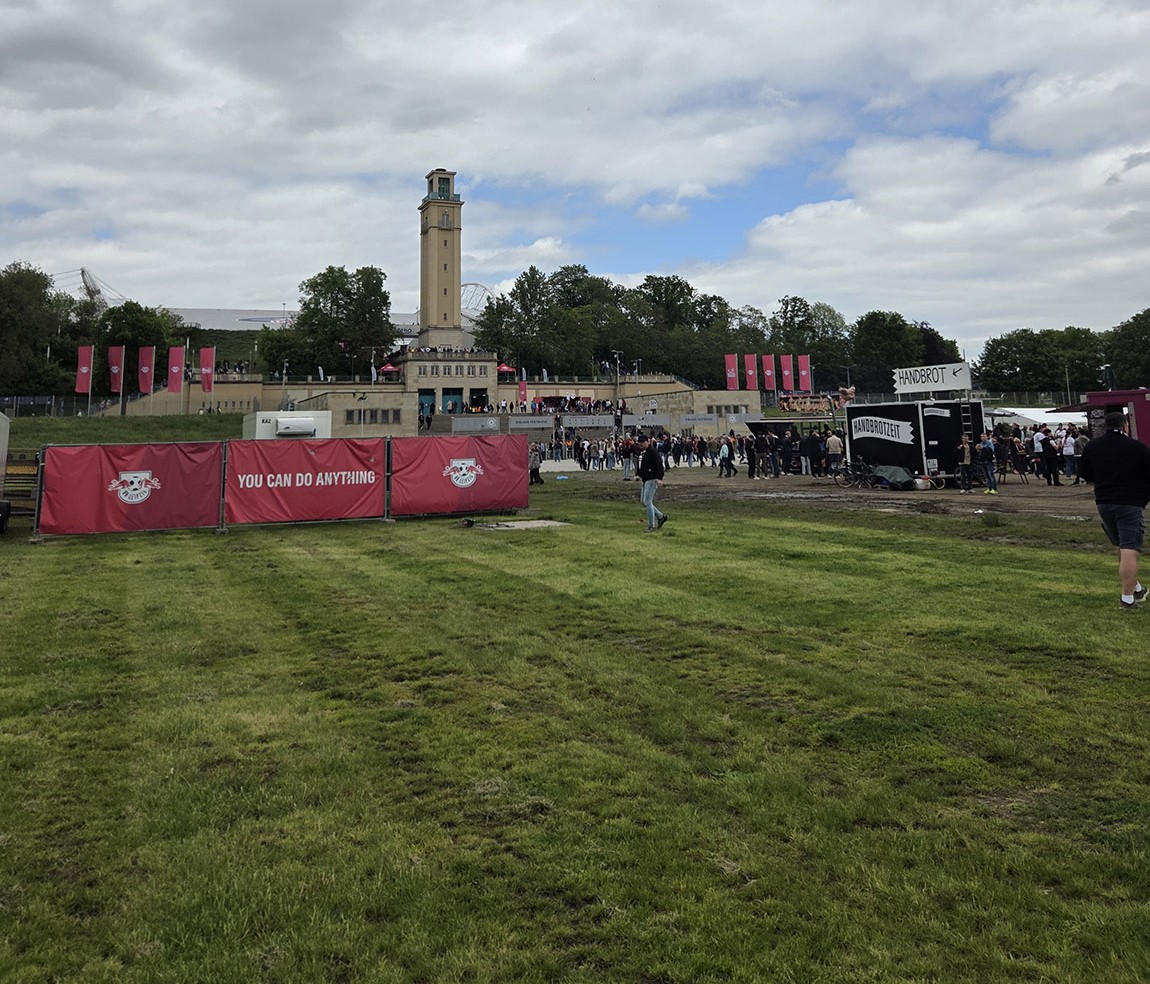
Famous “Glockenturm” of the old stadium, Leipzig.
The next morning, I had to catch the 8.32am train from Hof to Leipzig – in theory. Unfortunately, more rail construction work forced me to take another replacement bus to the city of Zwickau. Not only did it mean that I crossed the state border from Bavaria to Saxony, but it also represents one of the many older borders within Germany when the country was divided between the Federal Republic and the GDR. The landscape I was able to witness on the bus was stunning and it was the first time I saw the gorgeous Vogtland with its meadows, old villages, and farms.
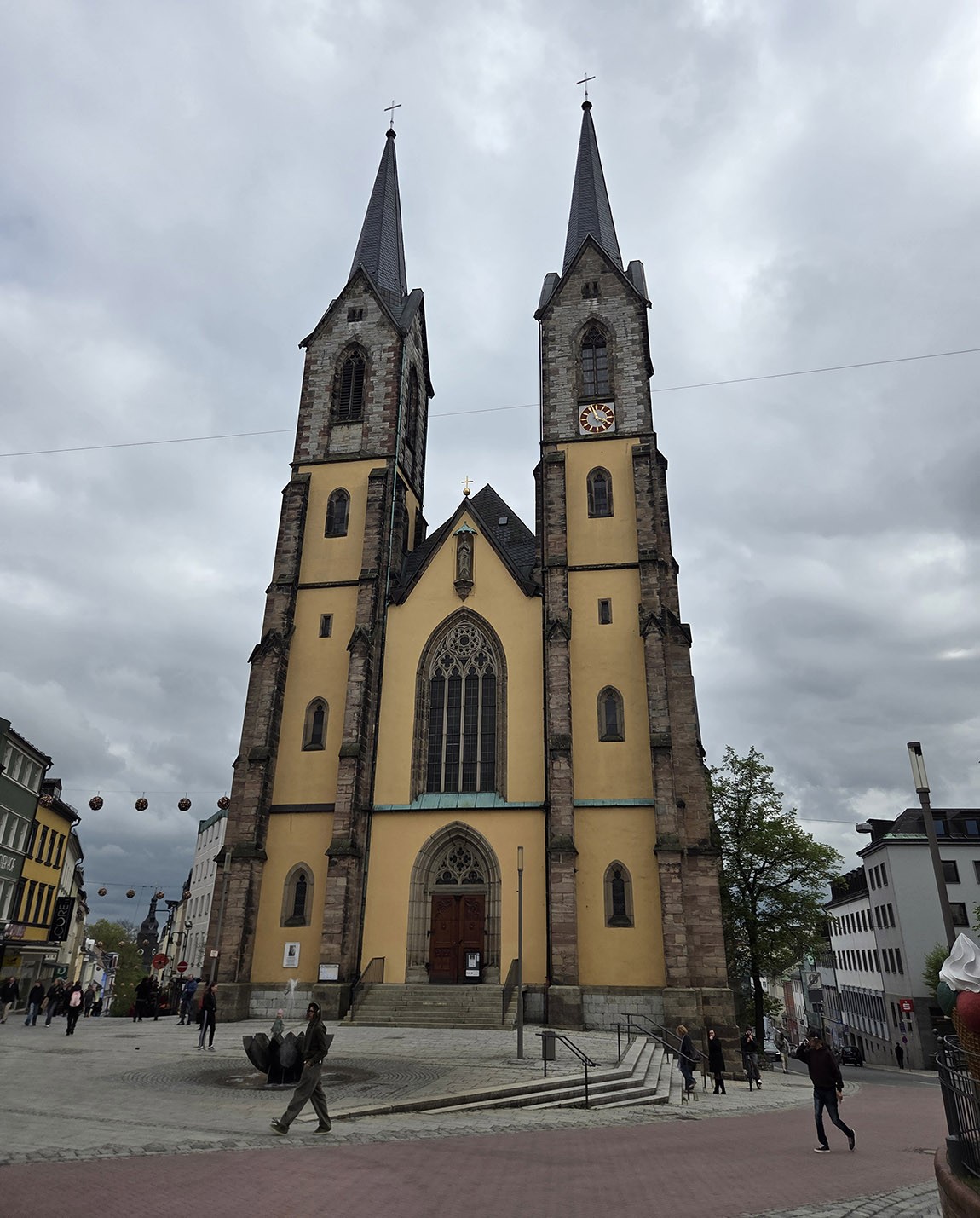
St Marienchurch, Hof.
After arriving at Zwickau Central, I was finally able to catch another train which took me to Chemnitz. It is one of the bigger cities in Saxony, formerly known as Karl-Marx-Stadt. However, my destination was Leipzig and after making it onto my final part of the journey on a packed train, I arrived at yet another station. Leipzig Hauptbahnhof, which is German for central station, is one of the biggest and most beautiful train hubs in Germany with two floors, many food and shopping options, and a lovely main hall. From there, it is a short journey with the local tram to the huge arena – home of Red Bull Leipzig.
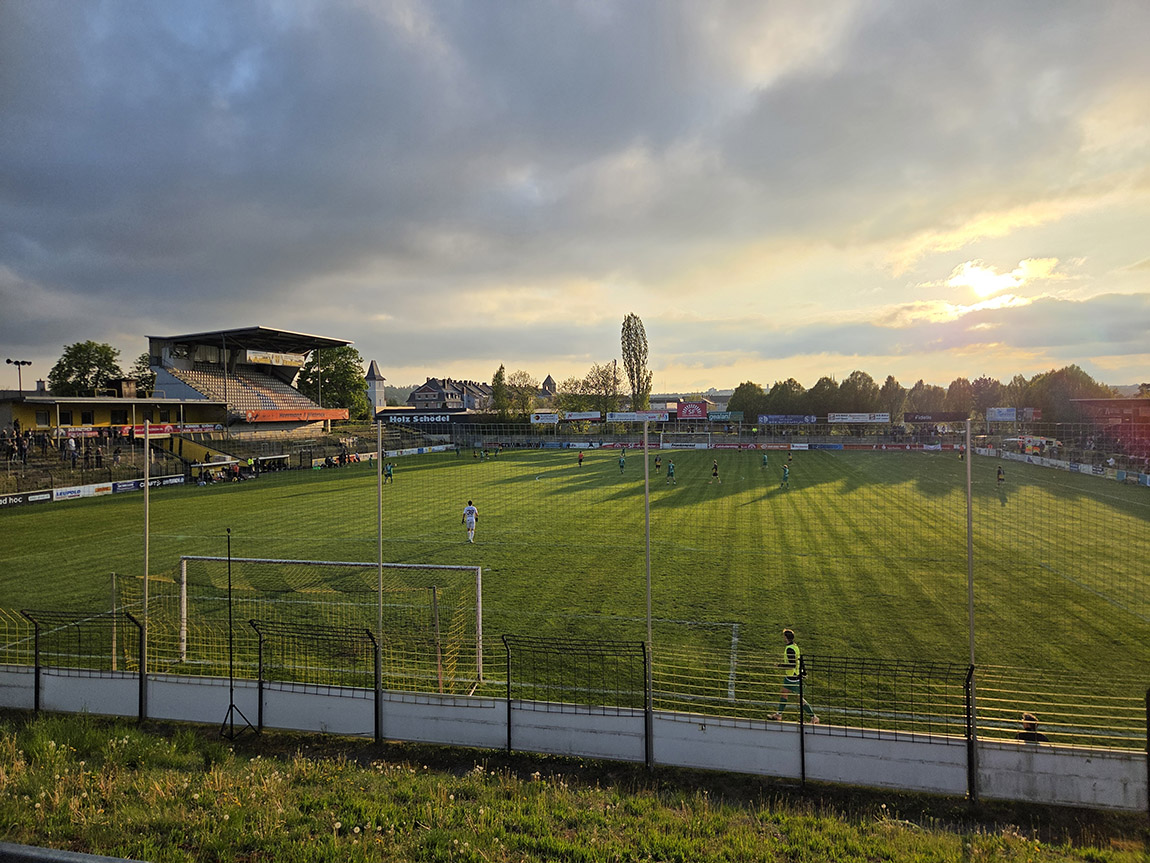
Stadium Grüne Au, Hof.
The club has only been founded in 2009 with strong financial opportunities and a chance to qualify for the Champions League on the day against relegation strugglers FC St. Pauli. The impressive stadium holds 45,228 seats and hosted the UEFA Conference Final this year. In front of a sell-out crowd, this Bundesliga clash showed the excitement of Bundesliga football and the atmosphere that is considered the best in Europe. Statistically, it is the league with the highest average attendances as well as two giants of international football – Bayern Munich and Borussia Dortmund.
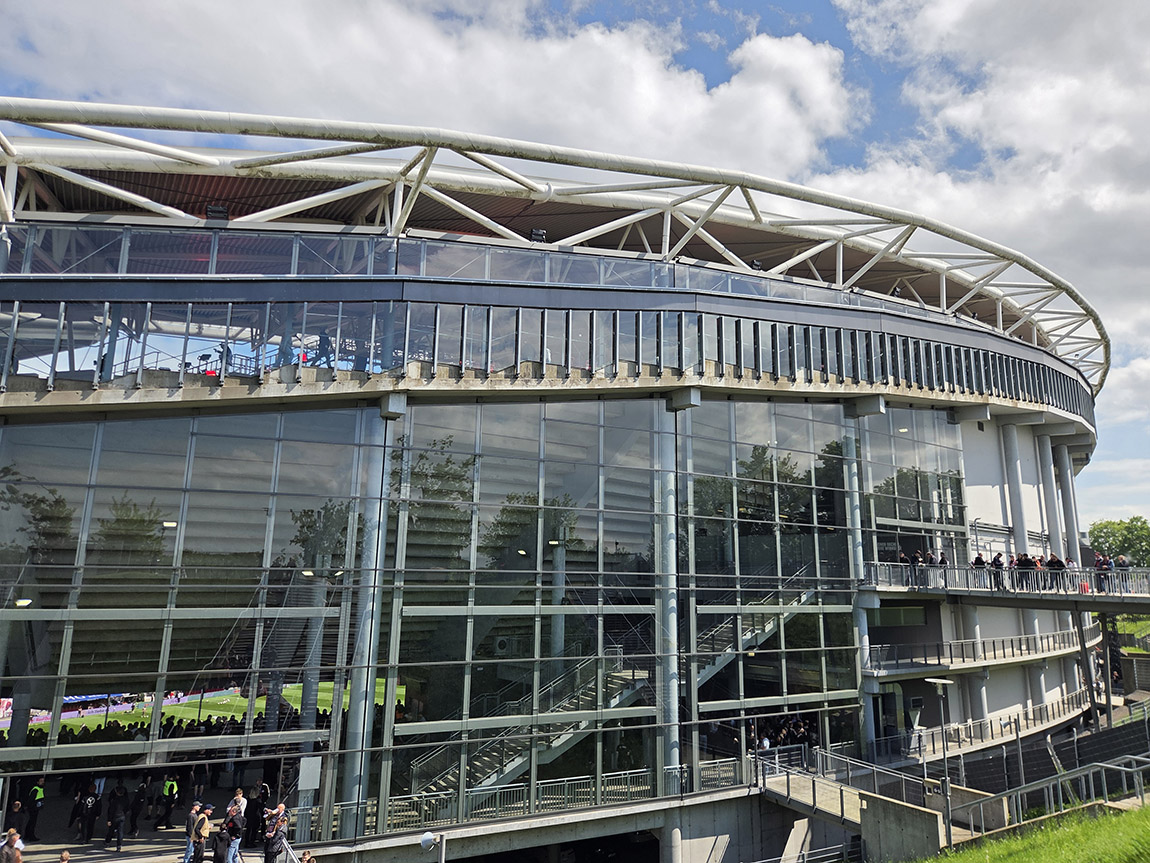
Outside Leipzig Arena
After the match, it was back to the station, to make my way to Franconia once again where the circle of this trip closed. After a stopover in Erlangen, an underrated town with a nice little marketplace, I had to catch a Sunday flight from Nuremberg back to Stansted Airport. On the way, you will find countless bakeries for both sweet and savoury treats. And if you have a bit of time to spare, you can take the subway from Nuremberg to Fürth to explore another traditional city in northern Bavaria. For beer lovers, the pub density and the number of local breweries is immense and perfect for football travellers or people who just like to sit in a beer garden and watch the world go by. One thing I know for sure: I will be back in Franconia and Saxony.
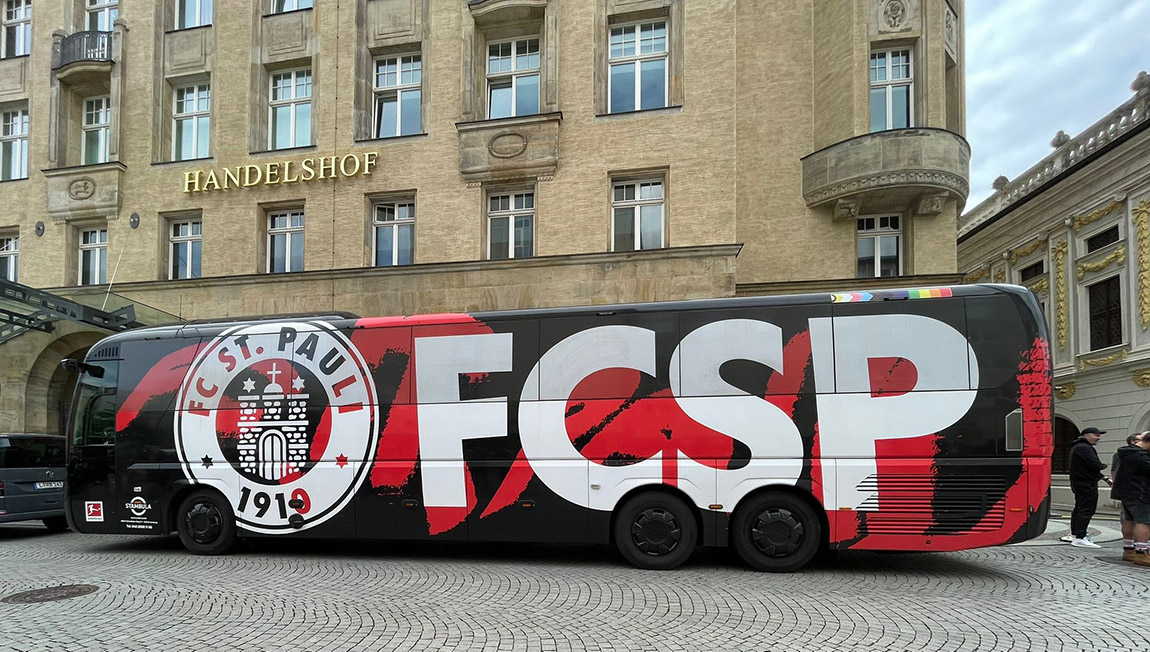
FC St. Pauli team bus in Leipzig.
Information on the Bundesliga:
www.bundesliga.com
The English tourism page for Franconia is available here:
www.frankentourismus.com

Subscribe to Our Newsletter
Receive our monthly newsletter by email