Worshipping white asparagus in Münster
TEXT: RICHARD MELLOR
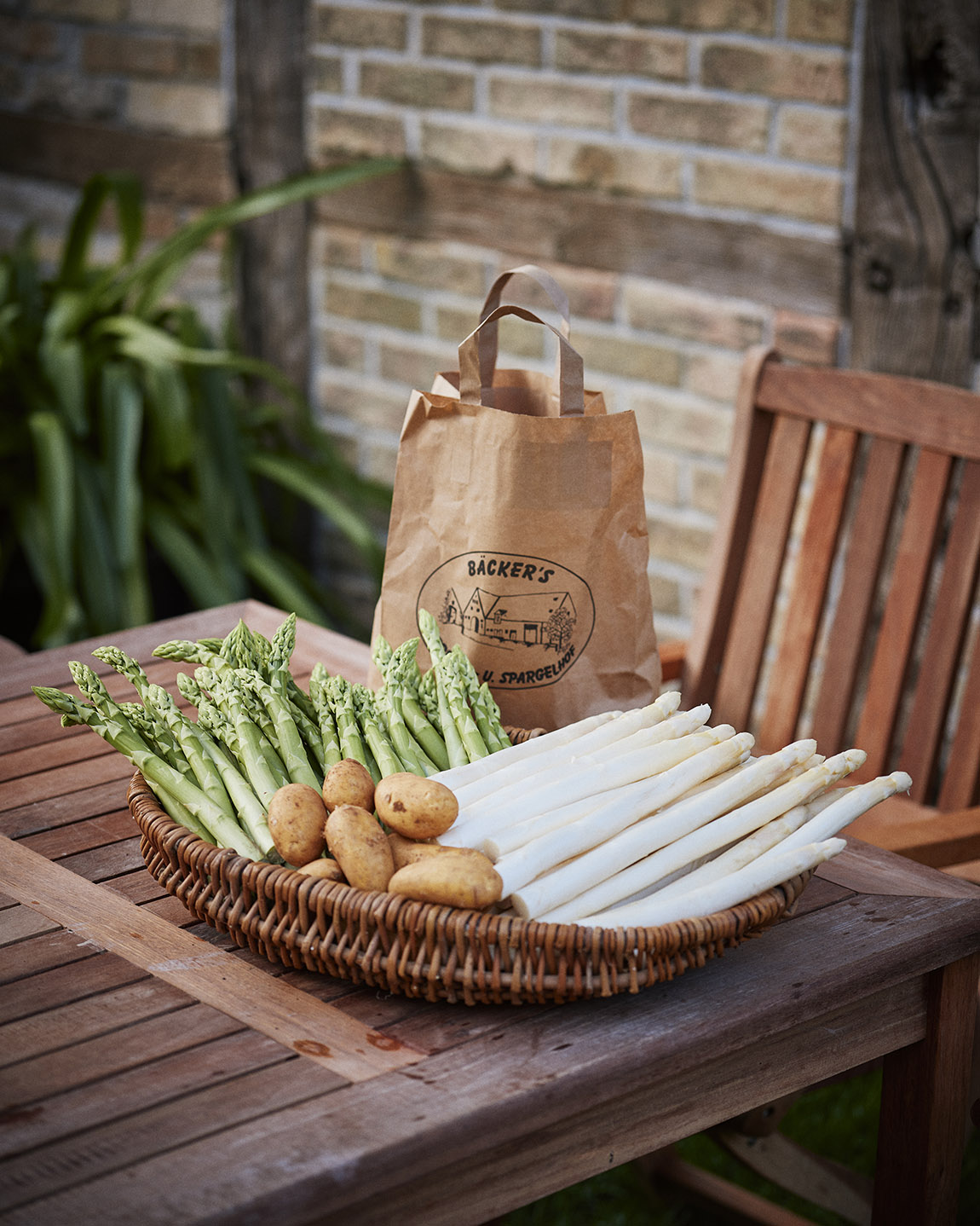
White asparagus, Hof Baecker in Münster. Photo: Philipp Fölting, Münsterland e.V.
In the centre of Münster, across a market below the colossal cathedral, one item dominates. I see liquorice, pumpernickel bread and punnet upon punnet of juicy strawberries. This being Germany, I see sausages and spätzle egg noodles. But, above all, I see white asparagus – in fact, almost half of the traders seem to be selling these plump, ivory-coloured spears.
Back home, two London-based German friends had told me that white asparagus – rare in Britain, unlike its green counterpart – was a national source of near-obsession during its harvest season from mid-April to late June. Now, halfway through May, a local called Katrin concurs while we queue at one counter. “We love it here,” she laughs. “And we really respect it as a regional product that’s part of our heritage. I will eat some every day.” I double-check that I’ve heard her correctly. “Every day, yes! It’s so good!”
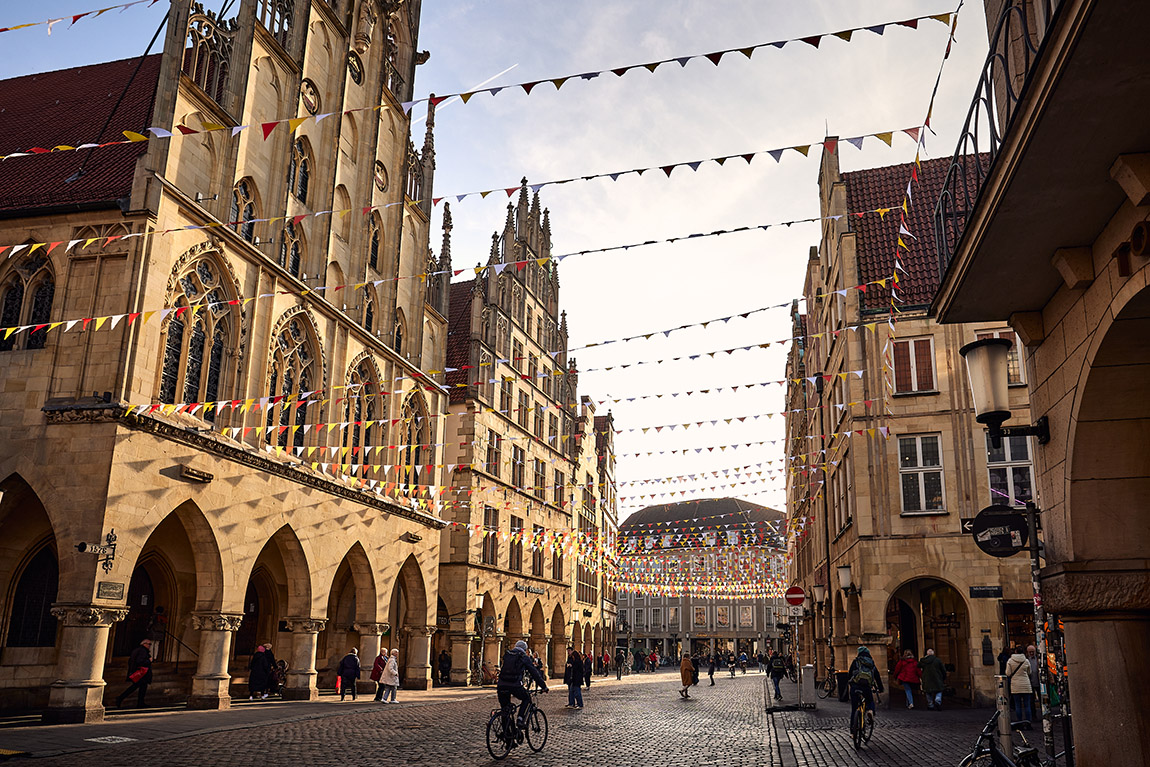
Prinzipalmarkt Münster. Photo: Philipp Fölting, Münsterland e.V.
From country to city
White asparagus is green asparagus that has been kept out of the sun, often in mounds of dirt, in order to prevent photosynthesis. As shoots must be constantly watered and then hand-harvested, farming it is labour-intensive – hence a 500g bag costing me 6.90 euro.
Taste-wise, whereas green asparagus always proves hearty and slightly bitter, the white kind is apparently creamier and milder, with a hint of nuttiness. I am already finding its aroma pleasingly earthy.
Germans allegedly consume 125,000 tonnes of white per year (green is not nearly as popular). The country has five prime areas of production, with wider Münsterland, a castle-filled, sandy-soiled portion of North Rhine-Westphalia in Germany’s northeast, famed for high-quality examples. An official, 129-kilometre cycling route crosses this flat landscape, linking up white asparagus-hawking farm shops, restaurants and half-timbered towns.
Sadly, limited to the city, I make certain to catch Münster’s major market. Held on the leafy Domplatz square each Wednesday and Saturday morning, this turns out to be a teeming, joyous maze of dining tables, food trucks and stalls. Students – of which the city has an estimated 60,000, creating a bohemian atmosphere – clink glasses of rosé as older residents shop for cheese, cheesecake, artisan honey or, yes, white asparagus.
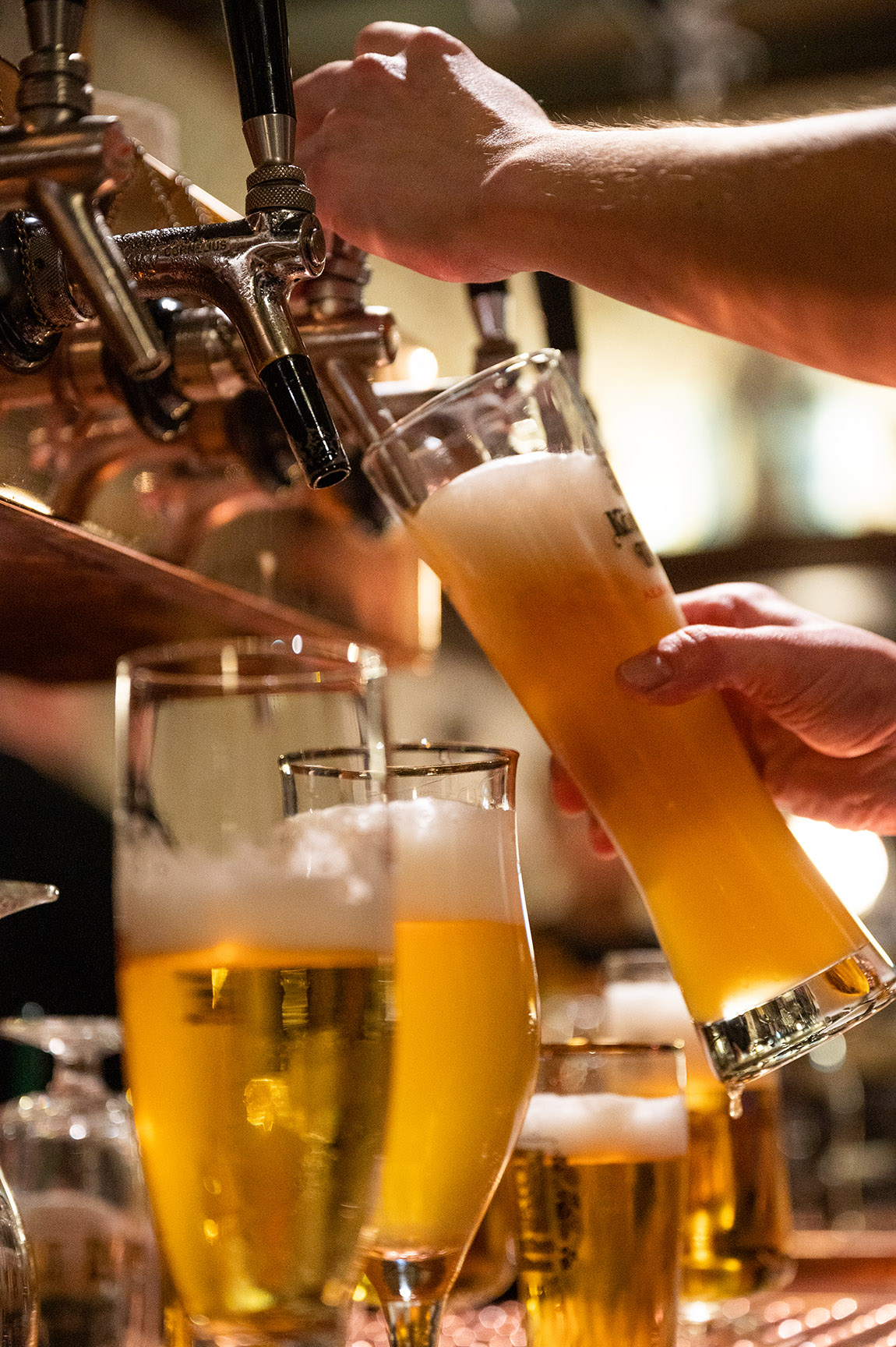
Altes Gasthaus Leve. Photo: Sebastian Lehrke, Münsterland e.V.
A starring or supporting role
Katrin directs me to cosy Altes Gasthaus Leve, a 400-year-old tavern, to try this white gold the classic way. Delivered by a waitress clad in old-fashioned Westphalian garb, my six braised stalks arrive with smoked local ham, a pile of boiled potatoes and jars of both melted butter and thick hollandaise. It is simple, but seriously yummy.
Other, posher places proffer more invention: I find white asparagus anchoring spring salads, as a topping on tarte flambées, grilled and accompanying poached quail’s eggs and finally, in Reckos, the Mauritzhof design hotel’s informal restaurant, giving main-character energy to a divine, gently-rich soup. The vegetable’s flexibility is clear.
Not that every Münster restaurant worships it. Far from it: white asparagus rarely registers at a tranche of international-focused venues, led by tens of Turkish establishments. And there is not a stalk in sight during one of the best meals I have – a vegan brunch bowl containing avocado, kiwi, granola and homemade banana bread at Die 3 Schwestern, out on trendy Wolbecker Straße.
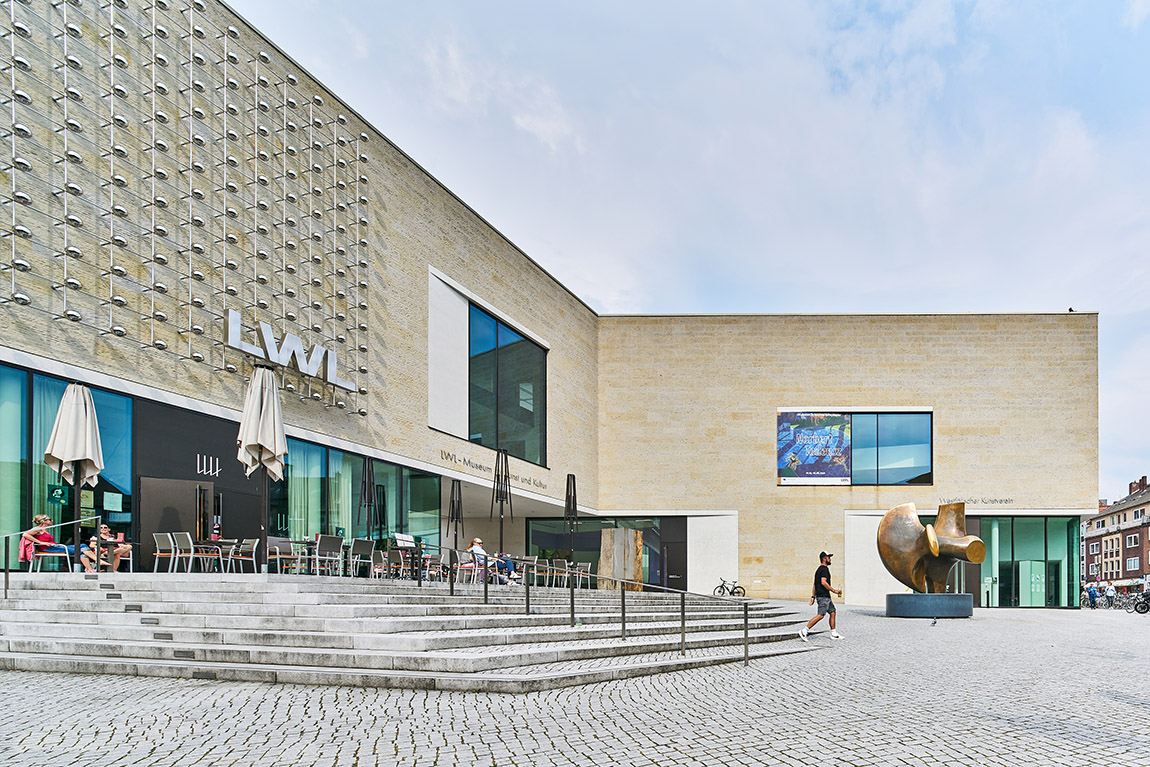
LWL Museum of Art and Culture. Photo: Philipp Fölting, Münsterland e.V.
More of Münster
Nor is, of course, white asparagus Münster’s sole temptation. A host of stand-out sights await around its large old town, beginning with that cathedral. One of 90-odd churches here, St.-Paulus-Dom contains porthole-like stained-glass windows and an ornate, 16th century astronomical clock. Every day at noon, this produces a glockenspiel-soundtracked display of the magi meeting Jesus.
Amid our morning walking tour, my guide Marie-Theres Kramer also introduces me to the gothic St Lambert’s Church, from whose steeple still hangs cages in which the mutilated corpses of three Protestant revolutionaries were once shockingly displayed. “It took 50 years for the last bones to fall,” she grimly reveals.
The adjacent Prinzipalmarkt street features 48 gabled houses; despite looking convincingly ancient, these were faithfully rebuilt following ruinous Second World War bombing. A few cobbled streets away is the LWL Museum of Art and Culture, whose history-straddling exhibits run from Luther bibles to a nude by Edvard Munch.
Having crossed the lime tree-shaded Promenade, defensive walls reinvented as a frenetic, four-kilometre cycling path, I stroll Lake Aa’s north bank in search of sculptures. Here and there are works bestowed by Skulptur Projekte Münster, a big-name exhibition held only every ten years – with 2027 bringing the sixth edition. I find giant pool balls, a mast hiding poetry lines and even a steel giraffe.
The exercise leaves me craving sustenance. I ring Altes Gasthaus Leve to see if they have a table free…
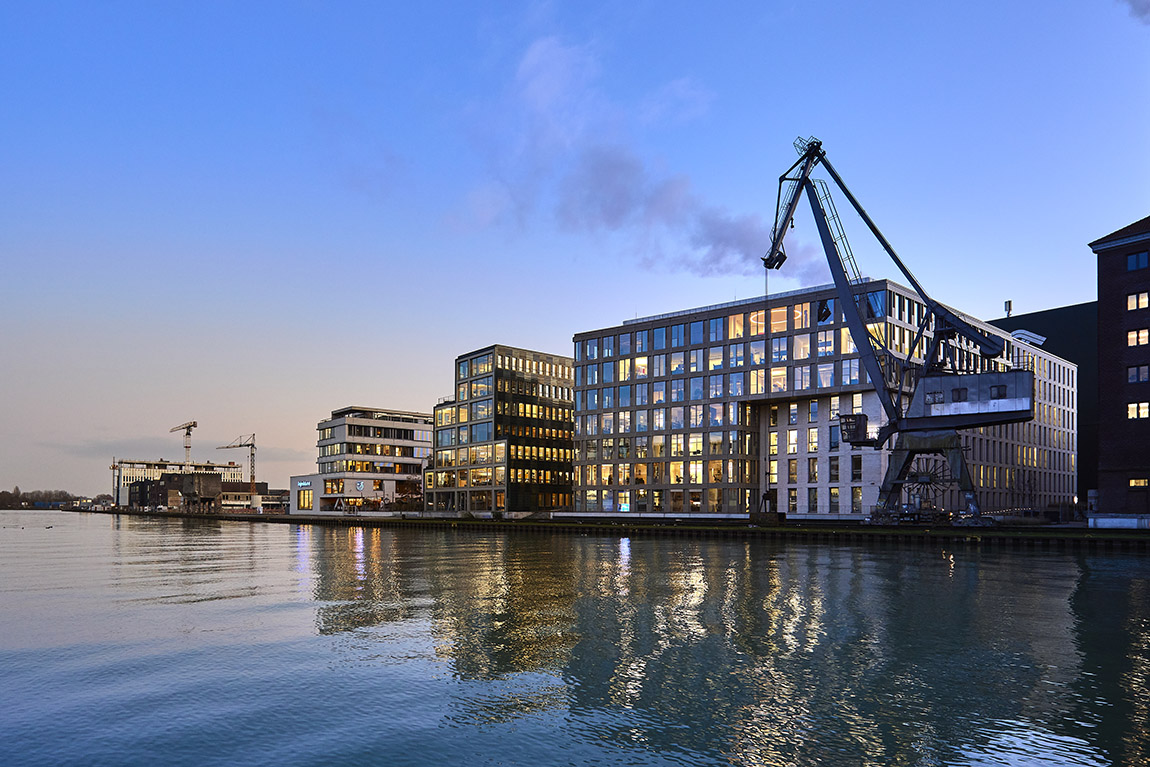
Münster harbour. Photo: Philipp Fölting, Münsterland e.V.

Subscribe to Our Newsletter
Receive our monthly newsletter by email