
Coastal magic and fish delights: A culinary adventure along the Baltic Sea
TEXT: NANE STEINHOFF
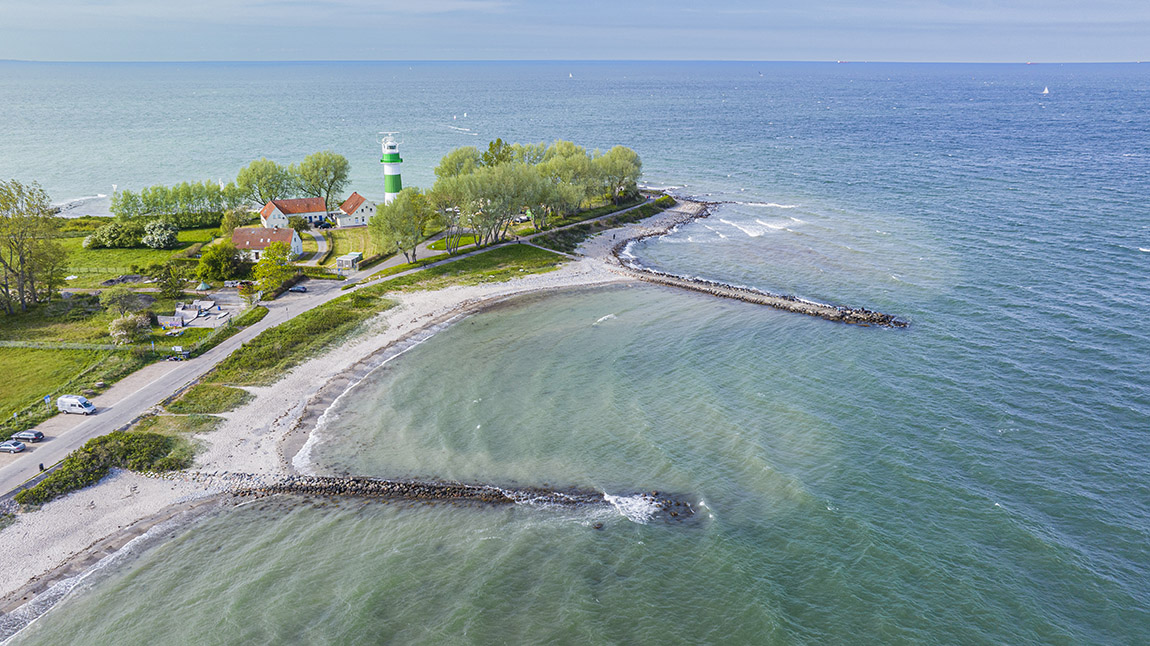
The Bülk lighthouse in Strand
Along Schleswig-Holstein’s Baltic Sea coast, you will find charming villages, sweeping stretches of sand, stylish hotels, and inviting restaurants and beach huts. Yet, there is one delicious thread weaving through them all: the beloved fish roll. It is a local passion that no visitor to this part of Germany can possibly ignore.
Growing up in Germany’s northernmost state Schleswig-Holstein, and after more than a decade living in England, my homecoming ritual has never changed: the very first – and last – thing I eat is a pickled herring sandwich, or as we fondly call it, a Matjesbrötchen. My English husband remains utterly baffled by it. I have long since stopped trying to coax him into even a tentative nibble, but for me, it is so much more than a sandwich. Each bite is a memory, conjuring up endless, sandy days at the beach with my grandma, countless chilly swims in the clear, placid waters of the Baltic Sea, and laughter-filled parties in the dunes as a teenager. No matter the season or stage of life, there was always a Fischbrötchen (fish roll) within easy reach. The fish roll has become much more than just a snack; it is a true taste of the Baltic coast and a cherished part of its traditions.
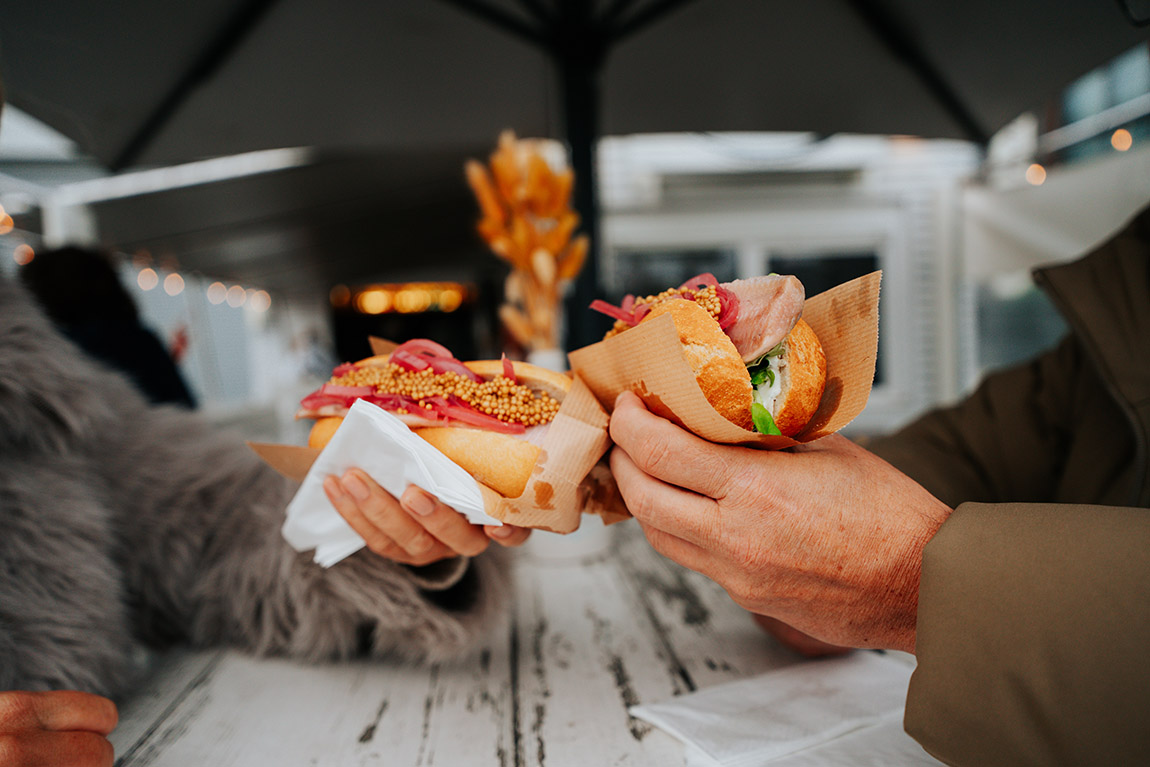
The famous fish rolls. Photo: Tim Eichert
Humble beginnings
The fish roll originated in the 19th century as an inexpensive, hearty snack for dockworkers and fishermen along the German North Sea and Baltic Sea coasts. Closely tied to the fishing industry, it evolved from a simple meal for labourers into a popular maritime cultural icon. Typical ingredients include pickled fish (matjes, Bismarck herring), onions, and gherkins served in a bread roll. Other fish commonly sold in fish rolls are smoked salmon, smoked mackerel, or Nordseekrabben (brown shrimp), amongst many other tasty variations. Whether enjoyed by locals or by visitors looking to sample authentic northern German fare, these fish rolls are ubiquitous at seaside stalls, bustling harbours, and quaint beach huts. Each vendor boasts their own recipe, with slight variations in toppings and preparation, but all share a commitment to freshness that defines the Baltic experience.
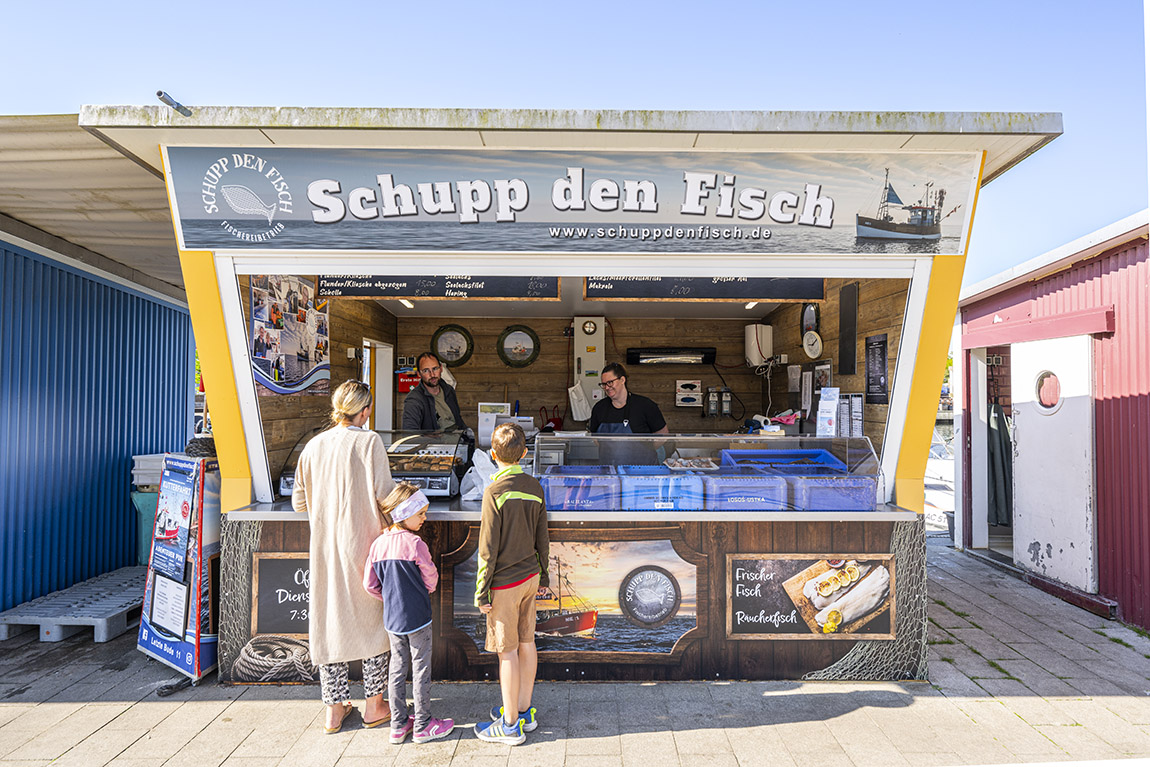
Fresh fish, sold by Peter and Hannah in Timmendorfer Strand. Photo: Tourismus-Agentur Schleswig-Holstein GmbH
On the fish trail
The fish roll’s charm goes well beyond its flavour; there is even a poem dedicated to it, a crime-themed scavenger hunt inspired by it, and an entire day set aside in its honour. To recognise just how much the fish roll means to Schleswig-Holstein, World Fish Roll Day returns on 2 May this year. It is a date every local and visitor should mark on their calendar.
“For us, the fish roll is more than just a snack. It represents tradition and coastal life, authenticity and typical holiday pleasures on the Baltic Sea,” says Simone Dikow who is responsible for the World Fish Roll Day at Ostsee-Holstein-Tourismus e.V. “Many people think back to fond memories – be it their first beach holiday as a child, spontaneous stops at the fishing boat, or summer evenings overlooking the sea.”
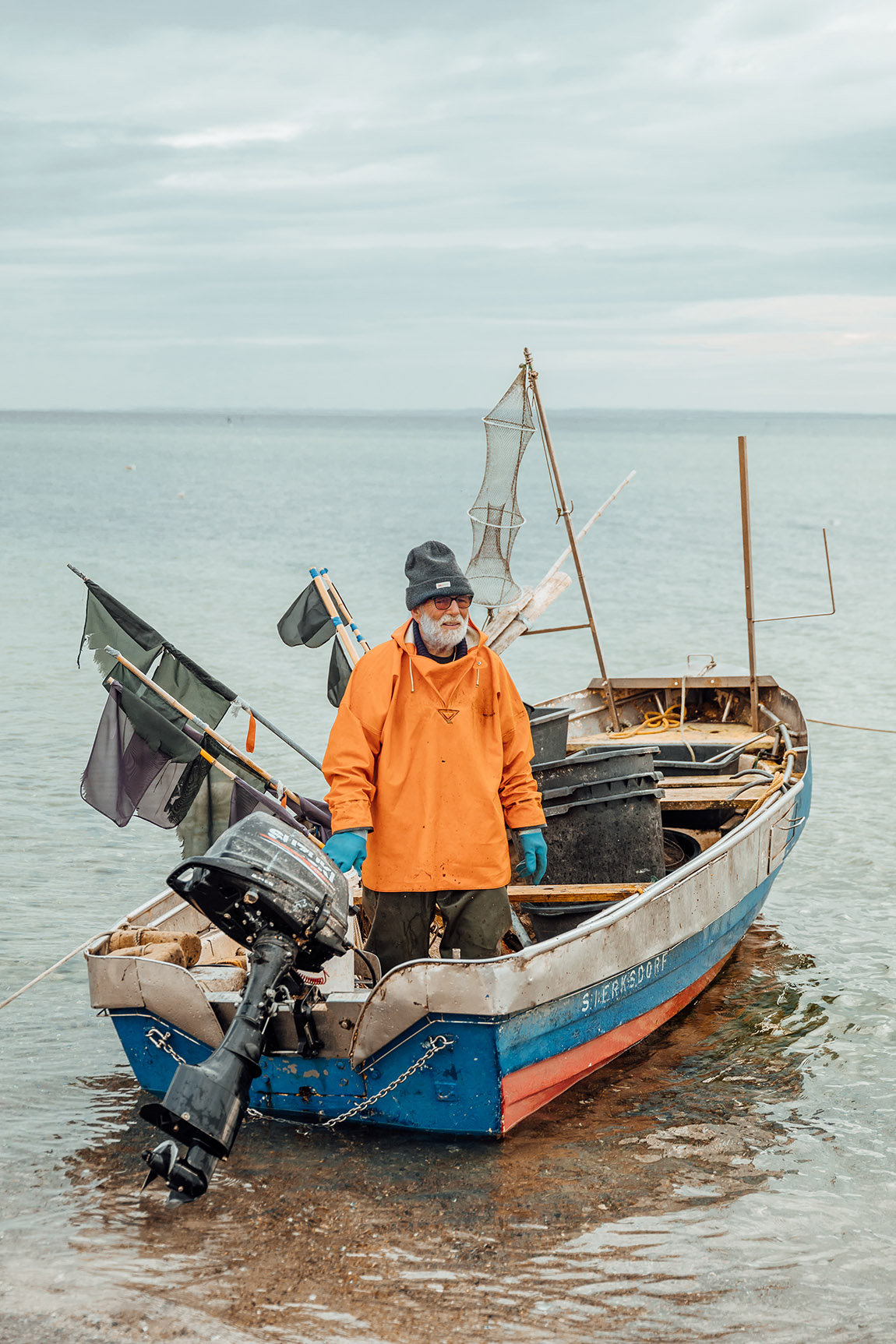
A fisher in Sierksdorf. Photo: www.luebecker-bucht-ostsee.de
Alongside World Fish Roll Day, the region hosts Fish Experience Weeks, a lively celebration where towns come together to offer a variety of events and activities. Under this theme, you will find everything from sustainable fishing tours and sea shanty singalongs to guided bike rides and inventive new fish roll recipes – including vegan and vegetarian options.
The Bay of Lübeck’s Fischbrötchenstraße, or Fish Roll Street, is a 44-kilometre coastal trail connecting 15 distinctive fish roll stops, from cosy stalls to elegant seaside restaurants. The route, blending coastal scenery, local culture, and the region’s beloved fish roll tradition, starts in Rettin, passing through Scharbeutz, Timmendorfer Strand, and ending in Lübeck-Travemünde. It is easily explored by bike or e-bike, offering a relaxed, tasty adventure. Travellers are encouraged to begin in Scharbeutz and cycle north, choosing their favourite fish roll stations along the way. Just beware of hungry seagulls. Highlights include the mile-long dunes, the pier, Haffkrug (the bay’s oldest fishing village), and Sierksdorf’s colourful fishing huts. After the HANSA-PARK theme park, Neustadt in Holstein’s fjord-like harbour is perfect for enjoying a fish roll and watching yachts. The journey continues to Pelzerhaken for shopping and lighthouse views, then returns to Scharbeutz, with a final fish roll stop at Neustadt’s market square.
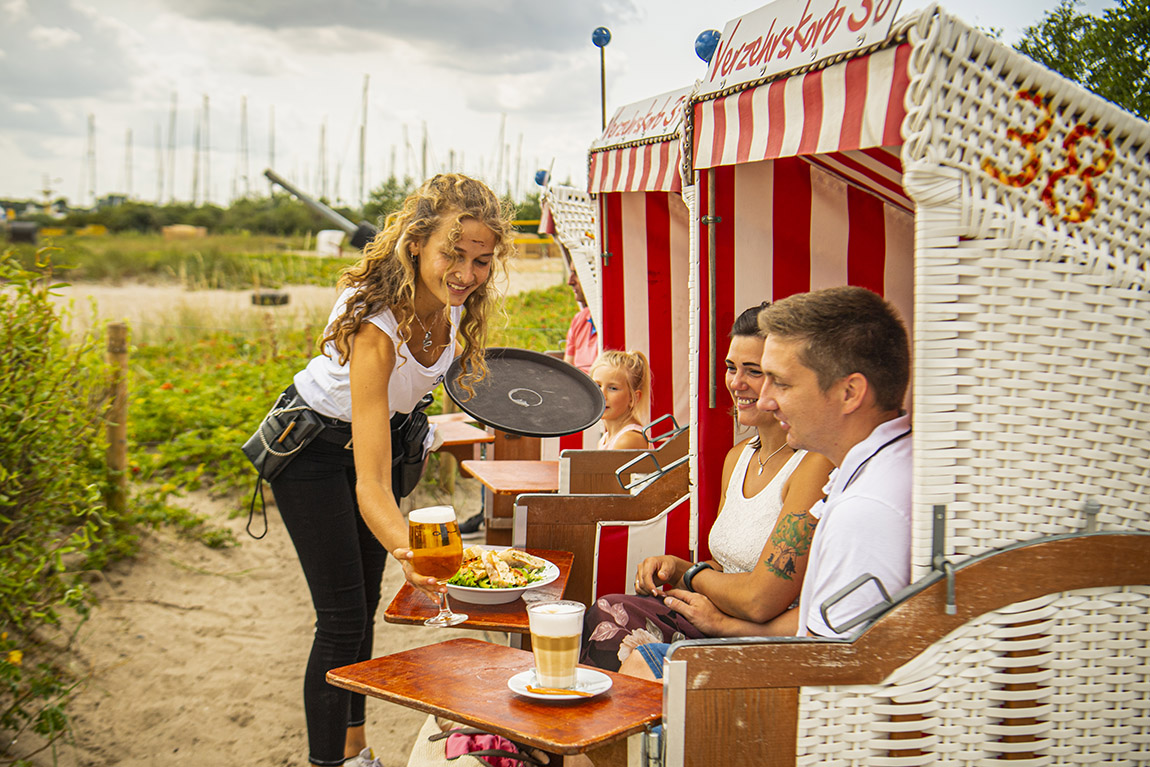
A break in Eckernförde Bay. Photo: Tourismus Agentur Schleswig-Holstein GmbH
For those wanting a somewhat quieter experience, the quaint village of Haffkrug offers the fisheries adventure trail. Here, along the promenade, visitors find numerous information boards and interactive elements about the inhabitants of the Baltic Sea. They tell stories of past fishing days and explain the different fish species of the Baltic Sea. A definite recommendation for all landlubbers.
What makes the fish roll truly special is its ability to bring people together. It is not uncommon to see families gathered around a harbour stall, sharing stories and sandwiches after a day by the sea. When exploring Germany’s Baltic Sea coastline, with every bite of a fish roll, one tastes the unique blend of tradition and contemporary flair that defines Germany’s Baltic coast. The fish roll stands as a symbol of regional identity, cherished by locals and visitors alike. A simple sandwich, but one with an extraordinary legacy.
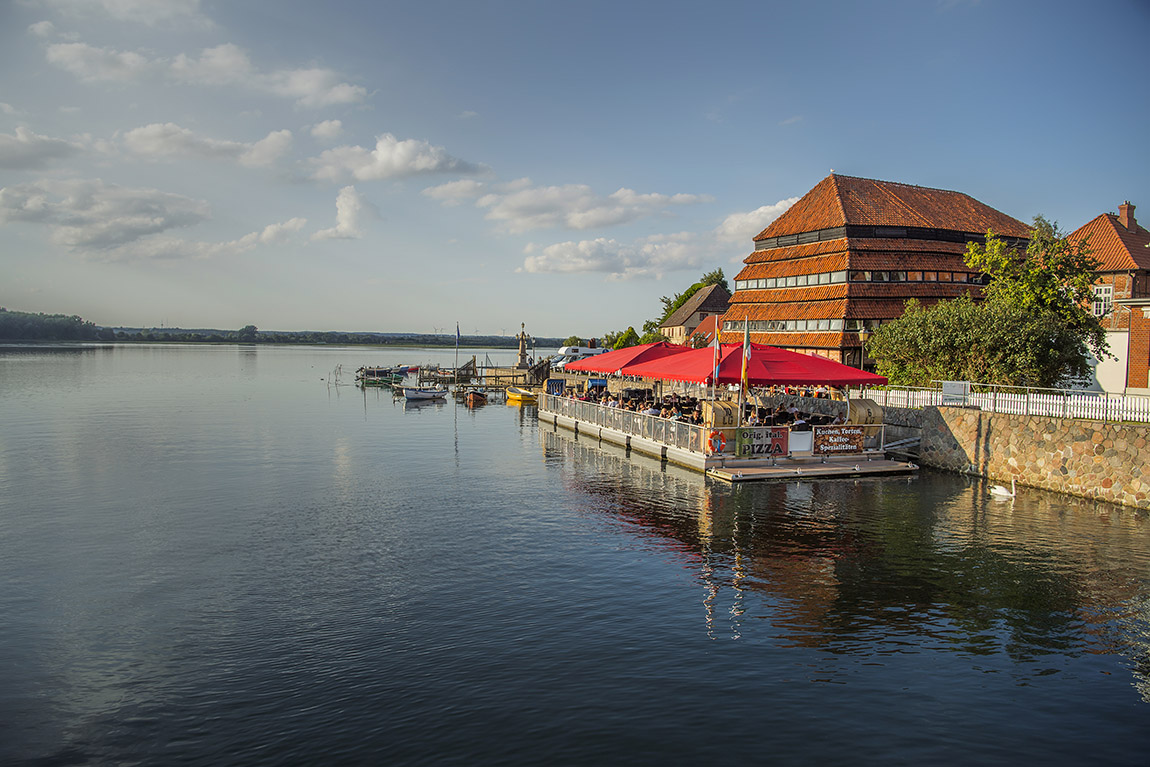
A restaurant in Neustadt in Holstein. Photo: Tourismus-Agentur Schleswig-Holstein GmbH
Conservation concerns
The Baltic Sea faces environmental issues like overfishing and pollution, leading to restrictions on favourites such as herring and brown shrimp. To protect fish stocks, vendors are now sourcing fish responsibly and supporting small-scale fisheries, helping maintain the tradition of the fish roll while safeguarding the sea's future. Making informed decisions about which fish to enjoy helps safeguard both regional culinary traditions and the future of the sea itself.

Subscribe to Our Newsletter
Receive our monthly newsletter by email