Dark-sky tourism in Germany: The top 6 star gazing hotspots
TEXT: NANE STEINHOFF
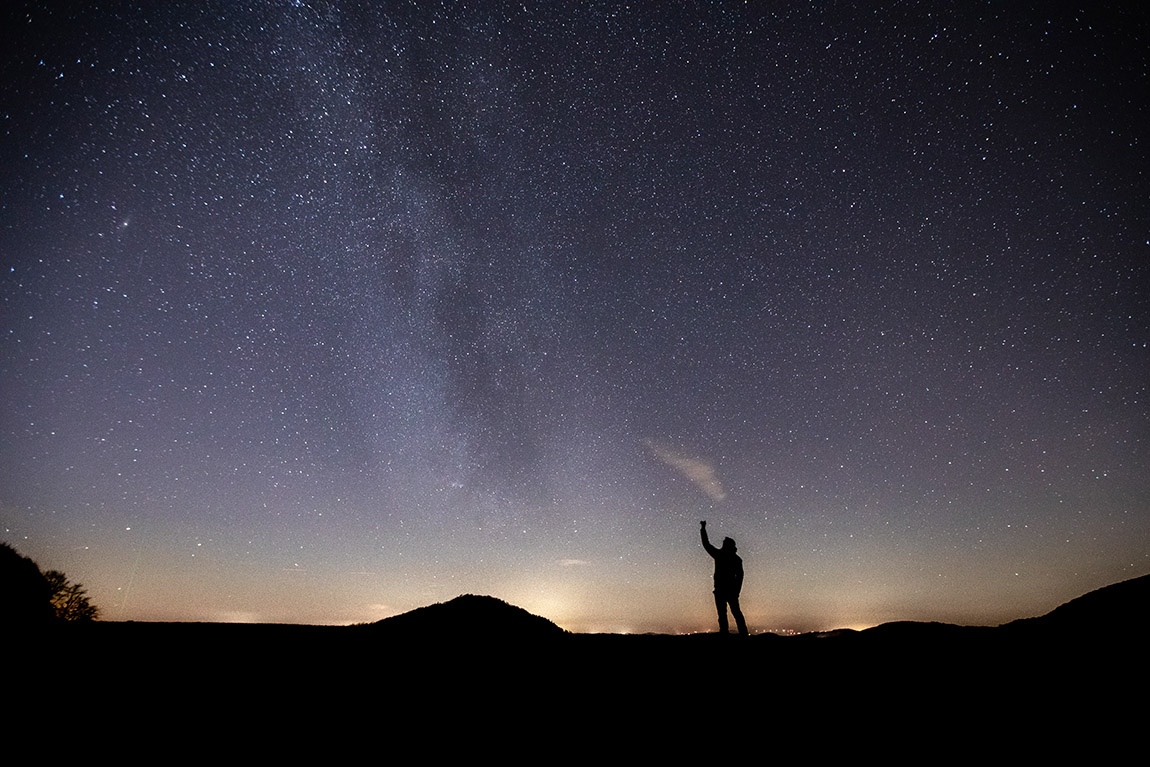
Star Park Rhön. Photo: Rhön GmbH
As urbanisation and artificial lighting increasingly encroach on our view of the stars, dark-sky tourism is more than a travel trend. It is a movement to preserve our connection with the cosmos. Germany’s parks and reserves are leading the way by not only offering spectacular stargazing opportunities but also championing conservation efforts. Reducing light pollution helps safeguard nocturnal wildlife, supports biodiversity, and restores the natural rhythms of night and day.
Imagine standing under a canopy of inky darkness, unable to see your own hands, but able to witness the breathtaking spectacle of thousands of stars twinkling overhead. This is the essence of dark-sky tourism, a rapidly growing travel trend that invites enthusiasts and adventurers to seek out the world’s clearest night skies for unforgettable stargazing experiences.
When you think of endless starry skies, you probably think of some remote desert or a small island in the middle of the Pacific. But Germany, better known for its vibrant cities and rolling countryside, is emerging as an unexpected leader in this movement, driven by heightened solar activity and one of the most active aurora periods in years. From remote mountain parks to the first certified Dark Sky Park, Germany offers unforgettable stargazing opportunities.
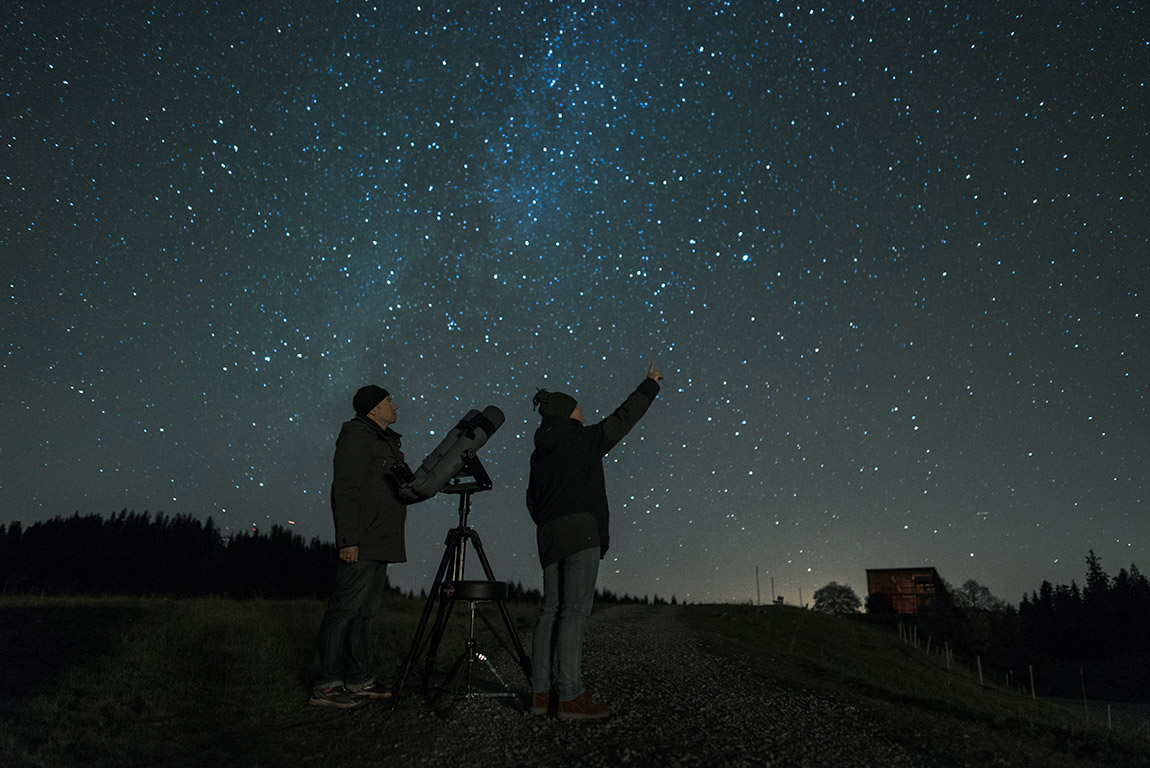
Winklmoos-Alm in Reit im Winkl. Photo: Sebastian Voltmer
Westhavelland: Germany’s first Dark Sky Park
Just an hour from the bright lights of Berlin, Westhavelland stands as a beacon for urban stargazers, offering easy access to a world of darkness and wonder. Recognised in 2014 as Germany’s first Dark Sky Park, this unique nature reserve combines human-shaped cultural landscapes with almost untouched river and wetland ecosystems. But it is the star-studded night sky that truly sets it apart.
Thomas Becker from Natur- und Sternenpark Westhavelland describes Westhavelland’s appeal: “The park is one of the dark sky parks closest to a major metropolis anywhere in the world. While the glow from Berlin is visible on the horizon, it means millions of people from the Berlin/Potsdam region have easy access to a wonderful night sky.”
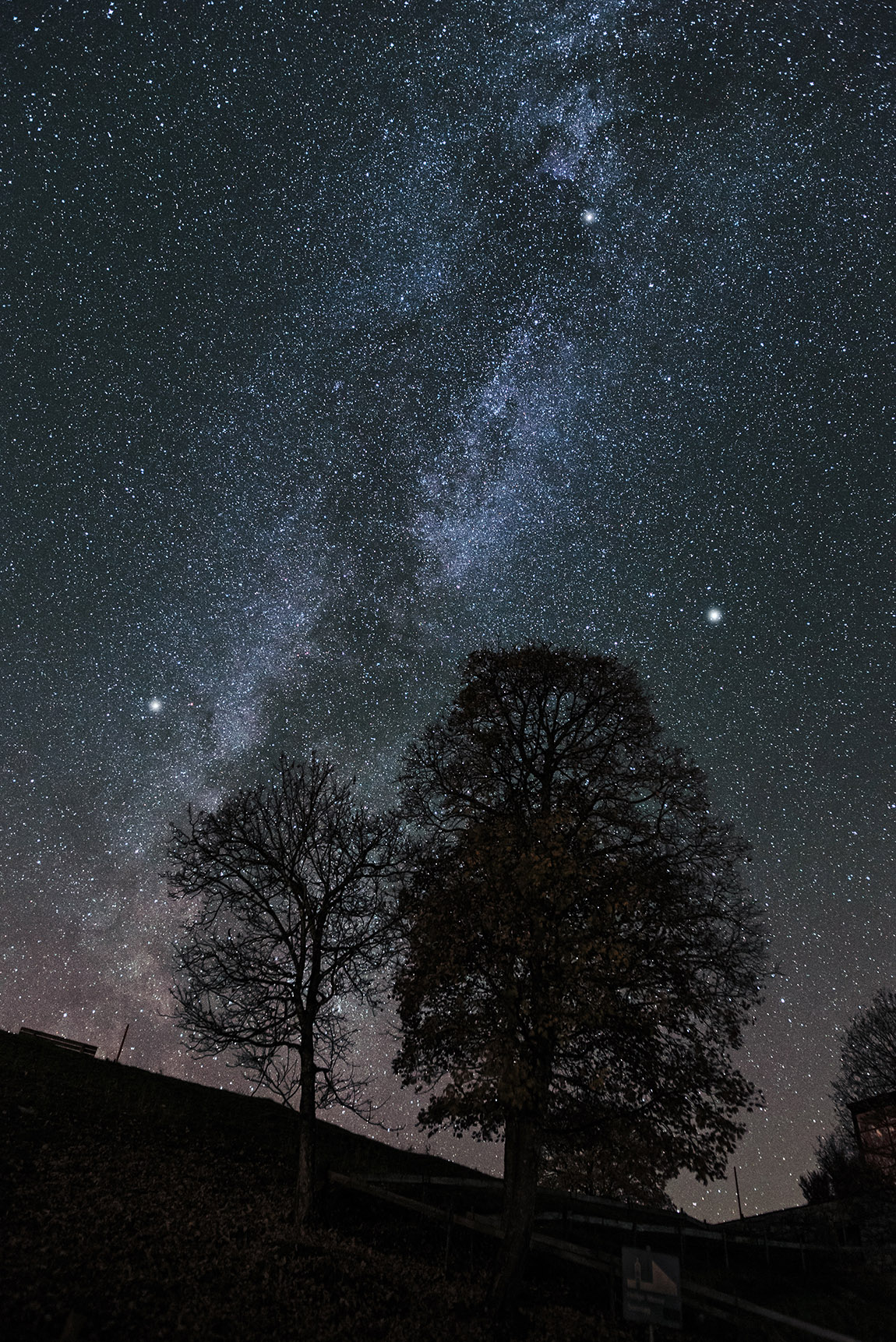
Winklmoos-Alm in Reit im Winkl. Photo: Sebastian Voltmer
Dark-sky tourism here is not just about beauty – it is about conservation. Becker explains; “Reducing light pollution is one of our main tasks. We developed lighting guidelines, voluntarily adopted by local communities, focusing on the direction, colour, dimming and intensity of street lighting.” These efforts extend to convincing major businesses, including the Deutsche Bahn, to join the crusade for darkness.
What can visitors experience? The annual Westhavelländer Astrotreffen (WHAT) in Gülpe draws astronomers from across Germany, while holiday homes such as Zemlin cater specifically to astrotourists. Night walks, moonlit paddling tours and meteor watching are all on offer, and a new observatory is soon to open. Becker fondly recalls the “strong polar lights in May and October 2024 and January 2026,” when weather, moon phase, and timing converged perfectly for a spectacular show.
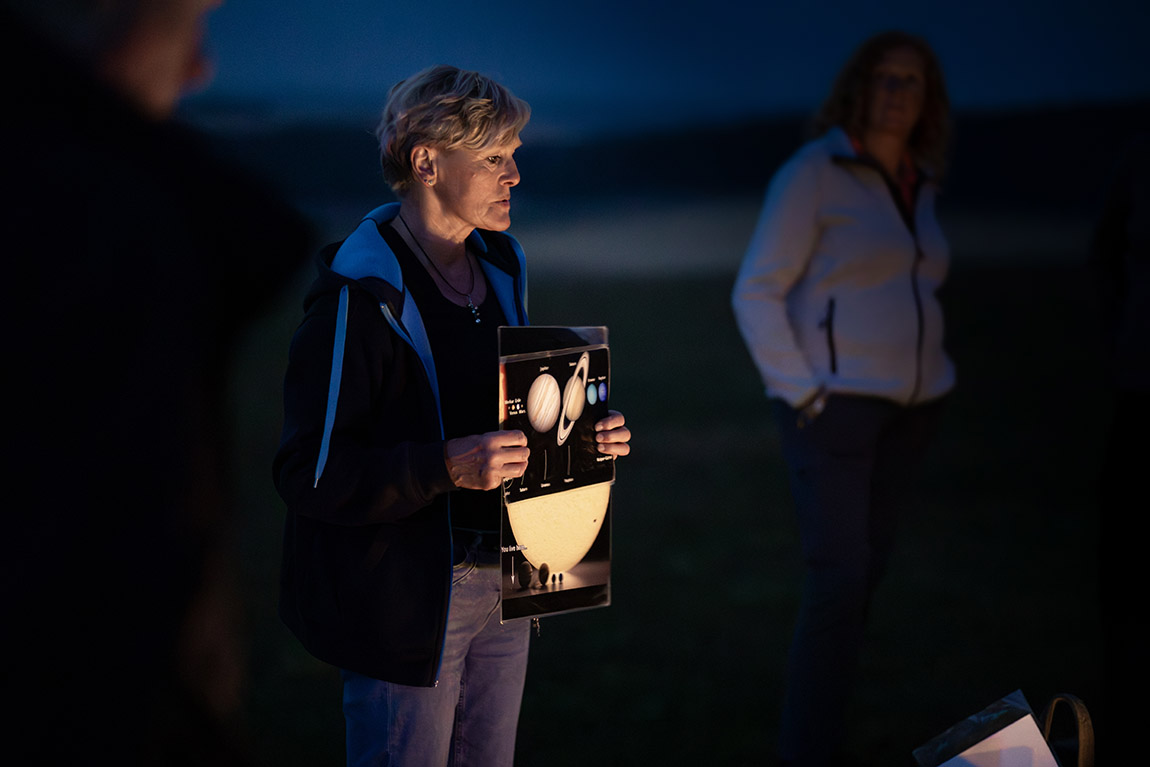
Star Park Rhön. Photo: Rhön GmbH
Rhön: minimal light pollution
For those seeking genuine darkness and a sense of openness, the Rhön UNESCO Biosphere Reserve in the border region of Bavaria, Hesse and Thuringia, which was recognised as an International Dark Sky Park by the International Dark-Sky Association (IDA) in August 2014, delivers. As Germany’s largest dark sky park, Sternenpark Rhön offers up to 3,000 visible stars on clear, moonless nights, often including the Milky Way seen with the naked eye. Its nickname, the land of open distances, captures the expansive landscape and wide horizons that define the region.
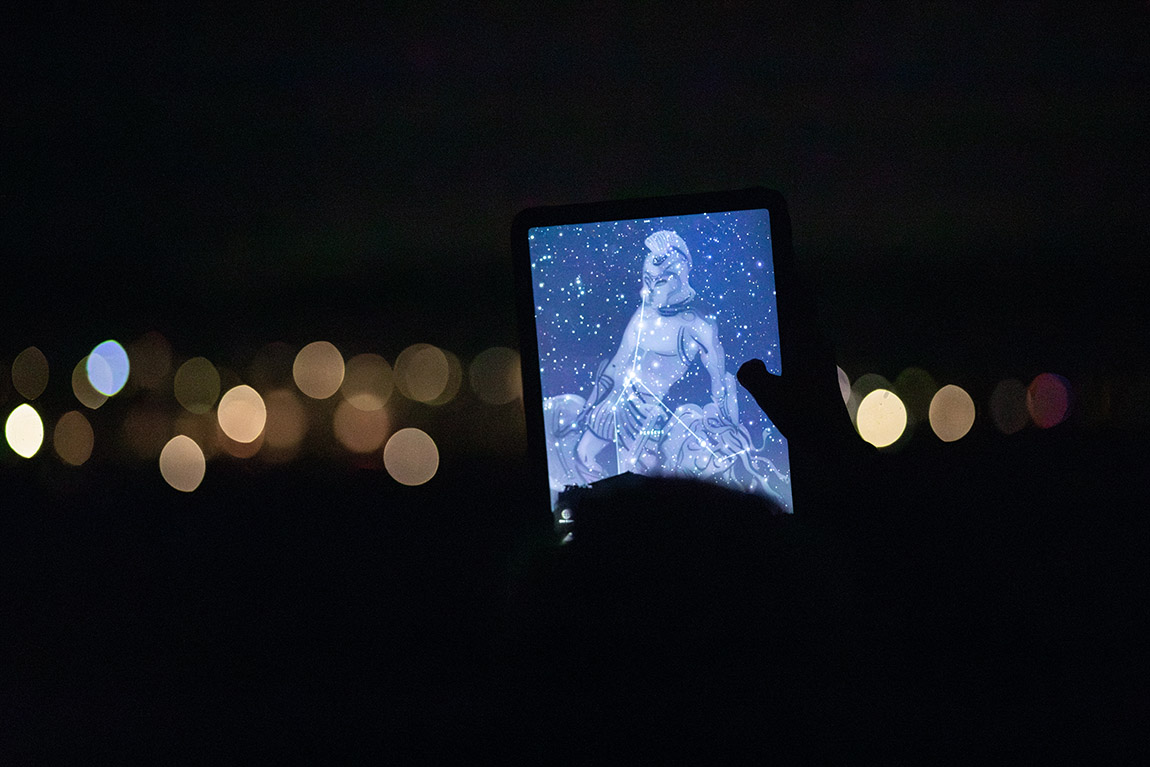
Star Park Rhön. Photo: Rhön GmbH
Ramona Zimmer from Rhön GmbH shares: “The park is special because you can still experience true darkness here. Visitors can explore on their own or join certified guides for night walks into the world of stars. Over ten sky viewing spots are equipped with star maps and guides to help you find constellations and planets yourself.”
Protecting the night is central to Rhön’s mission. Zimmer notes: “About 40 municipalities actively work to protect the night, aiming to reduce light pollution and preserve habitats for nocturnal animals—a vital contribution to biodiversity.” Warm white lighting, tailored brightness and demand-driven illumination are key strategies, and the annual Lights Out, Stars On campaign during the Star Park Weeks sees streetlights switched off for a weekend, raising awareness and enabling direct stargazing.
Rhön’s Star Park Weeks in summer are a highlight, with over 90 events covering guided night walks, astronomy sessions, astrophotography courses, sunset balloon rides, culinary offers and overnight packages. Zimmer’s favourite? “The Star Park Weeks, when everything in Rhön revolves around the sun, moon and stars.” In 2026, these will run from 1 until 23 August.
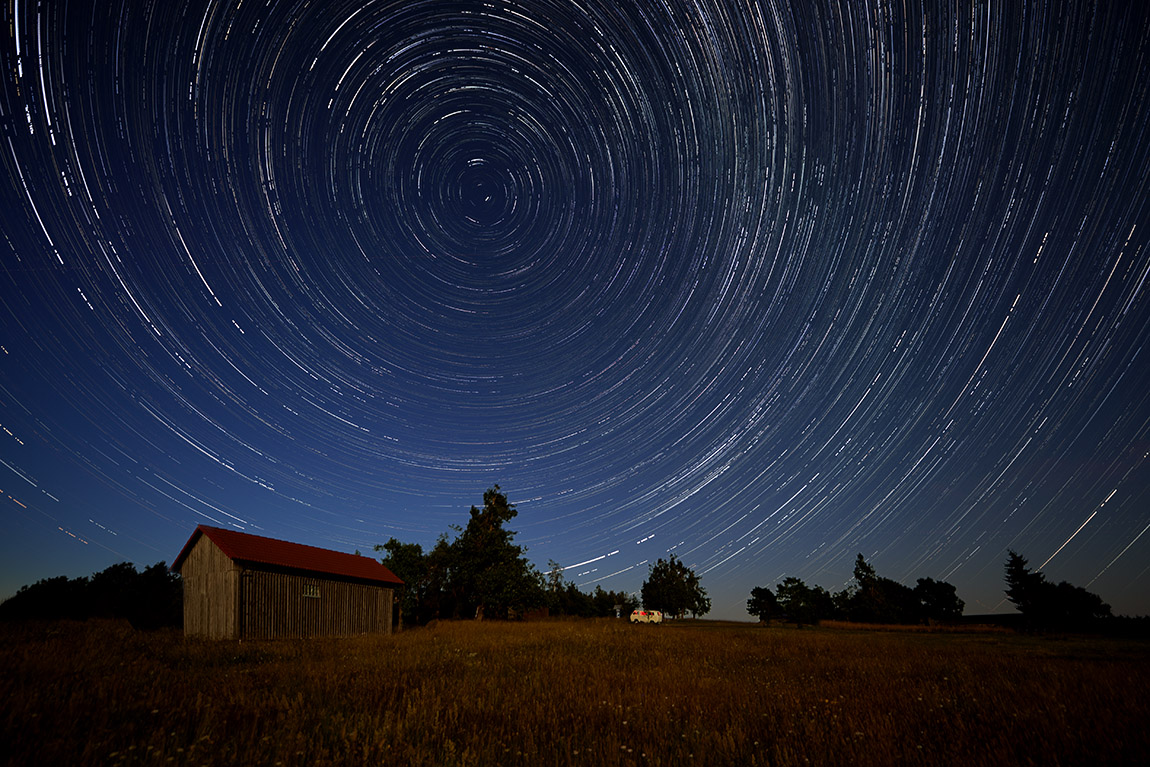
Star Park Rhön. Photo: Rhön GmbH
Eifel: the island of darkness
In the Eifel region, starry sky enthusiasts can find the Star Park Eifel National Park 65 kilometres southwest of Cologne. Its remote forests, gentle hills and volcanic landscapes create an astonishingly dark nocturnal environment. Harald Bardenhagen, astronomer and manager of the Endless Stars workshops, highlights the Eifel’s immersive qualities: “The nightly observation of stars and looking at heavenly wonders together with small and tall guests is always exciting and fascinating.” The special workshops encourage visitors to discover more, offering regular events such as starry hikes and observing interesting celestial bodies. The workshops are designed to leave a lasting impression, inspiring awe and curiosity in both newcomers and seasoned astronomers alike.
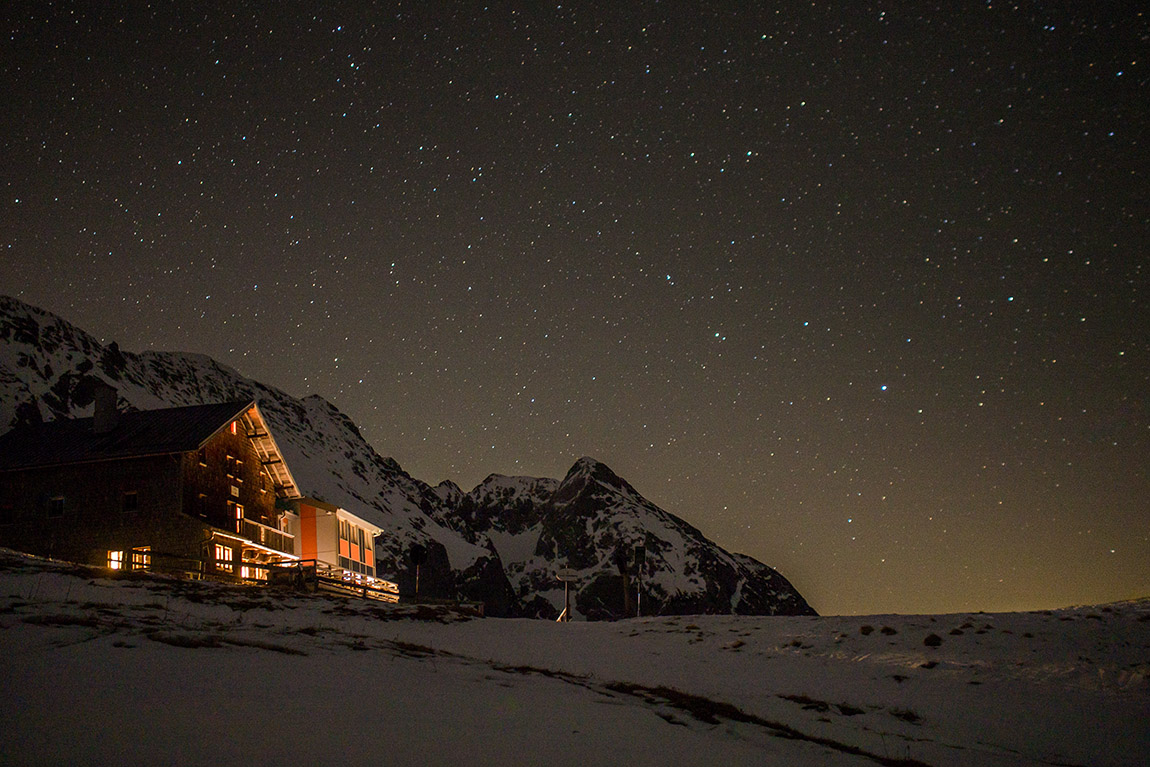
Berchtesgaden: a mountain shelter at night in winter. Photo: DZT/Francois Thierens
Winklmoos-Alm: stargazing at high altitude
Perched at 1,200 metres, Winklmoos-Alm in Reit im Winkl in Bavaria, is Germany’s highest dark sky park and a favourite among those seeking clarity and intensity in their astronomical adventures. The altitude means less atmospheric disturbance, making the starlight even more brilliant. The dramatic mountain scenery stretching from east to southwest provides a stunning backdrop for every observation.
Manuel Philipp, astronomer and owner of Abenteuer Sterne who offers astronomy courses and star tours in the region, describes the experience: “The unique height lets you see the stars with less atmospheric distortion. The combination of the mountain backdrop and relatively dark sky – cities with light pollution are 50 to 100 kilometres away – makes it truly special.”
Philipp’s star tours are immersive and accessible. “Through my tours, I try to create a lasting impact on people. Something that can be admired in all its splendour in fewer and fewer places,” he explains. “I try to show and explain things about the universe that most people have never heard of before. And because of the still very dark skies, I can show objects that are either completely invisible in most places in Germany, or only visible with binoculars or a telescope.”
And his most memorable moment? “Without doubt, 11 May last year, when polar lights were visible as far as the Alps. The northern sky turned from black to pink in seconds, with vertical bands of light dancing like a giant pink fire.”
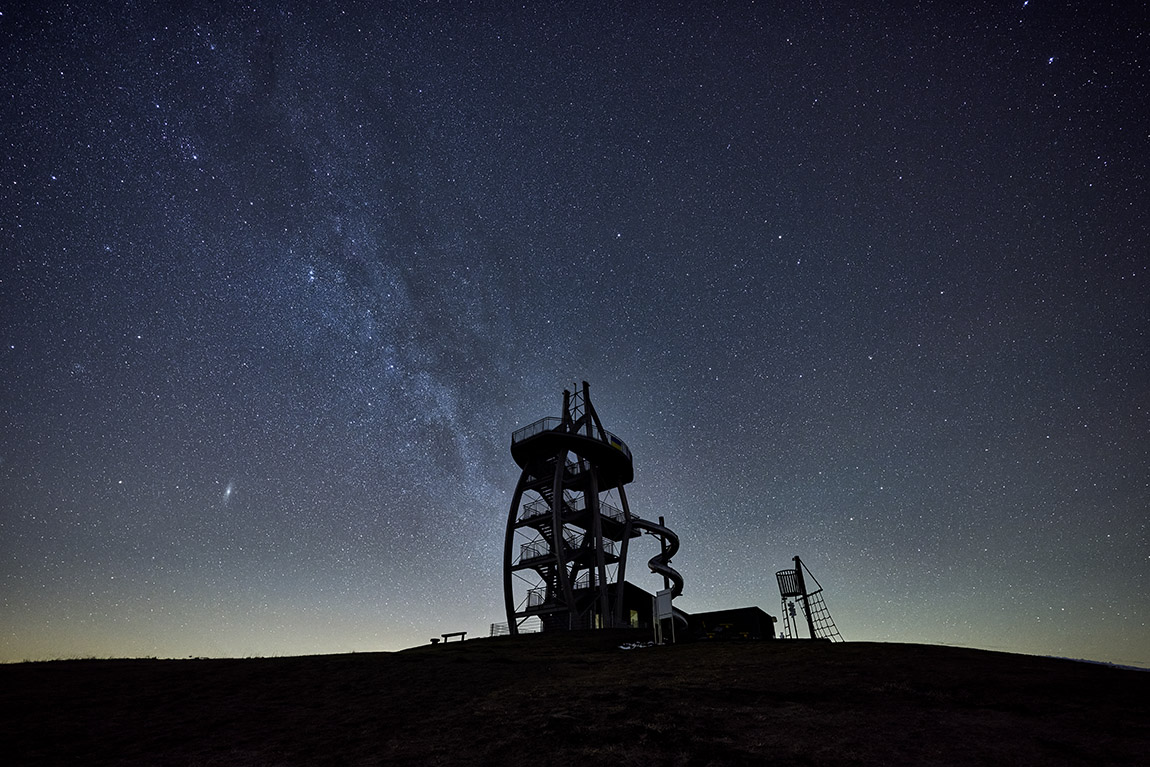
Oberweid: Summer Milky Way behind the Noah’s Sails observation tower. Photo: DZT/ Florian Trykowski
Sankt Andreasberg and North Sea islands: emerging hotspots
While Germany’s well-established dark sky parks draw most of the attention, new hotspots are emerging. Sankt Andreasberg, situated at 893 metres on the Rehberg in the Upper Harz, is currently seeking recognition as an IDA Dark Sky Reserve and features the Sankt Andreasberg Observatory, which offers tours and courses. Last but not least, the North Sea islands offer some of Germany’s darkest skies. Amrum, Pellworm, and Spiekeroog are standout locations, with Spiekeroog boasting the darkest sky measured by the IDA to date. Both Spiekeroog and Pellworm now hold official IDA International Dark Sky Park certification, providing extraordinary conditions for celestial observation.
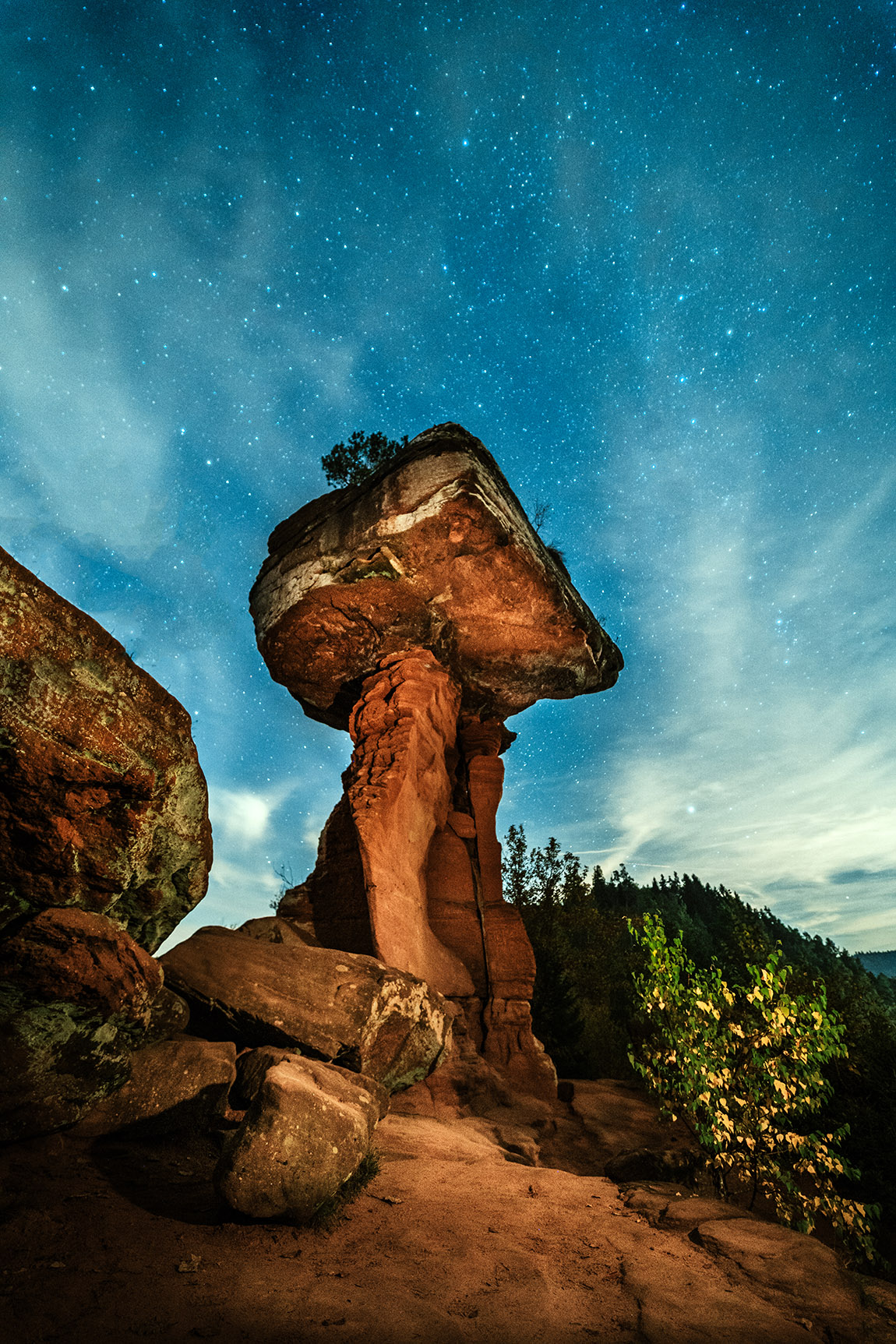
Devil’s table at night in Hinterweidenthal. Photo: DZT/Mathias Koch
Tips for stargazers
• Plan your visit around new moon periods and clear forecasts for maximum darkness.
• Check local events and workshops for guided experiences and expert insights.
• Bring warm clothing, binoculars or a telescope, and download a star map or app.
• Respect the darkness: minimise light use and follow park guidelines.

Subscribe to Our Newsletter
Receive our monthly newsletter by email