50 Years of the German Fairytale Route
TEXT: NANE STEINHOFF
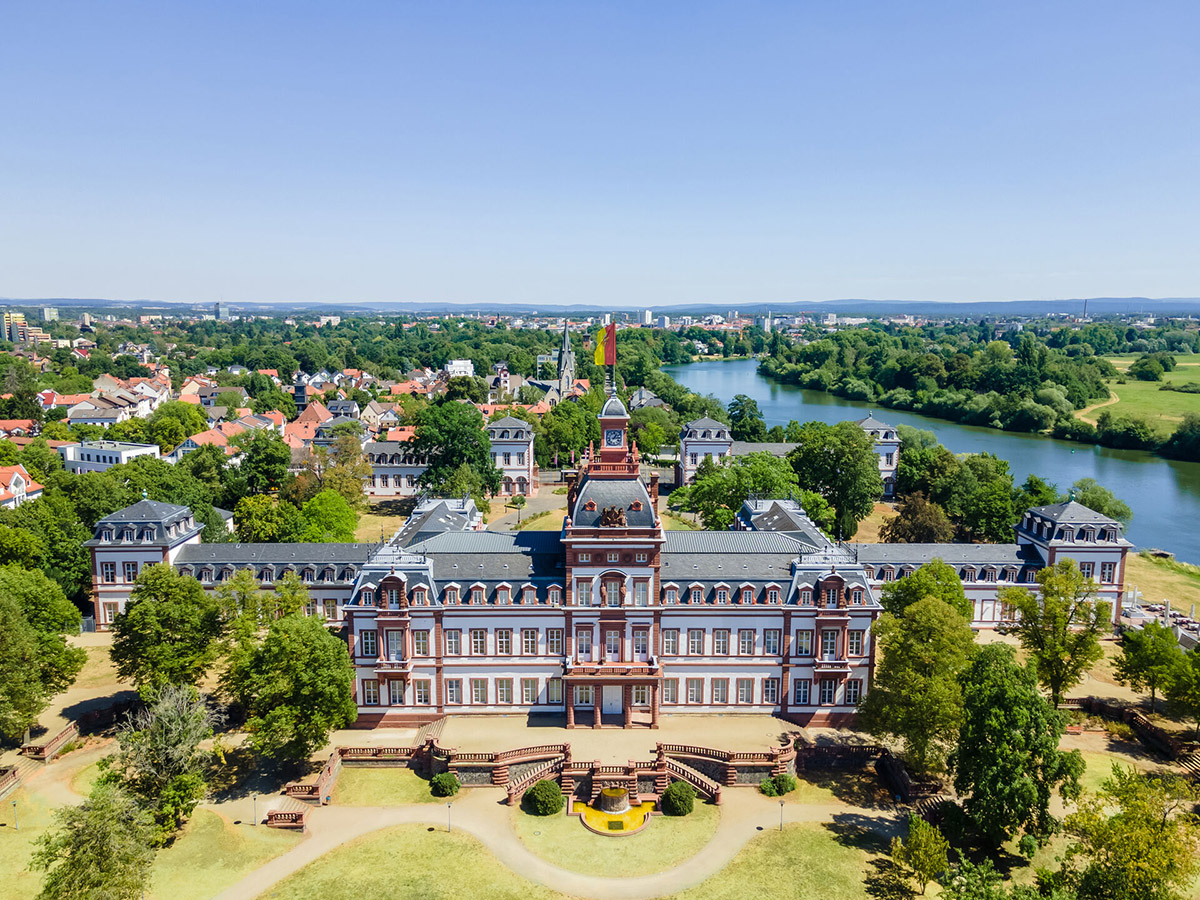
View of Philippsruhe Castle in Hanau. Here, the Grimms Fairy Tale Empire museum and castle garden can be found where the Brothers Grimm Festival takes place every year. Photo: #visitrheinmain/David Vasicek
Some trips are not just about the places you visit – they are about the stories you discover along the way. That is what makes the German Fairytale Route so special. For 50 years now, this route has been guiding travellers into the magical world of the Brothers Grimm, where old tales come to life and adventure waits around every bend.
This year marks half a century since the German Fairytale Route was officially mapped, and yet, as millions have found, its enchantment is as fresh and transformative as ever. The story of the German Fairytale Route begins, fittingly, with storytellers Jacob and Wilhelm Grimm, whose names have become synonymous with the timeless fables, legends, and folktales of Germany.
Born in Hanau at the turn of the 19th century, the Grimms were scholars and linguists whose passion for collecting and preserving oral traditions not only gave rise to the world’s most beloved fairy tales but also contributed profoundly to the study of language and folklore. Their legacy was never meant to be confined to the pages of a book. Over five decades ago, visionaries in tourism and culture recognised that the landscapes which inspired the Grimms’ tales were themselves a treasure, and so the German Fairytale Route was born – a living, breathing storybook stretching more than 600 kilometres from Hanau to Bremen.
To journey along the route is to step into a tapestry woven with castles that seem to hover above the clouds, whispering forests where shadows flicker with possibility, and half-timbered towns that bear the gentle patina of centuries. The route passes through more than 60 towns, villages and regions, each with its own story to tell and its own role to play in the fairy tale tradition.
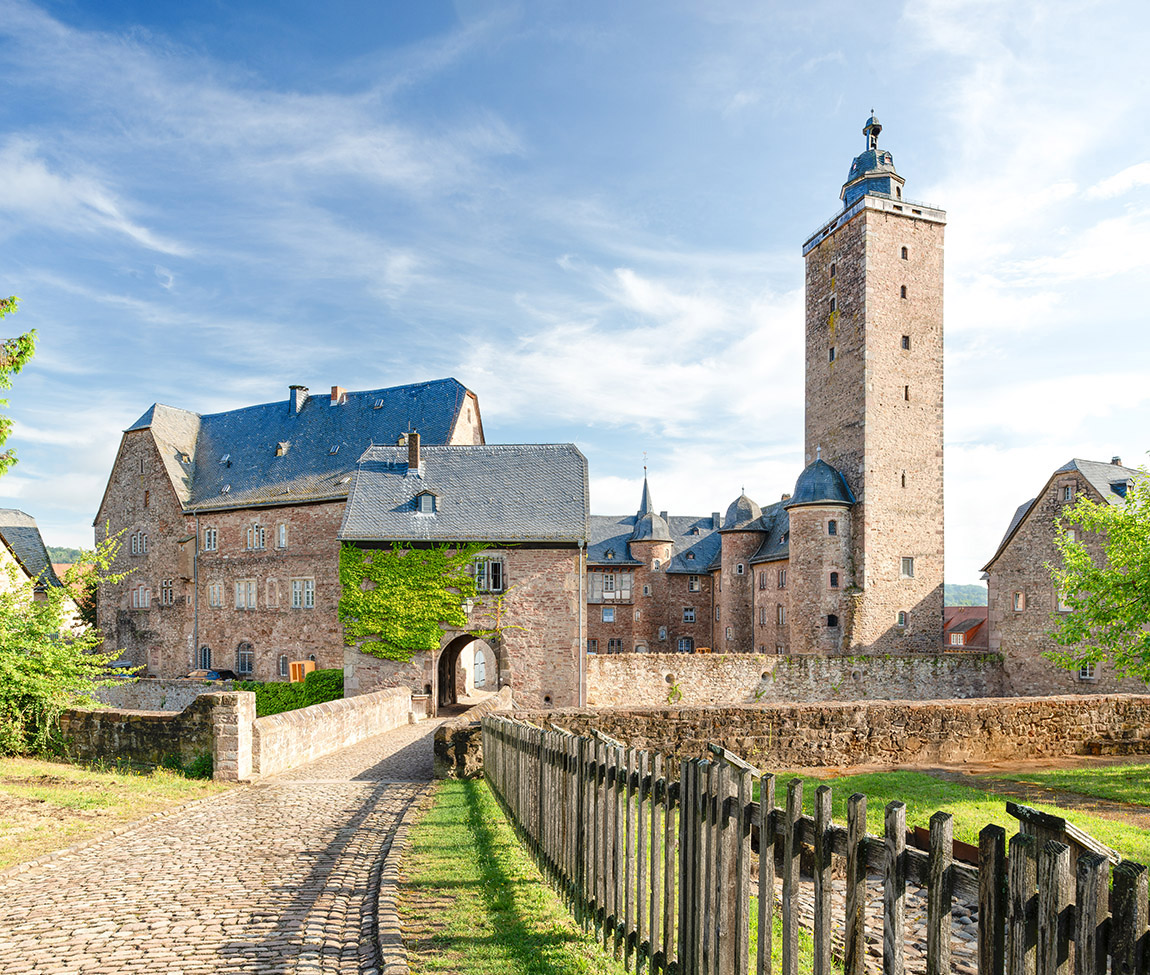
Steinau Castle. Photo: German National Tourist Board, Francesco Carovillano
Hanau to Steinau an der Straße
Once upon a time, there were two brothers – Jacob and Wilhelm Grimm. Born in Hanau am Main in 1785 and 1786, they grew up to become the most famous German storytellers through their numerous fairy tales including Little Red Riding Hood, Rapunzel, Rumpelstiltskin, and Cinderella. Therefore, it seems no wonder that Hanau marks the starting point of the German Fairytale Route. Here, visitors can stand before the Brothers Grimm National Monument and wander through markets where storytellers still enchant listeners, young and old. Not far away lies Philippsruhe Castle with GrimmsMärchenReich, or Grimms Fairy Tale Empire in English. Here, visitors can visit a hands-on museum and castle garden, where the Brothers Grimm Festival takes place every year.
After visiting Hanau, Steinau an der Straße invites guests to explore its rich fairy tale heritage. The small town, with a population of approximately 10,000, is officially known as the Brothers Grimm Town due to its historical association with the brothers, who spent their childhood here. The town contains the Brothers Grimm House, which is among the largest museums devoted to them. There is also a fairy tale fountain and the Holzköppe puppet theatre, where hand-puppet performances of fairy tales are held. Furthermore, the early Renaissance Steinau Castle is largely preserved and combines features of fortress architecture with castle construction from that period.
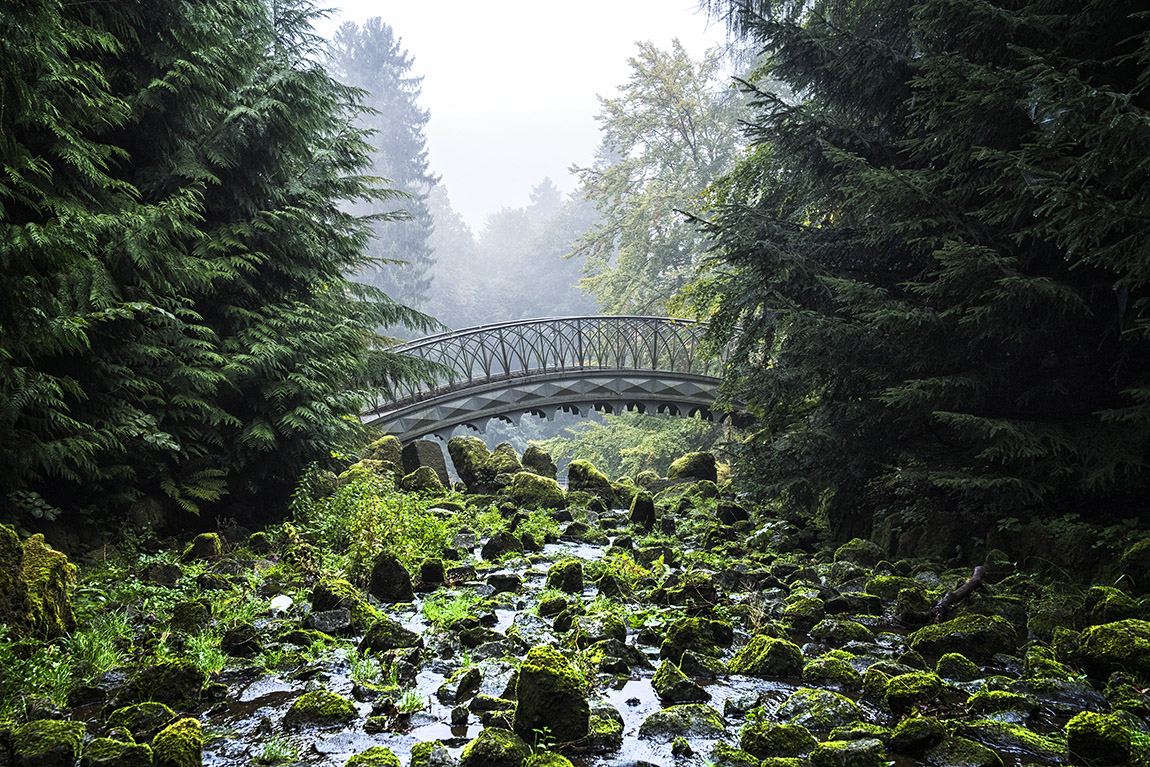
Palace Wilhelmshöhe in Kassel, palace garden. Photo: DZT/Florian Trykowski
Moving north
Nestled in the heart of Hesse, Alsfeld offers a magical gateway into the world of the Brothers Grimm. Begin with a stroll through the impeccably preserved half-timbered old town, where the 16th century town hall stands as a highlight and perfect photo spot. Visit Alsfeld Fairytale House, which brings Grimm stories to life through interactive exhibits and vivid storytelling. Do not miss guided tours that unveil the town’s role as the gateway to Little Red Riding Hood country – complete with locals in traditional Schwalm costumes. Enjoy puppet shows, explore cobbled streets, and let Alsfeld’s timeless charm spark your own fairy tale adventure.
Another popular stop on the German Fairytale Route is Marburg, where the Brothers Grimm attended university. Here, visitors can explore the legendary Grimm trail – and its two kilometres are a real workout! The idea, which was implemented for the first time in 2009, was awarded the Hessian Tourism Prize for its clever way to teach more about the most popular fairy tales by the Brothers Grimm. Stage painter Pasquale Ippolito has designed oversized figures, including representations like the Frog Prince and Snow White’s shoes, and placed them throughout the old town below the Landgrafen Palace, an area known for its historic half-timbered houses.
Moving northwards, the route passes through Kassel, where the Grimms spent most of their adult lives and where their original manuscripts are preserved in the city’s Grimm World museum. Visitors can learn even more about the life and work of the Grimms – in an artistic, modern, multimedia format. Not far from Kassel lies the Geo-Nature Park Frau-Holle-Land or Mother Hulda Land. With over 200 geotopes, two dozen premium hiking trails, half-timbered towns, castles and fortresses, nature lovers can stroll along the footsteps of Mother Hulda.
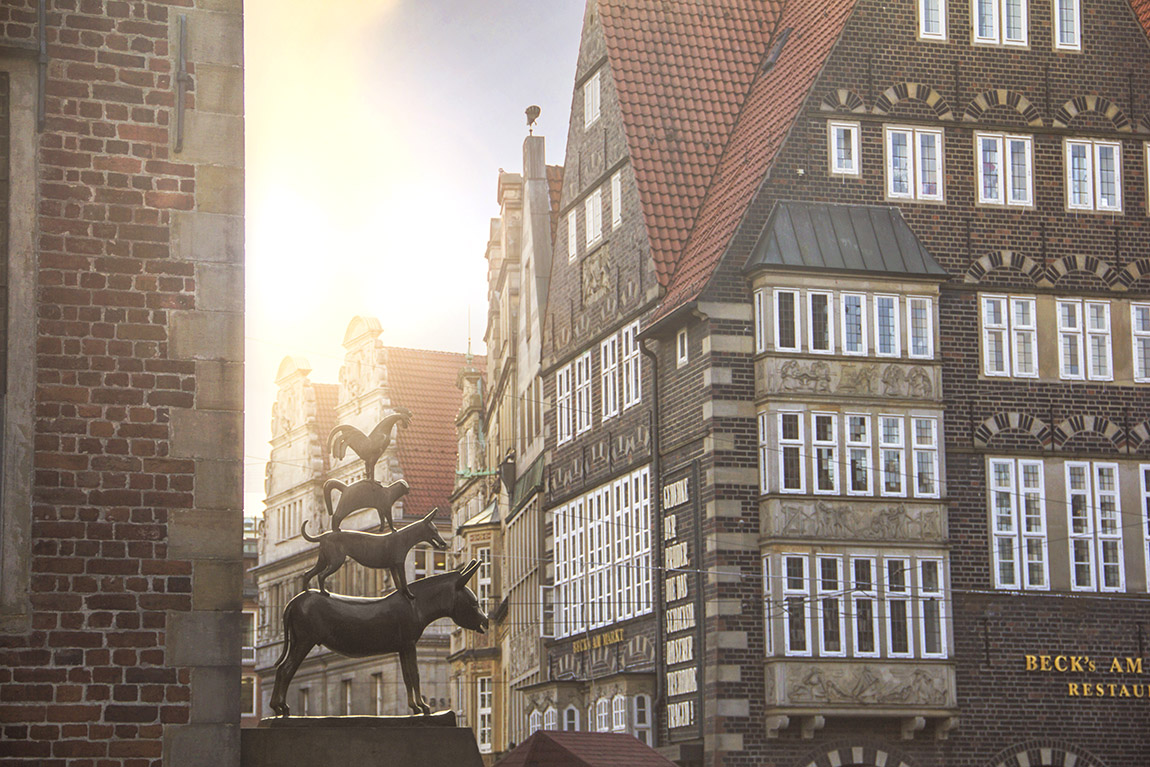
Bremen: bronze statue of Bremen Town Musicians in the city centre. Photo: WFB Bremen/WFB Carina Tank
Sleeping Beauty Castle and enchanted nature
The Brothers Grimm worked in Göttingen from 1829 to 1837, and a memorial plaque at 6 Goetheallee and the Paulinerkirche with its library hall commemorate their time here. On your way north, do not forget to visit the Sleeping Beauty Castle Sababurg , as well as Rapunzel’s tower in Trendelburg. The Sababurg is a dreamy fortress shrouded in rose gardens, said to be the inspiration for Dornröschen, or Sleeping Beauty. The moss-clad stones and winding staircases feel borrowed from another world, and it is easy to imagine a princess slumbering behind the tangled briars.
If you make your way to Bad Wildungen, you will hear all about Snow White – locals say that her story was inspired by old mining traditions and a bit of real-life drama from the area. The forests around Hesse and Lower Saxony feel straight out of a fairy tale, too. Sunlight streams through ancient oak trees, making it easy to picture Hansel and Gretel wandering around, looking for a way home. And then there is Hamelin, famous for the Pied Piper. Every week, you can catch lively performances about his story, and honestly, the whole town has a kind of magical, slightly mysterious vibe, as if the pied piper might turn up around the next corner.
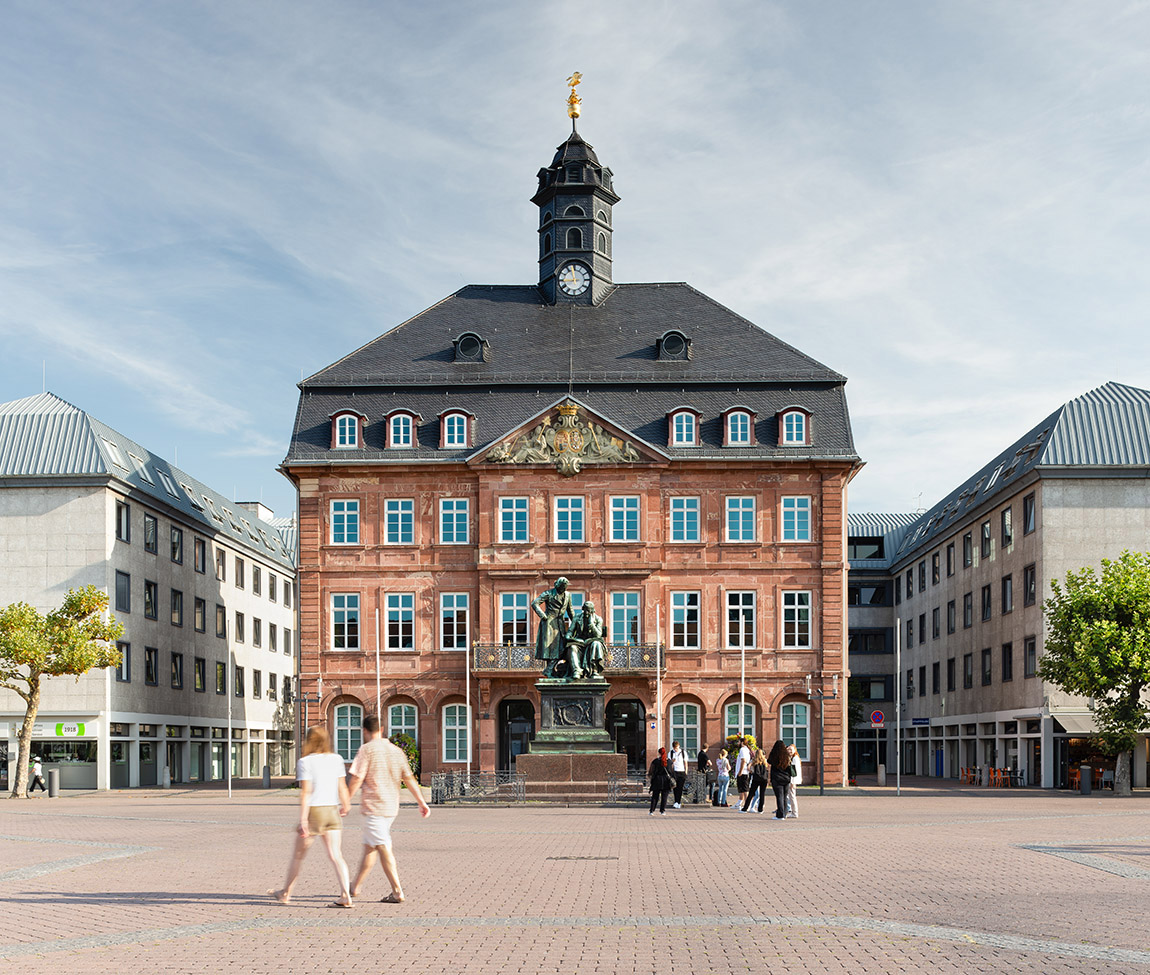
Market place in Hanau with the Brothers Grimm Monument. Photo: German National Tourist Board, Francesco Carovillano
The Fairytale Route culminates at the west side of Bremen Town Hall, where a bronze statue of the Bremen Town Musicians is prominently displayed. Adjacent to this location, in Domshof town square, the tale of these legendary figures is presented weekly through live, full-scale performances that are open to the public at no cost.
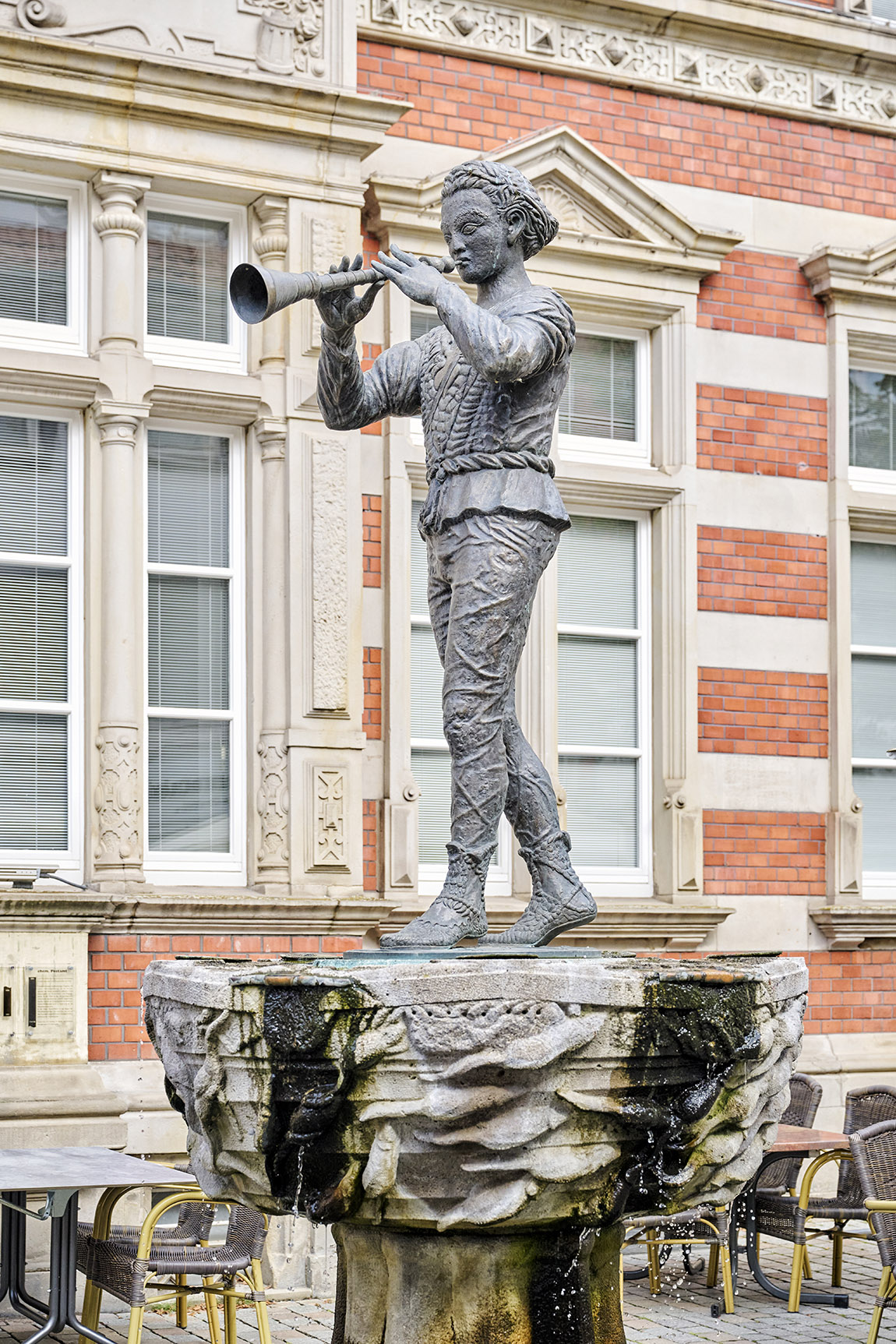
Monument of the Pied Piper of Hamelin. Photo: DZT/Florian Trykowski
Over the last fifty years, the German Fairytale Route has become more than just a scenic drive – it is a celebration of stories and community. The towns along the way are proud of their roots, and everyone works hard to keep old traditions alive. What really makes this route special is not just the pretty countryside or historic buildings, but how it pulls you right into the magic. There is always something happening: festivals with lively parades, puppet shows, and plays that put fun new spins on classic tales. Museums and old houses turn into time machines where families and kids can get hands-on with history, while castles let young visitors dress up as everyone from royalty to wolves. Locals get into the spirit by donning costumes, markets fill with gingerbread and marzipan shaped like fairy tale creatures, and everywhere you go there is music, laughter, and a real sense that you are part of something enchanting.
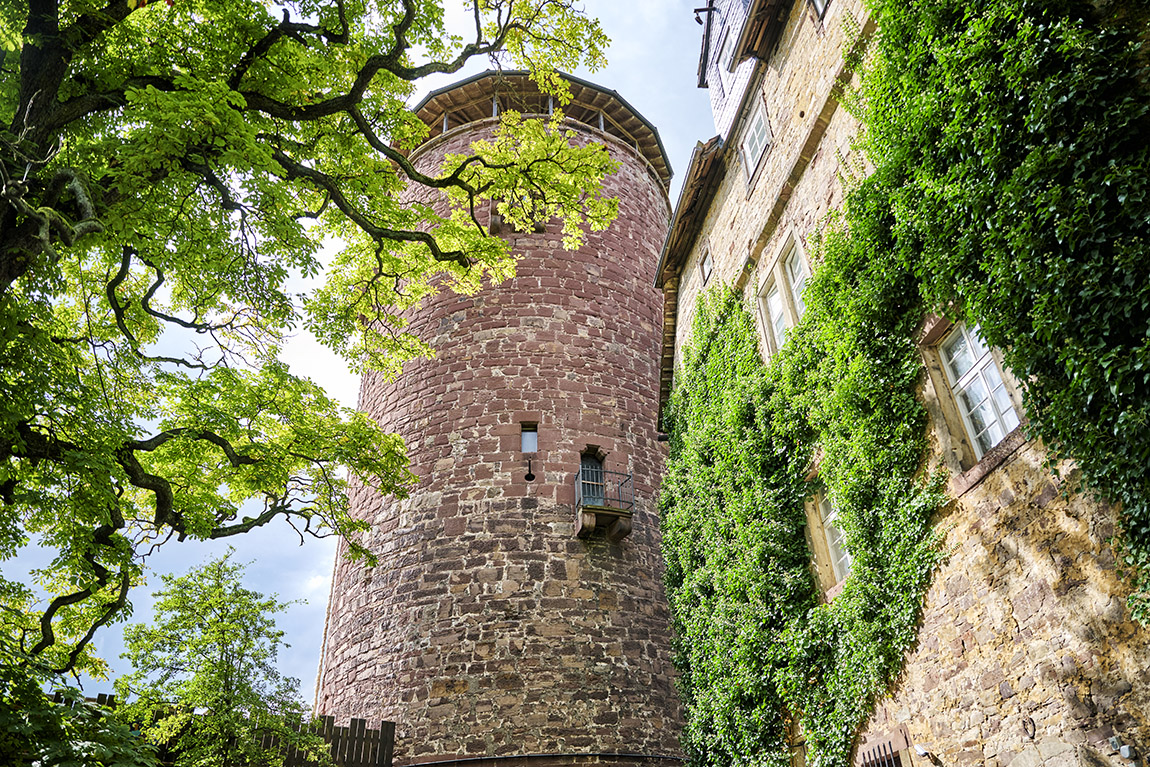
Castle tower and ivy-covered façade of Trendelburg Castle, which is associated with the Rapunzel fairy tale. The castle’s tall tower, known as the Rapunzel Tower, is said to be the tower in the story where Rapunzel let down her hair. Photo: DZT/Florian Trykowski
Yet, perhaps the greatest gift of the German Fairytale Route, after 50 years and countless retellings, is its ability to remind us why these stories endure. Even though the stories date back hundreds of years, they still speak to everyone, sharing big ideas about courage, kindness, curiosity, and the power of change. As you follow the route, you start to see that it is not just about castles and forests – it is about stepping into a world of imagination, where believing in a little magic is totally encouraged.
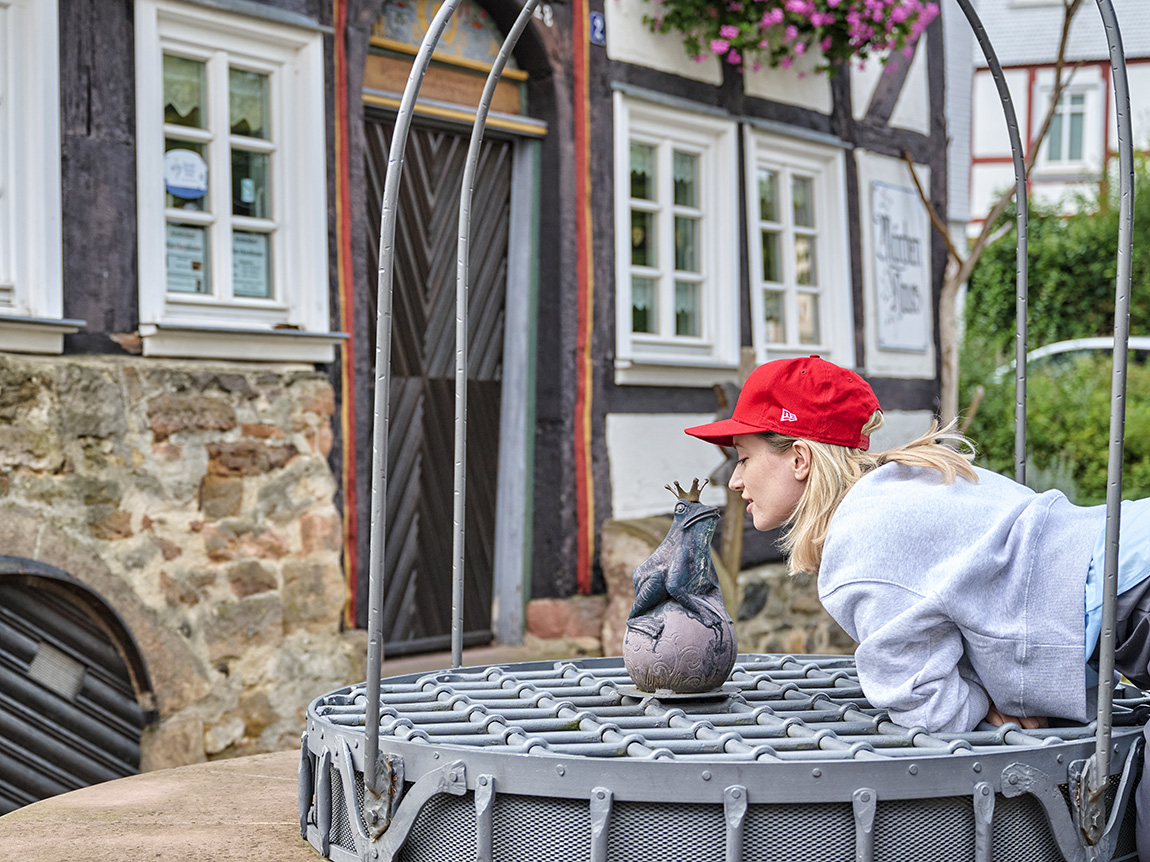
Fountain with frog figure and historical backdrop in Alsfeld. Photo: DZT/Florian Trykowski
The locations described here are only a smal selection of the many wonderful destinations that can be explored alongside the German Fairytale Route.
You can find out more about additional spots here: www.deutsche-maerchenstrasse.com/en/route/travel-stations/towns-regions

Subscribe to Our Newsletter
Receive our monthly newsletter by email