Francke Foundations – a mesmerising world of educational history
TEXT: CORNELIA BRELOWSKI | VIDEO: FRANCKE FOUNDATIONS
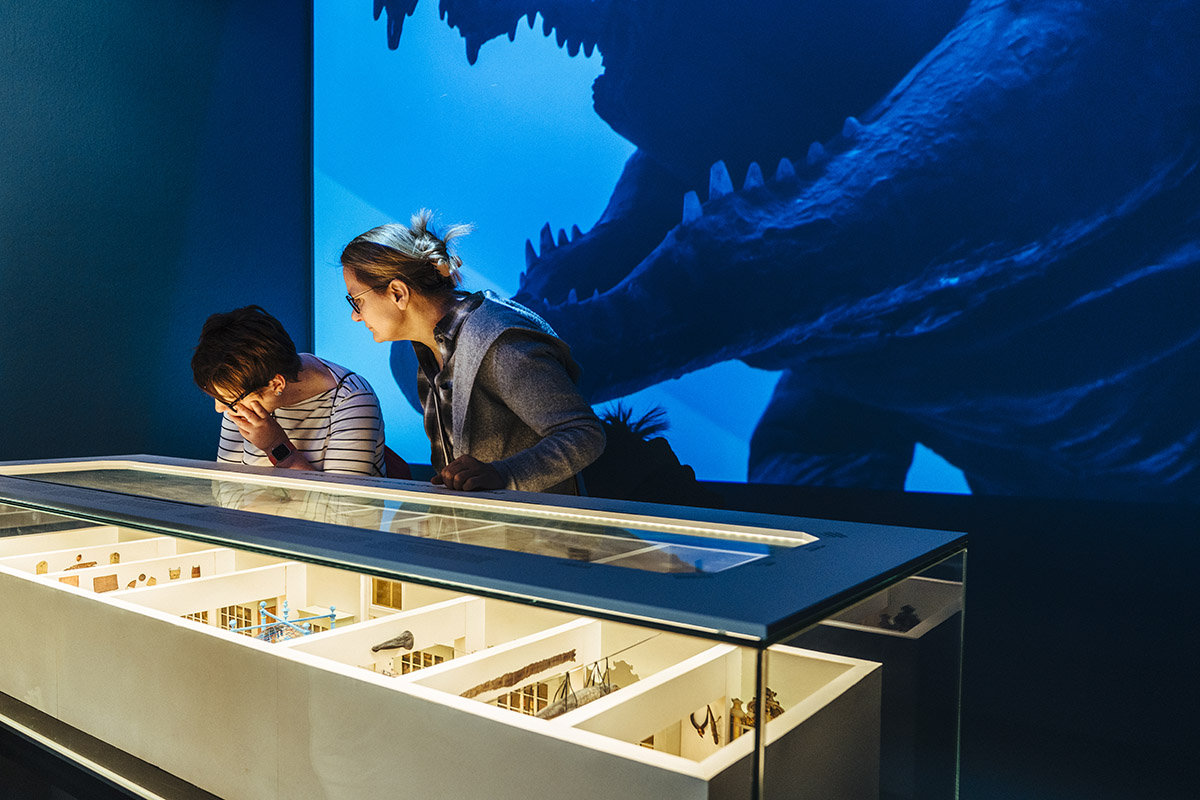
Annual exhibition. Photo: Michael Bader
300 years of curiosity mark the baroque Cabinet of Artefacts and Natural Curiosities of the Francke Foundations in Halle.
On the top floor of the Halle Historic Orphanage, one of the few fully preserved baroque cabinets of curiosities offers a unique journey through time. The Francke Foundations’ Wunderkammer displays the original museum concept of the 18th century in its authentic location and with fully preserved historical furnishings.
Here, all areas of life and fields of knowledge are considered in one context. The exhibit was initially established in 1698 as a collection for the pioneering schools of Lutheran theologian and leader of Halle Pietism, August Hermann Francke (1663-1727). Promoting an outstanding concept at the time, the school town at the gates of Halle taught girls and boys from all social classes.
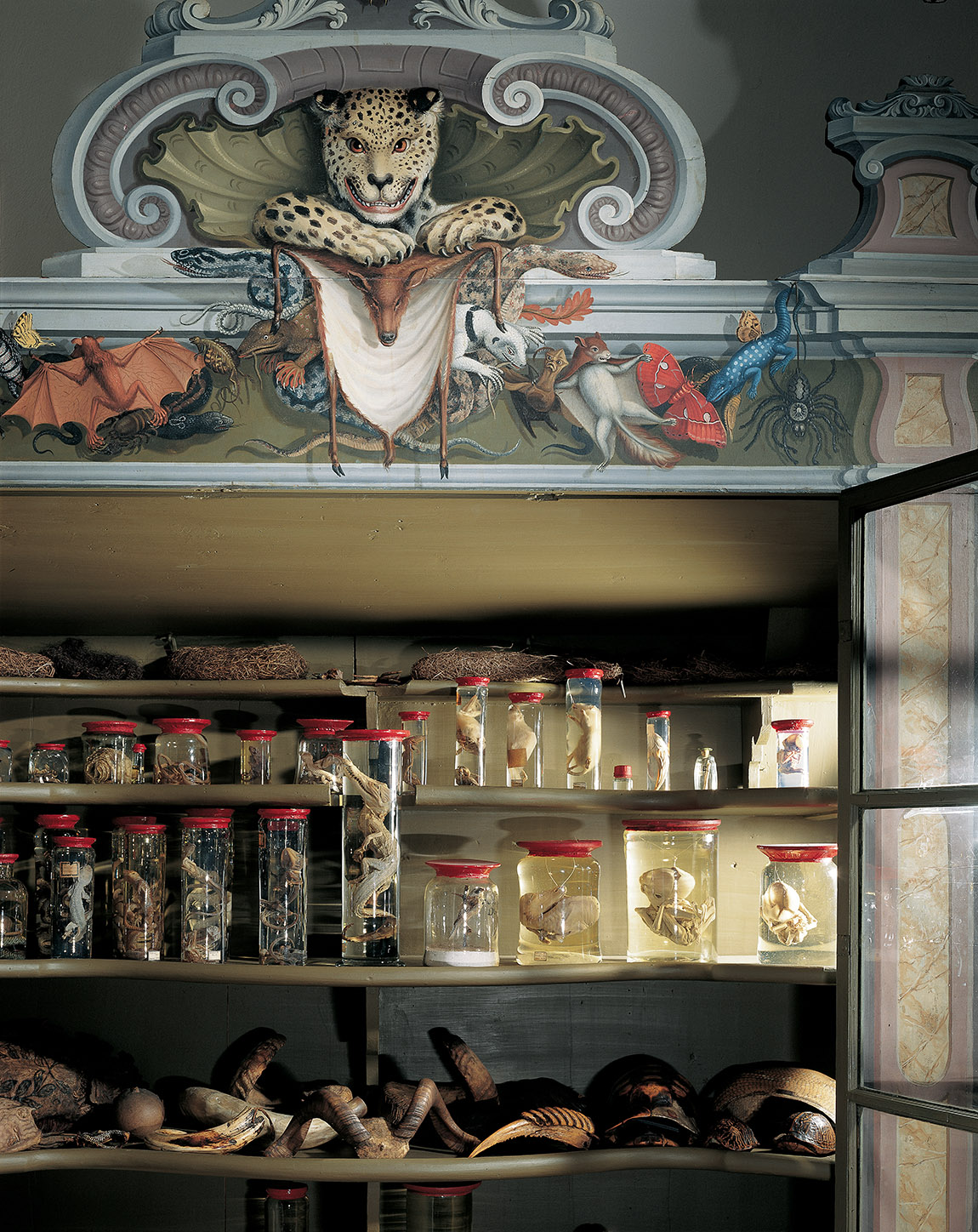
Animal cabinet with crowning. Photo: Klaus E. Göltz
The method of visual teaching was successfully established in the permeable school system consisting of German schools, a Latin school and the Royal Pädagogium. At the same time, the collection was also a showcase for the global network of the educational institution and successfully promoted support for its work. The exhibited objects from all over the world were sent to Halle by former students, who worked as teachers, pastors, missionaries, scientists or doctors from Russia through South India to the Americas. Today, these provenances are regularly researched by scholars from around the world in the Francke Foundations’ cultural history archive.
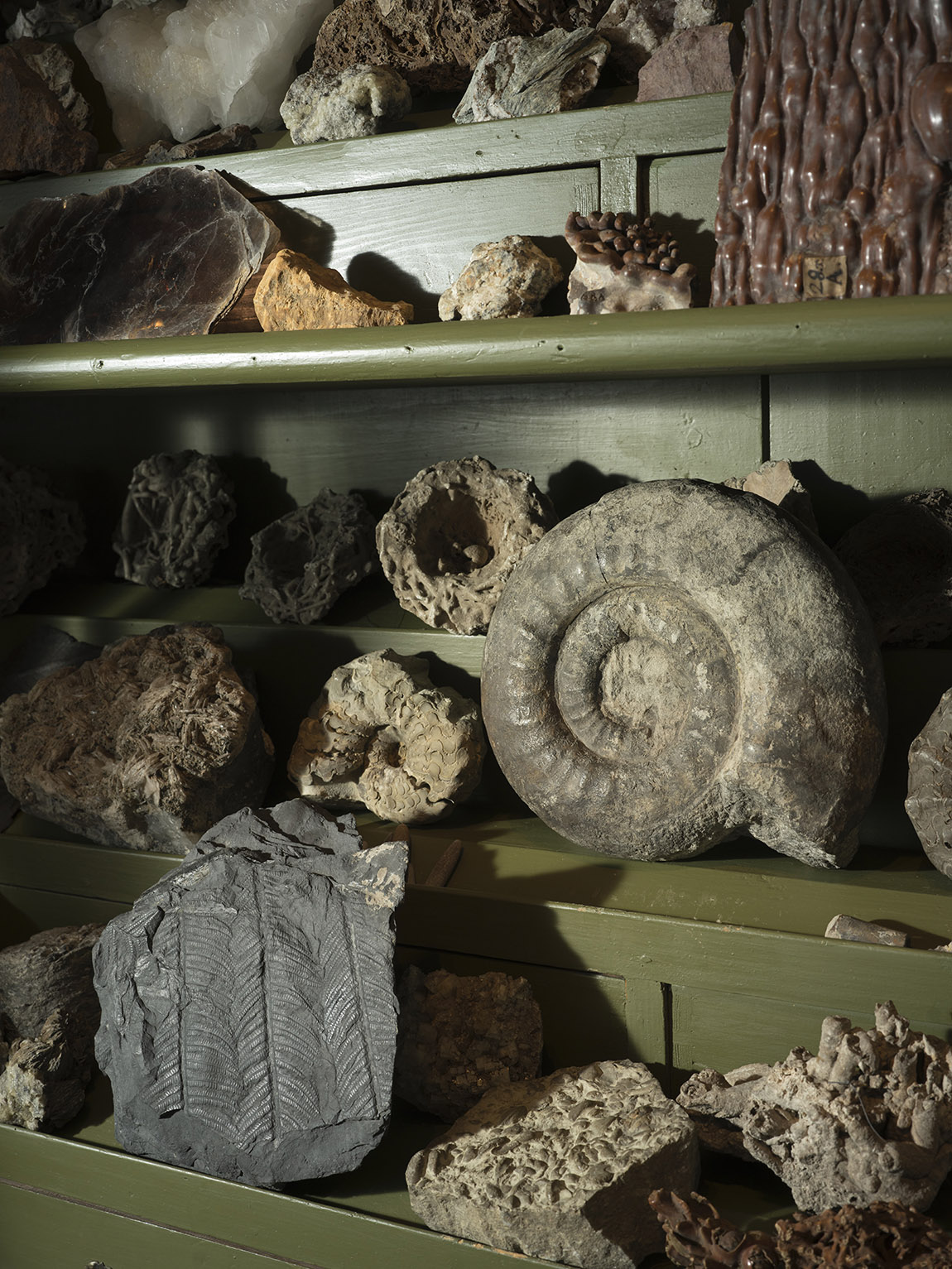
Mineral cabinet. Photo: Jörg Gläsche
Specially made collection furniture
Artist and naturalist Gottfried August Gründler created the auratic room between 1736 and 1741, which can still be experienced today in its original shape. Gründler re-systematised the collection, divided it into naturalia and artefacts, and arranged the objects in specially made collection furniture adorned with a magnificent, thematic crowning motif. None of the paintings and individual objects in this room are individually explained. Instead, each element forms part of the interplay in a microcosm that reflects the order of the whole world in all its diversity.
Francke Foundations. Photo: Michael Bade
An impressive arrangement of exhibits
During the tour, all kinds of curiosities become visible: a mouse embryo, a mysterious fish, a fossilised Hungarian cheese, or the astonishing collection of wooden models for education purposes. Meanwhile, a mighty stuffed Nile crocodile hangs from the ceiling. The pioneering presentation of the natural history collection follows the approaches of naturalist Carl von Linné (1707-1778), who paved the way for modern biology with his systematisation. The natural objects are juxtaposed with the extensive collection of artefacts, including pieces from India and America, reflect the impressive cosmopolitanism of the Francke Foundations.
International provenance research project
One of the mysteries of the collection is now being solved in an international research project. 110 objects from Borneo reached the Wunderkammer in Halle in the 1840s and are still on display here today. The German Lost Art Foundation is supporting a research project in collaboration with the museum in Sarawak. It aims to analyse the provenance of the objects and determine their original purpose.
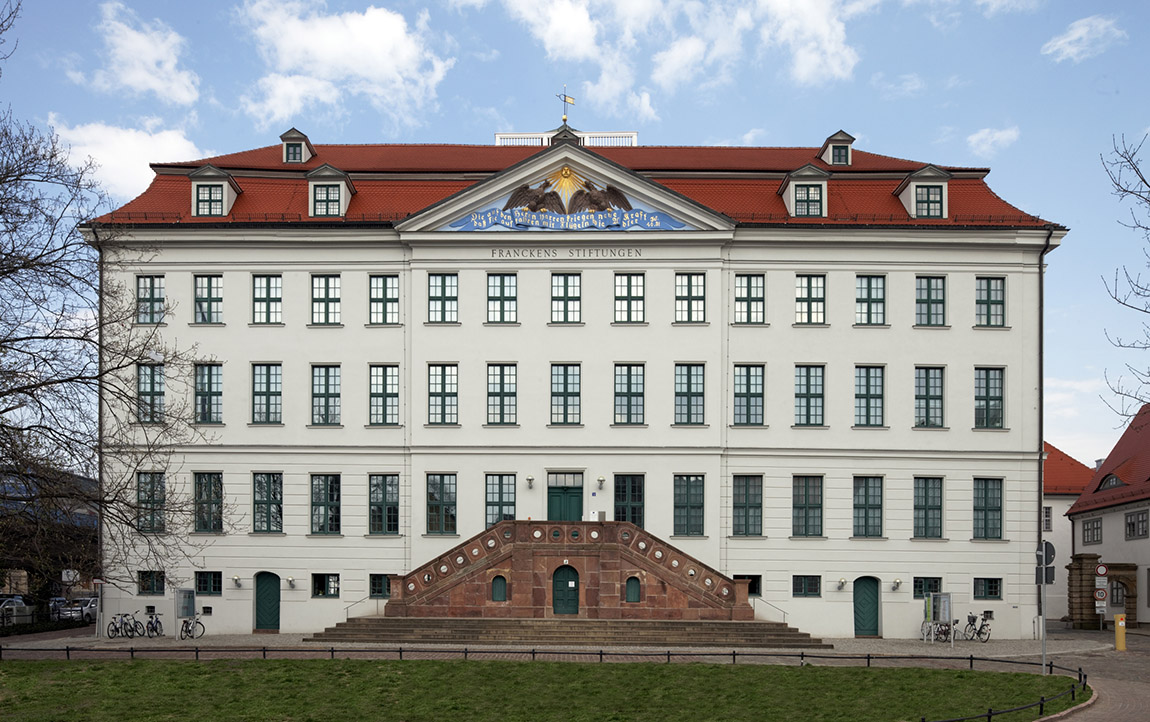
Historic Orphanage. Photo: Uwe Gaasch
A thrilling journey into the past
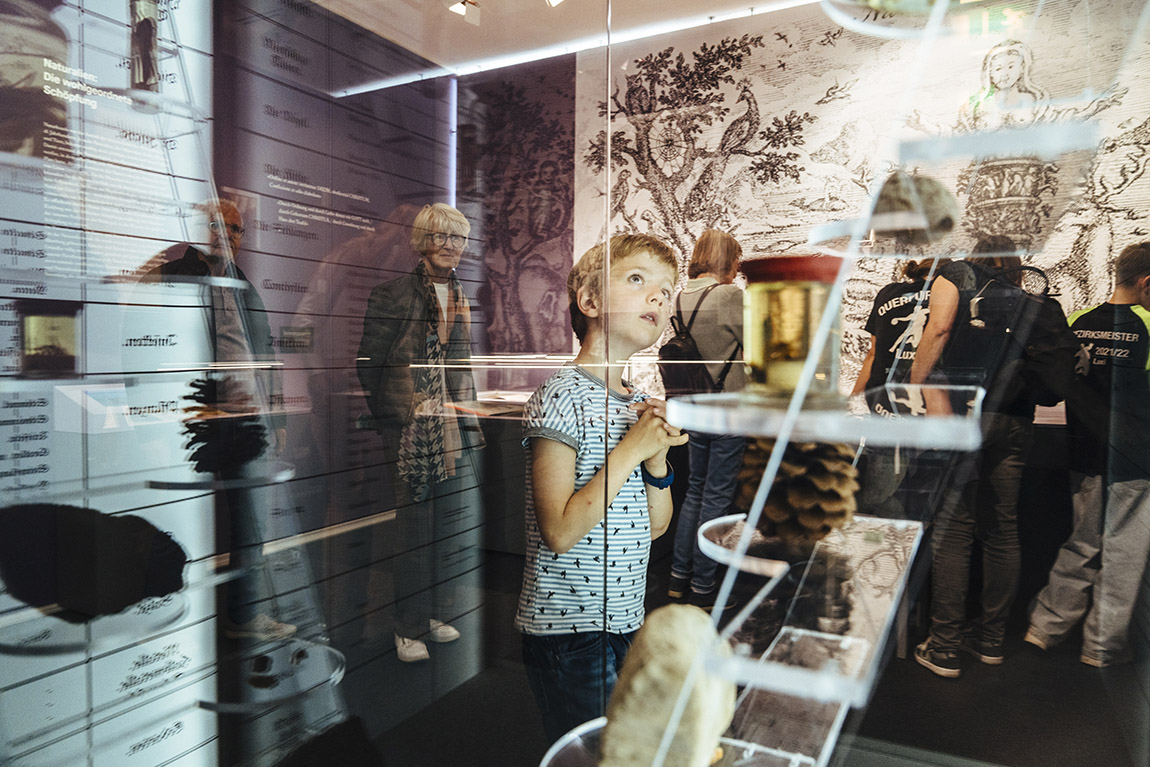
A current exhibition offers an exciting journey into the past: seven exhibition rooms span the range from the unique classification system and collection furniture to the then ultra-modern systematisation of the natural objects. Visitors embark on a search for lost and enigmatic objects, approach the Indian cabinet from a post-colonial perspective and experience a guided tour from the 18th century. “The collection has enormous potential to fascinate, inspire and enlighten,” say curators Holger Zaunstöck, Tom Gärtig and Philipp Wille. “The learning stimulus triggered by a cabinet of curiosities in the early modern period – through the complex interplay of space, furniture, exhibits, patterns of order and narratives – worked then, as it does today.”
A visit to the Francke Foundations in historic Halle allows you to experience an 18th century educational cosmos as a modern educational location. On a tour through the alleyways of the baroque school town, past and present intertwine. The Historic Orphanage, the Library Hall – one of Germany’s oldest purpose-built libraries – and the Lindenhof courtyard, which features Europe’s longest half-timbered residential building, stand out as architectural landmarks of the expansive site.
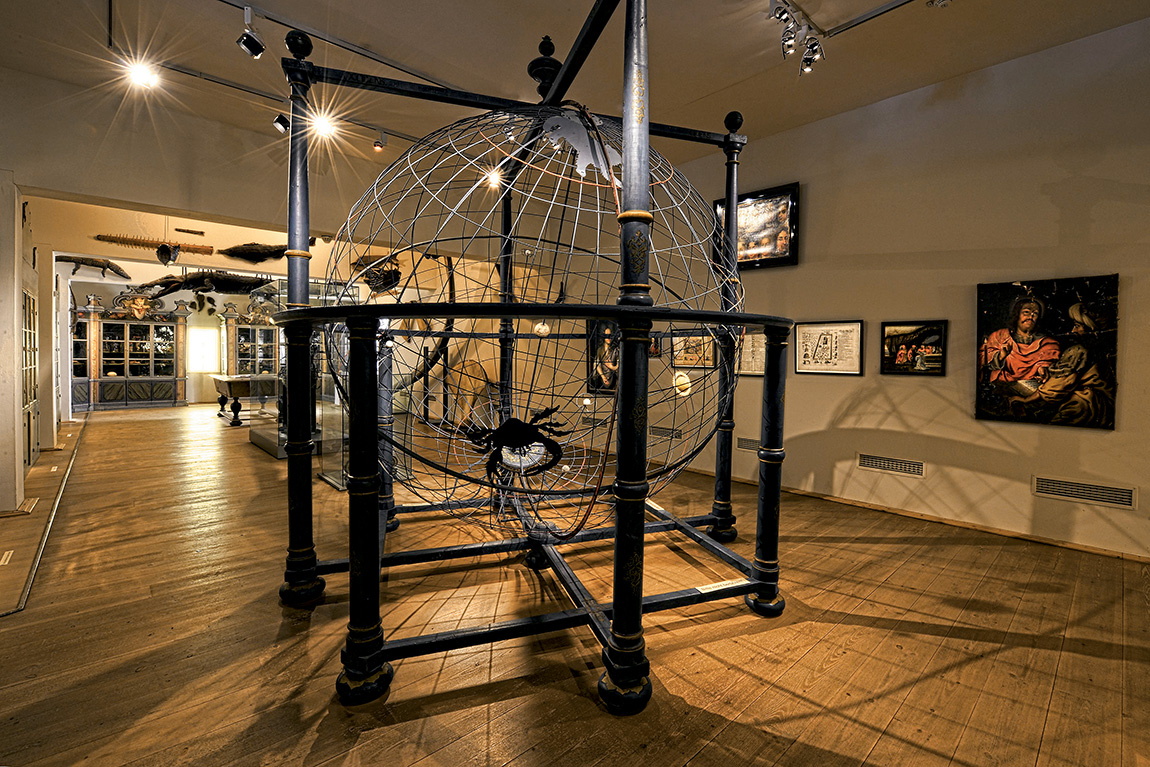
Wunderkammer (Cabinet of Curiosities). Photo: Thomas Meincke
Web: www.francke-halle.de

Subscribe to Our Newsletter
Receive our monthly newsletter by email